Author: Tom Lopez

  • Which Idaho Peak is the Highest?

    Which Idaho Peak is the Highest?

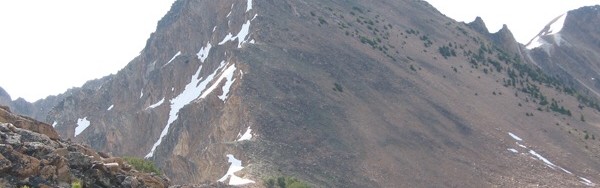
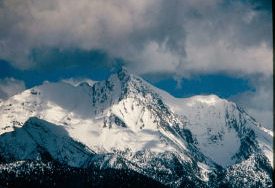
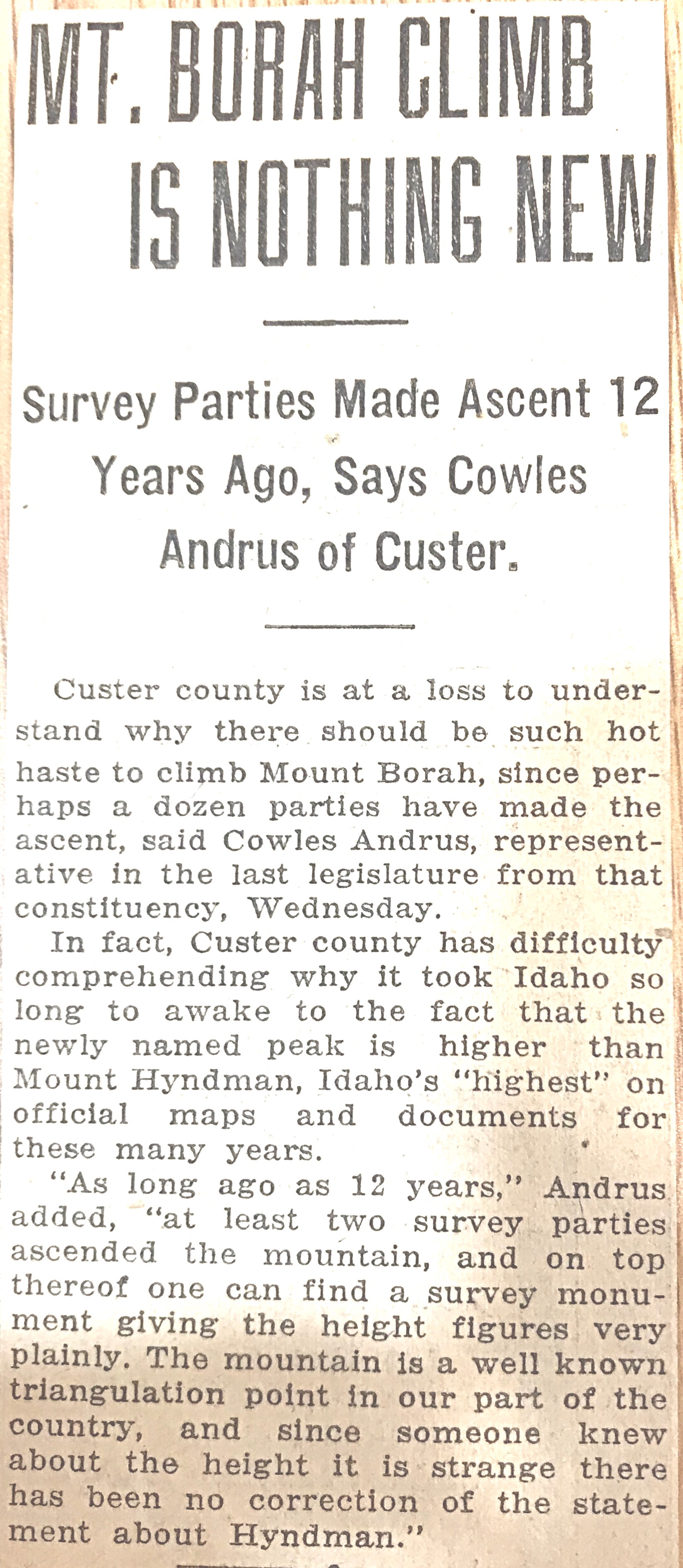
    In the early 1920s, Hyndman Peak was considered Idaho’s highest summit. After an article (not yet located) in the Idaho Statesman declared Hyndman the highest, a protest was sent to the Statesman and subsequently published by the paper. The protest, set out below, declared Patterson Peak in the White Clouds as the highest Idaho summit and claimed it was 13,000 feet high. Patterson is far from a dominating summit and the article, possibly written in jest, either ignores nearby Castle Peak, which lords over every other White Cloud summit or, as the hand-drawn map implies, is actually mistaking Patterson Peak for Castle Peak.


    Click on Photo to enlarge.

    SOMEWHERE in Central Idaho (in the southwest part of Custer County to be exact), there is a modest, unassuming mountain. Patterson is the name and Patterson never has been one to go out of his way in search of notoriety. He knew his merits, did Patterson, and was satisfied even if the world in general ignored him. 

    And to the southeast another mountain rears his head. There is nothing unassuming about the latter, Mount Hyndman. He claims to be the tallest fellow in Idaho, and broadcasts his claim to the world. There is something about his arrogant bearing, the sheer sweep of his cliffs, which proclaims his worth to a wondering world. And the world watching him, decided he knew where of he spoke. On his massive shoulders was pinned the toga and thousands visited him. 

    But there were those in the world who were determined that justice should be done. Perhaps there is a wee bit, too, of disgust at Hyndman’s overweening pride. At any rate, one day they started to broadcast. 

    The Statesman: On the unimpeachable authority of United States Geological Survey figures, proclaimed one day that Hyndman was the highest mountain in Idaho and one of the three or four highest in the northwest. 

    “And that’s just where you’re wrong,” quoth some unidentified correspondent. “There’s a taller baby yet, Patterson Peak. That’s no apple sauce and we can prove it.” 

    Forthwith the scoffers at Hyndman’s greatness produced a sheet of paper—nothing less than a list of the highest peaks is Idaho. There was Hyndman, all right—12,078 feet high, just as The Statesman had said he was, but there also was Patterson, an opposite the name of this shy, retiring violet was written “altitude 13,000 feet.” 

    And there the matter rests. Who invaded the solitude of Patterson Peak’s ages-long retreat, applied the unromantic baronet and the matter-of-fact triangulation formulas, stripped him of his mystery and his romance, and put him down in cold, hard type.

    Who had the temerity to challenge the hitherto undisputed reign of Mount Hyndman, arrogant and bold, in behalf of this diffident pretender, whose only claim lies in the support of his friends? Truly it will be a battle of the giants this struggle for the throne of Idaho. Rumor hath it that Patterson himself, though unassuming in demeanor, is not lightly to be scaled, not to be crossed with impunity. And to the qualities of Hyndman all will bear witness.

    The thing might be easily decided were there photographic studies of the new claimant extant. One could gaze on his profile, compare it with the lordly majesty of Hyndman, and award the palm to the most King-like. It mightn’t be scientific but it would be monstrously satisfying.  

    Unfortunately, Patterson in his retirement has attracted few visitors. Nobody has recognized his regal descent or is it ascent and his lineaments, if reproduced on paper, are unrecognizable from those of a score of peaks about him. Just one remedy seems possible. Engineering parties might be sent out to make accurate check of all the data on both, then  decide which is the true monarch. Till that day comes, each will have his champions and wordy will be the battle.


  • Lee Morrison

    Lee Morrison

    Lee Morrison was a USGS topographic engineer who led many mapping expeditions in Idaho in the 1920s and 1930s. He announced in 1929 that his calculations had identified an unnamed peak in the Pahsimeroi Mountains of the Lost River Range as being much higher than Mount Hyndman. The peak was soon there after named Borah Peak (aka Mount Borah). In the 1930s, he led the team that mapped the Borah Peak 15-minute quad. Climbers have unofficially named Peak 11367 “Mount Morrison” in honor of his contributions to Idaho.

    Lee Morrison at the USGS camp for the Borah Survey. Lyman Marden Photo
    Lee Morrison at the USGS camp for the Borah survey. Lyman Marden Photo
  • A 1949 Climb Up Borah

    A 1949 Climb Up Borah

    This article was published in the Aberdeen Times on August 18, 1949.Since 1940, only 62 people have climbed Mount Borah, Idaho’s tallest mountain. Among these are 4 amateur mountain climbers from Aberdeen who scaled the 12,655-foot peak last Monday morning. Stanley and Horace Nealey, Howard Morton and Norman Brown put on a good pair of shoes last Saturday afternoon and drove to the base of Mount Borah where they started the climb the next morning.  

    “We stopped at a farmhouse at Dickey and got all the information we could get,” Horace Neeley said, “but we found out that there are no regular trails up the mountain and that climbing it would be up to us.”  

    “We camped that night at the base of the mountain. We had driven as far as possible in our pickup truck, but found that we had about 7,000 more feet to climb on foot the next morning,” Neeley said. He also said that although the mountain is plenty steep, spiked shoes and ropes were not necessary for the climb. ‘‘All you need for Mount Borah is a good sturdy pair of shoes,” he said. “The climb is nearly all rock and it’s easy to wear out a pair of ordinary shoes.” 

    “On the way up, the air kept getting thinner,” Horace said, “and near the top, we had to rest quite frequently.” 

    “The top of the mountain is quite a ways above the timberline. We saw some huge snow drifts and ran into a snowstorm. The snowstorm wasn’t like a regular blizzard because it was caused by a Summer thunderstorm that turned to snow at that high altitude. We had coats with us but it got mighty cold anyway. After about 20 minutes on the summit, we turned back down the mountain. We had left our camp at 7:35 in the morning and got to the top at 12:20PM, approximately five hours of climbing. Although we covered about two miles, it was about a mile from base to summit in a straight line.” 

    “From the top of the mountain, we could see a lake below us with a small iceberg floating around in it. We saw few animals . . . only one herd of about a dozen antelopes. We found a box at the top that had been placed there by the Mazamas Club in 1940. The Mazamas Club is a mountain climbers organization. Only people who have climbed to the top of the mountain where there is perpetual snow qualify for the club. We signed our names to the list. Only 62 people have climbed Mount Borah since 1940. Apparently, the trip back was considerably easier, but it still took the group three hours to go the two miles down.”  

    The boys advise potential mountain climbers to wear a good strong pair of shoes and to take a lunch along on the climb. And, climbers should take a canteen of water, although there will probably be enough snow at the top to take care of thirst. A good truck is needed to get over the rough roads to the base of the mountain because a car won’t clear some of the obstacles.  

    Horace Neeley has been climbing mountains for quite some time and has scaled several in Idaho. He’s climbed Bannock Peak, Mount Sedgwick beyond Lava, and Mount Hyndman near Sun  Valley. The latter is 12,078 feet high. The next mountain on the list to be climbed is Mount Leatherman near Mount Borah. “It’s not quite as high as Borah,” Horace said, “but they say the climb is a lot tougher.”  “I like mountain climbing, but I haven’t reached my ambition yet. Someday, I’m going to climb the Grand Teton, north of the Jackson Hole country.”  Want to keep cool this summer? Go find a nice, tall mountain and sit on top of it.

  • 1929 Borah Declared Idaho’s Highest Peak

    1929 Borah Declared Idaho’s Highest Peak

    The book discusses the discovery of Borah Peak as the highest point in Idaho on Pages 16 and 17. This entry expands on that discussion and adds source documents relating to the issue as well as documentation for T.M. Bannon’s first ascent in 1912.


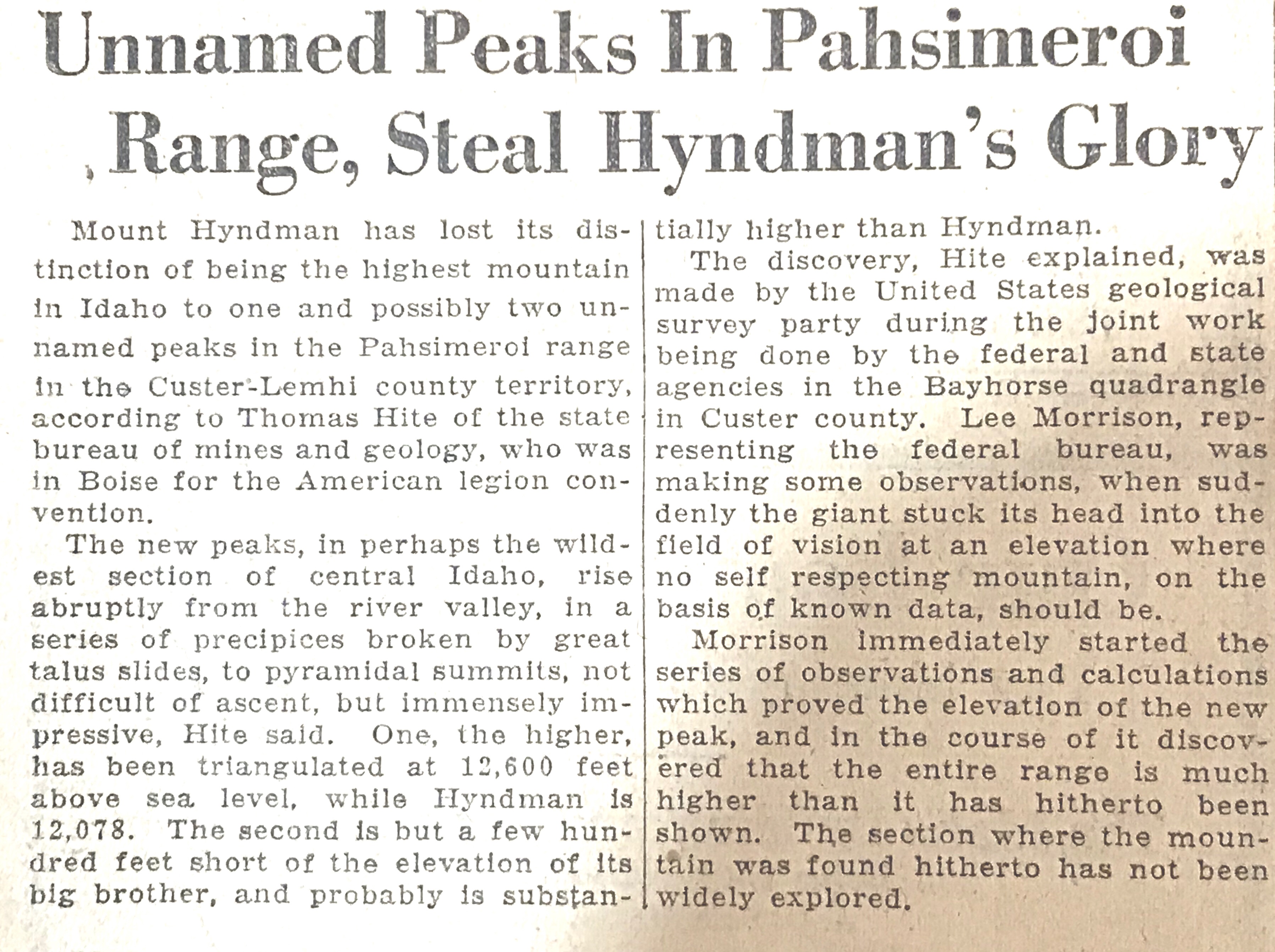
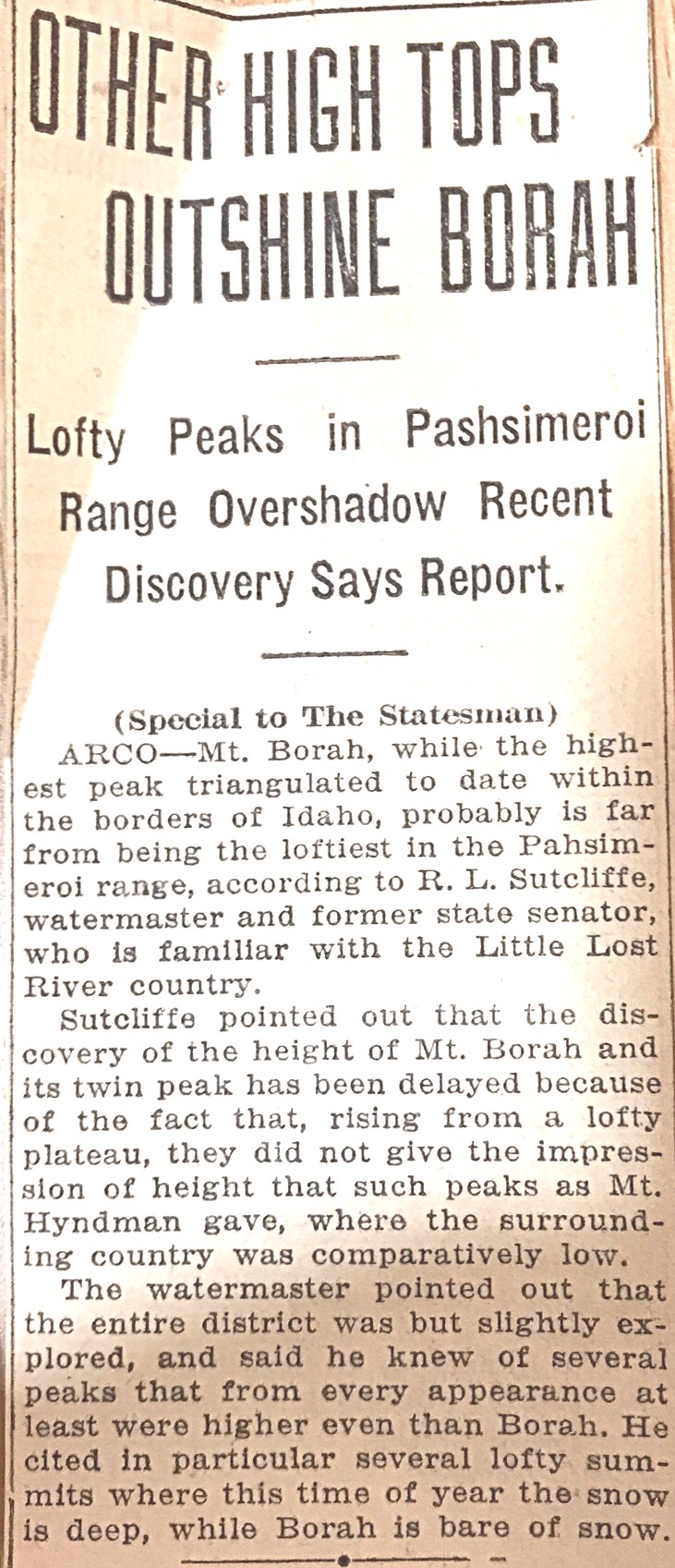
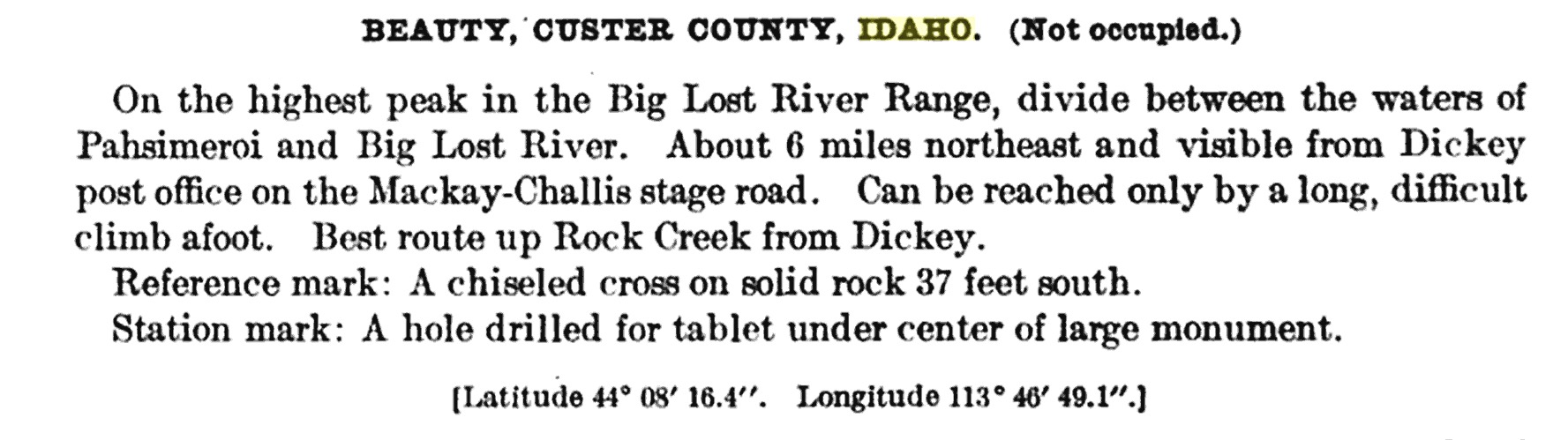
    The following 1929 article from Idaho Statesman declared to the world that Borah Peak, also known as Mount Borah, was Idaho’s highest peak. However, the second article on this page demonstrates that not everyone was willing to accept that Borah was the highest peak. The third Idaho Statesman article on this page disputes the fact that many knew before 1929 that Mount Borah was taller than Hyndman. Interestingly, there is support for this proposition (see below) as T.M. Bannon, a government surveyor, placed the Beauty Benchmark on the summit in 1912, although it does not appear he mapped an elevation at the time. Click on the articles to expand and enjoy.

    Idaho Statesman, November 29, 1929.
    Idaho Statesman December 19, 1929.Except from the Thirty-Third Annual Report of the Director of the United States Geological Survey, 1912.

    This 1912 entry is one of many by T.M. Bannon and covers his work on Mount Borah and briefly describes his first ascent route.
    This 1912 entry is one of many by T.M. Bannon and covers his work on Mount Borah. It briefly describes his first ascent route.


  • 1938 Account of a Mount Borah Ascent

    1938 Account of a Mount Borah Ascent

    The following article was published in the Salt Lake Tribune.  Tribune Intermountain Service. September 25, 1938

    TWIN FALLS, Idaho—Climbing Mount Borah, Idaho’s highest peak, is like walking a tight rope for at least a quarter of a mile with nothing underneath you on either side and only loose rock shale in the middle.

    That is the warning issued by Walter Williams, Twin Falls mountain climbing enthusiast, one of 16 Idahoans to scale the summit last week in the largest excursion ever to reach the 12,655-foot peak. Four parties from Twin Falls, Mackay and Pocatello made the climb, more than three miles long, taking from 6:30AM to 7:30PM for all to make the round trip. 

    Williams, with Area Scout Executive Amby Frederick, were the first of the Twin Falls group to reach the summit, making the ascent in 4 hours and 35 minutes. Both agreed the climb is not quite as interesting as that up Mount Hyndman, long thought to be the top in Idaho elevations, but agreed the badly crumbling rock on Mount Borah is more dangerous. Part of the way one must travel a narrow, razor-like hogback, part of which is so narrow that a false step might mean a fatal slide down a 45-degree slope under tons of avalanching shale. 

    Fast walking to avoid loss of balance on crumbling rock is necessary to pass this stretch, the hikers explain. From the summit, one can see in all directions, the lofty Lost River Mountains extending over the horizon. Mount Hyndman also is visible from the peak along with several other mountains only a few feet lower than Mount Borah itself.

  • Climbing the Slopes of Mount Borah—the Dean of Idaho Peaks

    Climbing the Slopes of Mount Borah—the Dean of Idaho Peaks

    Editor’s note: This article from The Idaho Statesman (February 10, 1935) was written by Lyman Marden, one of the participants in the 1934 USGS mapping of the 15-minute Mount Borah quadrangle. 


    The Idaho Statesman (February 10, 1935).

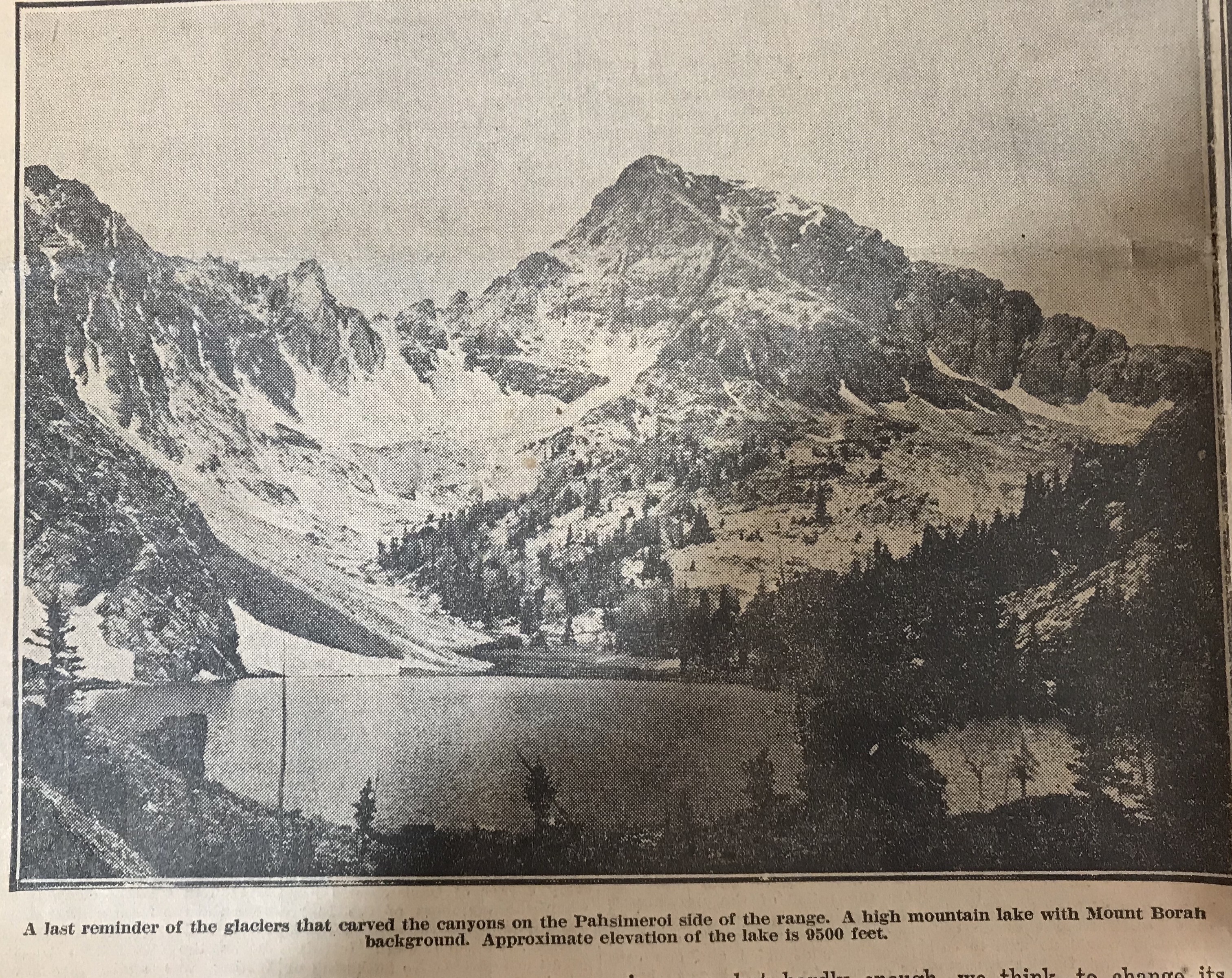
    By Lyman Marden 

    During the season of 1934, the United States Geological Survey began the mapping of the Borah Peak quadrangle that includes about 900 square miles of territory around Mount Borah. In charge of the work as chief of party was Lee Morrison, topographic engineer, who first announced in 1929 that his calculations had identified an unnamed peak in the Pahsimeroi Mountains of the Lost River Range as being much higher than Mount Hyndman. It was officially named for Idaho’s famous senator, William E. Borah, about a year later. 

    This veteran Idaho topographer returns each year to the state to advance the mapping of many sections, and each year a great fund of information becomes accessible to parties interested in the terrain covered. This is a part of the plan to eventually map the entire United States on a practical, useful scale. The map of this quadrangle will be of great use to the Forest Service in the Lemhi National Forest and to ranchers and agencies in the area. 

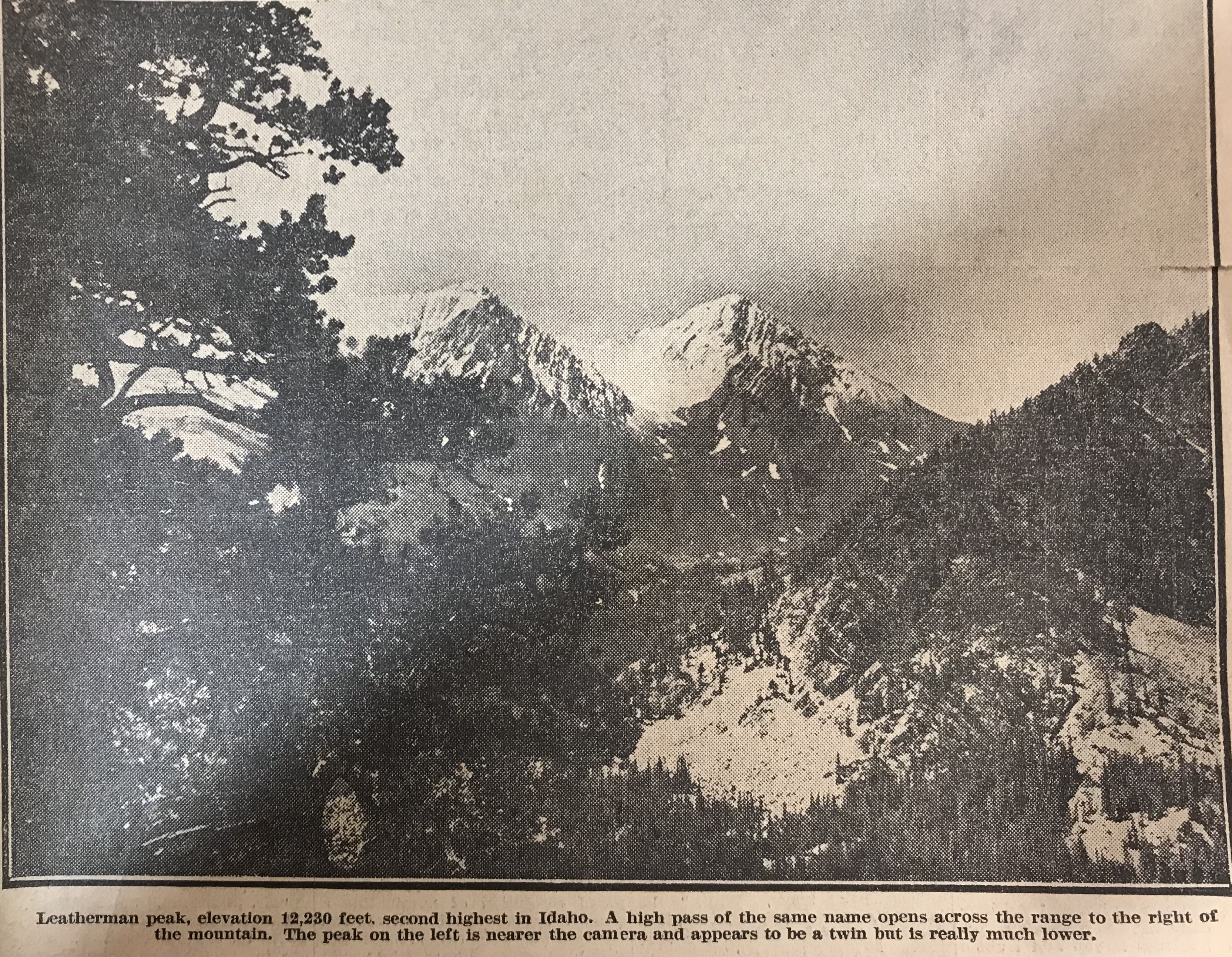
    For general information, it now becomes known that Idaho has several peaks that are higher than Mount Hyndman. From memory these are as follows: Mount Borah (12,655 feet); Leatherman Peak (12,230 feet); Diamond Peak (12,200 feet). Diamond Peak is in the Little Lost River Mountains [Lemhi Range] and, out of curiosity, we calculated its elevation. Since this was done from a distance of 20 miles, it may be slightly in error but hardly enough, we think, to change its allocation among the high points. Then comes Mystery Peak [Mount Idaho] at 12,120 feet and after that, so far as we now know, comes Mount Hyndman at 12,078 feet. Mystery Peak is our name for a mountain peak next to Mount Borah and we so named it because of its elusive-appearing summit.  From no two views does it look the same and at first we thought it must have a double summit, but later learned that its shape gives it a different skyline from the varied views. 

    Among the states’ highest points in the United States, Mount Borah is ninth in elevation, eight states having as high points a peak of greater elevation than Idaho. All these high points are in the west. As a graphic example, there is no elevation east of the Rockies that quite comes up to the altitude of Shafer Peak, just north of Boise, at 7,591 feet. 

    To make up the engineering party that would begin the accumulation of these facts, men were assembled from various points in the state by orders from H. H. Hodges, division engineer in Sacramento, California (his initials distinctive in repetition), arranged quickly a party of absolute strangers whose only common bond was engineering and orders from H. H. H.

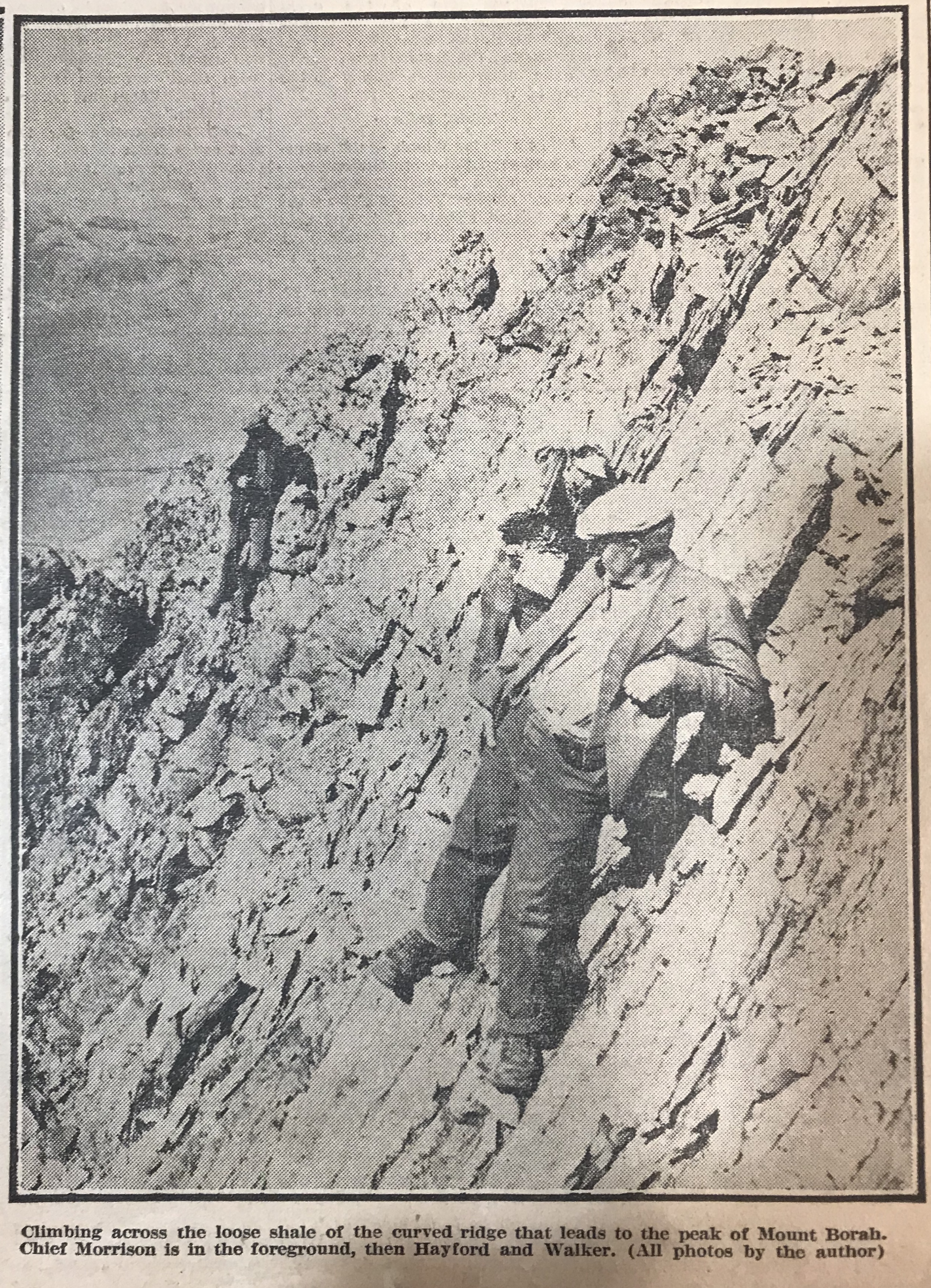
    L.C. Walker of Twin Falls and the author unknowingly rode the same train into Salt Lake to meet the chief and Mrs. Morrison. From there, we took two trucks and supplies back into Idaho and on to Mackay where we met F.F. Hayford of Boise, who had been ordered to meet us there. Additional supplies came from the survey stores in Idaho Falls and a reserve warehouse in Challis. L.V. Carothers from the East Fork of the Salmon met us in the first camp with horses and packs. Accompanying him came Jim Bruce of Challis and the party had come together as smoothly as synchronized cogwheels.  

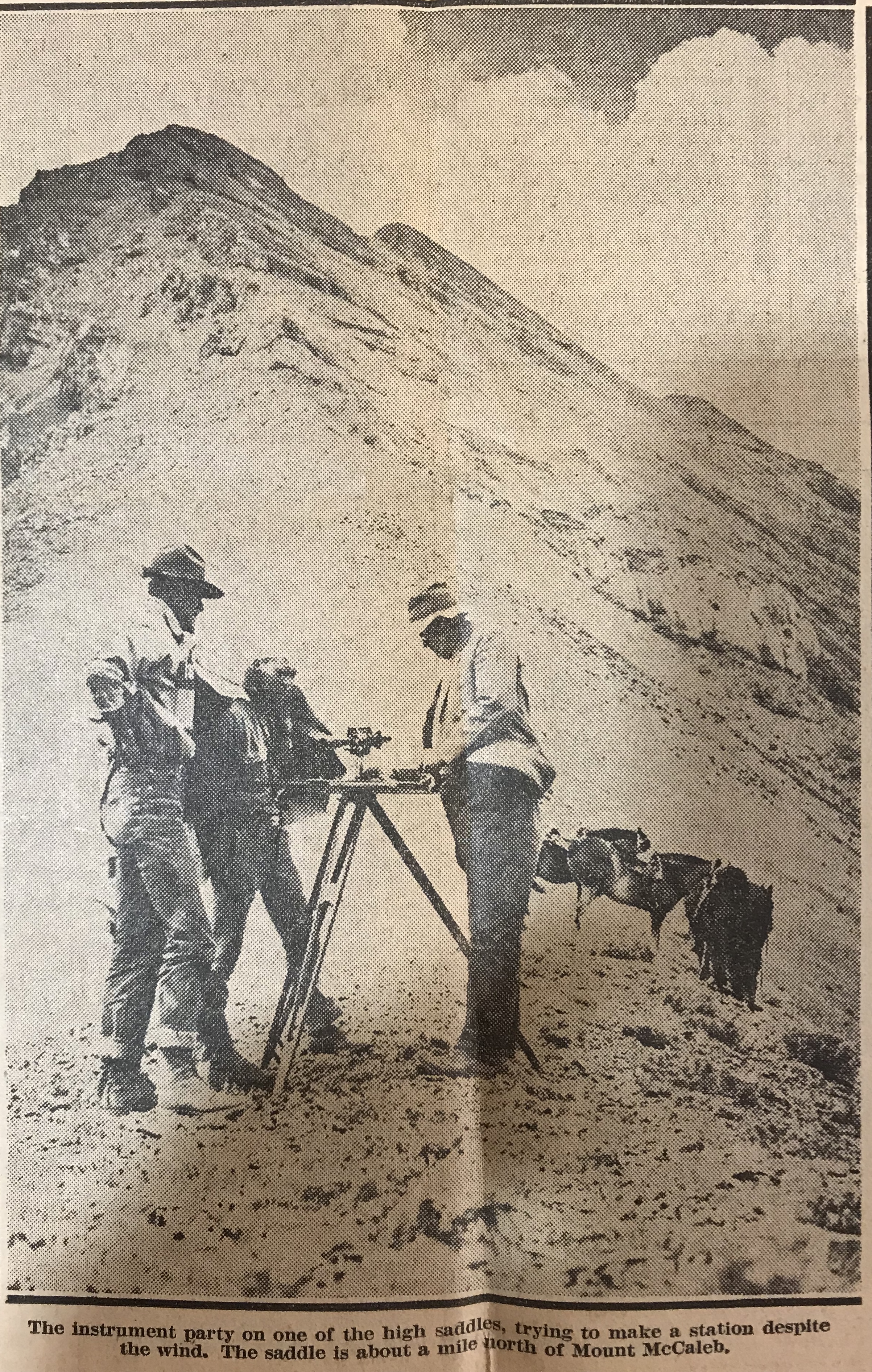
    From this first camp at the foot of Mount Borah, the work began in earnest. We had already begun the mapping and some of the Lost River Range was taking form in contours on the paper. For persons familiar with the country the south edge of the quadrangle runs just behind Mount McCaleb and north of Mackay and crosses the Lost River Valley cornering south of Chilly. From memory again, Mount McCaleb is 11,595 feet high. From this baseline, the map is a square (30 miles on a side) running northward and taking in most of the Pahsimeroi Valley and part of the Little Lost drainage. [Note: these surveyors were working on a 15-minute quadrangle.]

    The interest of the entire party in the climbing of Mount Borah became evident as soon as camp was settled. The pros and cons of possible routes of ascent were argued on many occasions, but we were delayed many times in our plans due to inclement weather. The season was peculiar and good weather was imperative so that we might take the instruments, set the benchmark on top and take pictures. 

    In the meantime, the work gathered momentum through practice and we were soon up to top speed. Moves of the camp and numerous side camps brought all the many the distinct features to light while the map grew like a living thing. Thus, we studied the ascending mountains as they gradually gain altitude to culminate in the state’s highest  point. After reaching Mount Borah they drop off about 1,500 feet and descend toward the Salmon River.  

    In the glacial canyons on the Pahsimeroi side, we read the reason why a limestone peak tops Idaho’s basic granite. A very ancient lake bottom of water deposit limestone has been blown upward by a mighty volcanic upheaval that left markings of its power on the faces of sheer mountain walls. Glaciers and violent storms gouged and tore at the mountains until now we may see a range marked differently on all sides and interesting things appear in secluded parts. Several high mountain lakes occupy glacial basins under the sides of Mount Borah and their outlets plunge down hundreds of feet of swift cataracts to the Pahsimeroi River. Much rough and picturesque country may be found under Leatherman Peak and that mountain itself should be a very interesting climb for those so inclined.  

    Of course only a few miles away, Mount Borah rises more than 400 feet higher and takes primary interest. For those who might like to stand some day on the top of Idaho, the peak stands in full view about four miles east of the Al West Ranch at Dickey. It would be a good idea to get directions there before attempting the ascent. Dickey is situated about halfway between Challis and Mackay on the highway and from there one may drive to the foot of the peak.

    Our camp was placed at the Birch Springs at the mouth of an open draw on September 12 and we began the climb the next day. Contrary to the reputation of the number, the 13th was a perfect day. It would have been quite impossible to have picked a better. 

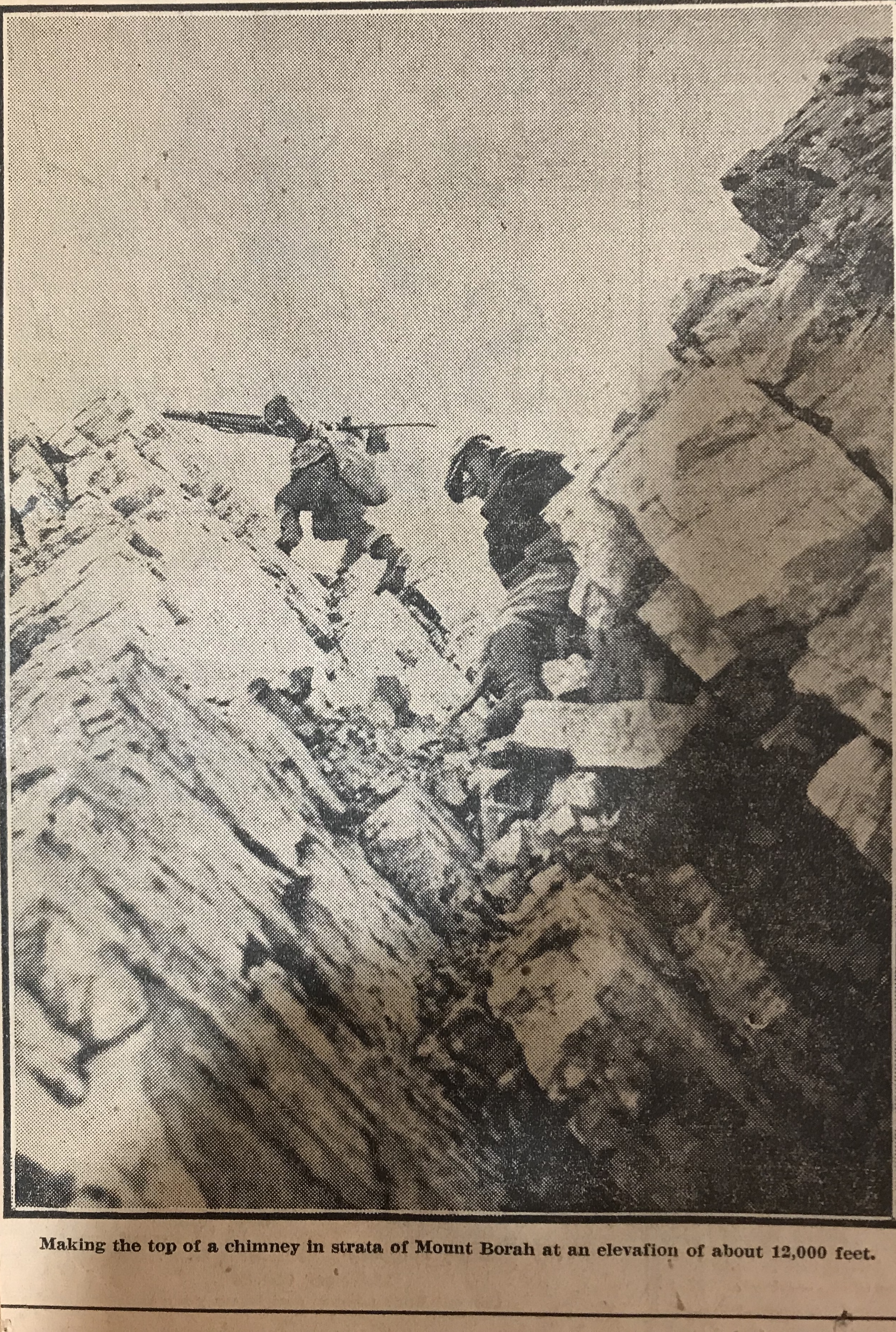
    Straight back of camp the four of us making the climb took our course up the draw to ascend the headwall. On its top, we made our first instrument set-up and checked our elevation at 9,000 feet. From there we approached the edge of a great basin gouged back into the mass of the peak and, after observing it carefully, swung eastward around its edge. Over pinnacles in this edge, as we came close under 12,000 feet, we had our first real climbing. Below, the talus slopes had been fairly uniform though sometimes hard walking presented no other difficulties. Now, however, we were on a ridge that projected shale down steep sides as fast as it loosened weathered limestone is sharp as to edge and treacherous footholds for it loosens easily. 

    It is not our intention to brand the climb as very dangerous or difficult. No special equipment is necessary but ordinary precautions must be taken. The average man should make the top in about six hours or less. Two famous mountain climbers made it in four hours under adverse conditions. Their names are Miriam Underhill and Robert Underhill of Boston, Massachusetts and they are registered at the top.

    Past the knife edge of the ridge, the footing seemed easier and we climbed in a slight curve to come upon the top from a little in back. Close under the rock cairn that marks the exact high point, the footing was again insecure and many large rocks that we trusted with our weight suddenly fell away and bounded into space to shatter far below. We gained the top with no mishap, however, and with excellent weather were able to enjoy the view that is unequalled in the state. Idaho’s mountains stretch out in range on range until the earth meets the sky, while under the peak, the valleys appear small and insignificant. All the territory we had worked was but a drop in the bucket compared to the miles to be seen.

    But our time on top was short. We hurriedly set the benchmarks tablet, that may be found from now on at the base of the rock cairn. While the camera registered every angle of the view. Just an hour and 45 minutes we spent at this spot that we had looked forward to gaining all season and then took up our packs for the descent. We were finishing a record season. When ready for distribution, the Borah Peak quadrangle gives Idaho an other important survey of interesting country.