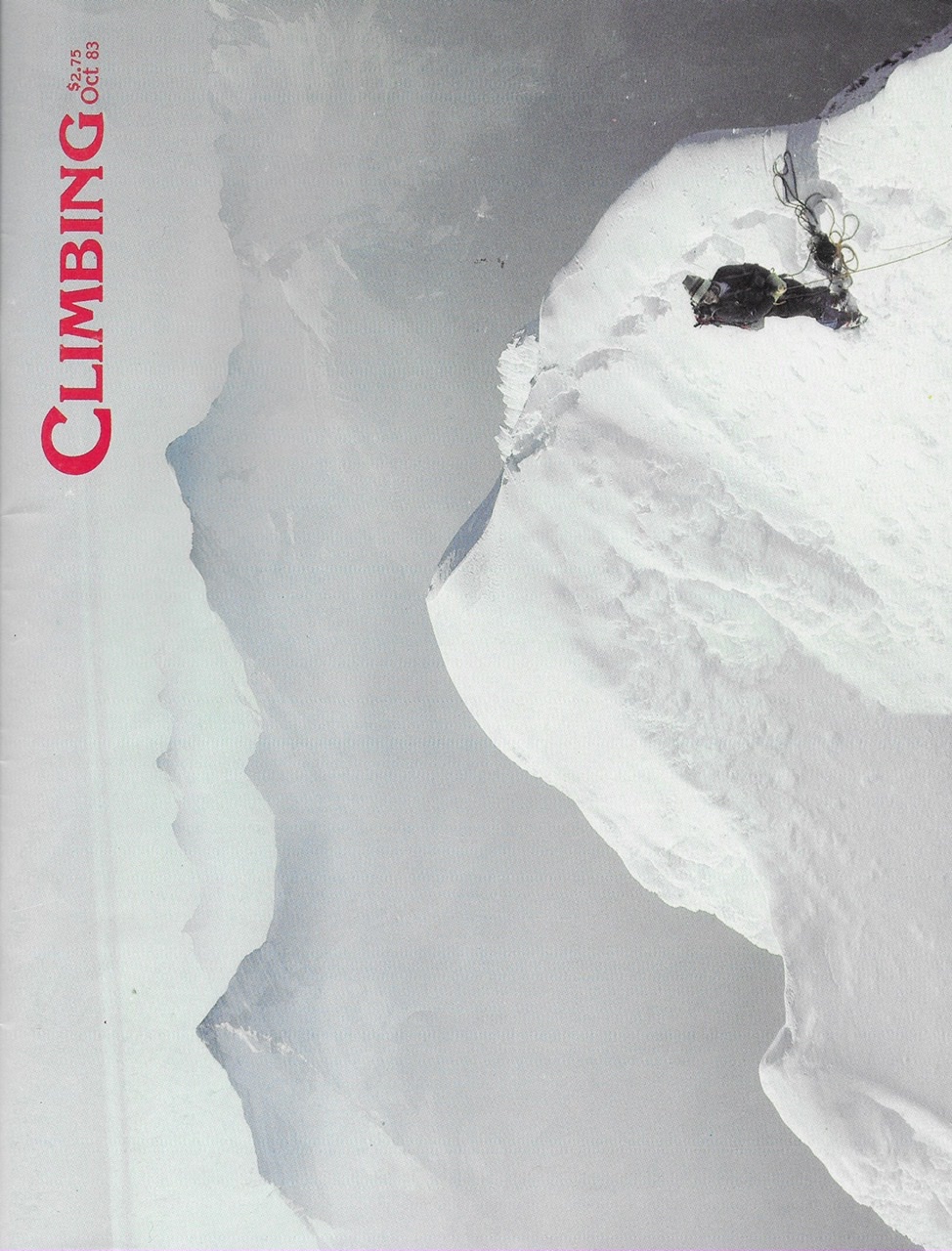
The City of Rocks
—Politics, Climbing History and Need (Climbing, No. 80, October 1983)


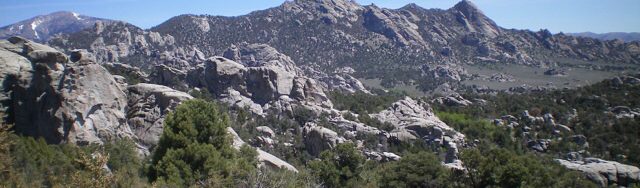
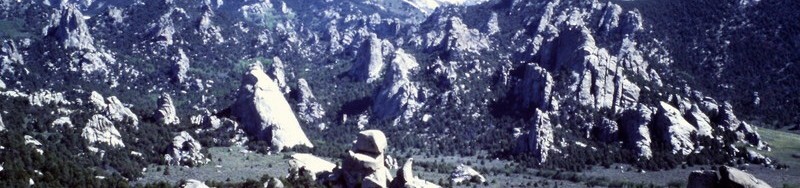
The City of Rock, a land of spectacular granite formations at the southern end of the Albion Range, was a stop in the 1840s along the historic California Trail. This trail forked off the Oregon Trail. Memoirs written by California Trail travelers momentarily brought some national notoriety to what was then known as the “Silent City of Rock.” After the railroads spanned the continent pioneers no longer traveled crosscountry by Conestoga. The City was forgotten by most and became the home of ranchers and a few settlers. The City’s status would remain silent for many years.
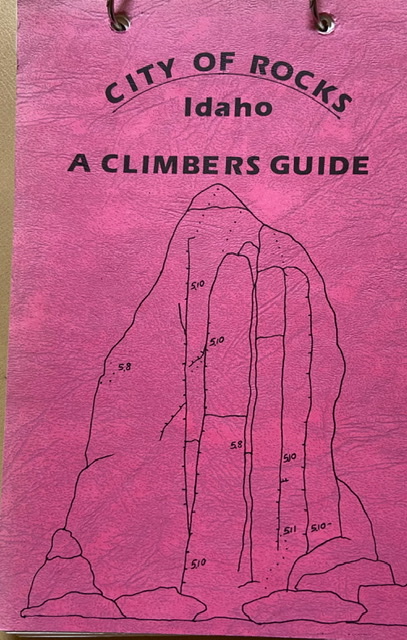
Dave Bingham first visited the City of Rocks in 1978. At that time the City was the quintessential “off-the-radar” climbing destination. Over the next few years the City’s popularity took off and politics and conflicting uses exploded into controversy. (See Politics, Climbing History and Need, Climbing, No. 80, October 1983) In 1985 Dave published the first guidebook documenting the few known climbing routes. Historically, Dave is credited with publishing Idaho’s first climbing guidebook. From a climbing perspective the guidebook was one of the catalyst for ensuring that rock climbing and rock climbers would have a seat at the table as land managers discussed the City’s future.
As the City evolved from a nearly forgotten in time stop along the California Trail into a busy climbing and recreational destination manages as a National Preserve so has Dave’s guidebook. Now in its 8th edition, the book has evolved over the past 35 years it is a comprehensive guide covering over a thousand climbing routes as well as the area’s history and climbing lore, camping and nearby amenities and bouldering, hiking and mountain biking opportunities.


On August 6, 2019, Terri became the first woman and only the 8th person to climb all of the Idaho County High Points. Terri also became the first woman to complete the Lower 48 State High Points twice. Terri is now working on Idaho’s mountain range high point list as well.
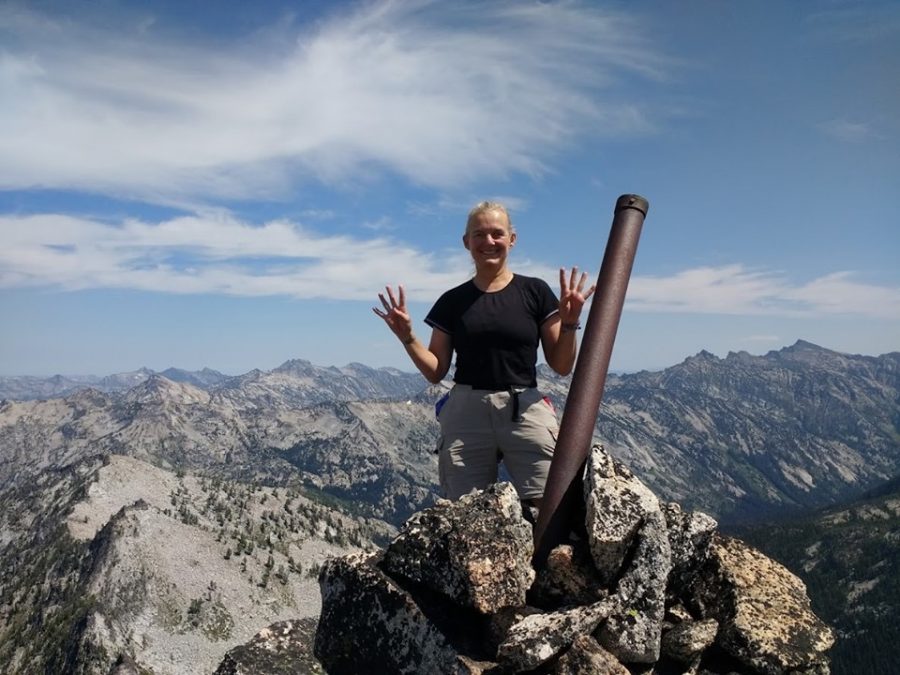
Terri reported her accomplishment in a Facebook post: “Wow! I did it! I’m the first woman to summit the highest point in each of Idaho’s 44 counties! My final peak was Idaho County’s Bare Peak NW in the Bitterroot Range, which Paul Jurczak and I reached on Tuesday. To make summit day a little less grueling, we backpacked into Nelson Lake the day before and out from the lake the day after. Even so, our summit day was 11 hours of hard work to go 6 miles round-trip from our campsite at the lake. The injury risk was very high on this remote peak and I am forever grateful to Paul for his company and his encouragement to get me across a few sections requiring rock climbing moves.”
Her highpointing journey began in 2010 when she read about “highpointing” in the summit register on Wolf Fang Peak, leading her to discover The Highpointers Club. From 2011 to 2014, she and her daughter Fallon completed 49 of the 50 state highpoints becoming the first mother-daughter team to do so.
Link for the Idaho County High Points list; Idaho County High Points
Link for the Highest Peak in each Idaho Mountain Range and Subrange: Range High Points
The other finishers are Ken Jones, Bob Packard, Dan Robbins, Dennis Poulin, Adam Helman, Chris Anderson and Tony Wofford.
Idaho’s county high points are not only scattered all over Idaho but also encompass many access and climbing problems. Ken Jones and Bob Packard mutually agreed to complete the list on September 2, 2001. Below Ken Jones recounts the event.
In the summer of 2001 as I looked forward to completing the Idaho county high points I realized that there was a chance I could be the first completer. But it also appeared that my good friend Bob Packard, from Flagstaff AZ, could beat me to the punch. Maybe he wasn’t aware of the race, and I could beat him to it! Maybe he was planning to leave me in the dust (he was retired, I was not). What to do?
So I sat down with our respective lists and proposed to Bob that we schedule a joint completion on Illinois Peak in Shoshone county – we both needed it still, and it looked like a good place to finish. We picked a date in early September, and I scheduled my wife and sons to join us.
Now, all I had to do was complete the remaining peaks before Illinois Peak while Bob completed his somewhat different set to get to the finish line. I did several solo trips, my 9-year-old son’s first backpack (Snowyside Peak, he fell in the water on a stream crossing but all turned out well), and a big multi-peak trip with another Arizona friend, Andy Martin. After a backpack with Idaho hiking buddy Roger Williams to Big Baldy on the last weekend in August I was ready. The family and I hiked Rhodes Peak on Sunday, September 2 and met Bob near the trailhead for Illinois Peak on Labor Day morning.
The hike went well, and we positioned ourselves on opposite sides of the summit to touch simultaneously for a joint completion (although I was on the Pacific time zone side while Bob was on the Mountain time zone side, so you could argue that I finished an hour before him – if you don’t understand time zones!).

Thomas M. Bannon was also a self-taught mountaineer. Although his name is not widely known in mountaineering circles, during his surveying career from 1889 to 1917 he climbed nearly one thousand summits in the American West. More than two hundred of these summits were in Idaho. Bannon’s cryptic reports, supplemented by the rock Cairns, Wooden triangulation signals, chiseled cross-reference marks; and brass benchmarks that he left behind tell his fascinating story. More than one hundred of his Idaho ascents were probably first ascents. These climbs included many of Idaho’s highest and most famous peaks, including Mount Borah (which he called Beauty), Leatherman Peak, and Invisible Mountain in the Lost River Range; Diamond Peak (which he called Thumb), Bell Mountain (Bannon’s Finger), Lem Peak, and May Mountain (Bannon’s Hi Peak) in the Lemhi Range; Standhope Peak and Smiley Mountain in the Pioneers; Castle Peak in the White Clouds); and Mount McGuire in the Salmon River Mountains. Bannon’s death at 48 cut short an extremely active life.
I spent a good part of the 1990’s investigating pioneer government surveyors in the Idaho and western US mountains. This involved recovering some 100 mountain top triangulation stations placed by Bannon & party in Idaho from 1911-1915. In his career as USGS Topographical Engineer 1894-1917 T.M. Bannon had a hand in making ~50 topographic maps.
Having grown up myself in Maryland, a highpoint was a July 1995 pilgrimage to the Bannon burial plot at St Lawrence Martyr R.C. Church in Jessup. Bannon family monument (like T.M.’s triangulation monuments) occupies a prominent position in the church graveyard.

THOMAS M. BANNON DIES AFTER A BRIEF ILLNESS
Was Engineer of Topographic Branch Geological Survey- Funeral Thursday at Jessups, Md.
Thomas M. Bannon, engineer of the Topographic Branch of the geological survey and a prominent resident of Anne Arundel county, Md, died Sunday evening at Maryland University Hospital in Baltimore. Mr Bannon had been ill only a short time. [Author’s Note: USGS said field worker deaths at that time often attributed to typhoid fever].
Mr. Bannon had been connected with the geological survey since 1888, the greater portion of his service having been given to topographic and geodetic surveys in different western states.
Prior to the organization of the United States reclamation service, Mr Bannon was detailed to collect the data which that organization used in connection with the development of its projects in Idaho and Utah [Author’s Note: chiefly Bear River drainage].
In 1908 he was detailed to the Porto Rican government and placed in charge of surveys in developing irrigation of the semi-arid portion of the island.
During the last few years Mr Bannon’s efforts had been directed to the extension of geodetic work in western Montana and eastern Idaho and in mapping portions of the national forests in Idaho.
In addition to his official duties with the government Mr Bannon served seven years as a member of the board of governors of the Maryland board of correction and was active in many local and charitable organizations of Anne Arundel county.
Mr Bannon was unmarried, is survived by two sisters, Mary and Francis Key Bannon, and three brothers, James T., Phillip M., and Joseph Bannon.
Final notes: It is believed Bannon thru his mother Evaline was related to Francis Scott Key. Bannon’s federal appointment as an 18 year old was thru Rep. Barnes Compton, also an F.S. Key relative. Survey director John Wesley Powell was chided for hiring “Congressmen’s nephews”. Bannon estate in Jessup was demolished in 1950 to make way for Baltimore Washington Expressway.
See also: Appendicitis Hill and T.M. Bannon and 1929 Borah Declared Idaho’s Highest Peak

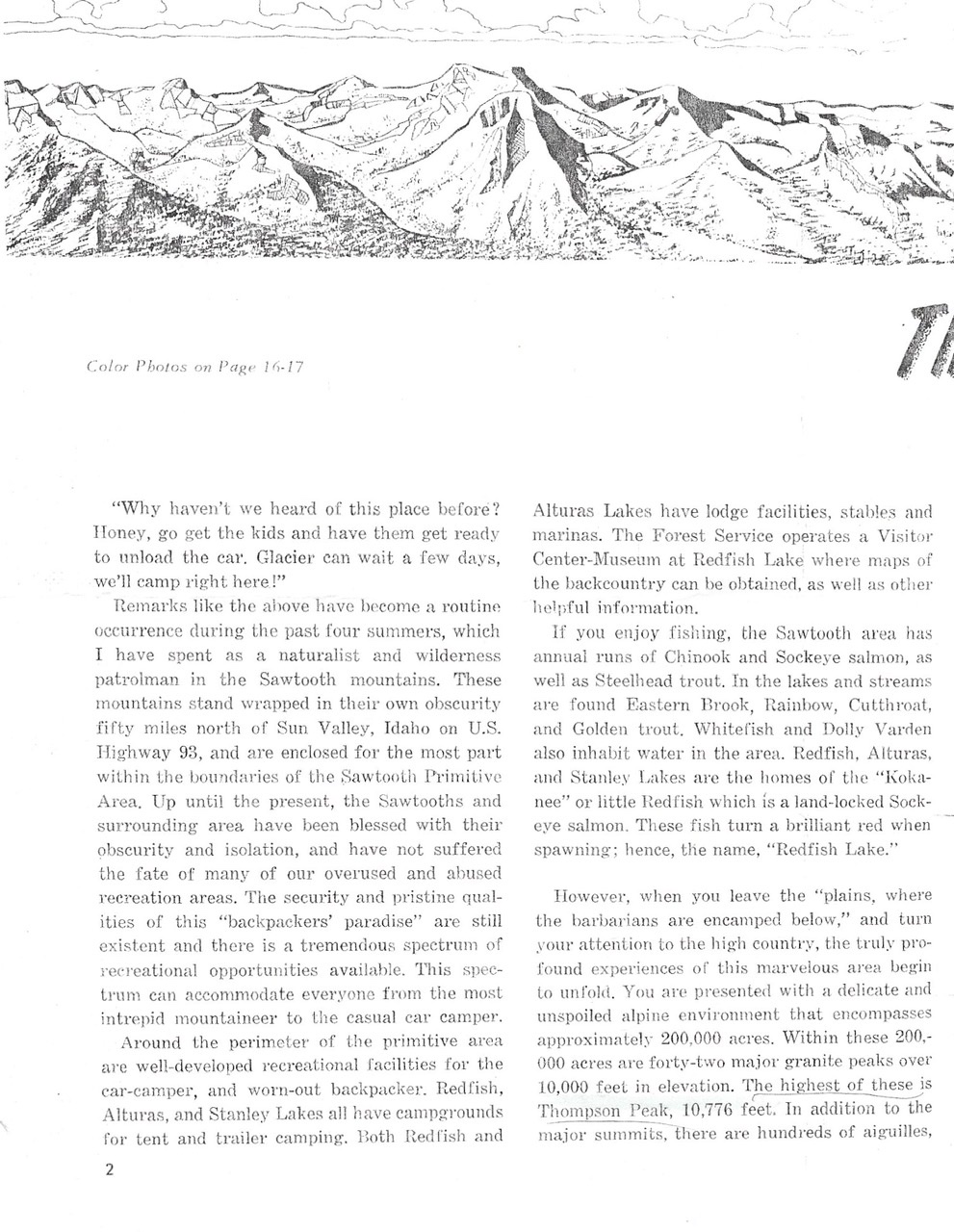
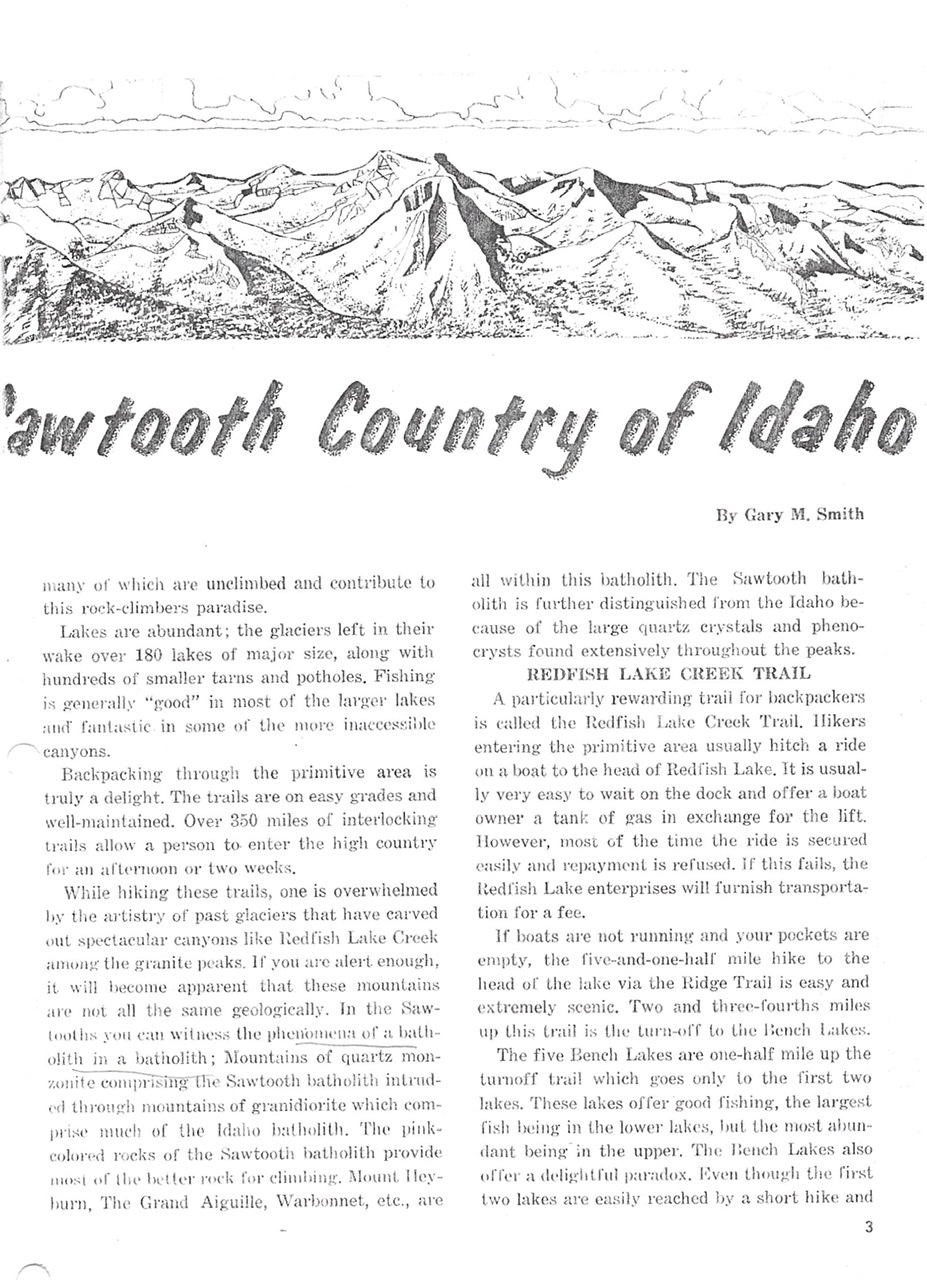
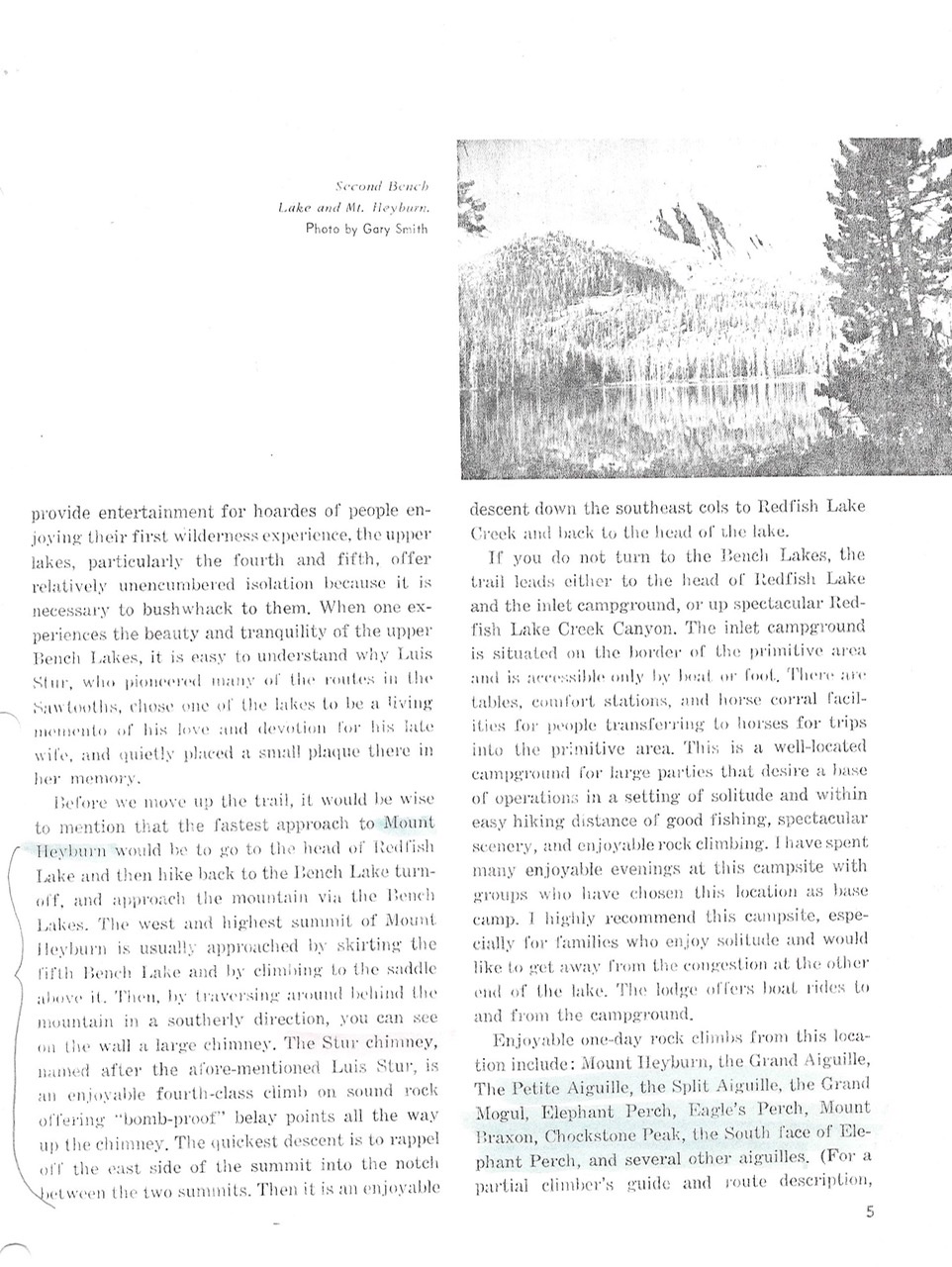
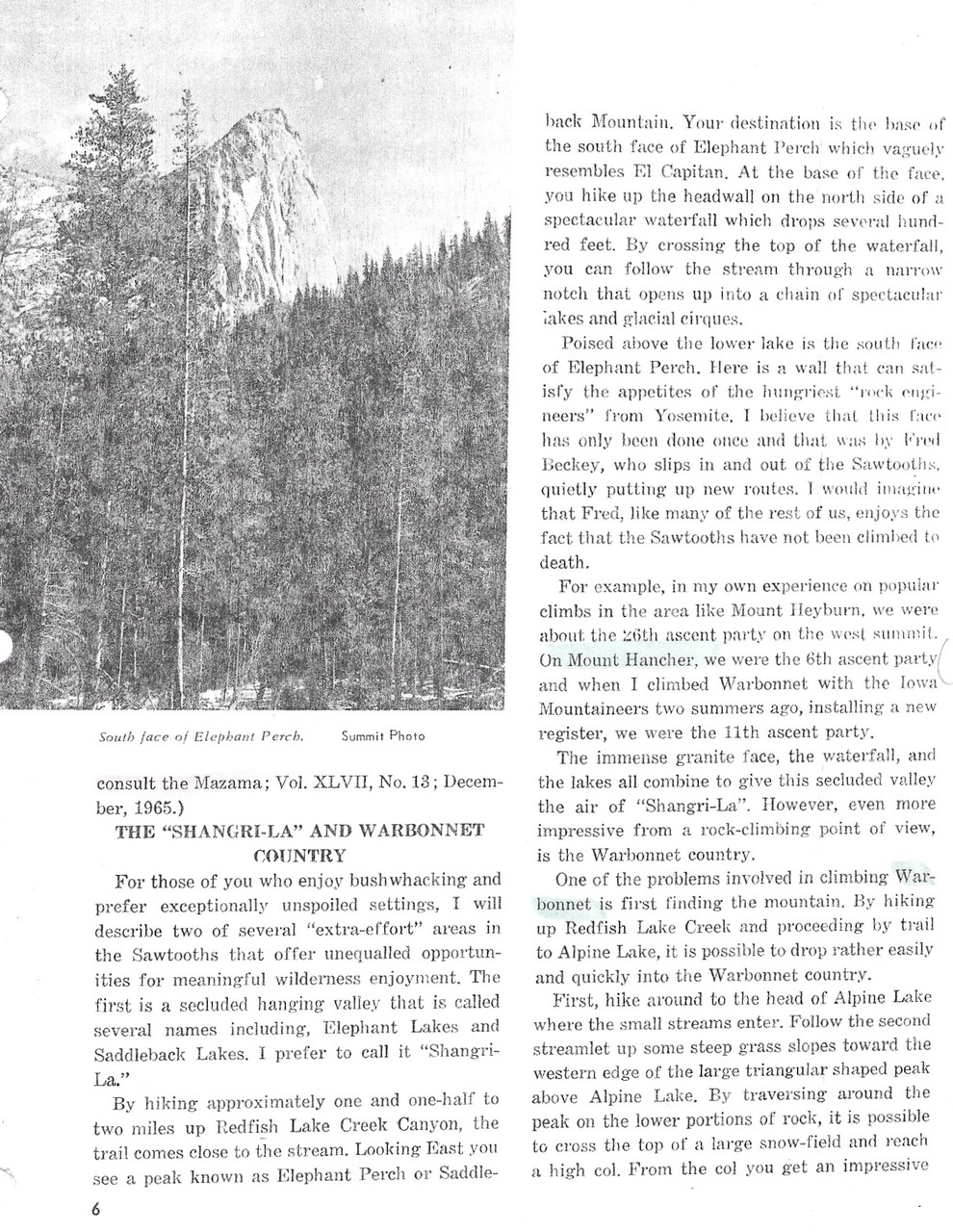
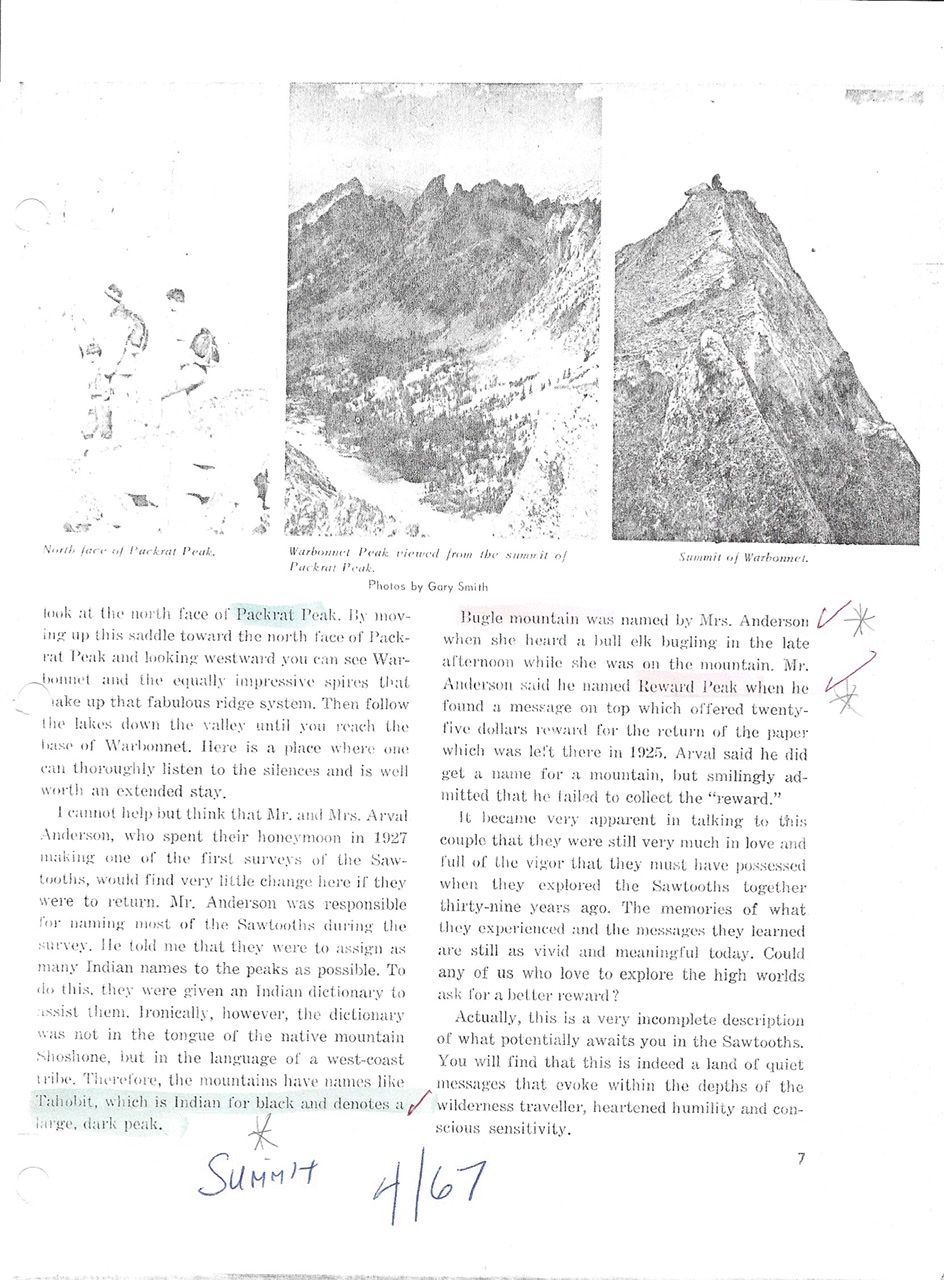
This article was published in the April 1967 edition of the long defunct Summit Magazine. Perhaps the most interesting information in the article is the author’s recounting of his interview of early Sawtooth surveyor, Arval Anderson. Summit Magazine published by was founded in November, 1955 by Jene Crenshaw and Helen Kilness. They published the monthly magazine from mid-1955 until 1989 when they retired. The magazine covered mountains and climbing throughout the world and was an important and influential information source for climbers during this period.