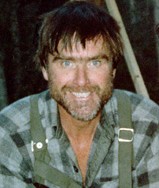
Harrison “H” Hilbert was the first director of the Idaho State University Outdoor Program. He was an active Idaho climber for many years and was part of the first Winter ascent of Castle Peak discussed on Pages 22-23 of the book. He was responsible for bringing British mountaineer and ice climber Bill March to Idaho.
Category: Biographies
-

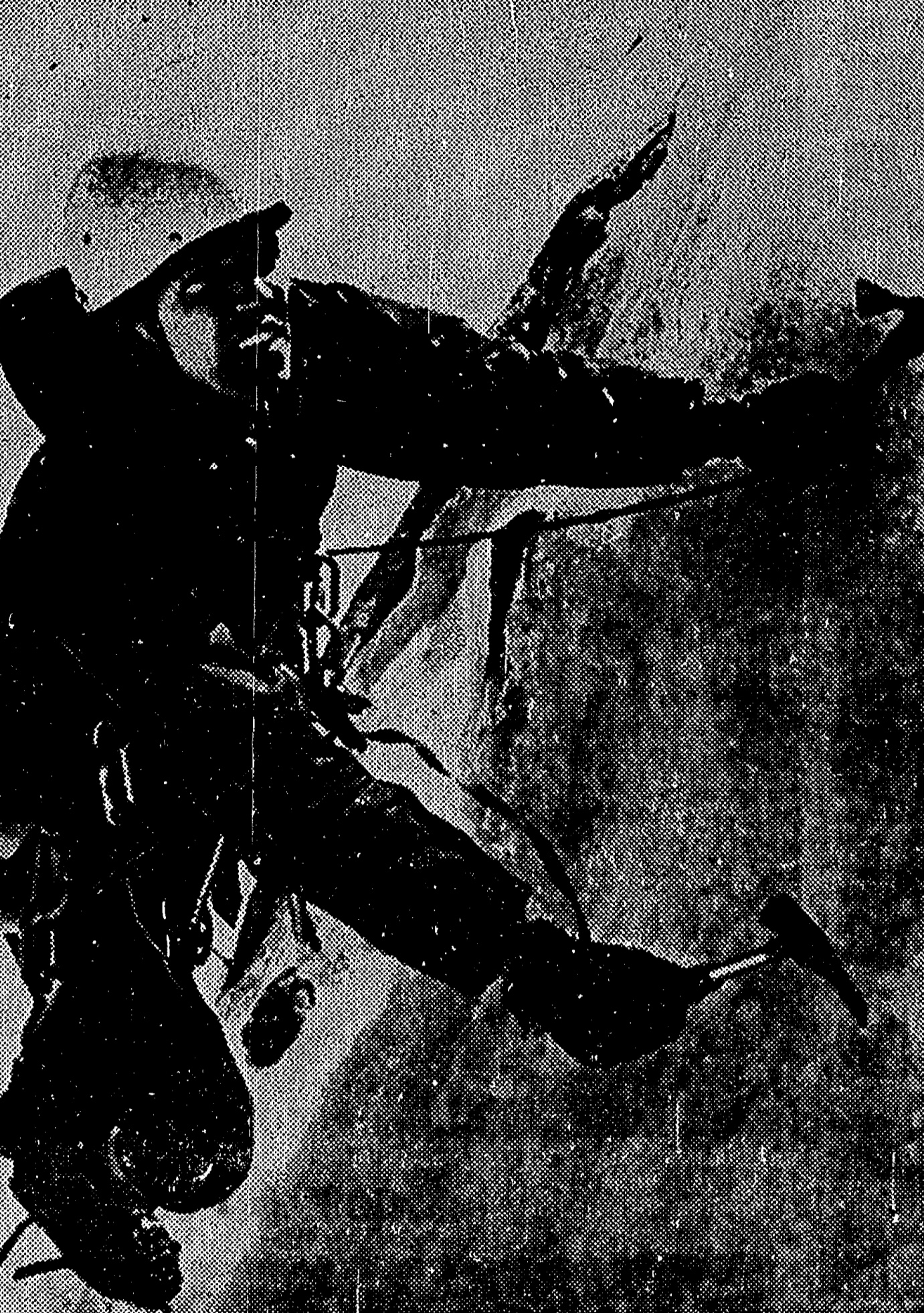
Bill March
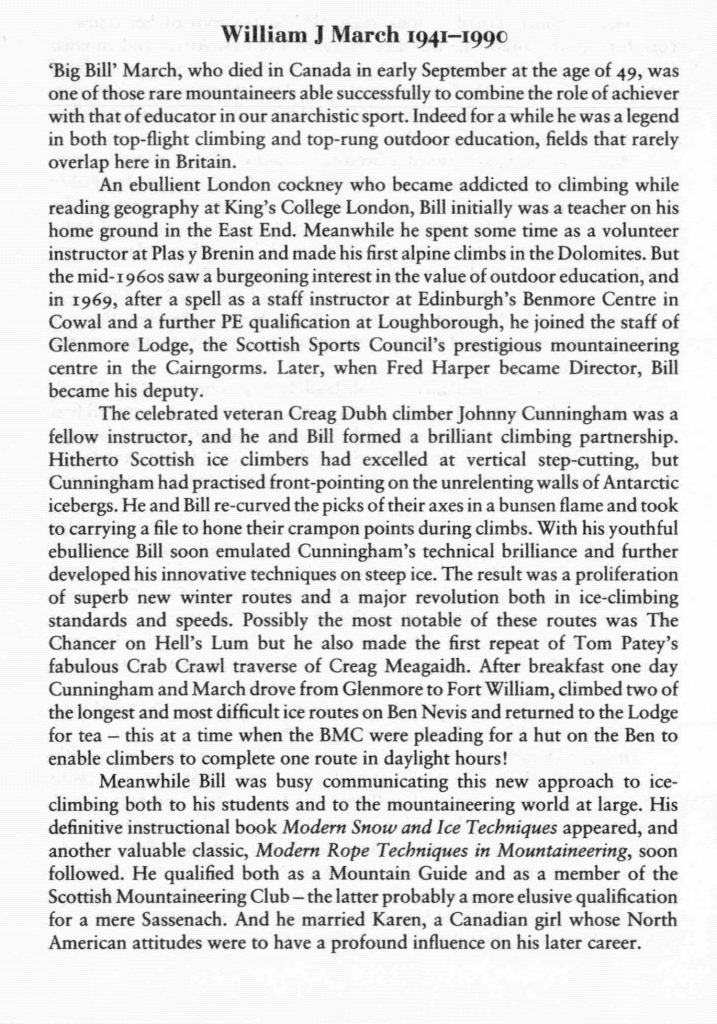
Bill March was a British mountaineer and ice climber who, along with Rick Albano, is credited with the first Winter ascents of Leatherman Peak and White Cap Peak in 1975. He came to Idaho at the request of his friend Harrison “H” Hilbert and was associated with the Idaho State University Outdoor Program in the 1970s. The American Alpine Club has a brief biography which is worth a read. Click on the following link: Bill March
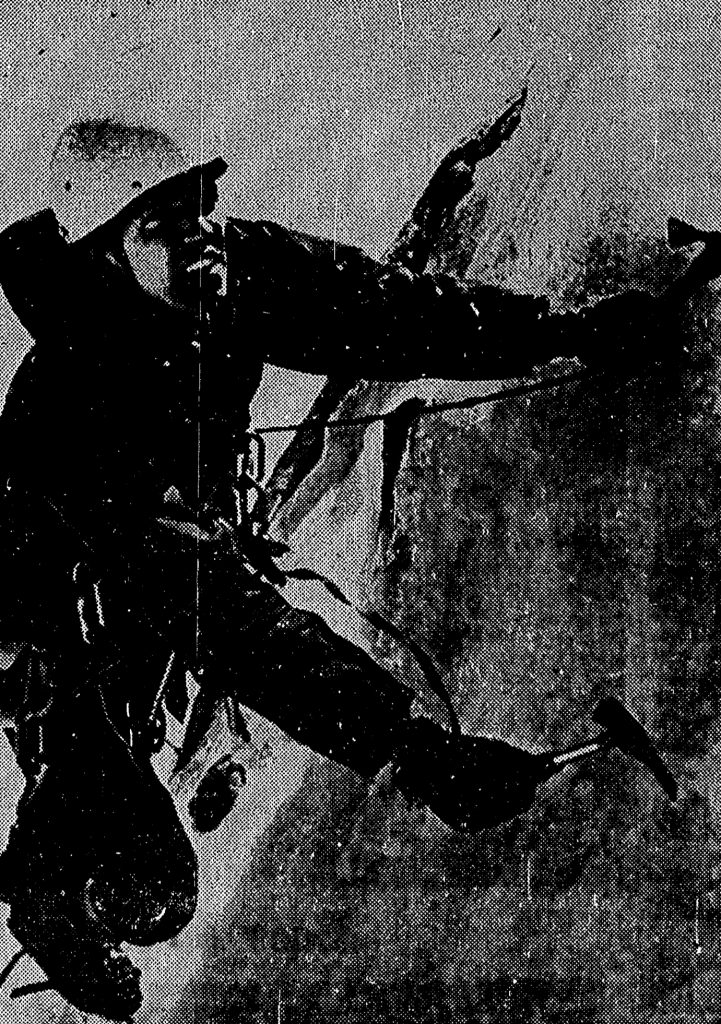
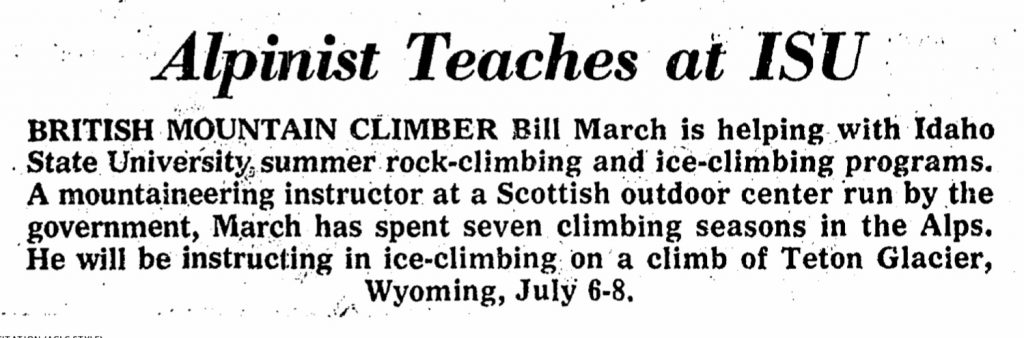 —Idaho Statesman June 30, 1973
The following Memoriam is from the British Alpine Club:
-

Lou Florence
Lou Florence served in Africa and Italy in WWII. He moved to Boise with his family in 1972. He and his son Frank started Sawtooth Mountaineering, Boise’s first dedicated climbing and Nordic ski shop. An avid hiker and scrambler himself, Lou used Sawtooth Mountaineering as a venue through which to promote outdoor recreation. Throughout the 1970s, the shop offered introductory rock climbing and mountaineering instruction and helped to broaden the base of active climbers in Southwest Idaho at that time.
This coincided with the early development of climbing routes in the basalt columns along the Boise River (The Black Cliffs). He also brought guest speakers/instructors to the shop including Henry Barber, Louie Stur, Royal Robbins, Bill March and British mountaineer Doug Scott. Lou was also active in the development of some of the first Nordic ski trails in the Boise National Forest and he was an early advocate of the Boise River Greenbelt.
Bob Boyles told me: “I can’t overstate how influential their shop was to the Boise climbing scene. 1972 was a golden era in climbing. Heck, one could go put up a new route at the Black Cliffs, Table Rock, the Sawtooths, Lost Rivers, Pioneers and on and on. Lou and his shop served as the focal point for Boise climbers.”

Bob Boyles, Lou and Frank Florence on the summit of the Grand Teton. Mike Weber Photo -
Chuck Ferguson by Rick Baugher
The late Chuck Ferguson (1940-1998) is not as well known as one would expect, considering his accomplishments as an Idaho climber with a peak (at least unofficially) named after him. I met Chuck in the early 1980s during my working at the Idaho Falls YMCA. I was organizing community fun runs in Idaho Falls and Chuck ran in all of them. As a public school math teacher, Ferguson was a stickler for accuracy and I was told more than once that my 10K courses were not measured accurately. I did not realize he was a climber until 1993.
I discovered that he was more than a runner when I climbed Peak 11509, now named after Chuck. Perhaps a good starting point for my discovery was August 15, 1993 when I finally climbed the peak. The 11,509-foot, cliff-rimmed mountain that divides Dry Creek and Long Lost Creek on the back side of the Lost River Range is a daunting challenge. The day before (from Far and Away Peak) I had spotted a gully on the Southwest Side of the peak that looked climbable. It was and when I reached the top, it looked untouched. But then I found a little meat snack tin tucked into the rocks. Inside the tin was the name Chuck Ferguson along with the date June 29, 1978.
Anyway, after my adventure I felt compelled to call Chuck and compare notes. Turns out he climbed the dicey East Side line from Swauger Lakes to reach the summit. His route involved crossing a catwalk snow bridge on the peak’s narrow South Ridge. Apparently we had something in common, as we climbed together over the next several years on a dozen peaks or more peaks.
During his life, he climbed Borah Peak 25 times and climbed hundreds of other Idaho peaks and undoubtedly recorded several first ascents including a difficult route on Brocky Peak in the Pioneer Mountains. Looking over Chuck’s peak list, I see Warbonnet was the second peak he did after Borah. Talk about diving in head first. In addition to Brocky, his other first ascents are Pegasus (July 29, 1994) and Straight Shot (October 21, 1995). He shared his climbs with relatives, colleagues, students, and friends and left an enduring legacy in Idaho’s climbing history. Climbing was something that he was good at, but Chuck’s passion was running.
He completed 100 of the 26.2-mile marathons and several ultra-marathons, almost winning the Lake Tahoe 72-miler. He began climbing mountains in 1976 as a training tool. All together, Chuck climbed over 200 peaks, including 54 Colorado Fourteeners. Warbonnet was the second peak he did after Borah on July 16, 1977. In fact, he and David were first known Idahoans to complete the 54 Colorado Fourteeners on August 21, 1998.
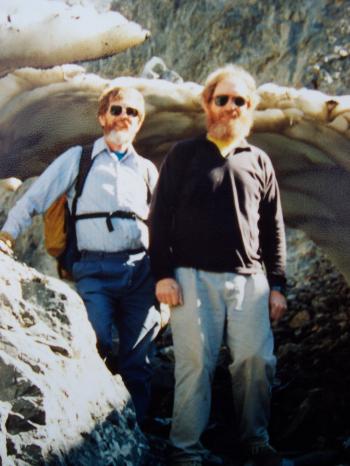
Chuck Ferguson (left) and David Ferguson (right) in Jones Creek after climbing No Regret Peak (July 1994). Rick Baugher Photo -
Dr. Evilio Echevarria
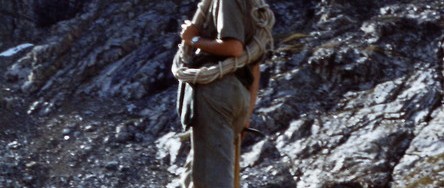
Evilio Echeverria was on a personal quest to explore the world when he arrived in Sun Valley from Chile in 1953. He took a job as a waiter at the lodge where he met Louis Stur. Stur quickly invited him into his climbing circle and the two shared many adventures over the next 3 years. The following photos were provided by Dr. Echevarria. The photos document a period during which written Idaho mountaineering history is hard to find. Dr. Echevarria contributed to the second edition of the book.

The North Ridge in front and the Northeast Face of Hyndman Peak. Evilio Echevarria Photo 
Hyndman Peak as viewed from the NNW. Evilio Echevarria Photo 
Approaching the North Face of Hyndman Peak from Wildhorse Canyon. Evilio Echevarria Photo 
The North Face of Goat Mountain. Francis Willmarth of Berkeley, California. Evilio Echevarria Photo 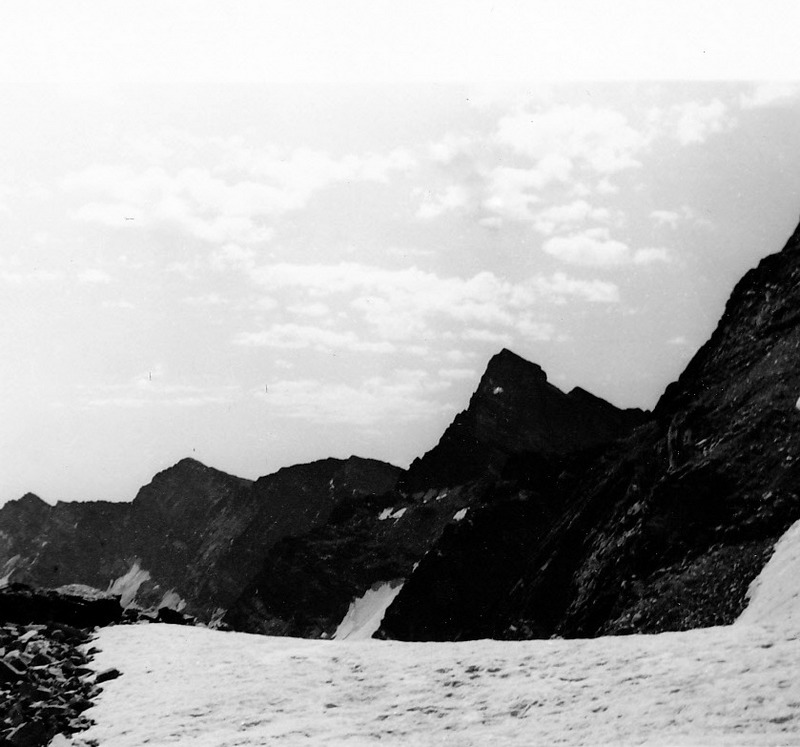
Old Hyndman Peak as viewed from the north. Evilio Echevarria Photo 
Old Hyndman Peak as viewed from Upper Wildhorse Creek. Evilio Echevarria Photo 
The WNW Side of Hyndman Peak. Evilio Echevarria Photo 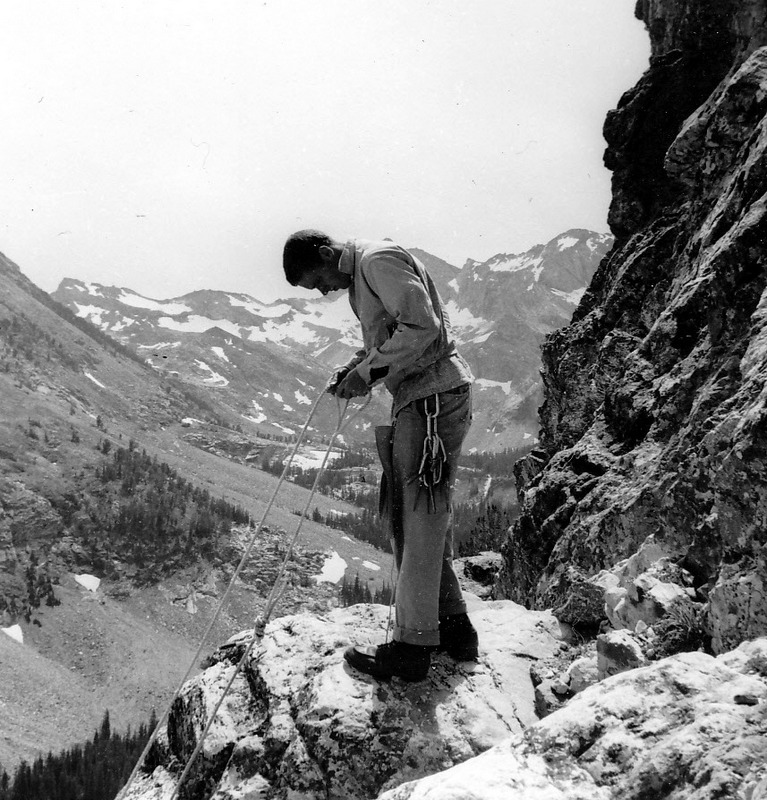
Francis Willmarth roping up on the North Face of Goat Mountain. Evilio Echevarria Photo 
Hyndman Peak and surrounding environs as viewed from the west. Evilio Echevarria Photo 
Old Hyndman Peak as viewed from the north. Evilio Echevarria Photo 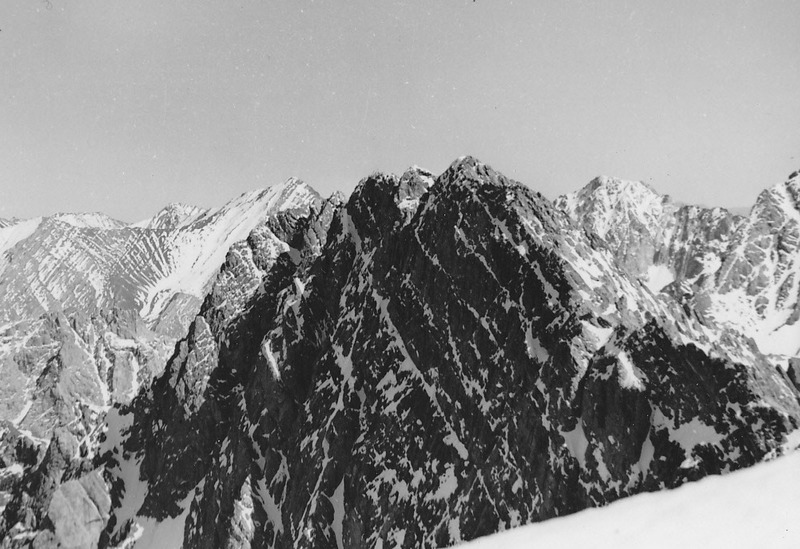
The North Face of Leatherman Peak. Evilio Echevarria Photo 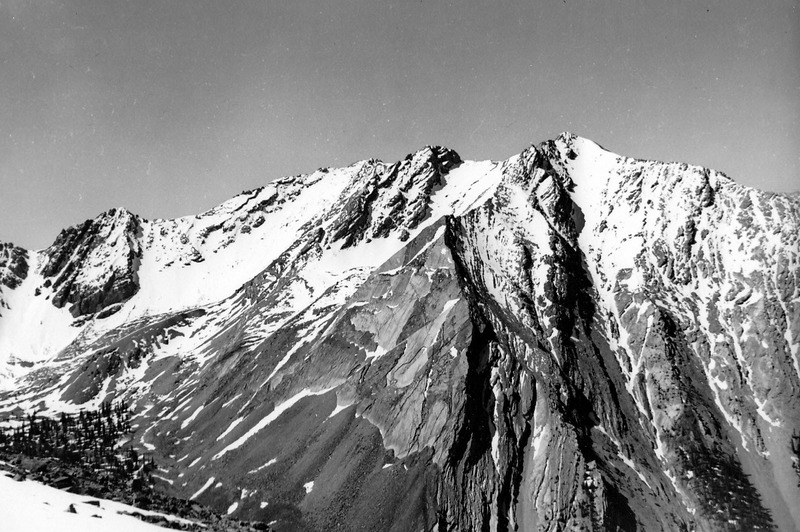
Peak 11090 as viewed from the summit of Mount Borah. Evilio Echevarria Photo 
This is the summit ridge of what Louis Stur called Mount Hancher. [Editors Note: I am not sure which peak this is. The name has not stood the test of time]. Evilio Echevarria Photo 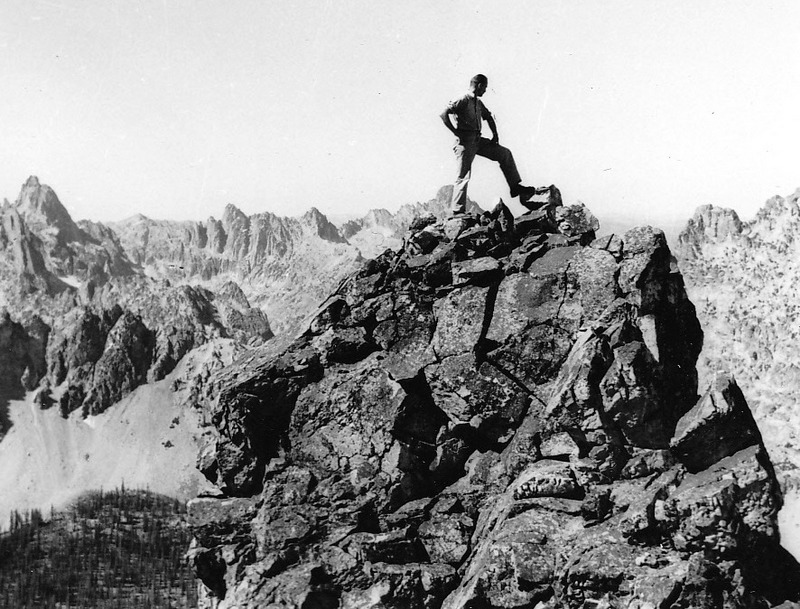
Louis Stur on the summit what he called Mount Hancher. [Editors Note: I am not sure which peak this is. The name has not stood the test of time]. Evilio Echevarria Photo 
Louis Stur on the summit ridge of what he called Mount Hancher. [Editors Note: I am not sure which peak this is. The name has not stood the test of time]. Evilio Echevarria Photo 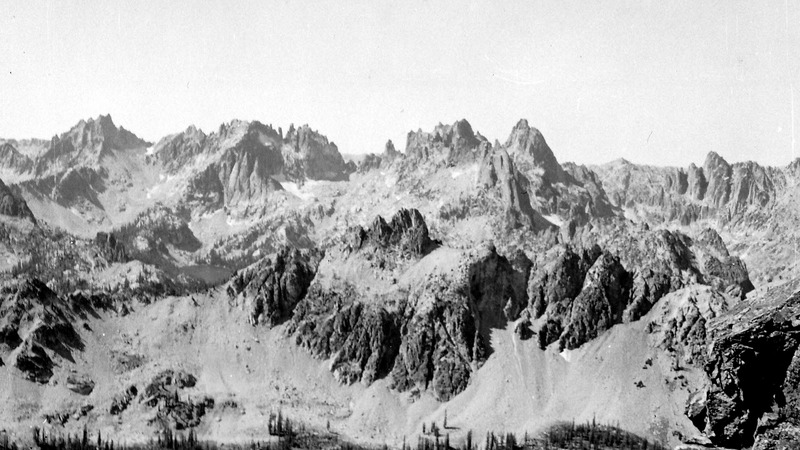
A panoramic view (left to right): Packrat Peak, Monte Verita and Warbonnett Peak. Evilio Echevarria Photo 
Louis Stur ascending a slope in the Sawtooth Mountains. Evilio Echevarria Photo 
Louis Stur and Freddi Haemisaeger on top of Horstman Peak in 1955. Evilio Echevarria Photo 
Looking north from the summit ridge of Mount Bush during a solo attempt on the peak. Evilio Echevarria Photo 
Mount Bush as viewed from the northeast. Evilio Echevaria Photo 
Mount Bush as viewed from the west. Evilio Echevarria Photo 
Francis Willmarth surveying an approaching thunderstorm during a 1954 attempt on the North Face of Goat Mountain. Evilio Echevarria Photo 
Evilio Echevarria during an attempt on the North Face of Goat Mountain. Evilio Echevarria Photo 
The final climb up Mount Borah as viewed from Chicken-Out Ridge in 1955. Evilio Echevarria Photo -

Louis Stur
The following is extracted from Page 21 of the book.
In 1951, Louis Stur came to Sun Valley to act as a ski instructor. The Hungarian immigrant was destined to become the most prolific climber among the European guides who worked at Sun Valley. Stur, occasionally with Fred Beckey and often with Jerry Fuller, raised the standards of Idaho mountaineering as he explored every nook and corner of the Sawtooths and established classic routes on many of the peaks. Stur specialized in climbing Warbonnet Peak and Mount Heybum, both of which he ringed with routes. Stur and his companions tended to find lines of attack that others had missed. He pioneered 3 routes on Warbonnet: the South Face in 1957 with Ring, Bennet and Franke; the West Ridge in 1958 with Jerry Fuller; and the East Face in 1960. He also established the West Face Route on Mount Heyburn in 1958.
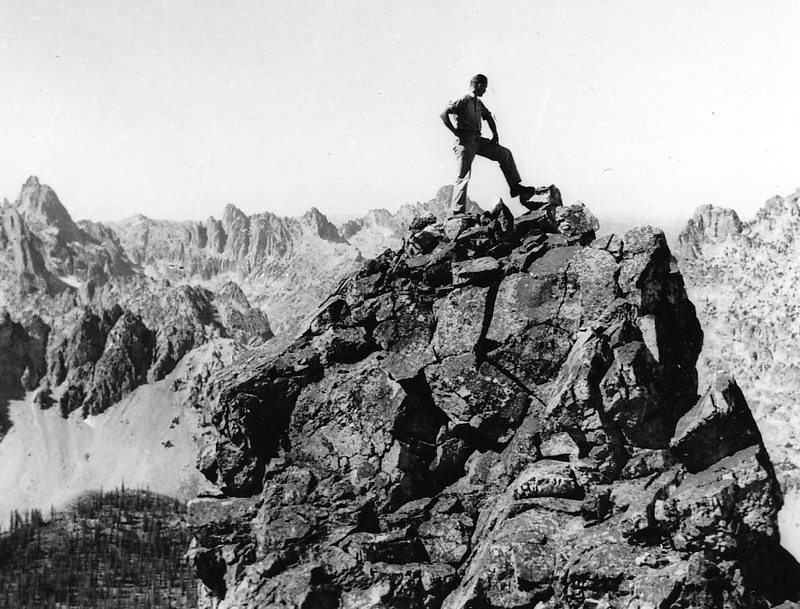
Louis Stur on top of the Sawtooths. E.V. Echevarria Photo Mount Heyburn, a conglomeration of spectacular shattered towers, attracted climbers to its slopes at least as early as the 1920s, when the East Summit was probably first climbed. After making the first ascent of the slightly higher West Summit, Robert Underhill described the peak’s granite as “some of the worst stuff I have ever seen.” Although many had tested the notoriously rotten granite, in 1958 none of the established routes were considered enjoyable and getting to the top was strictly a “because it is there” proposition. Stur, along with Jim Ball and Jerry Fuller, changed the mountain’s reputation when they climbed the obvious but untried chimney on the peak’s West Face, which today is known as the Stur Chimney. The moderately-difficult route avoided the “ball-bearing” granite encountered on other Heybum routes by following a classic line grooved in solid granite for its entire distance.

A closer view of the Stur Chimney from the base of the slabs that lead up to it. 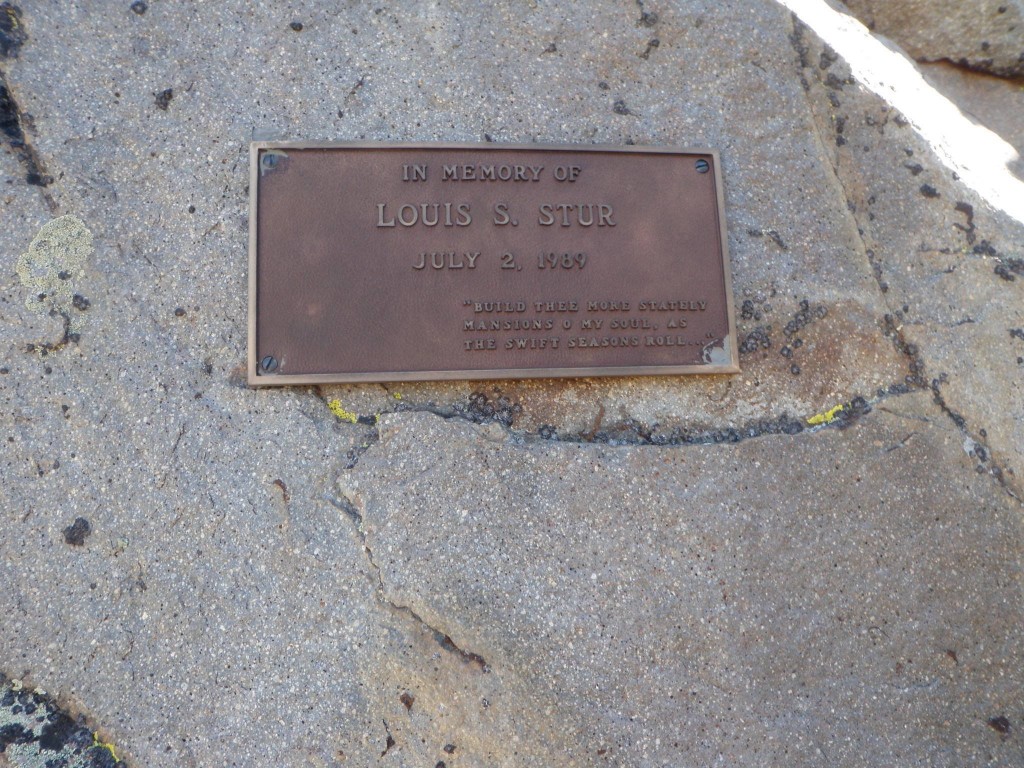
A memorial to Louis Stur on Mount Ebert. Louis died in a fall on the peak. Ralph Shelton Photo 
Louis Stur climbing in the Sawtooths. Evilio Echevarria Photo