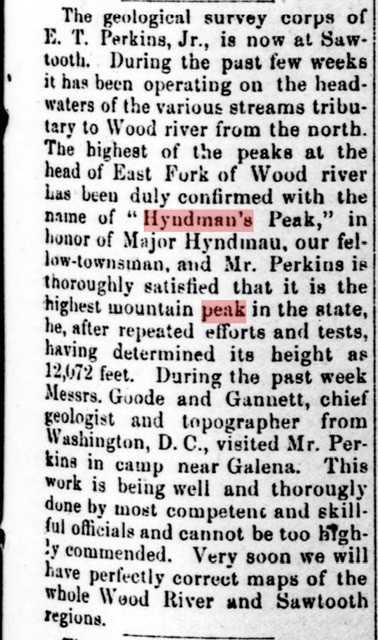
The geological survey corps of E.T. Perkins, Jr., is now at Sawtooth. During the past few weeks it has been operating on the headwaters of the various streams tributary to Wood river from the north. The highest of the peaks at the head of East Fork of Wood river has been duly confirmed with the name of “Hyndman Peak,” in‘ honor of Major Hyndman, our fellow-townsman and Mr. Perkins is thoroughly satisfied that it is the highest mountain peak in the state after repeated efforts and tests, having determined its height at 12,072 feet. During the past week Messrs. Goods and Ganuett, chief geologist and topographer from Washington, D. C., visited Mr. Perkins in camp near Galena. This Work is being well and thorougly done by most competent and skillful officials and cannot be too highly commended. Very soon we will have perfectly correct maps of the whole Wood River and Sawtooth regions.
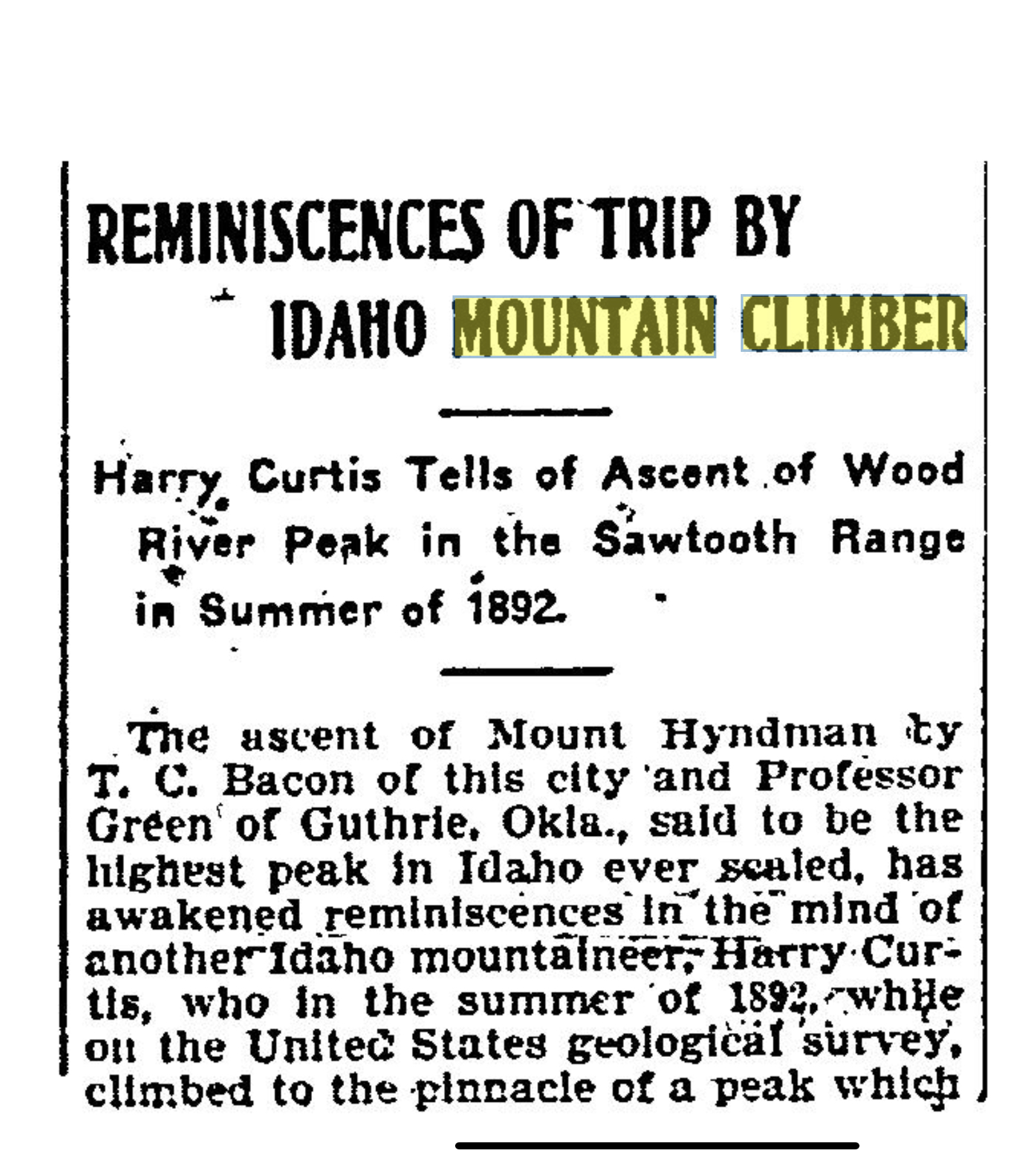
In this article Harry Curtis claims that in 1892 he climbed a peak at the head of Wood and Big Lost rivers that was a thousand feet higher than Hyndman Peak. Interesting he did so with E.T. Perkins of the USGS. While the story seems based on a confused recollection it does demonstrate how little was known about Idaho’s mountains before the state was completely mapped.
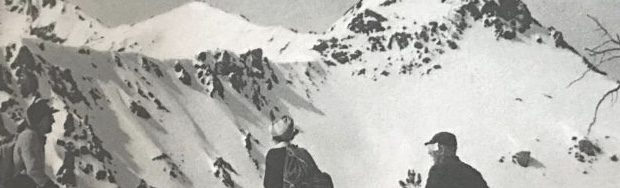
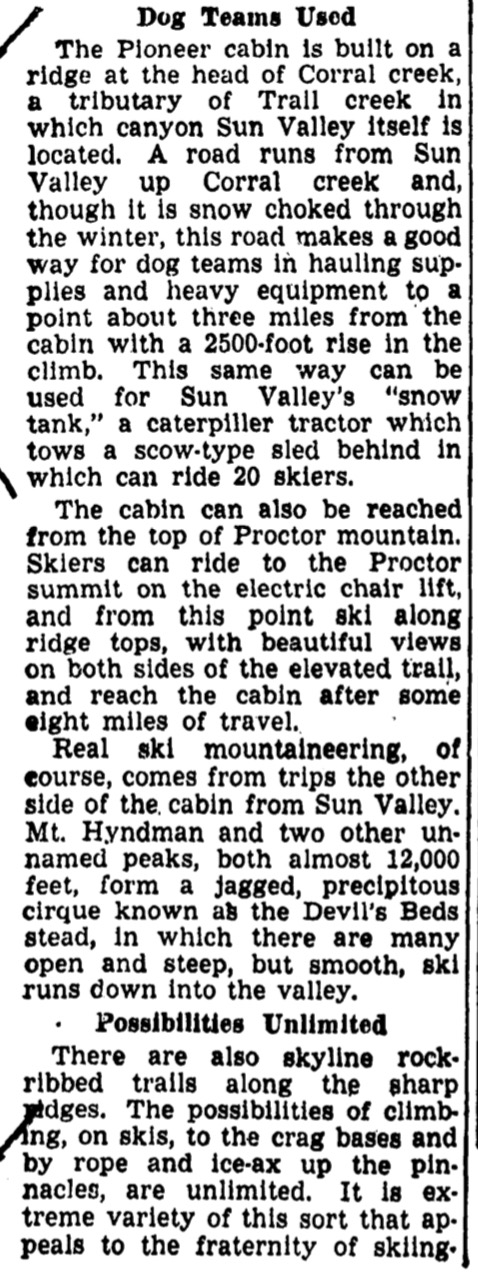
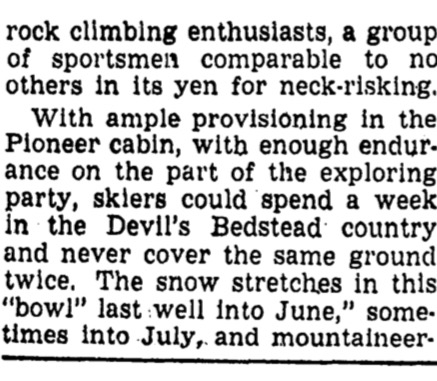
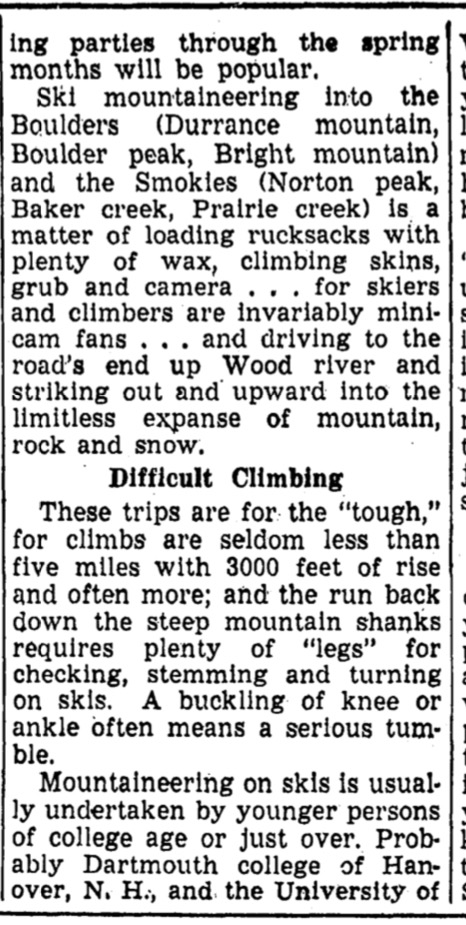
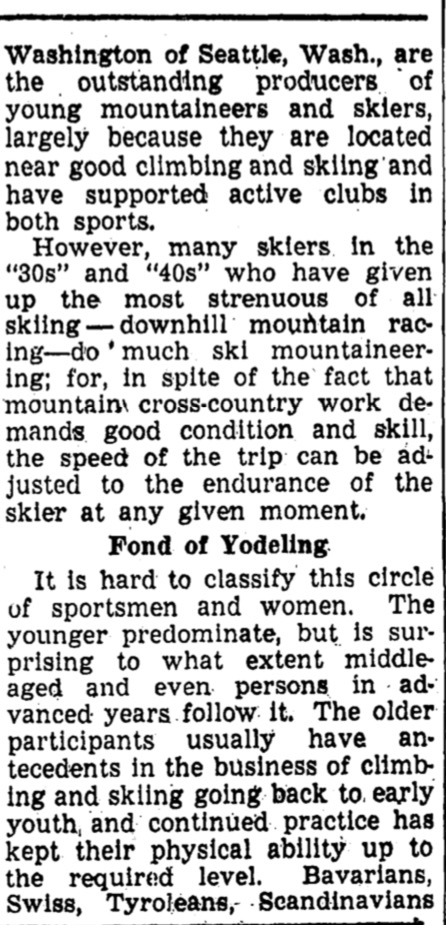
This December 4, 1938 Idaho Statesman published a Sun Valley promotional article written by the resort’s manager which discussed Ski Mountaineering opportunities in the mountains surrounding the resort. The article predates the publishing of Andy Henning’s definitive guidebook for backcountry skiing around the resort, the Sun Valley Ski Guide, in 1948. As lift skiing gained popularity and adherents, the resort abandoned Pioneer Cabin and terminated its backcountry guiding.
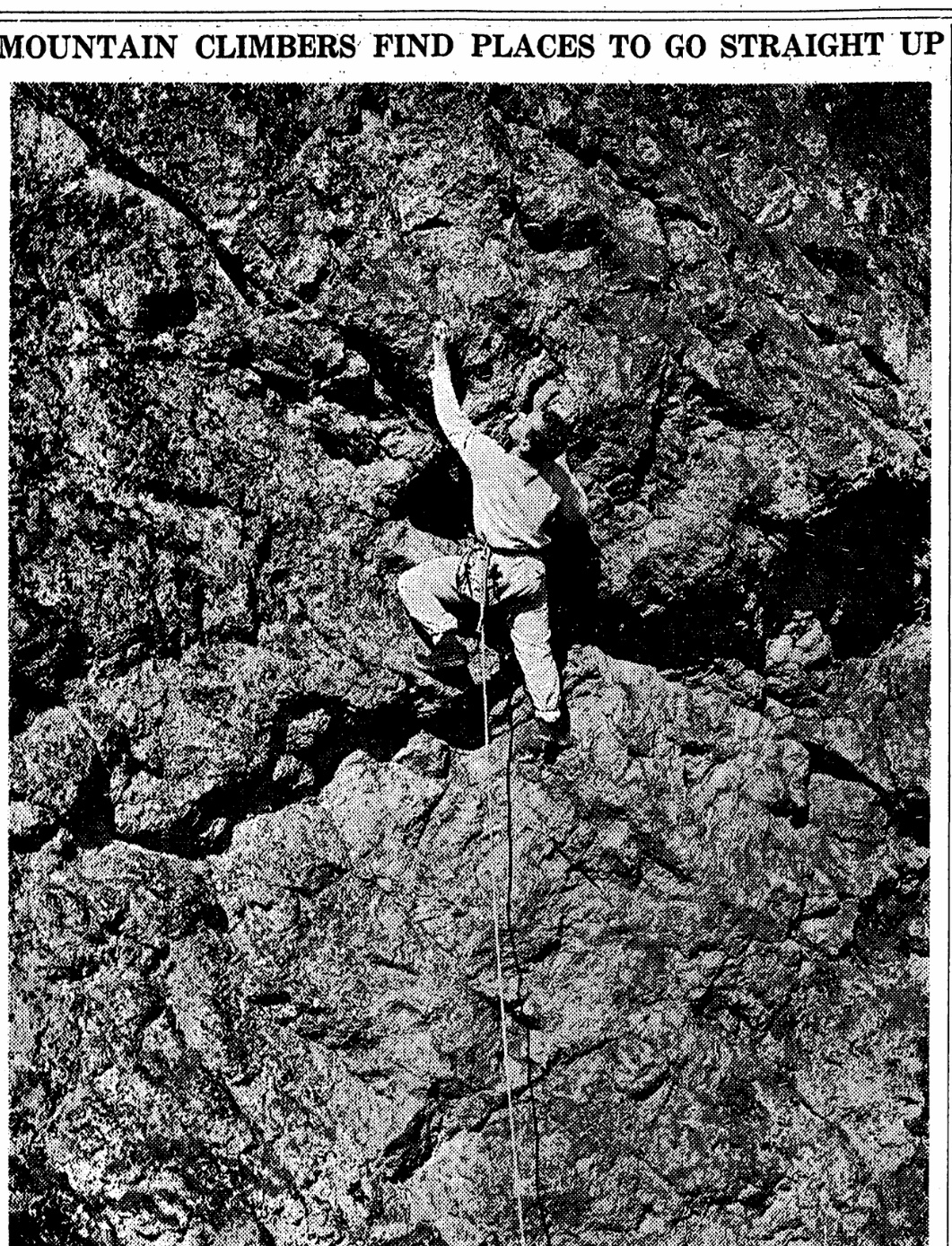
This July 23, 1939 article briefly surveys Idaho Mountaineering at the time. Unfortunately, the climbers shown in the photographs are not identified. Nevertheless, the article demonstrates that Idaho climbers were actively “getting after it” 80 years ago.
In the early 1920s, Hyndman Peak was considered Idaho’s highest summit. After an article (not yet located) in the Idaho Statesman declared Hyndman the highest, a protest was sent to the Statesman and subsequently published by the paper. The protest, set out below, declared Patterson Peak in the White Clouds as the highest Idaho summit and claimed it was 13,000 feet high. Patterson is far from a dominating summit and the article, possibly written in jest, either ignores nearby Castle Peak, which lords over every other White Cloud summit or, as the hand-drawn map implies, is actually mistaking Patterson Peak for Castle Peak.
Click on Photo to enlarge.
SOMEWHERE in Central Idaho (in the southwest part of Custer County to be exact), there is a modest, unassuming mountain. Patterson is the name and Patterson never has been one to go out of his way in search of notoriety. He knew his merits, did Patterson, and was satisfied even if the world in general ignored him.
And to the southeast another mountain rears his head. There is nothing unassuming about the latter, Mount Hyndman. He claims to be the tallest fellow in Idaho, and broadcasts his claim to the world. There is something about his arrogant bearing, the sheer sweep of his cliffs, which proclaims his worth to a wondering world. And the world watching him, decided he knew where of he spoke. On his massive shoulders was pinned the toga and thousands visited him.
But there were those in the world who were determined that justice should be done. Perhaps there is a wee bit, too, of disgust at Hyndman’s overweening pride. At any rate, one day they started to broadcast.
The Statesman: On the unimpeachable authority of United States Geological Survey figures, proclaimed one day that Hyndman was the highest mountain in Idaho and one of the three or four highest in the northwest.
“And that’s just where you’re wrong,” quoth some unidentified correspondent. “There’s a taller baby yet, Patterson Peak. That’s no apple sauce and we can prove it.”
Forthwith the scoffers at Hyndman’s greatness produced a sheet of paper—nothing less than a list of the highest peaks is Idaho. There was Hyndman, all right—12,078 feet high, just as The Statesman had said he was, but there also was Patterson, an opposite the name of this shy, retiring violet was written “altitude 13,000 feet.”
And there the matter rests. Who invaded the solitude of Patterson Peak’s ages-long retreat, applied the unromantic baronet and the matter-of-fact triangulation formulas, stripped him of his mystery and his romance, and put him down in cold, hard type.
Who had the temerity to challenge the hitherto undisputed reign of Mount Hyndman, arrogant and bold, in behalf of this diffident pretender, whose only claim lies in the support of his friends? Truly it will be a battle of the giants this struggle for the throne of Idaho. Rumor hath it that Patterson himself, though unassuming in demeanor, is not lightly to be scaled, not to be crossed with impunity. And to the qualities of Hyndman all will bear witness.
The thing might be easily decided were there photographic studies of the new claimant extant. One could gaze on his profile, compare it with the lordly majesty of Hyndman, and award the palm to the most King-like. It mightn’t be scientific but it would be monstrously satisfying.
Unfortunately, Patterson in his retirement has attracted few visitors. Nobody has recognized his regal descent or is it ascent and his lineaments, if reproduced on paper, are unrecognizable from those of a score of peaks about him. Just one remedy seems possible. Engineering parties might be sent out to make accurate check of all the data on both, thendecide which is the true monarch. Till that day comes, each will have his champions and wordy will be the battle.
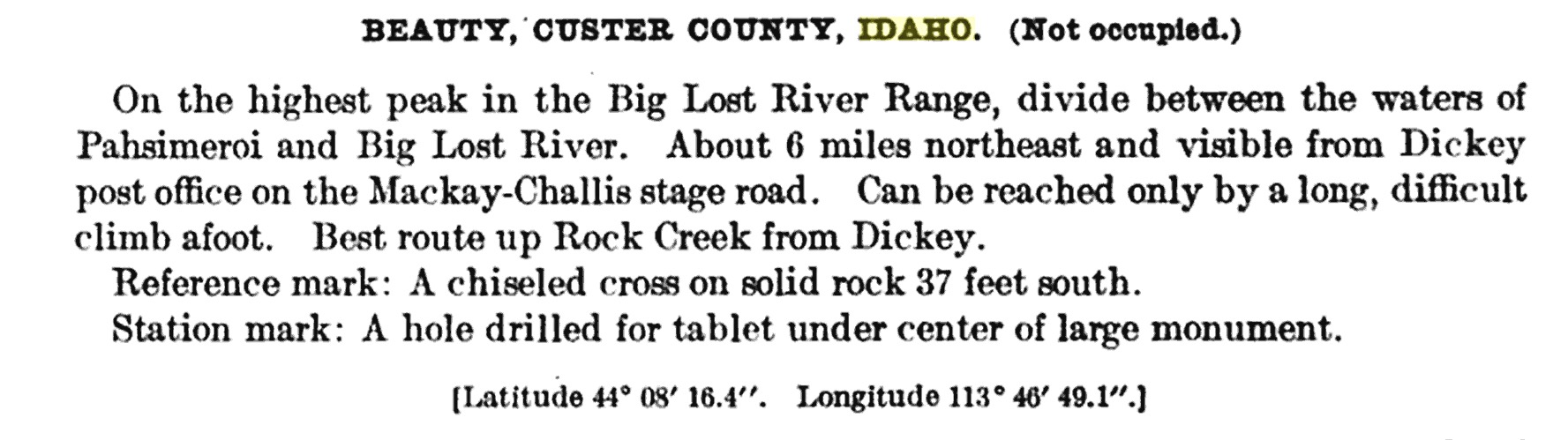
The book discusses the discovery of Borah Peak as the highest point in Idaho on Pages 16 and 17. This entry expands on that discussion and adds source documents relating to the issue as well as documentation for T.M. Bannon’s first ascent in 1912.
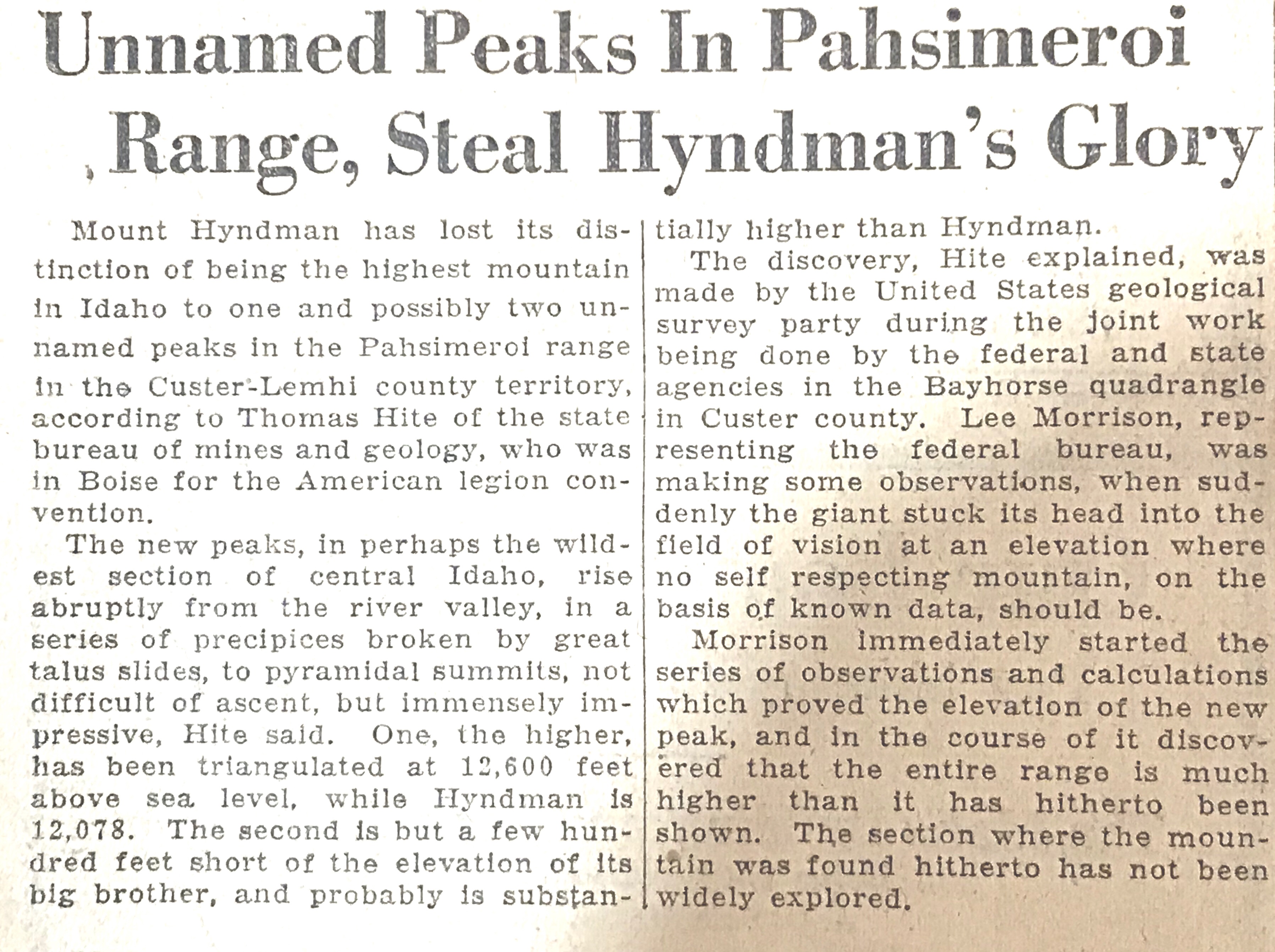
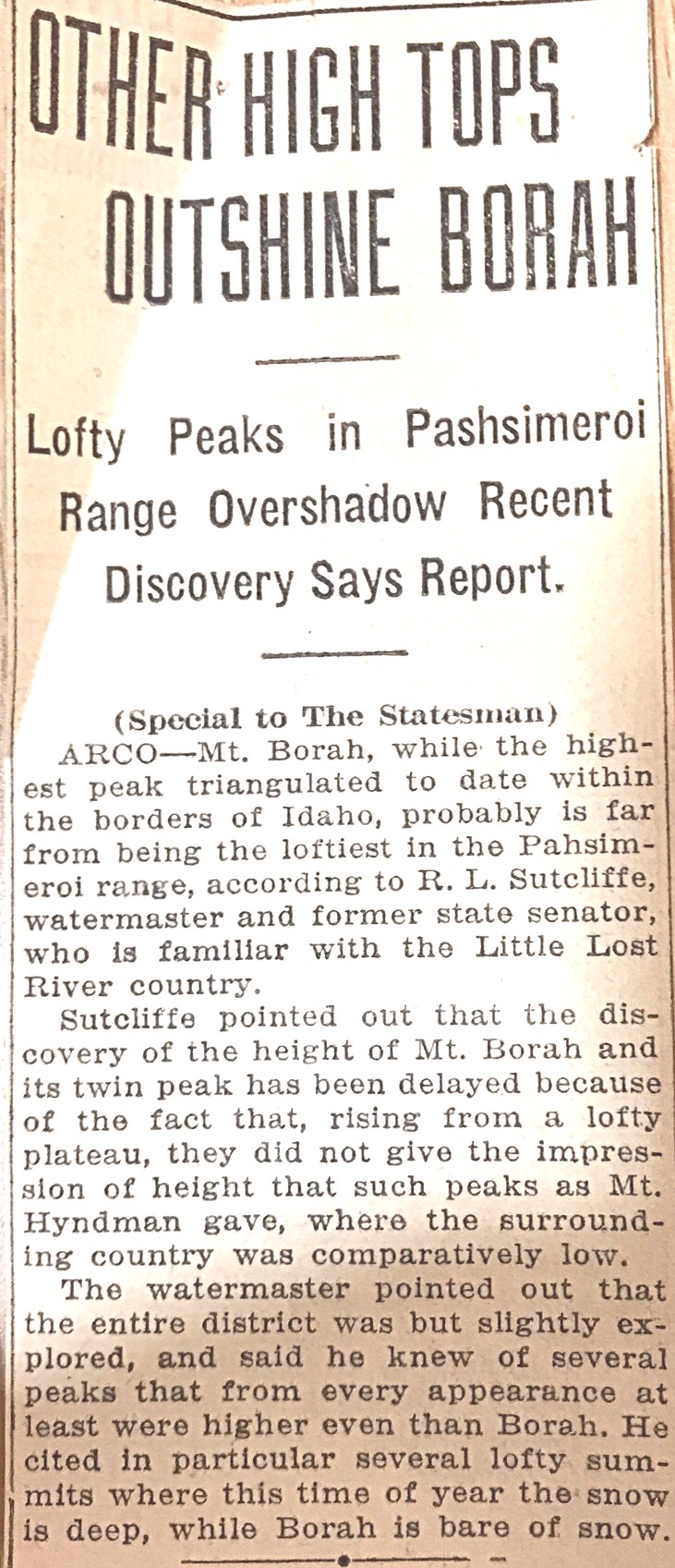
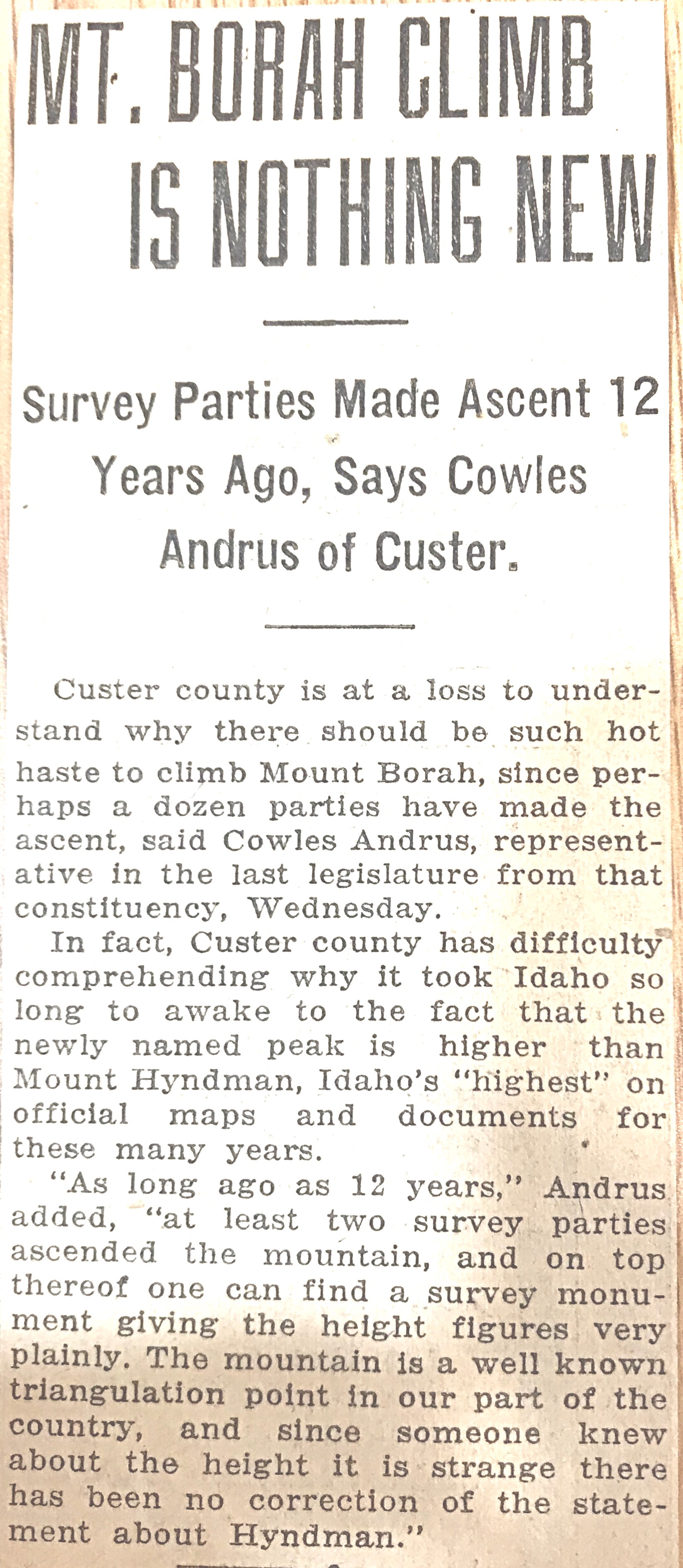
The following 1929 article from Idaho Statesman declared to the world that Borah Peak, also known as Mount Borah, was Idaho’s highest peak. However, the second article on this page demonstrates that not everyone was willing to accept that Borah was the highest peak. The third Idaho Statesman article on this page disputes the fact that many knew before 1929 that Mount Borah was taller than Hyndman. Interestingly, there is support for this proposition (see below) as T.M. Bannon, a government surveyor, placed the Beauty Benchmark on the summit in 1912, although it does not appear he mapped an elevation at the time. Click on the articles to expand and enjoy.
Idaho Statesman, November 29, 1929. Idaho Statesman December 19, 1929.Except from the Thirty-Third Annual Report of the Director of the United States Geological Survey, 1912.
This 1912 entry is one of many by T.M. Bannon and covers his work on Mount Borah. It briefly describes his first ascent route.