Category: Magazine Articles

  • Kong and Us by Bob Boyles

    Kong and Us by Bob Boyles

    [This article was first published in Idaho Magazine, July 2022.]

    The Peak That Got Away

    Lady and I gotten along just fine for about half of the five-day horseback trip up the South Fork of the Payette River, until she bolted off the trail into Lodgepole pines. She was at full gallop and I had to lie flat on the saddle to keep from getting knocked off by low-lying tree limbs. After I finally managed to stop her and we trotted back up to the trail, the outfitters quickly found the cause of her behavior. A yellow jacket had burrowed under her saddle blanket and she was getting stung repeatedly. Other than this incident, Lady and I became good friends, and she impressed me with her calm demeanor and backcountry skills. I had ridden a few times in my youth but had never spent a full eight hours on the back of a horse, so I was in for a surprise after dismounting at the end of a long day. It took me a full day to walk normally again and by then, I had nothing but respect for those who make a living on horseback.

    This was September 1973, and I had been invited on the trip by the Carson family. When the outfitter assigned the horses that we would ride based on our experience and the personalities of the animals, he told me, “You’ll ride Lady. She’s a little feisty but she’s a good, sure-footed horse.” We started from the stables at Grandjean, from where we would ride a loop around Virginia, Edna, and Vernon Lakes in the Tenlake Basin before reaching base camp at Ardeth Lake.

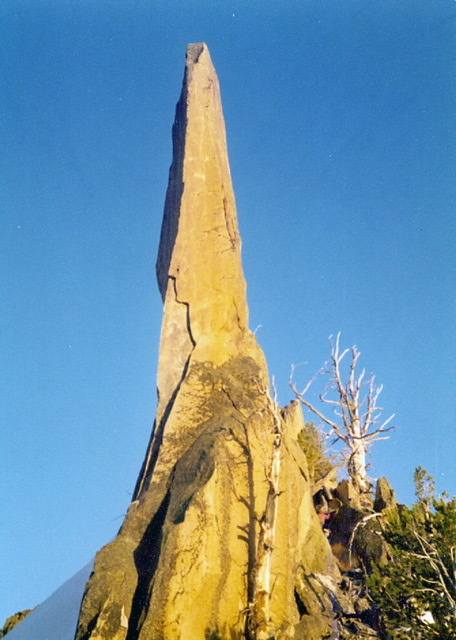
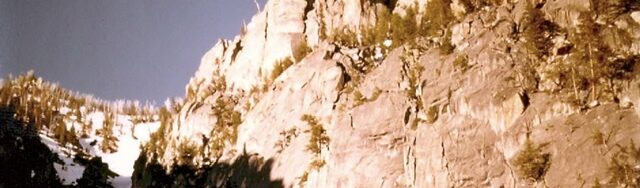
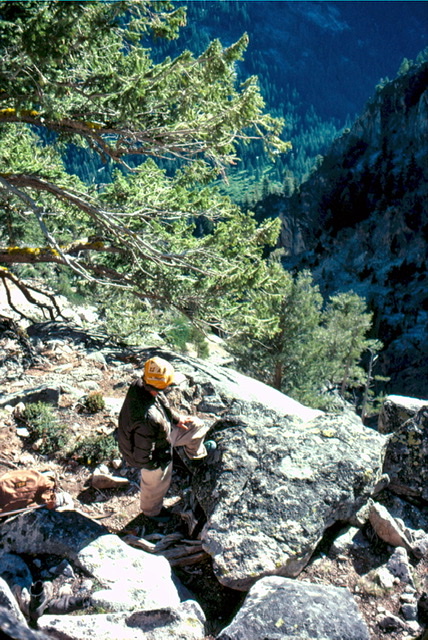
    Our trip was one year after I had started rock climbing, and because we had pack mules to haul our loads on this trip, I had decided to take my rock gear along. I also kept an eye out for opportunities for future trips and wasn’t disappointed once we passed Fern Falls on the South Fork of the Payette River. As we rode farther up the trail, I gawked at the granite formations on the east side of the valley and thought, “Wow.” One formation in particular stood out. I shot photos and vowed to come back to it with my rock-climbing buddies. The first name for it that occurred to me was King Kong, which stuck, although we later shortened it to Kong.
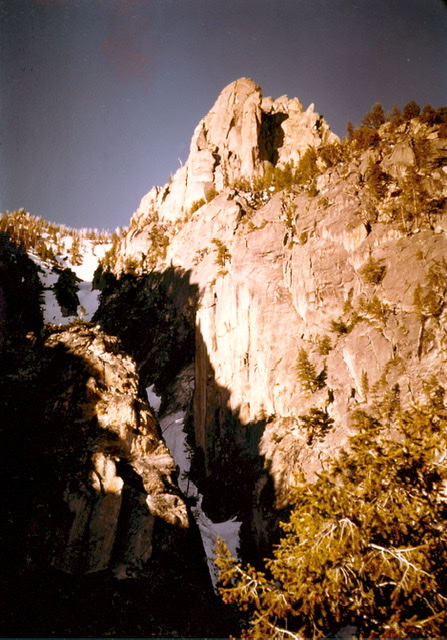
    The Kong

    After a long day in the saddle, we arrived at Ardeth Lake. Our outfitters had previously set up wall tents, so it was kind of like arriving at a motel in the wilderness. The pack mules had ensured there was just about nothing that didn’t get packed, including a couple of coolers full of drinks and comfort food like steaks and burgers. I wasn’t used to this kind of backcountry camping but quickly adapted after being offered an ice-cold beer. The early fall weather had been perfect for the ride up to camp but the next morning we woke to the surprise that it had snowed a couple of inches overnight.
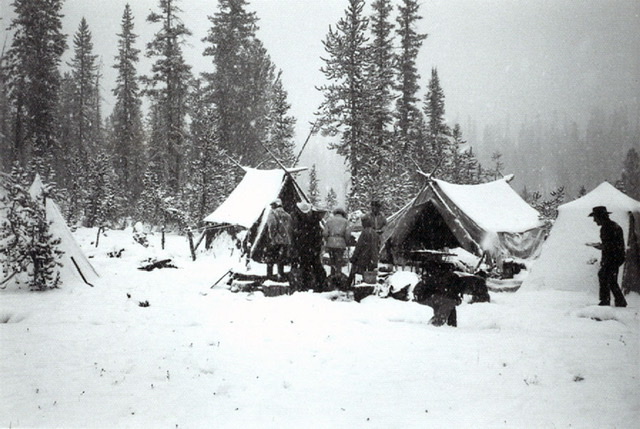
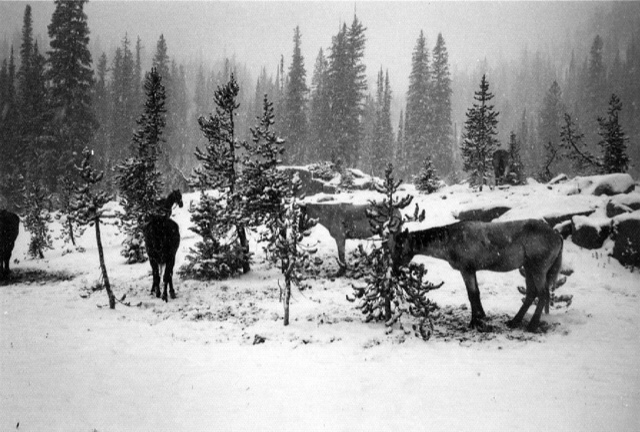
    Lady (foreground) with the other packhorses.

    Typically for fall, the weather improved by evening and the next day promised to be much better. The morning was clear and cold but by afternoon it had warmed into the lows seventies , and the dusting of snow had all but melted. The Carson kids, Bruce, Jackie, and Guy, headed up Tenlake Trail with me, and after about a half-mile we spotted a worthy climbing objective: the eastern face of Point 8590.
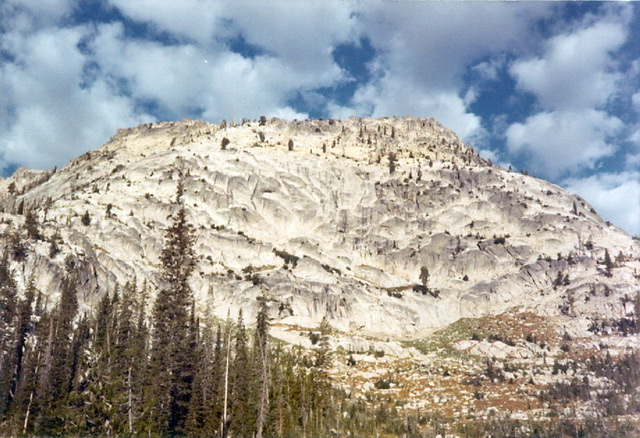
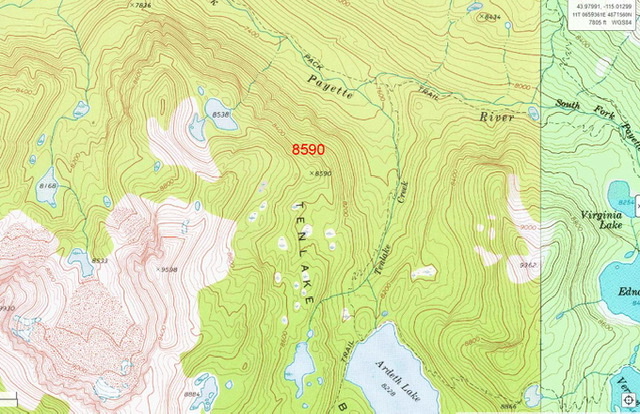
    Point 8590.
    Point 8590.

    It was getting late in the afternoon so we went back to camp, our plans for the next day now set. After a big breakfast along with real cowboy coffee, in which the grounds are dumped right into the water and boiled over an open campfire, the four of us headed back up Tenlake Trail, this time loaded with rock-climbing gear and a rope. We found a series of ledges that started out as second class but turned to fourth class higher up the face. At that point, Jackie decided she had had enough rock-climbing and went back down. Bruce, Guy, and I continued up until we finally reached a point where a rope and belay were in order. I led the first pitch, a delightful 5.4 (of a maximum 5.15 class rating) on near-perfect granite. After I brought Bruce and Guy up, we stayed roped and finished with another pitch of fun climbing. Below the top it turned to easier ground where we could scramble to the high point on the ridge and soak in views of the central Sawtooth Range.

    As soon as I got home from our pack trip, I started talking up with my climbing friends what I had seen on the Payette River. It didn’t take long to generate interest in Kong, and we made the trip in early October. This time we didn’t have horses, which meant our backs and legs took the load on the grueling hike above Fern Falls. After a hard day on the trail, we found a nice camping spot below our objective and spent the night. The next day we started looking for a way to get up the rock to the bottom of a massive slab that marked the beginning of final peak. There was an obvious gulley along the left of the climb but it was very steep, loose, and it looked like a death trap loaded with boulders that could tumble in a heartbeat. We found a fourth-class zigzagging rock route that led to a nice ledge (for camping or bivouacking) close to the base of the slab, but it also was out of the question, because we’d be carrying full climbing packs. It was getting late and we knew we’d have to do more exploring to figure out this challenge. We descended and decided to come back early the next summer, when the gulley would most likely be filled with snow.

    Not wanting to leave without some kind of summit, we decided to explore the top of the ridge and try to find the finish of our future climb. We were carrying only day packs, so we climbed up the gulley and along the ridge, where we spotted some interesting formations. There was a beautiful tower at the top of the gulley and we gave it a try. Mike made it all the way up to the last thirty feet, where the rock went blank. Lacking bolts or any way to protect ourselves, we called this one a near miss. Following the ridge that separates the Payette River and the Goat Creek drainages, we spotted a summit that looked reasonable and got to the top of it.
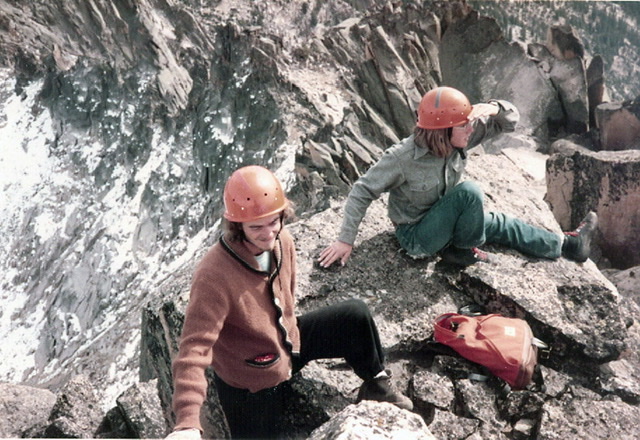
    Carl and the author on a ledge below the summit of The Kong.
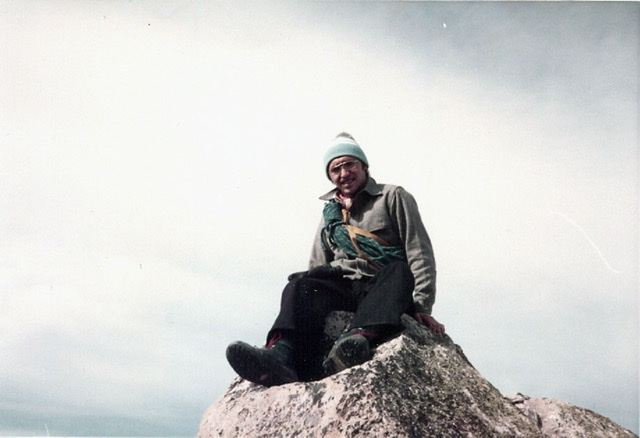
    Guy Carson on the summit of the unnamed point above the Kong.
    Mike climbed up to the last 30 feet on this pinnacle next to The Kong. The last 30 feet was without holds.

    When the time came in June 1974, we decided to do things a little differently. Instead of hiking up the South Fork of the Payette River and arriving in the heat of the afternoon, we would spent a night at the Grandjean campground and depart at 1:00 a.m., which should put us at our base camp early in the morning. Everything went as expected and we arrived in time for breakfast and a good rest. We lounged around for most of the day, enjoying the scenery and exploring the Elk Lake area.
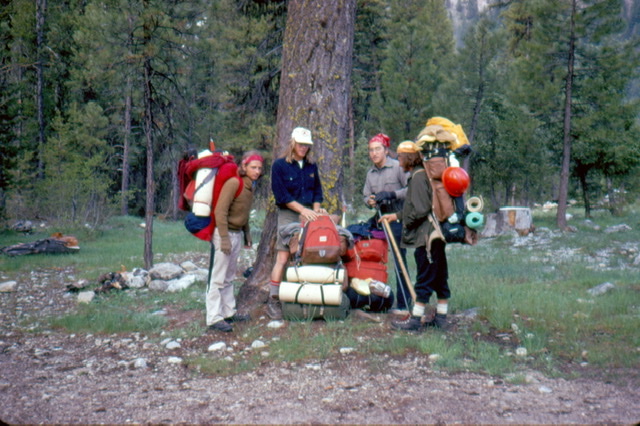
    (From left to right) Mike, Bob, Guy and Carl ready to roll at the Grandjean trailhead.
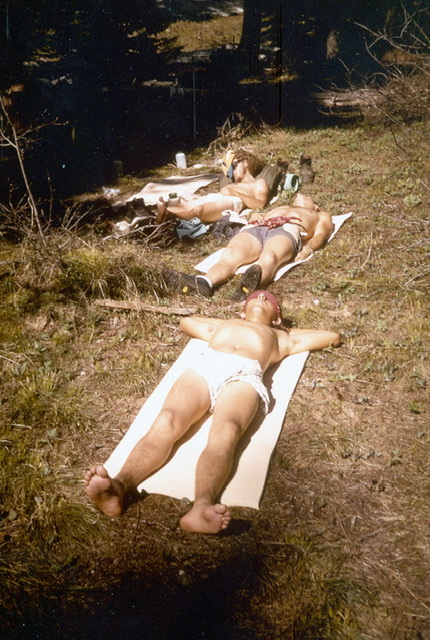
    Mike, Guy and Carl rest a few hours after the group’s all-night assault on The Kong.

    The weather was perfect and mosquitoes were non-existent, so we camped without bothering to put up a tent. Early the next morning, I awoke to the sound of something shuffling around our camp. I raised my head to the sight of a medium-sized black bear sniffing the foot of our sleeping bags. I sat up in and yelled to the guys, who woke all at once. My thought was that once the bear saw us, he’d bolt into the woods. Instead he slowly walked past us and stood on his hind legs to show us how big he was. A few minutes later, he took off into the brush and we didn’t see him again for the rest of the morning. We weren’t too worried about him, because we had plans to head up to our bivalve  ledge for the day so we loaded up our climbing packs and headed up the gulley. We had brought ice axes but no crampons, figuring the snow would soften up a bit by the time we got up the gulley. We were wrong.

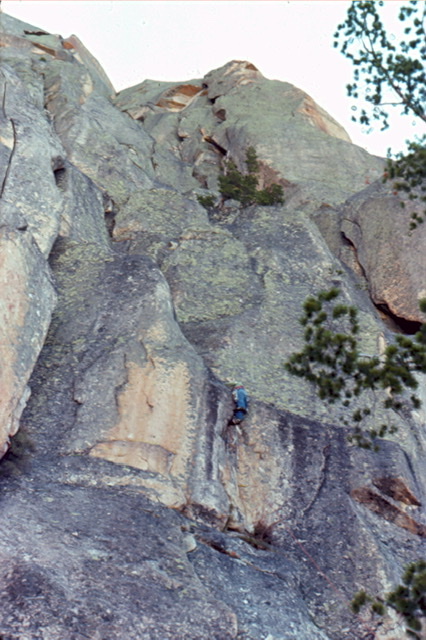
    The gully was reasonably accessible, but we could see that a short climb up an incline of fifty-five-to-sixty degrees on hard snow to the biv site would require step-cutting and a lot of “pucker factor.” After reaching the bivy ledge we scrambled up to the start of the climb where Guy and Carl watched while Mike and I racked up and tried to find a continuous crack system up the face. We finally spotted a good-looking line and I led the first pitch. I led up maybe ninety feet to the bottom of an overhanging, left-leaning fist crack that flared into an arm-and-knee crack. I didn’t think I could free-climb it so I slapped in a couple of hexes (hexagonal nuts that can be placed without a hammer) and pulled out my aiders (short ladder slings). Once I rounded the lip, I went free, but it was still very awkward and hard. I made it over the edge and decided to set a belay (a pulley-like device to control the rope)so I could talk to Mike when he came up. He ascended to the start of the overhang and then decided to try free-climbing the rest of the way up. After a fair amount of swearing, grunting and sweating, he made it over the lip. We really didn’t know grading very well but we both thought that it was maybe a 5.10. It later proved to be the crux pitch of the climb. We went up another pitch to a ledge system along the crack, and the climbing was still fairly stiff. We had burned up quite a bit of time getting to the base and working out the first two pitches so we knew we had to make a decision. It was getting late in the afternoon and we still had to descend the gully to get back to our base camp so we rappelled off and decided to come back the next summer to try it again.

    After descending the gulley we hiked back to where our packs were stashed and discovered that our bear friend had made another visit. All our packs were untouched except for Guy’s. It was missing two of the outside pockets that had had food in them and his foam pad had a large bite taken out of it. It was rolled up and when he unrolled it, it reminded me of how we used to make paper dolls. He accused the bear of being out to get him and no-one else. We picked up our packs and headed back to our base camp. As we ate the last of our food and listened to Guy grumble about the bear, Carl came up with an idea for revenge. He had part of a loaf of bread, some honey and a tin of cayenne pepper, so he and I went into the brush to fix the bear a snack.

    We found a stump and Carl stacked bread as if they were pancakes. In between each layer of bread he dumped a couple of tablespoons of cayenne pepper and then topped it off with a generous helping of honey. Chuckling, we headed back to camp. Figuring the bear wouldn’t find the bread for a while, we sat around talking about our adventure. We were wrong again. It took the bear only about thirty minutes to discover his snack, and he was very annoyed. As he came out of the brush above our camp, he was ripping leaves off the bushes.  We could see he had a mouthful of leaves and the hair on his back stood up. He snorted around and wouldn’t leave, which made us nervous, so we decided to use the African bush-beating method we’d seen on TV to chase him off. We all picked up our ice axes and at the word “go,” we charged toward him. We got about halfway to where he was sitting when he reared up on his hind legs and charged us. We turned and ran as fast as we could back to our camp. Luckily, his charge was a bluff, but he would not let us out of his sight. We agreed that maybe it wasn’t a good idea to stay there for the night. Under the watchful glare of the bear, we packed and hiked back to Grandjean.
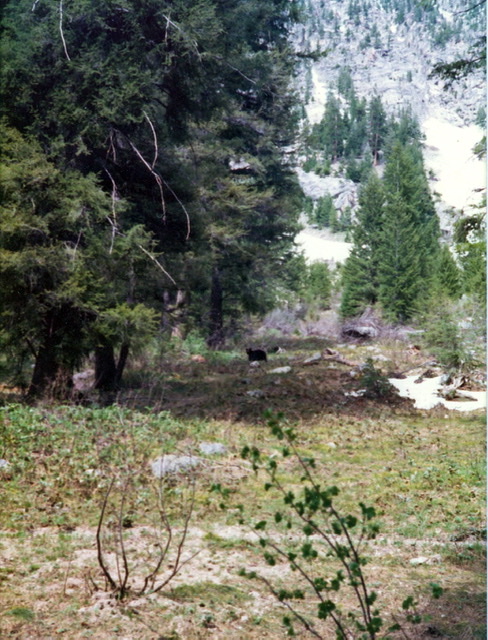
    Only hungry visitor casing our campsite.

    On our third trip at the beginning of July, 1975 we altered our plans once again. Instead of camping at the base and climbing the gully, we decided to haul all of our gear up to the bivy ledge both saving us time and avoiding any more encounters with our buddy, the bear. We couldn’t convince Guy to go back again so we recruited Mike’s cousin Sam to join us on our adventure. Carl was still interested so as a foursome we headed back up to Grandjean for the long grind up the Payette River. After a long day on the trail and a hard climb up the gully, we made it to our bivy spot below our climb.
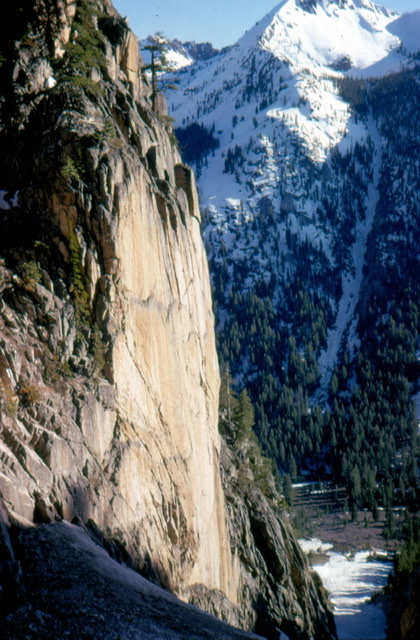
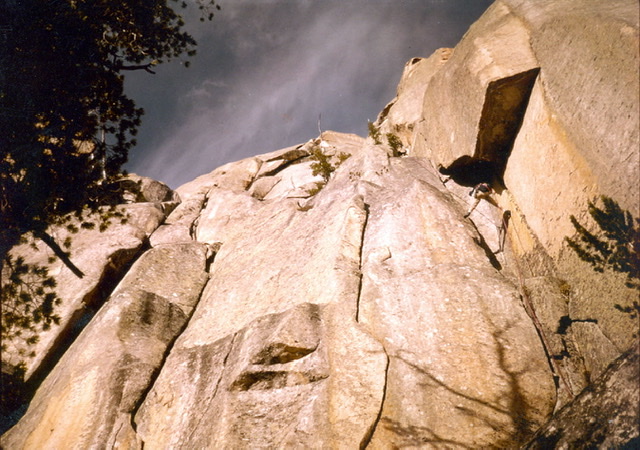
    The author and his friends bivouacked next to the tree at the top of this photo during the lightning storm.
    Carl on the bivy ledge.

    Early the next morning, Mike took the first lead up to the crux overhang. I had set a directional belay about twenty feet from the start in order to be able to watch him climb. Just as he was grunting his way over the bulge, he suddenly flew out of the crack and I heard him yell “falling.” As I was pulling in slack, his top piece of protection popped out and then my directional anchor gave way, leaving maybe thirty feet of slack in the rope. I watched him free-fall around forty feet until he came to a stop about thirty feet off the deck. As I lowered him, he cursed about having almost made it. I thought he’d pass me the lead after recovering but that’s not how Mike works. He quickly gathered himself and went right back up, more determined than ever. On this second try, he cracked the code of the crux and continued up to a nice belay ledge.
    Bob can be spotted on the right rappelling from the top of the first pitch.

    The next pitch led up to a dihedral (two planes of intersecting rock face). The climbing was on near-perfect granite that varied from hand-width to arm-width cracks. I led pitch three, which ended on a nice flat ledge midway up the dihedral. Mike took the fourth pitch, to the top of the dihedral, where we stopped to inspect the final short pitch to the top. There was no defined summit and from our ledge, we saw only two options for what we called the “H” pitch. To our left was a thirty-foot horizontal knife-blade crack that would require aid and led to places unknown. To our right was a large overhanging flared crack that would require very large pieces of gear to protect us. We didn’t have the right equipment for either approach, so we were stuck concerning how to finish the last fifty feet of rock. Bolts would have worked but we were devoted to the clean-climbing ethics of the time and neither of us owned that kind of hardware. We talked about cutting tree limbs for chocks and slinging them with webbing but it was too late in the day for that, so we called our high point good and began to rappel back down to our start.
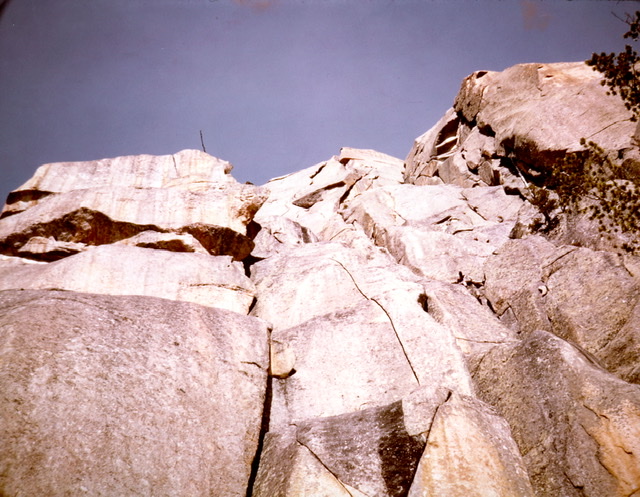
    The author cleaning P2.
    Mike is the tiny figure contorted on the crux pitch.

    The first rappel went a without hitch and we had only to leave a single sling behind on our way down. On the third rappel, things were looking good until I pulled the rope down. Just after the free end started to fall, it stopped. We pulled as hard as we could and realized it was jammed hard and would not budge. It was late in the day and clouds were building rapidly in the west. Ascending a stuck rope was completely out of the question and neither one of us wanted to lead that pitch again. We had two ropes with us, so along with the shortened end of the stuck rope, we still had enough rope to get down.  I free-climbed up as high as I could without aids and cut the rope, after which we descended to our bivy ledge for another night but soon discovered our adventure wasn’t over yet.
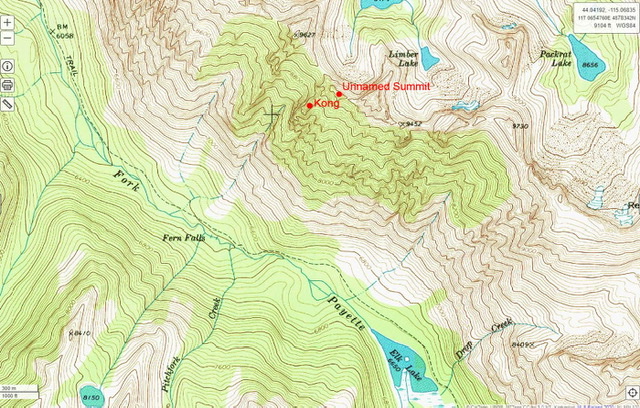
    The Kong.

    By the time the four of us down-climbed to our bivy ledge the sun was starting to set. We ate and settled into our respective spots. Soon it got dark and the wind began to blow in earnest. We saw the first of many flashes as a thunderstorm rolled in from the west. Rain poured down and the wind whipped up to about 50 m.p.h. We huddled in our spots and, in case we took a hit, we said goodbye to each other over the howling wind. Lightning struck below and above us. Rain hit the rocks in sheets and for maybe ten minutes it went up the mountain instead of down it. It then changed direction and poured downward for at least another half-hour. Lightning flashes that illuminated the entire mountainside left us temporarily blinded. There was no pause between the lightning and thunder, only loud explosions and an acrid smell in the air. Finally, the storm passed, and we were all okay. I later realized we had gone through a vertical wind shear, where the wind blows up one side of a thundercloud and down the other. We had experienced both sides of the storm.

    As chance would have it, it was the evening of July 4. In the morning, we not only were a little shaken from the excitement of the night before but realized we needed to rethink our hardware. We down-climbed and went back to Boise, where we read that a hiker had been killed by the same storm on the eastern side of the range.

    We always intended to go back and finish that last little bit of climbing to the top of Kong and retrieve the piece of stuck rope we had left hanging, but we were distracted by other Sawtooth climbs, such as the Finger of Fate and Elephant’s Perch. Around that time, we also started making regular trips to the Tetons and North Cascades. For us, Kong turned out to be the summit that got away.
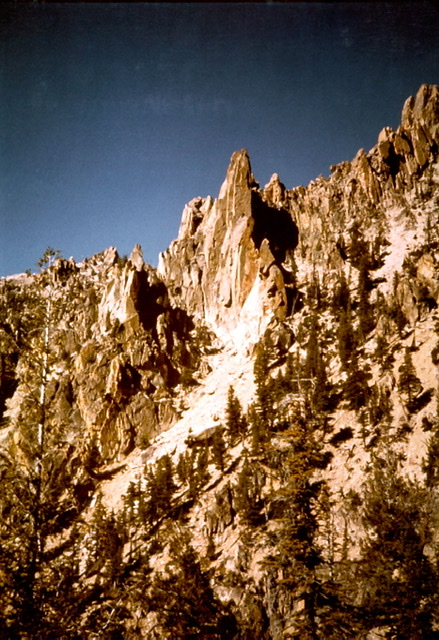
    An an unnamed tower that sits across the gully from the Kong.


  • Leading a Cat by Its Tail by Miriam E Underhill

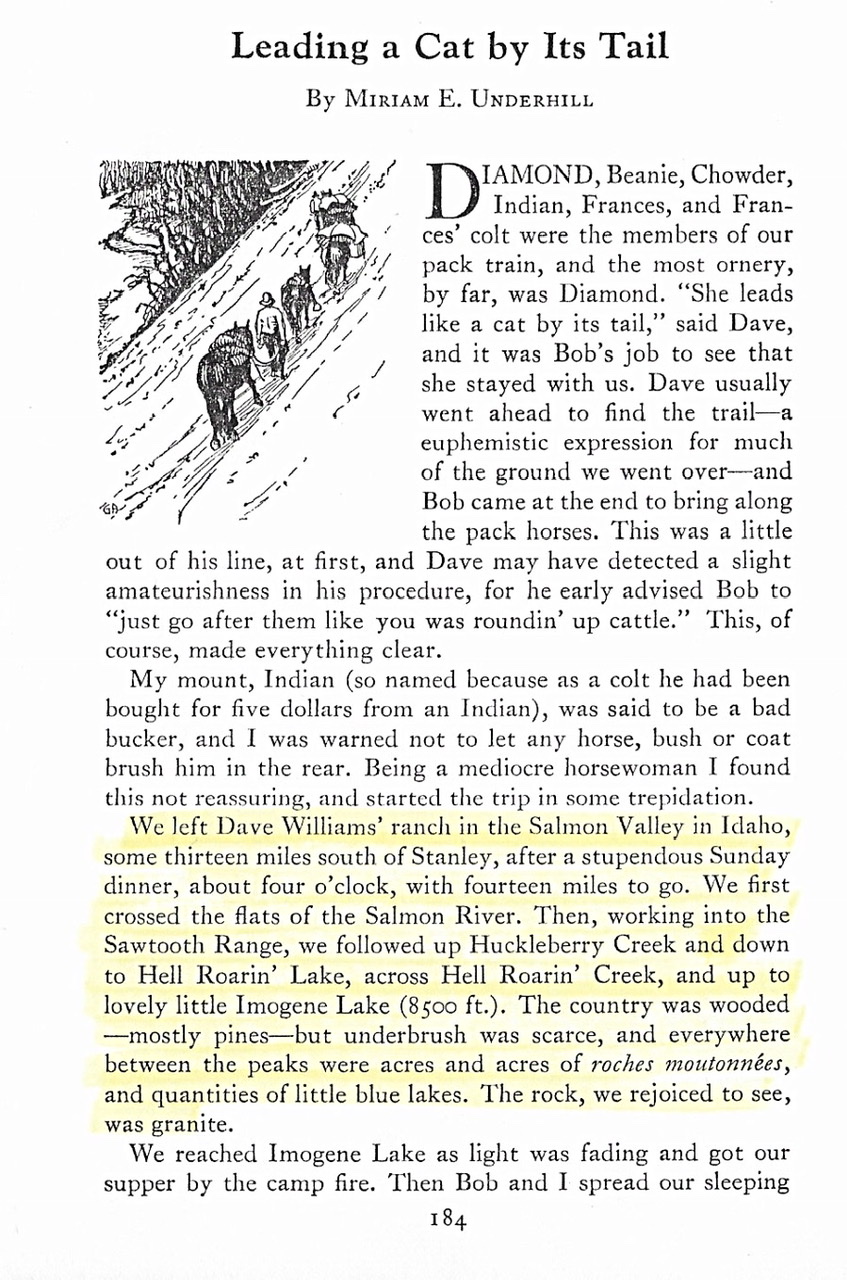
    Leading a Cat by Its Tail by Miriam E Underhill

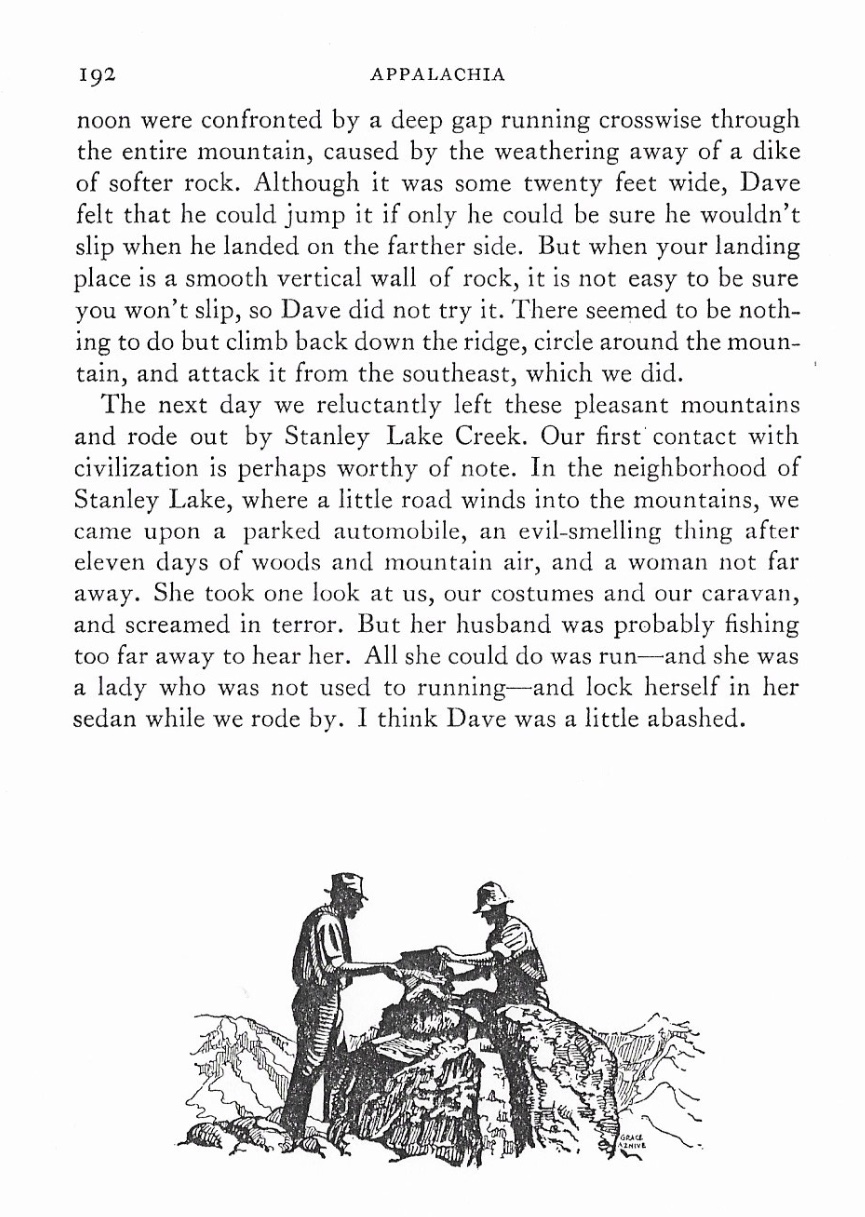
    Editors Note: Appalachia Vol. 20, 1934. This article put the Sawtooth Range in the national spotlight. Use this link to learn more about the author: Miriam Underhill 


    There is a bit of page 188 text missing at this point. I will add it as soon as possible.

  • Chimney Rock Off-Belay Magazine 1972

    Chimney Rock Off-Belay Magazine 1972

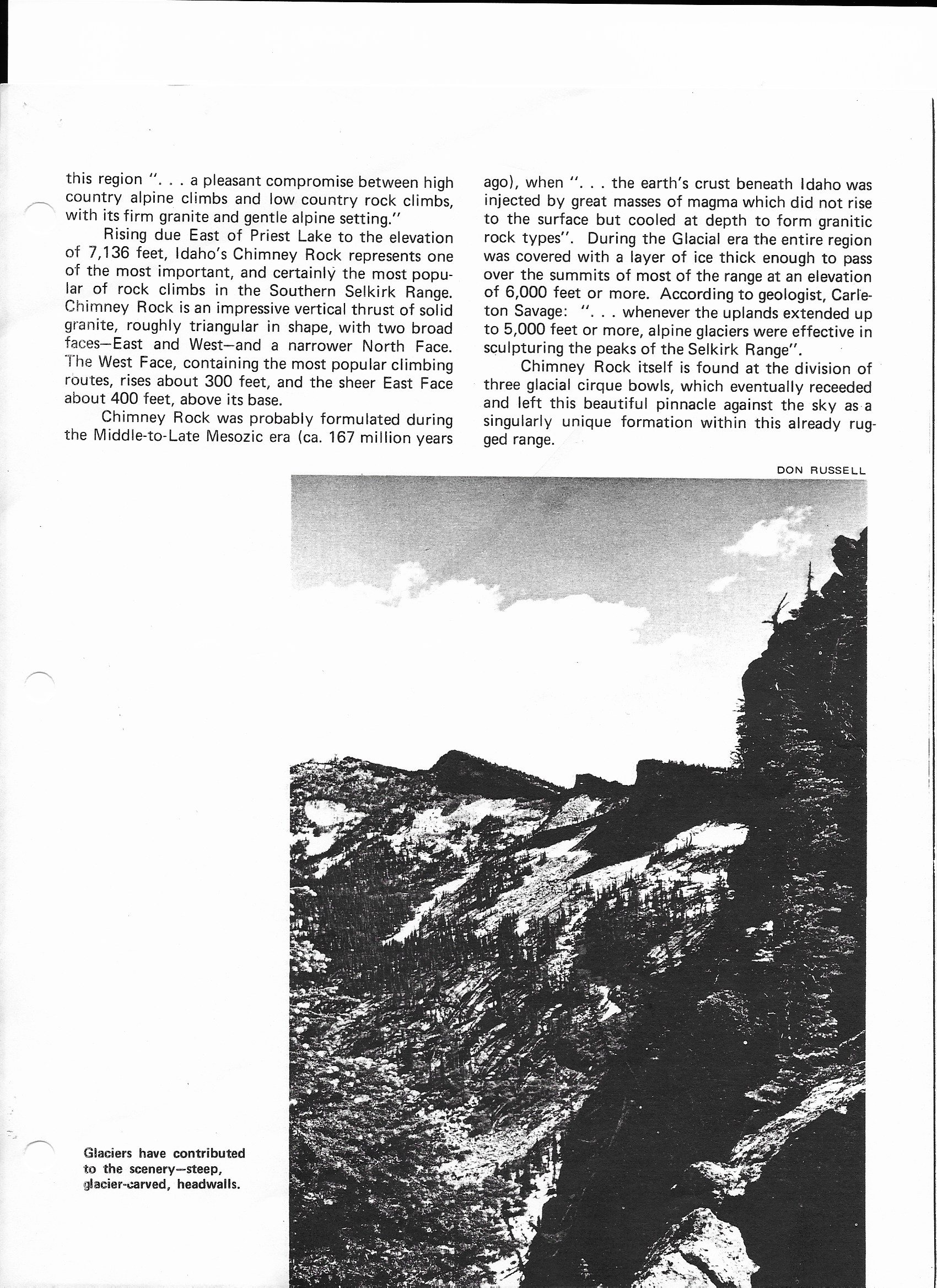
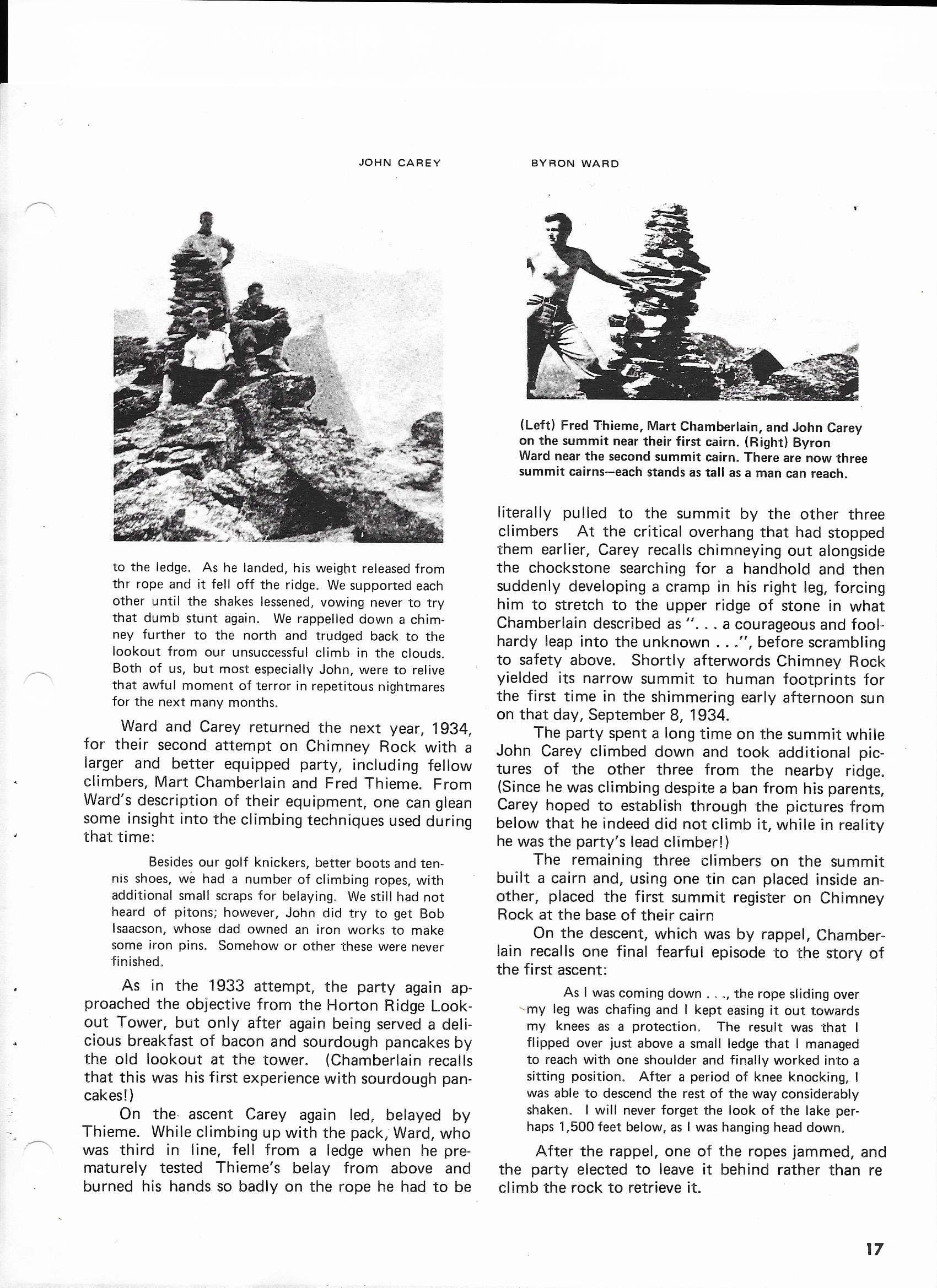
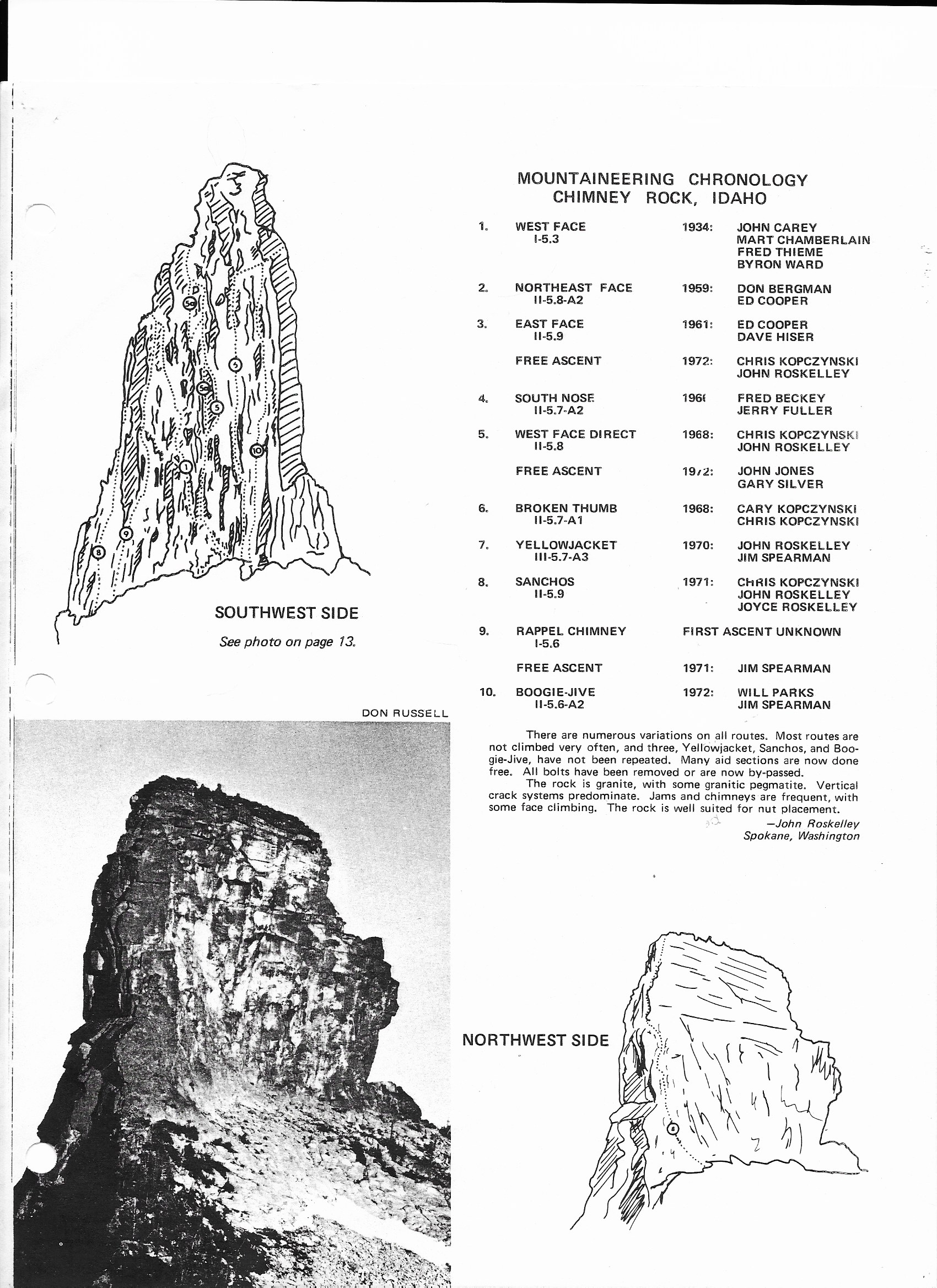
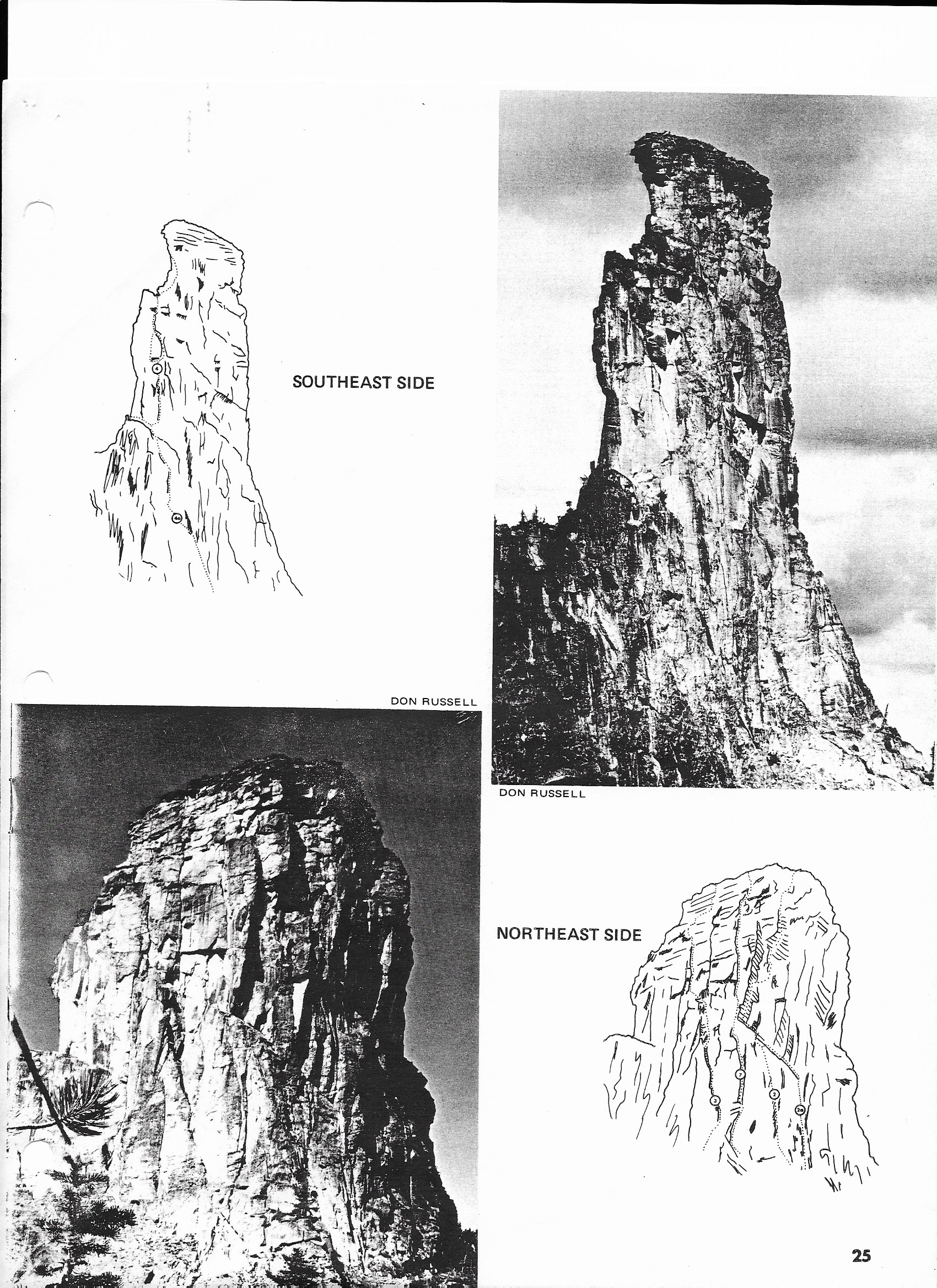
    Off Belay Magazine was THE climbing magazine of its day. The following article had an extensive discussion of Chimney Rock [Off-Belay Dec. 1972 Vol. No 6.]. Ron Klimkow (1936-2012), the author, was a professor in the Music Department at the University of Idaho and an accomplished climber.


  • Off Belay Magazine —The Sawtooth Issue 1975

    Off Belay Magazine —The Sawtooth Issue 1975

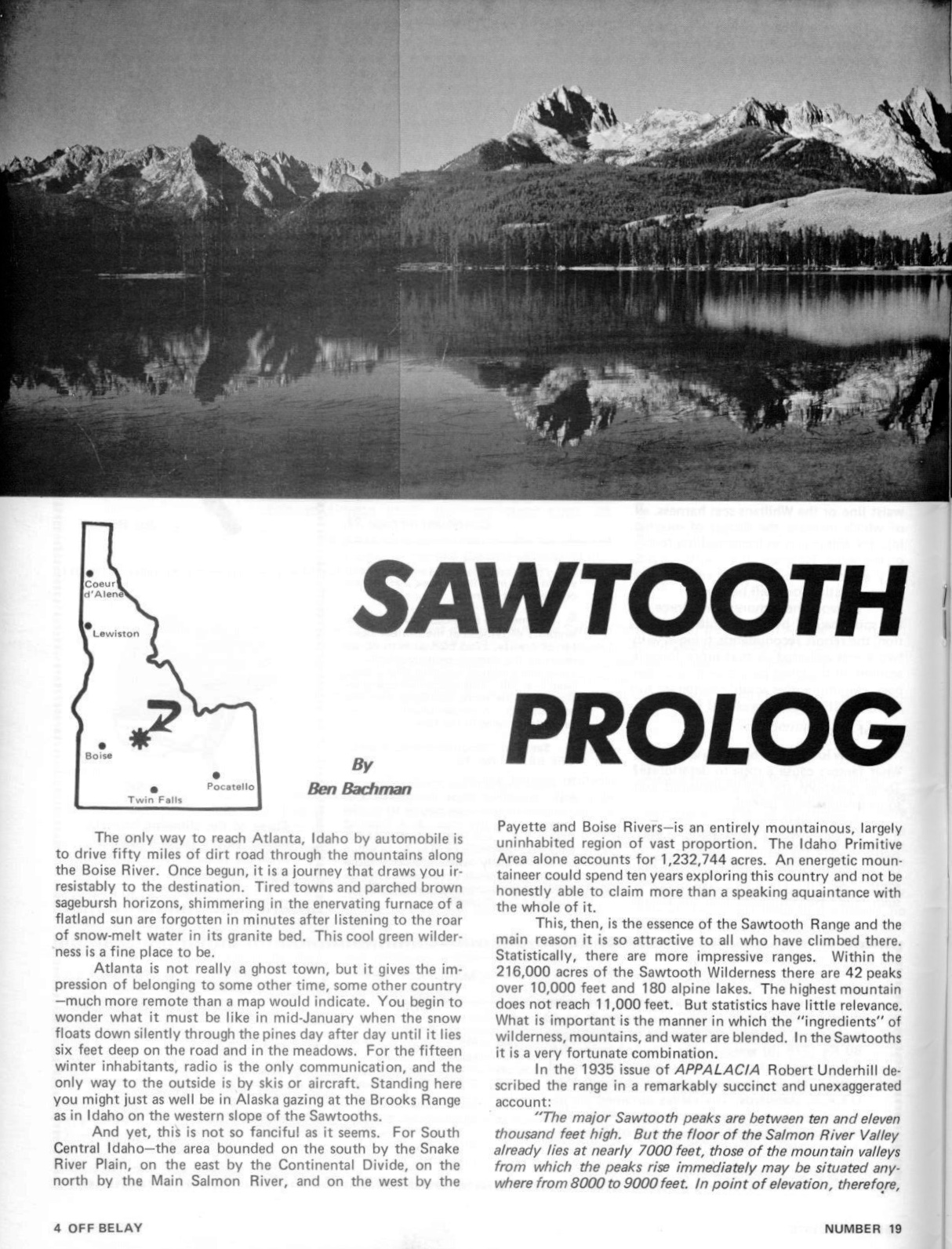
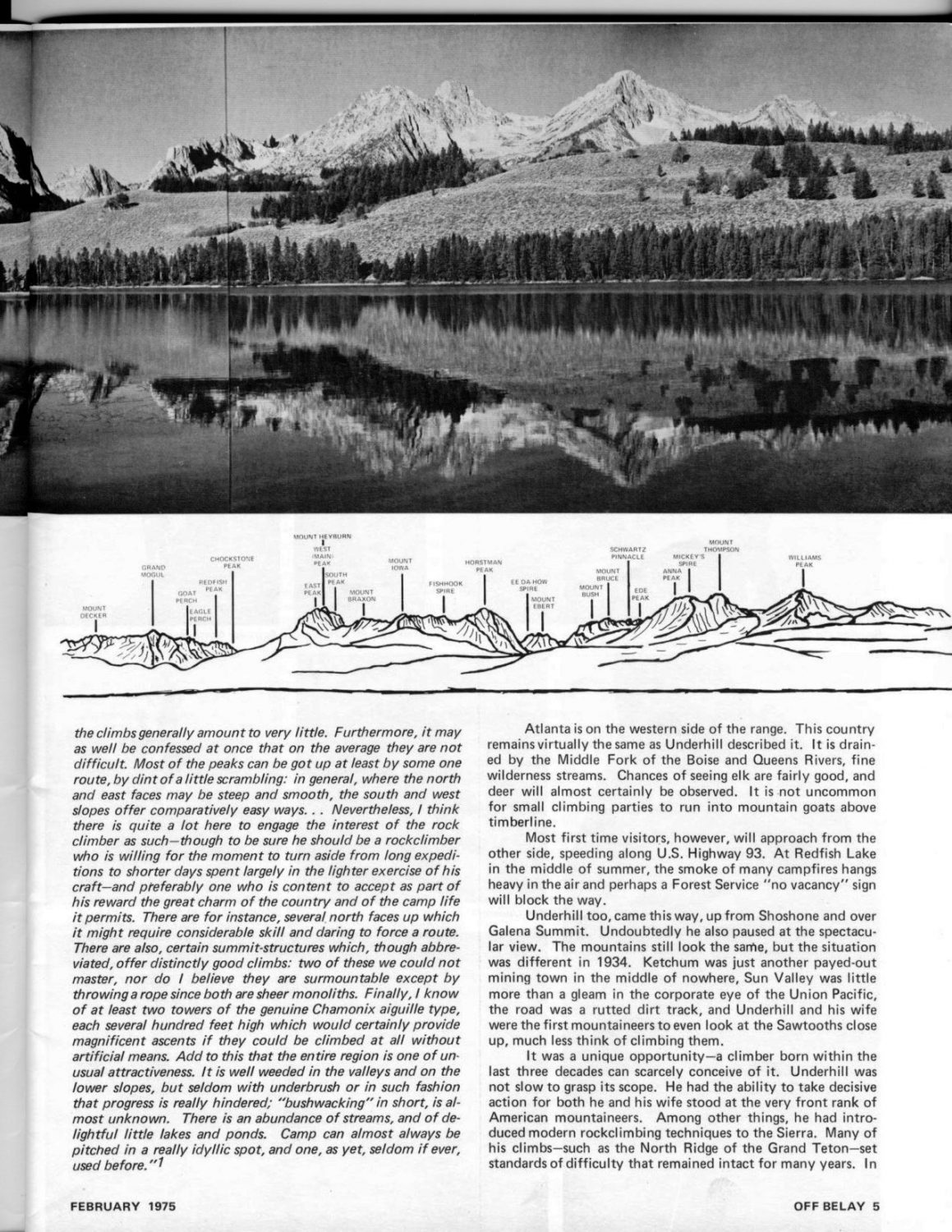
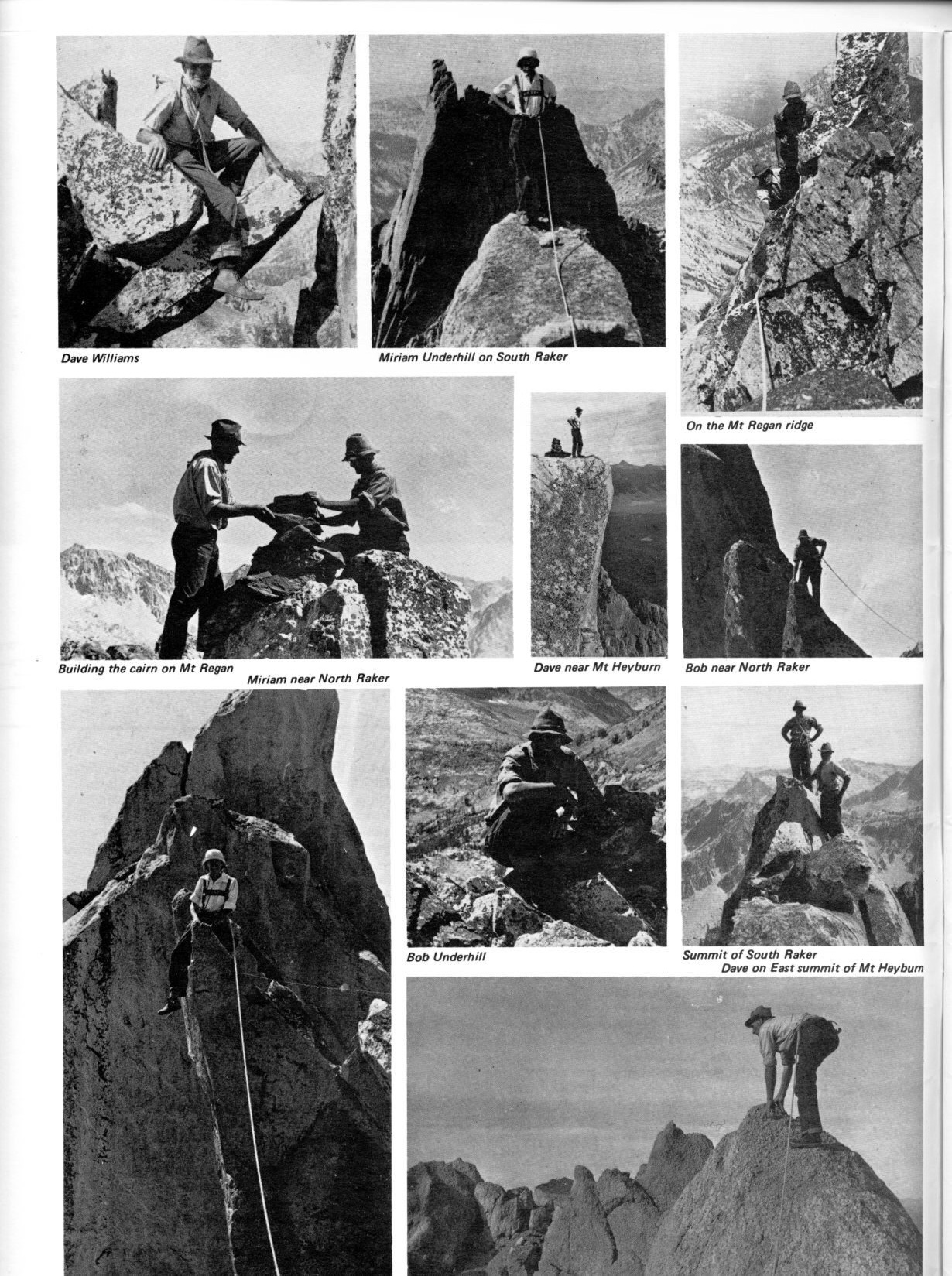
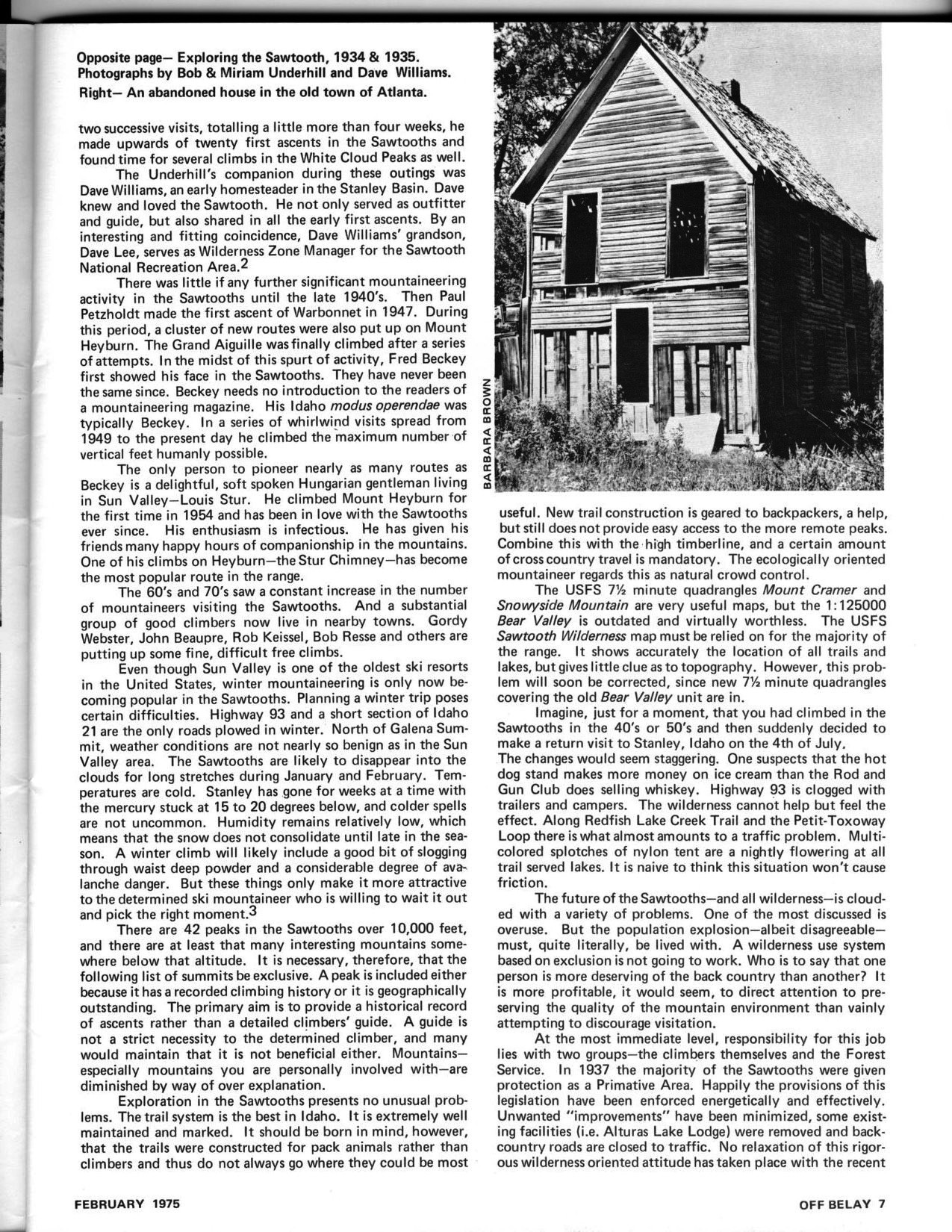
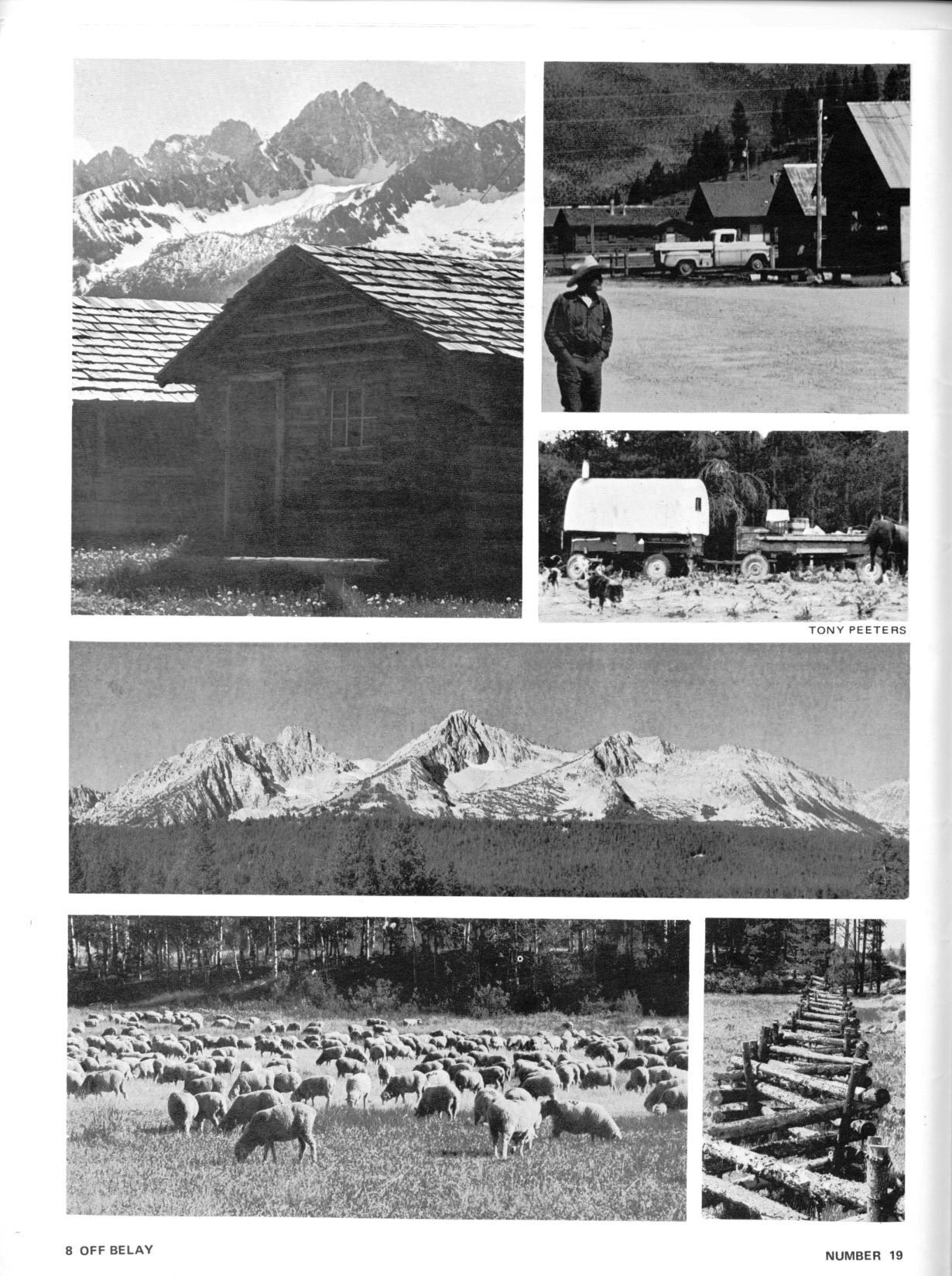
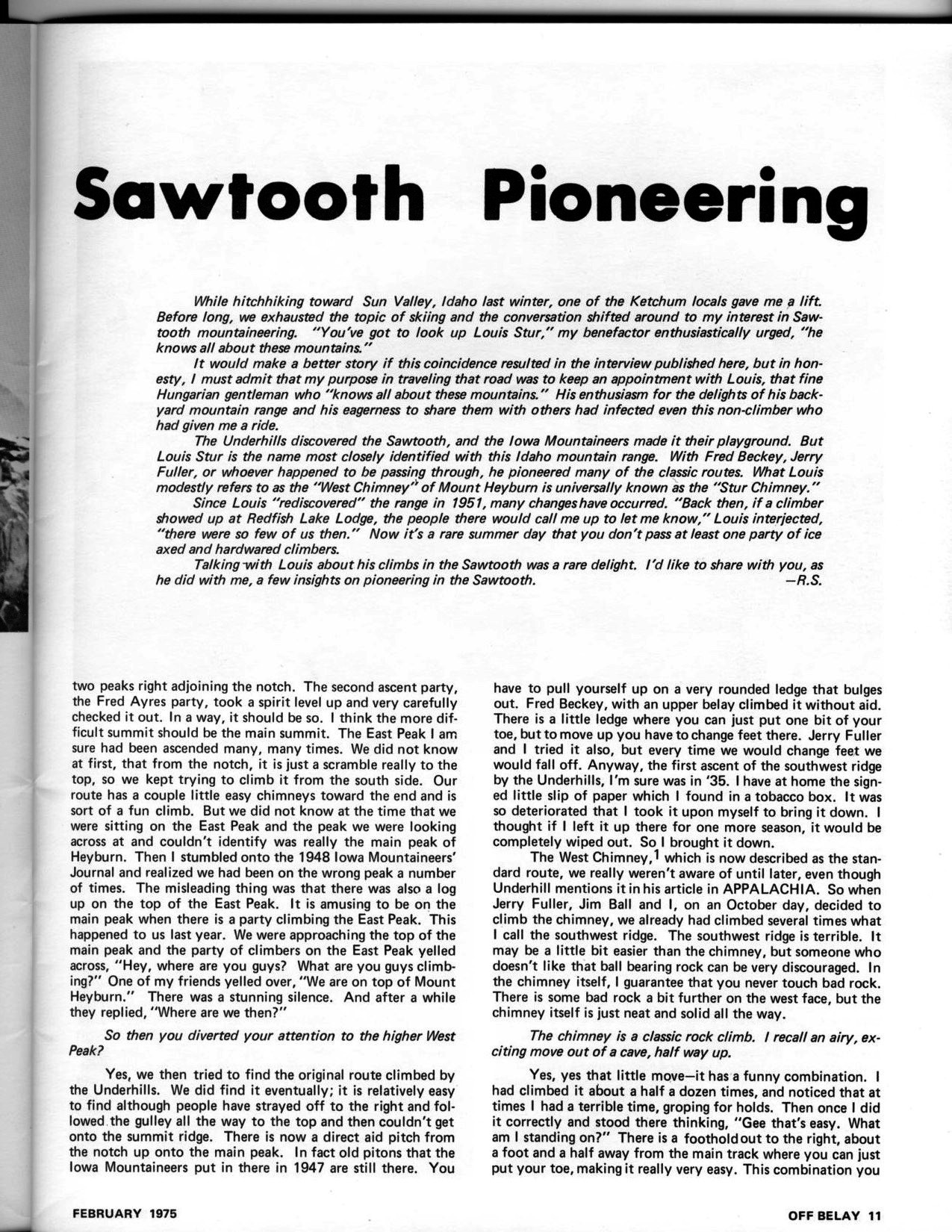
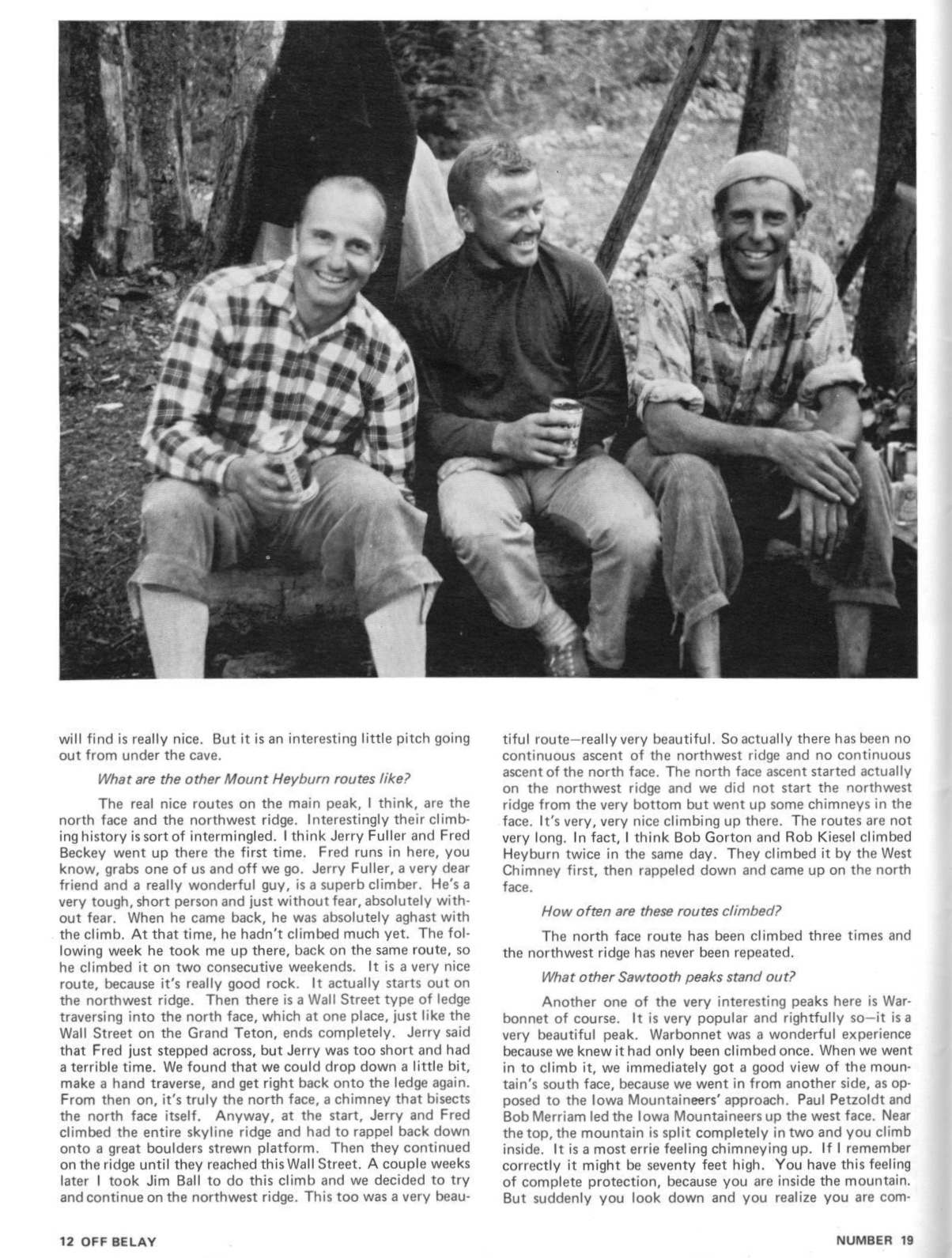
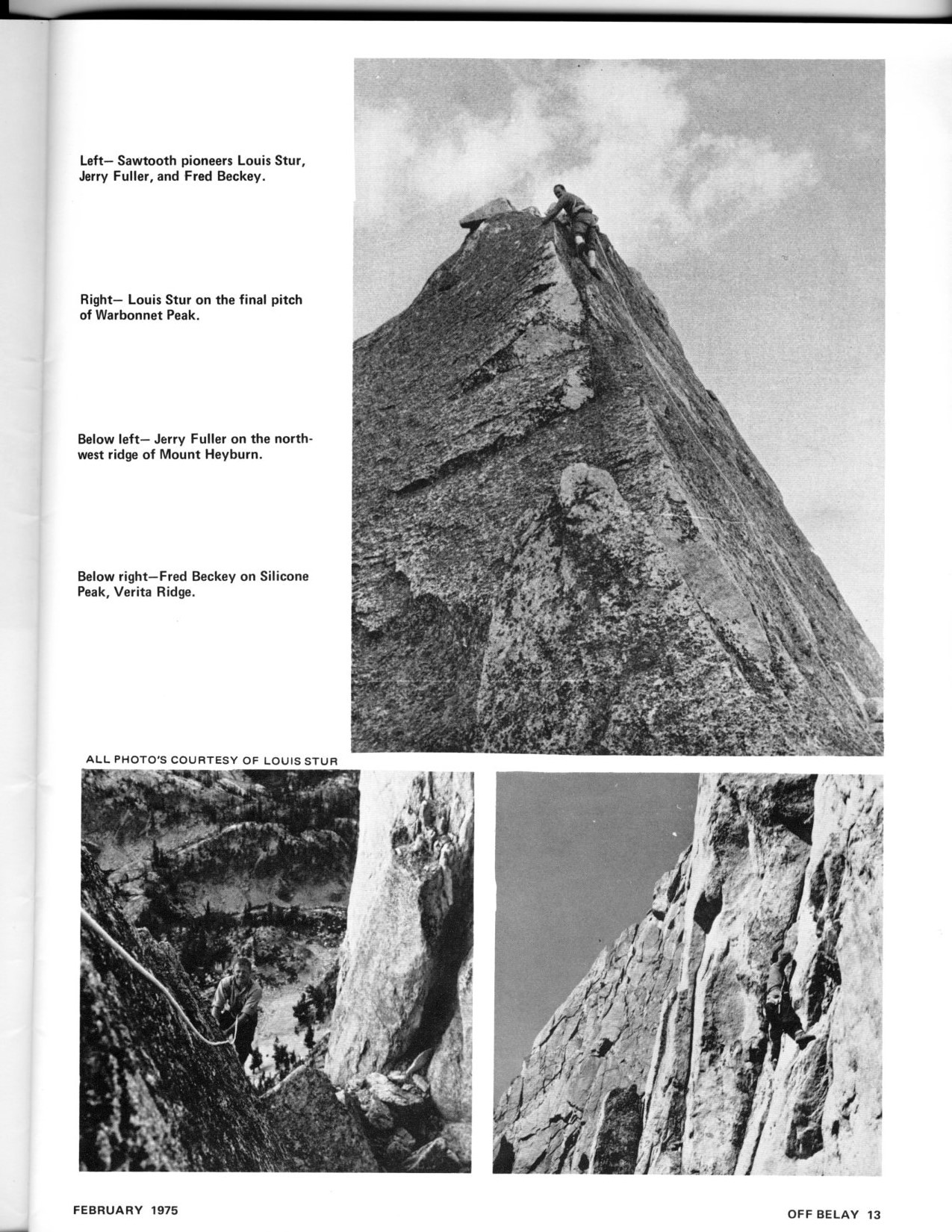
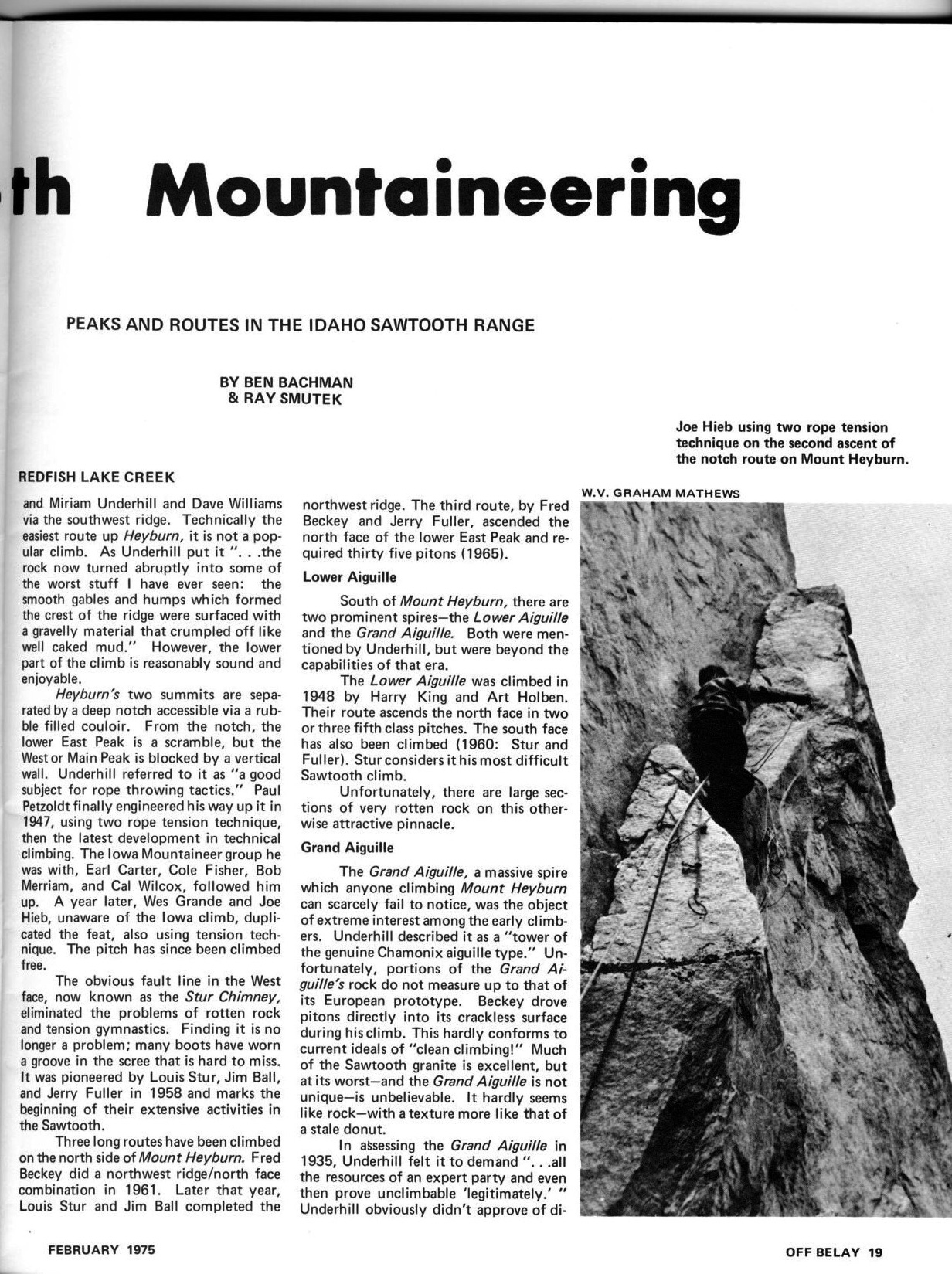
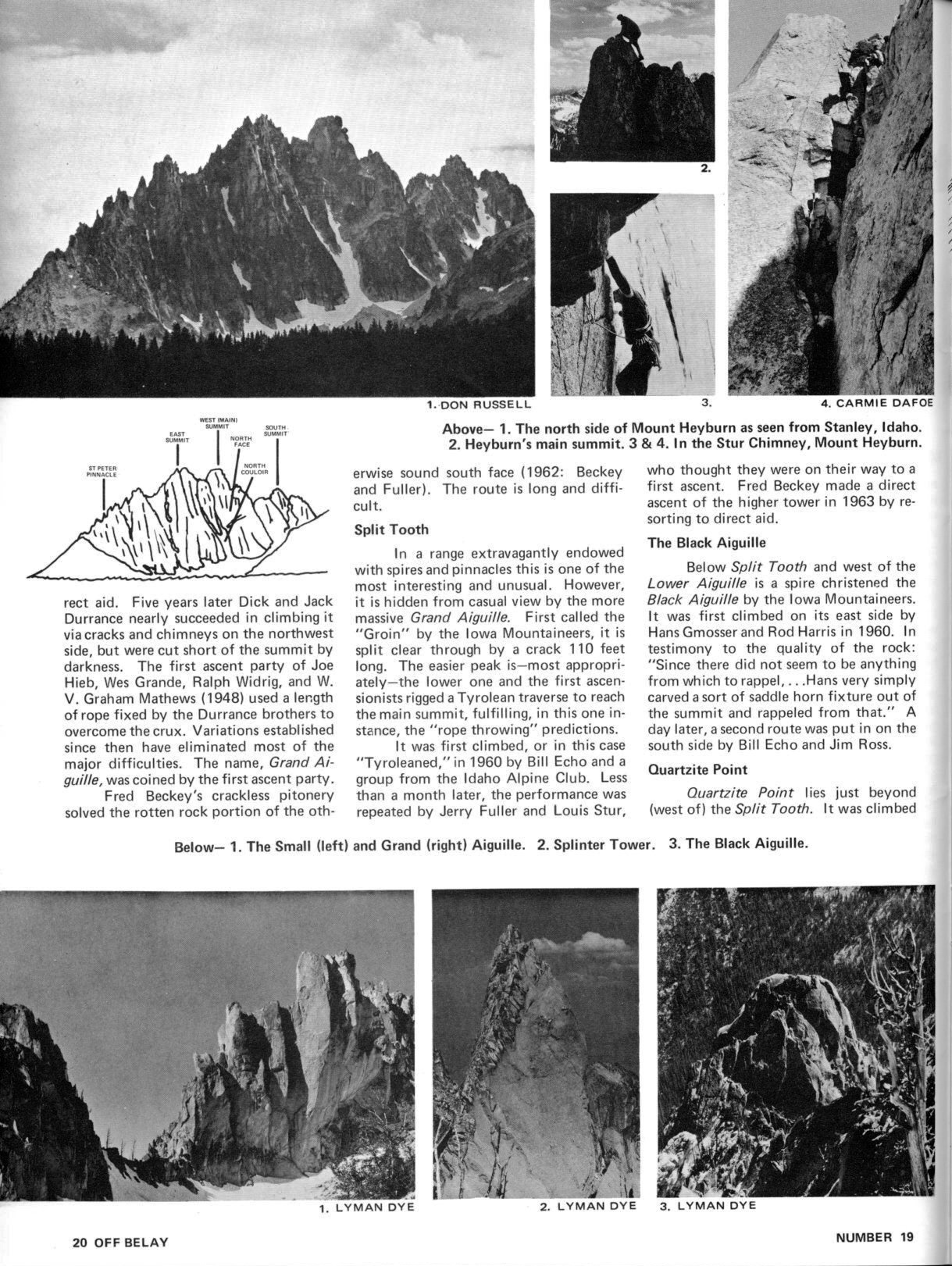
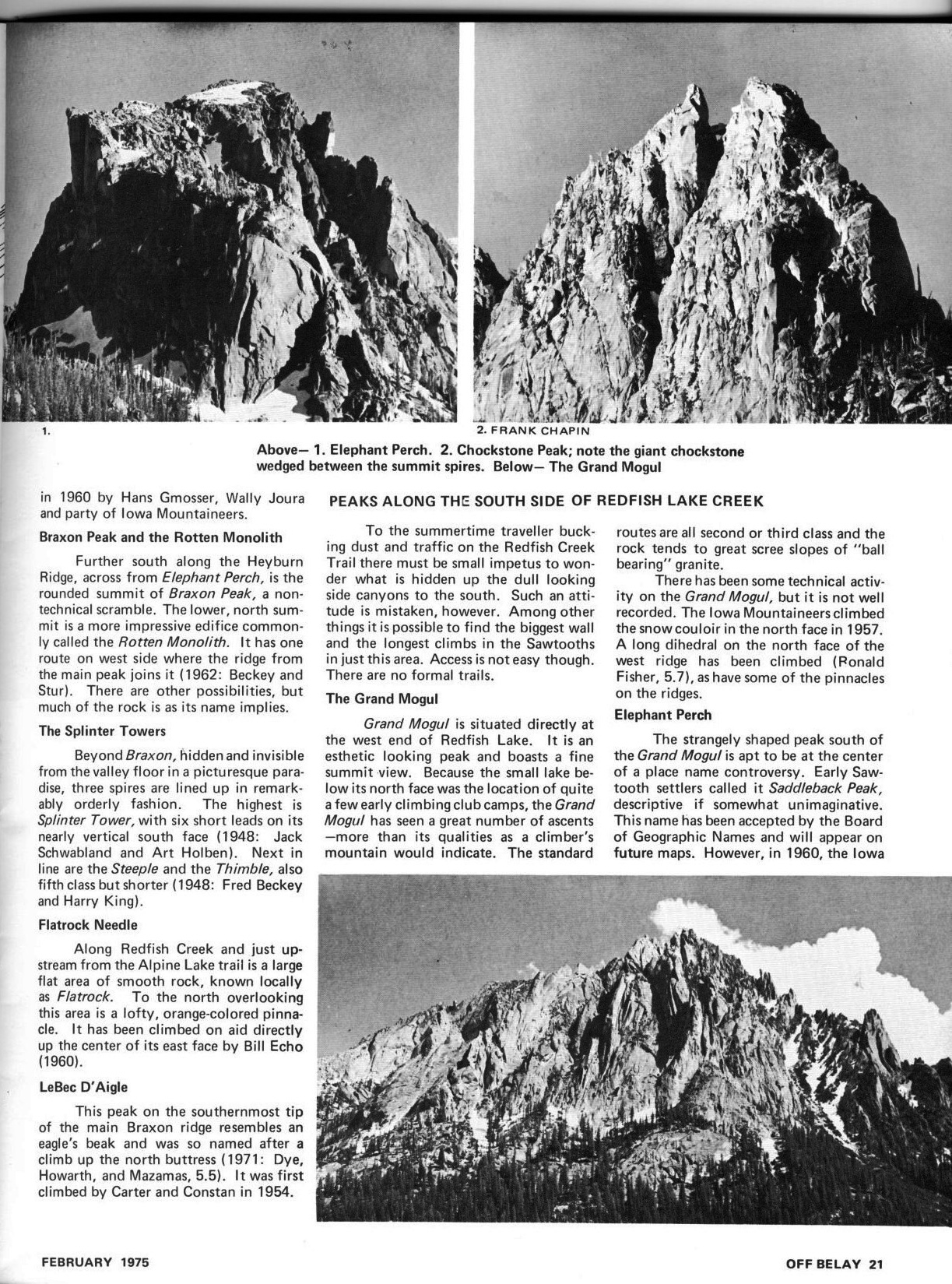
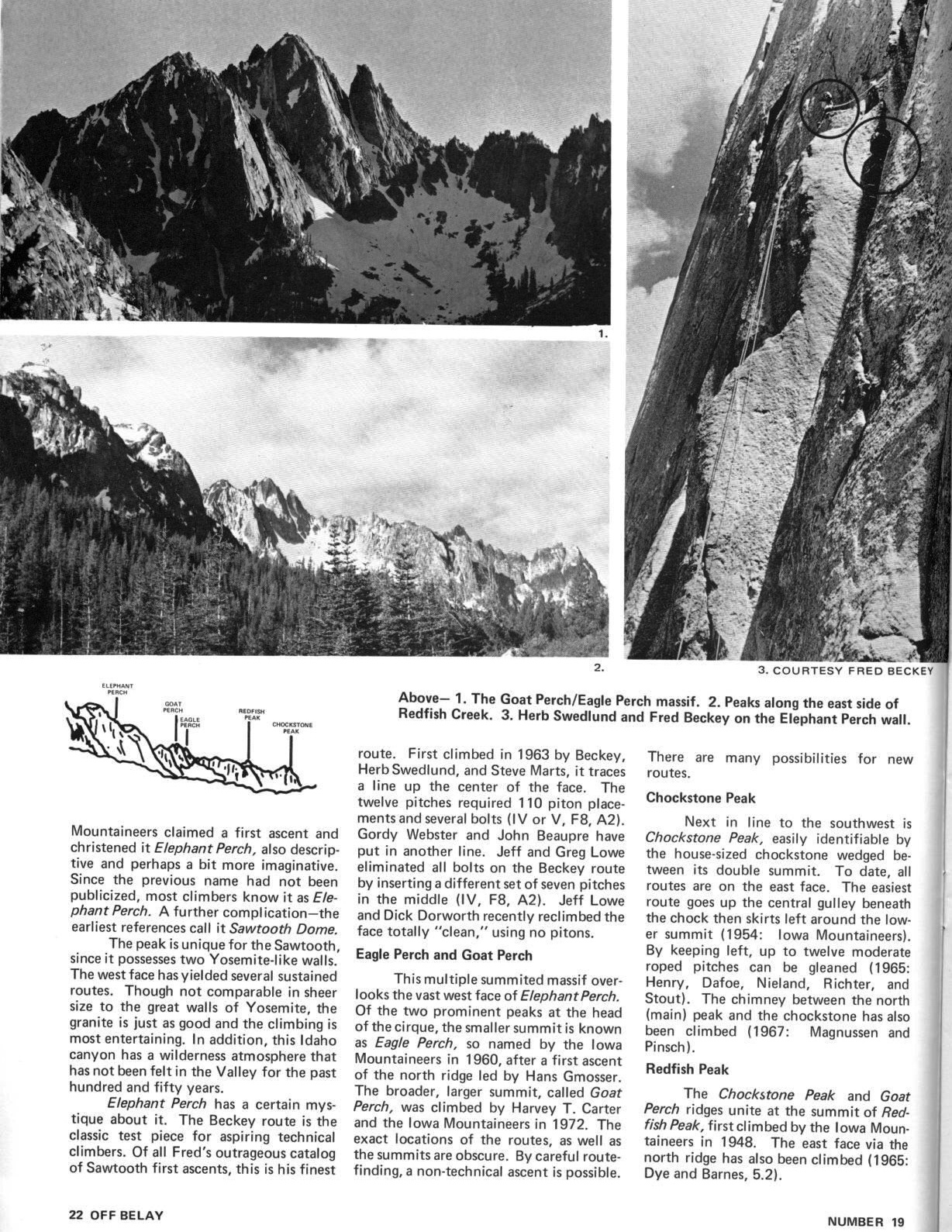
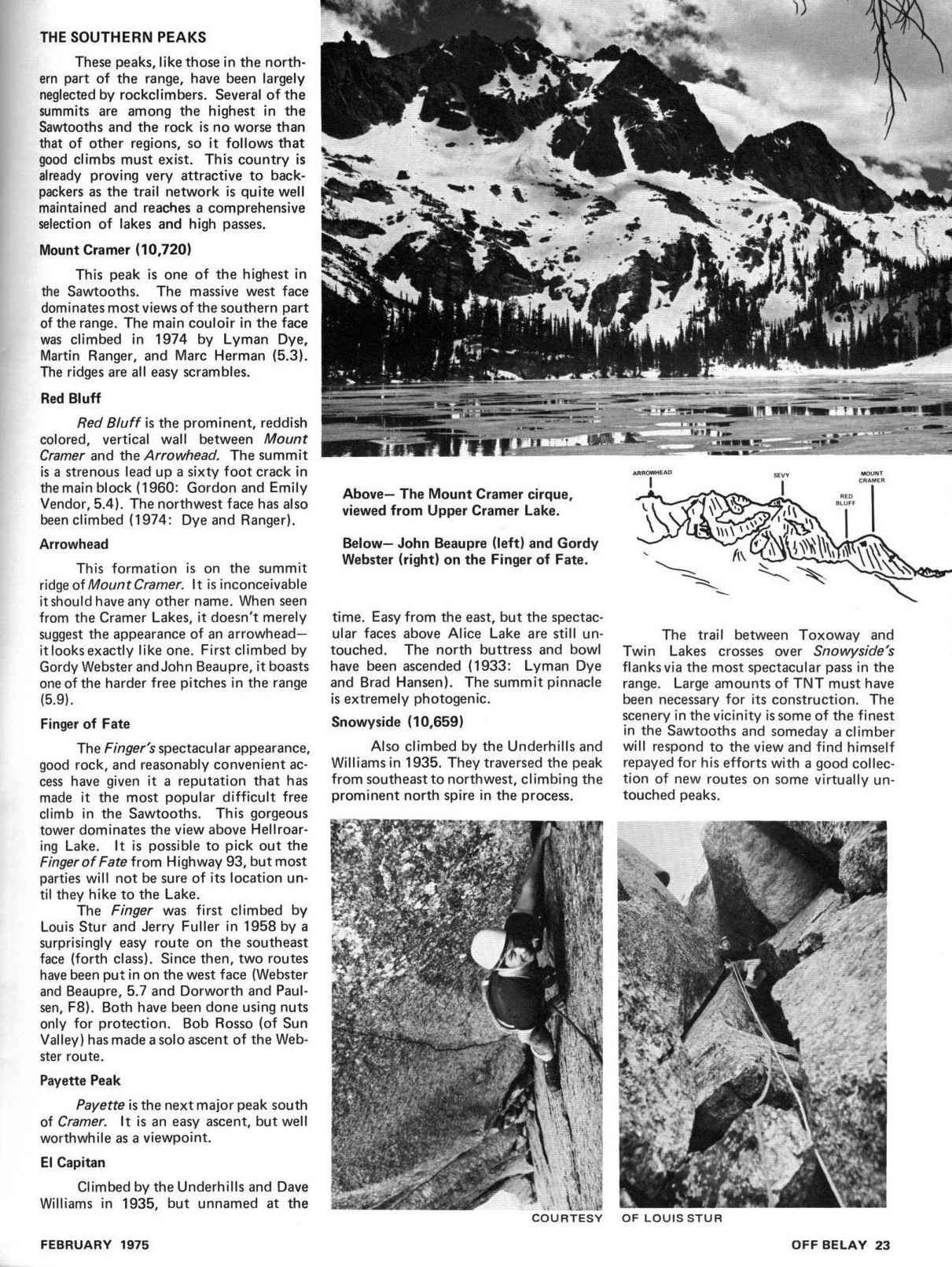
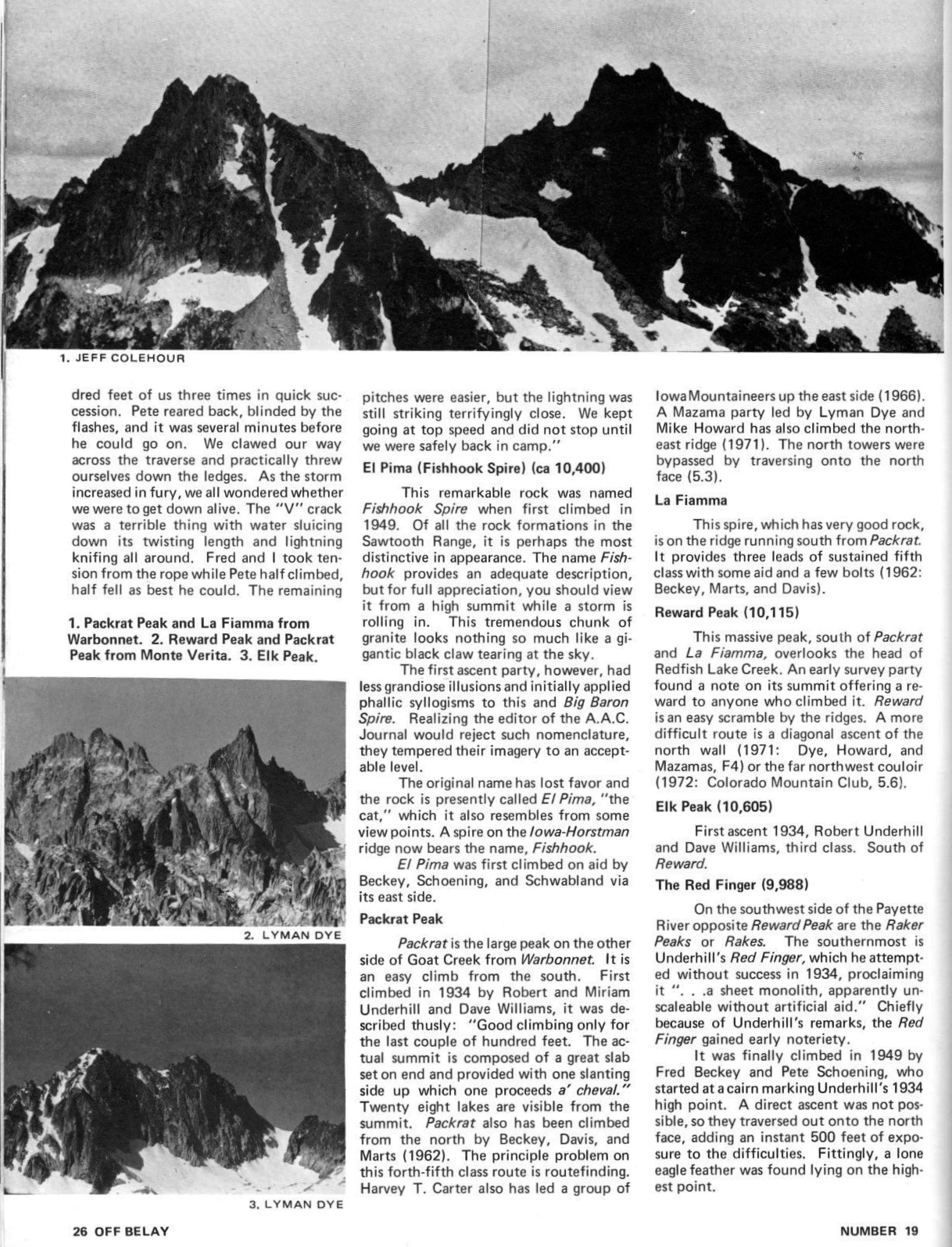
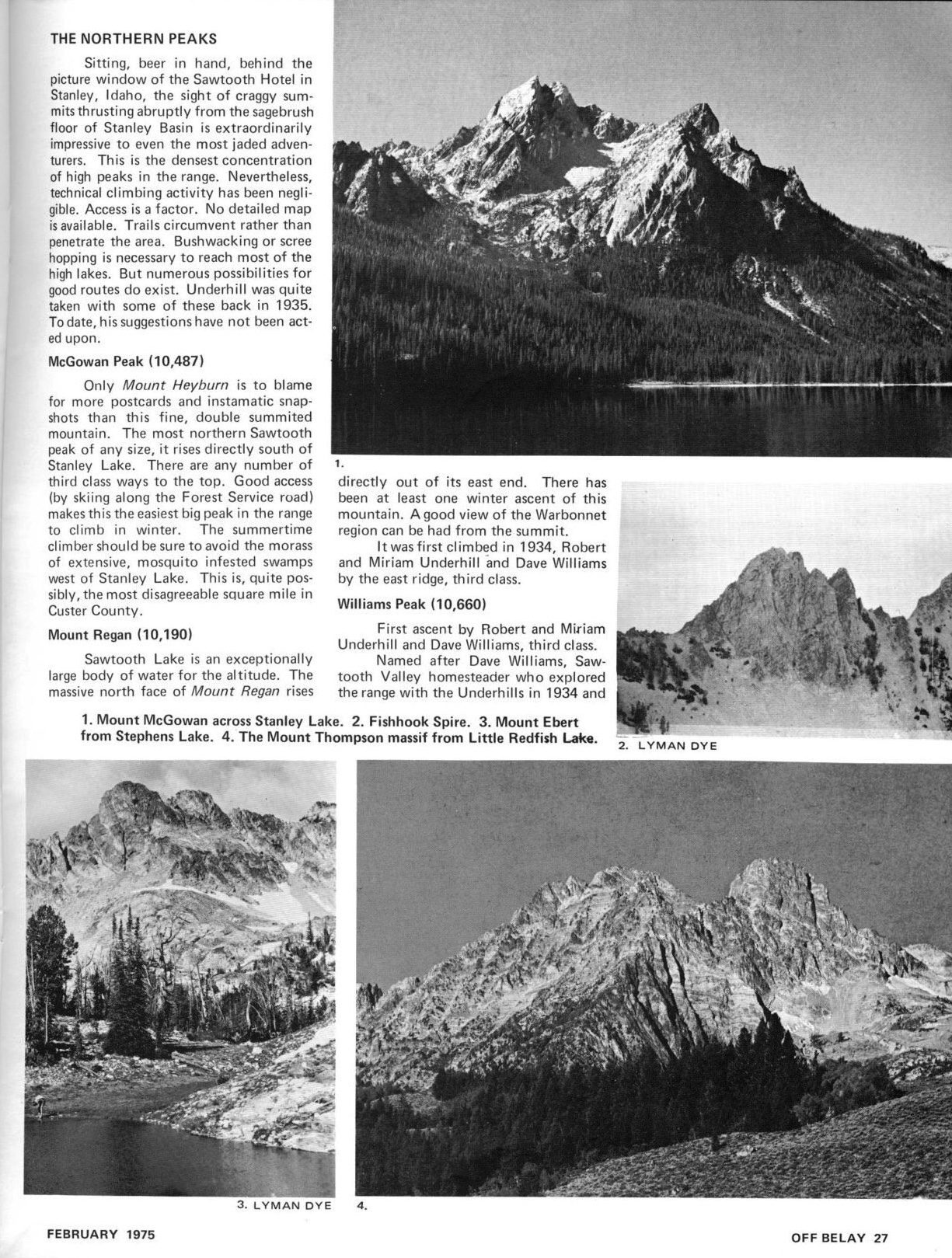
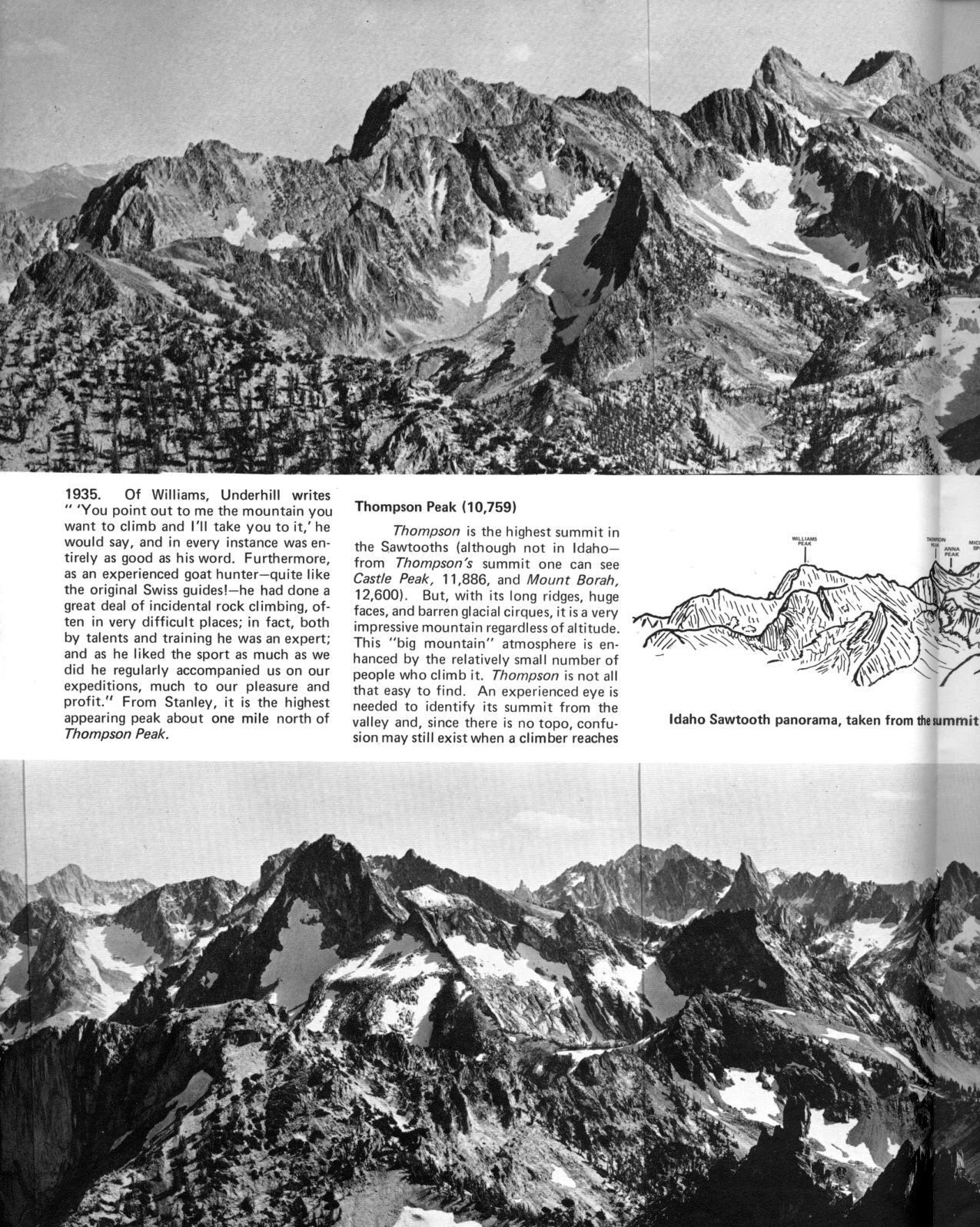
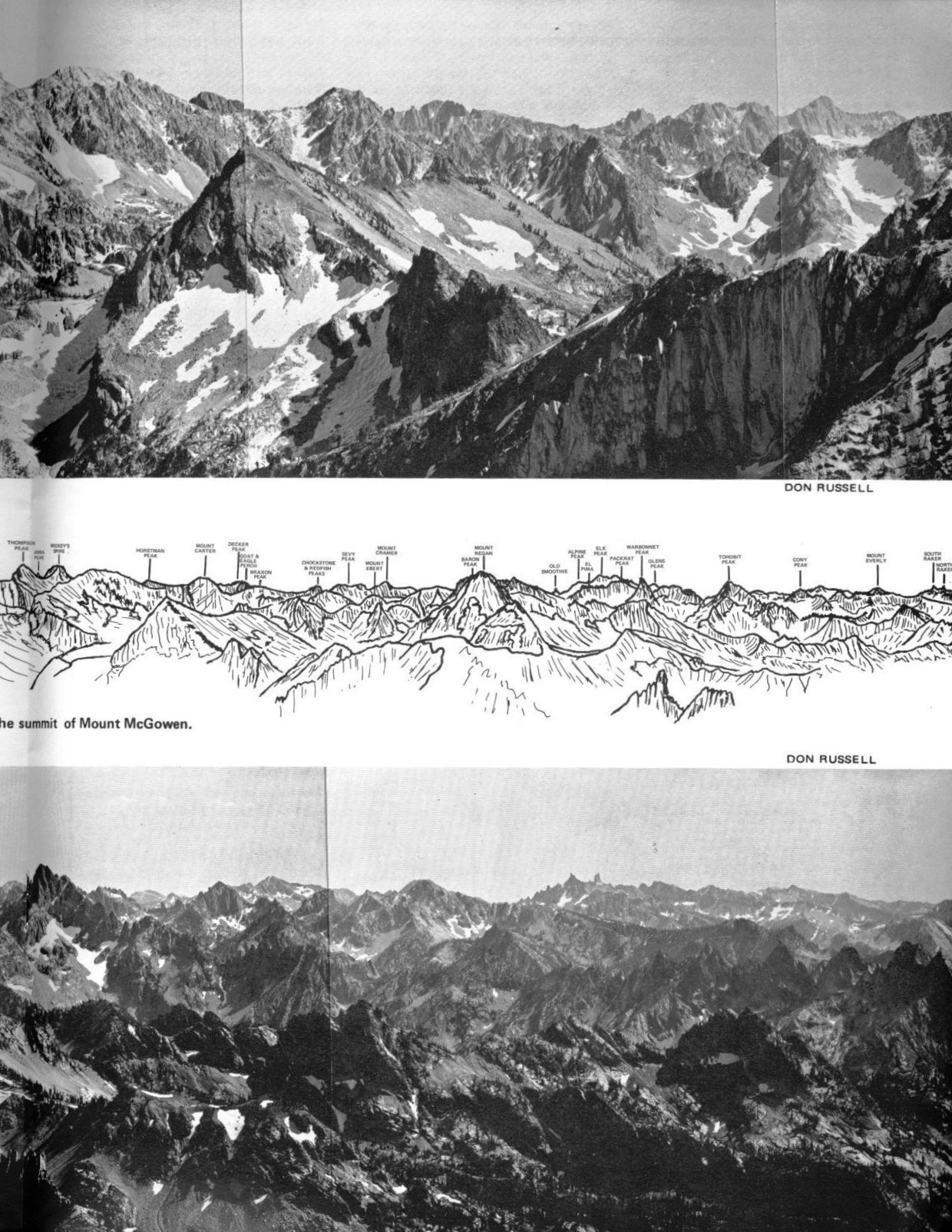
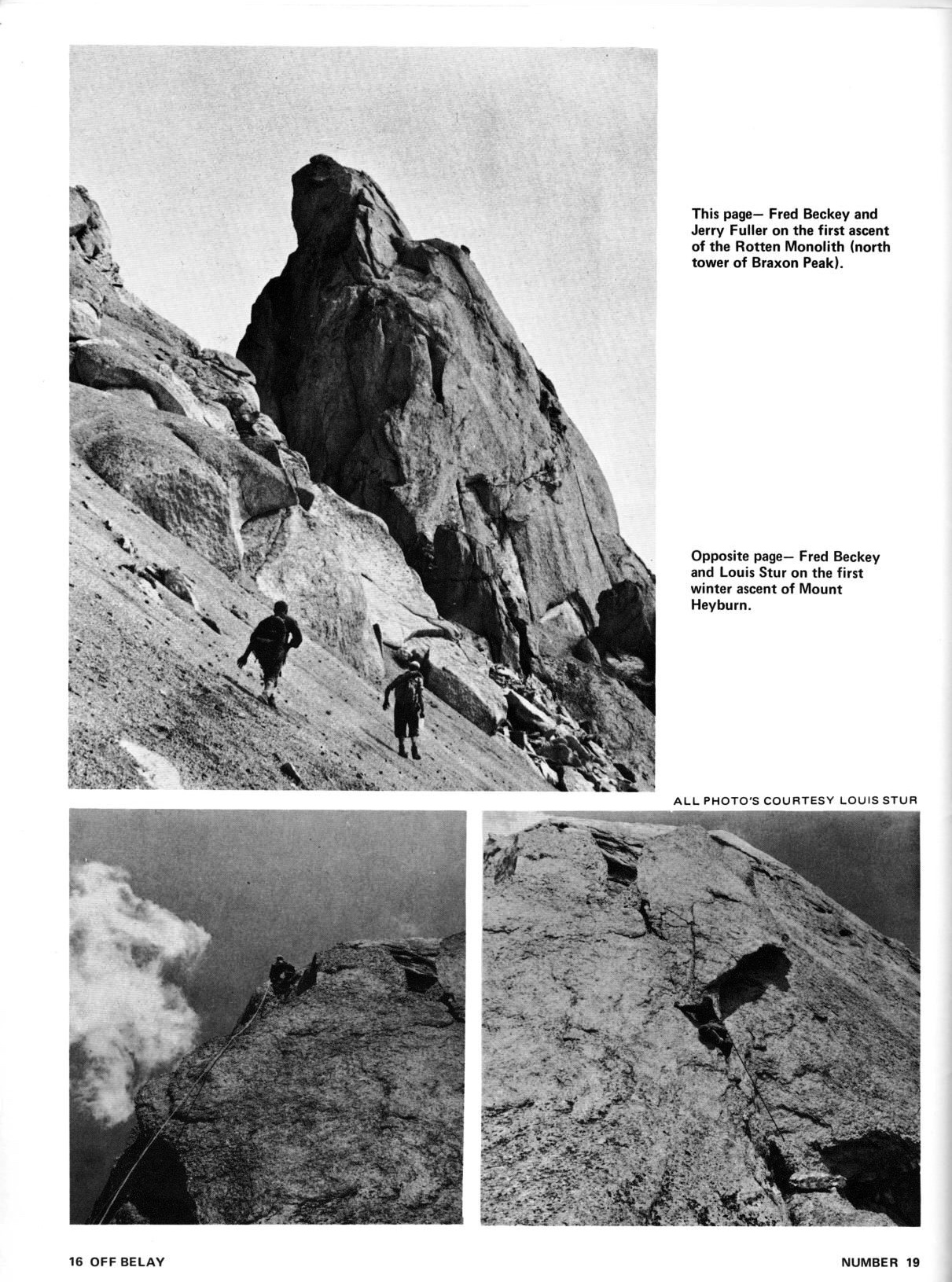
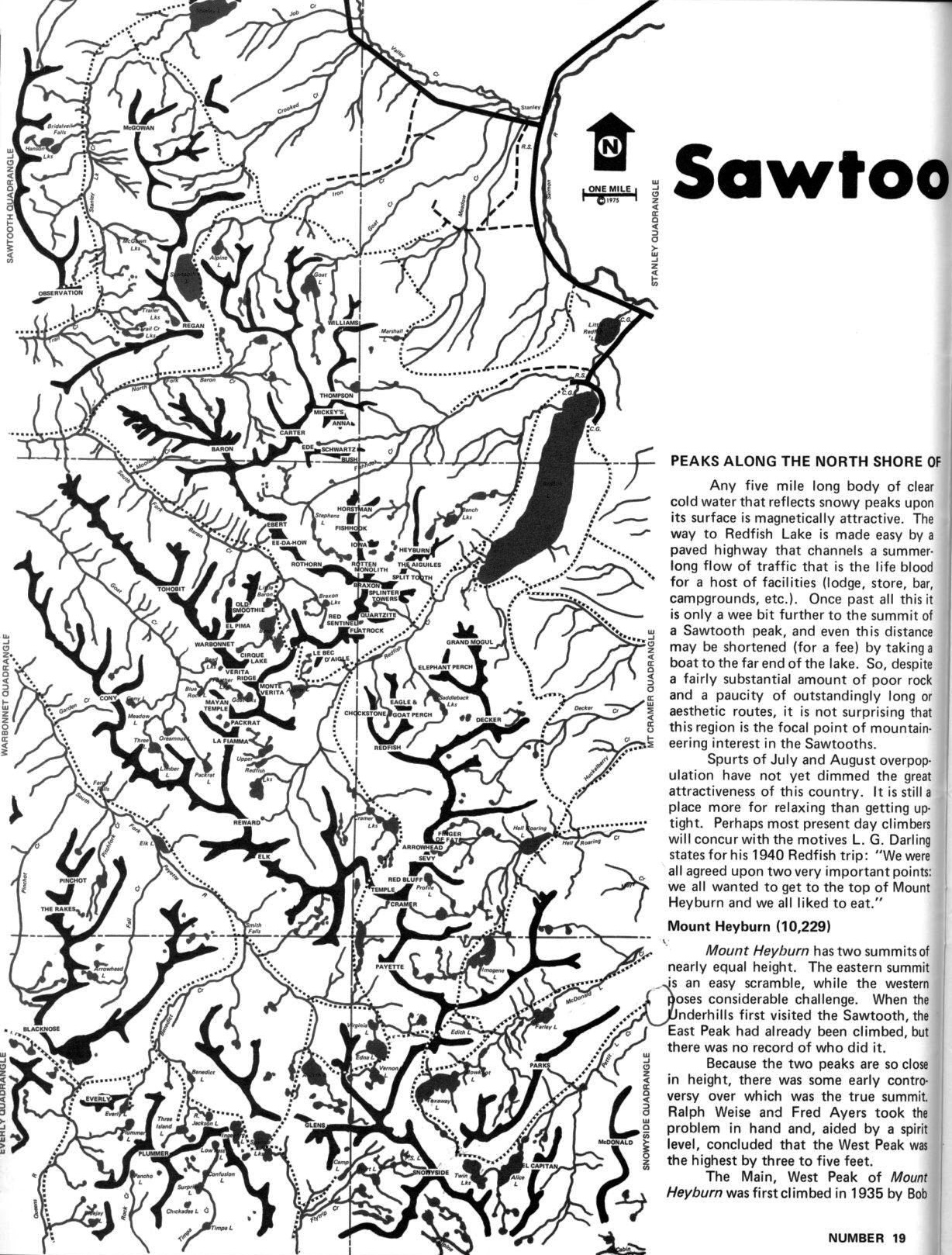
    Off Belay Magazine was THE climbing magazine of its day. The following articles contained the most extensive discussion of the Sawtooth Range yet published in 1975. Special thanks to Ray Brooks for providing the scans. (Click on the scans to enlarge)


  • The First Ascent of the North Face of USGS Peak

    The First Ascent of the North Face of USGS Peak

    ARTICLE INDEX

    The North Face of USGS Peak

    I wrote this article about the first ascent of the North Face of USGS Peak for the Idaho State Bar magazine, The Advocate. They wanted me to write an article to demonstrate that attorneys could have a life apart from their legal practice. This article recounts the first ascent of the North Face. It was originally published in The Advocate, published by the Idaho State Bar in the July 1997 issue, Volume 40, No. 7. The peak’s page is found at this link: The climb took place in August 1995. USGS Peak


    I climb with my wife. For us, spare time means weekends and vacations. The typical climbing weekend begins as the prior weekend ends. As our truck reaches the pavement. Dana, my wife asks “What shall we climb next weekend?”
    “I’m not sure I can go. I have a hearing the following Monday.”
    “Can’t you get ready before the weekend?”
    “I’ve got to write three briefs this week. I’ll have to work all night.”
    “The weather can’t last forever. We should take advantage of it.”
    “I know, I’ll work late.”
    “Me too. What shall we climb?”
    “What shall we climb?” is a loaded question for us. Its kind of like “to be or not to be?” for poor old Hamlet. There are too many options, too many summits. We talk about the options and then agonize about the decision because time is so limited.

    Monday and Tuesday. Work, work, work. At home, it’s chores. At lunch, its running. In between, we pick a peak: The North Face of USGS Peak in the Lost River Range. To our knowledge, the face has never been climbed. Its one of those peaks that has haunted us for a long time. Three earlier attempts on the peak over the last 15 years came up short. One brief is finished.

    Wednesday. Wednesday evening is usually the drop-dead date for packing and planning. We must collect the maps, pick the route, pack the packs and buy the food because we will be too tired on Thursday. Brief number two is done by 4:30PM.

    Thursday. Its time to finish the third brief and draft an outline for the Monday morning hearing. A new case comes in and I find an answer is due by today. Between witnesses and opposing counsel, too much time is spent on the phone. I run at lunch time. A case settles, gotta draft a release, oops, time to go home. At home, the garden needs water and the equipment needs checking. We look at the maps and go to bed.

    Friday. The drive to the East Side of the Lost River Range will take at least 5 hours, so we plan our escape for the early afternoon. The third brief is done. At 3:15PM, we are in the truck and heading for the freeway. From Boise, we drive east to Bliss, Shoshone and Arco. Lava fields and small towns pass by and the mountains to the north and east grow closer. At Arco, we buy gas and drive east to Howe. Its 6:00PM and we are pointed north on Little Lost River Highway.
    The good roads end at Clyde. We follow the Wet Creek Road west to the Dry Creek cut-off road which runs northwest. At about 6:45PM, we arrive at the shattered Dry Creek Dam which was, according to one story, blown up as a result of a water rights dispute in the 1920s. We stop for a break. The most difficult 4 miles and hour of the drive are ahead. The sun is dipping down behind the Lost River Range Crest. The shadows bring coolness.

    The road down from the top of the dam is reminiscent of a roller coaster ride. One turn and the road is nothing more than a talus slope which pitches out and sharply down at a wicked angle. The Jeep bounces and stammers, the wheels throw gravel and its over. I release my death grip on the steering wheel.

    It’s now time to ford Long Lost Creek for the first time. The creek is wider than I remember, but we plunge in anyway, making waves with our bumper. The gravel stream bed supports us and we cross without incident. Its starting to get dark. In another mile, we cross the creek again. A quarter mile farther and we reach a grassy, water-logged meadow. The stream has divided into numerous rivulets which liquefy the earth. No cell phone will reach a tow truck from this remote spot. We have visions of the truck sinking into the meadow and, tired of driving, consider setting up camp without crossing the meadow.

    We realize that if we do not continue, we will have a much longer climb the next day. So we go on. Mud oozes and water sloshes around the truck. We creep from one mud hole to the next, finally reaching the mother of all mud holes. “What do you think?” Dana asks. “Someone drove through here,” I say without much confidence. We explore the mud hole on foot, it has a bottom, and we drive on. Suddenly, it’s over. There is dry ground under us. The road is now surprisingly good and the last bit goes quickly. We have made it to the proverbial end of the road.
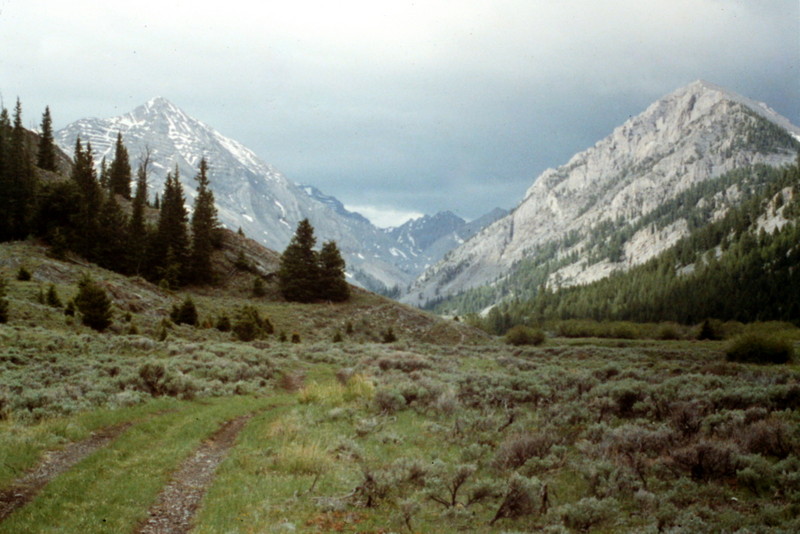
    The Long Lost Valley is a difficult place to reach but well worth the effort.
    The Long Lost Valley is a difficult place to reach but is well worth the effort.

    Time to make camp in the twilight. The tent goes up, the sleeping bags are unpacked, the headlamps and novels are thrown in the tent, water is located, a late-night snack is gobbled up and suddenly it’s quiet. Massacre Mountain, a long hulking ridge, towers above one side of the valley while the canyon walls on the other side of the creek climb to the summits of several unnamed peaks. A deer crosses the meadow. The wind shifts slightly and the sound of the creek rolling down the canyon reaches our ears. It’s cool now. The trees sway with the breeze and I fall asleep while my untouched novel lays at my side.

    Saturday. Well, OK, not the crack of dawn but a respectable 7:30AM. Time for a quick breakfast, then we load the packs. At 8:10AM, we’re on the trail, an old trail that has seen little use in the last 25 years. We hike through stretches of fir and pine separated by sagebrush-covered flats toward the headwall at the end of the canyon. The trail has disappeared. As the route climbs up a steep slope through an avalanche run, my legs remind me that it’s going to be a long day.

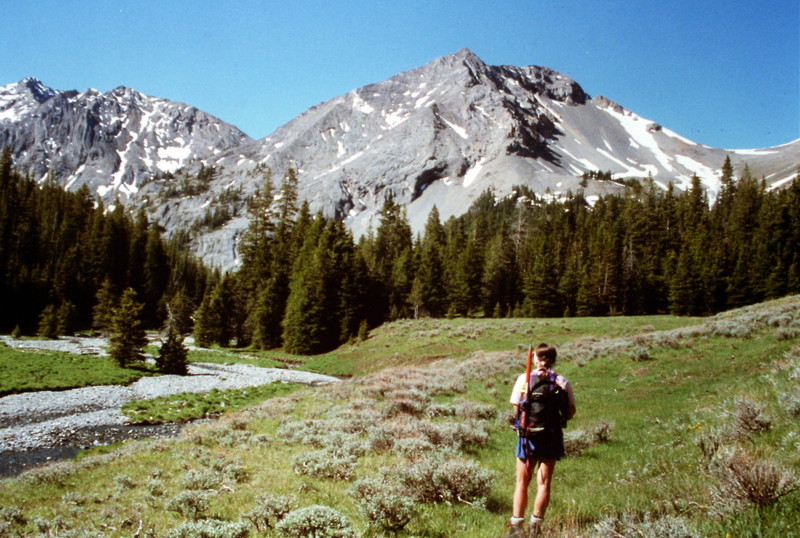
    After the road ends there is a sketchy trail that can be followed in places. It is for the most part missing in the meadows but locatable in the trees.
    After the road ends, there is a sketchy trail that can be followed in places. It is, for the most part, missing in the meadows but appears in the trees.

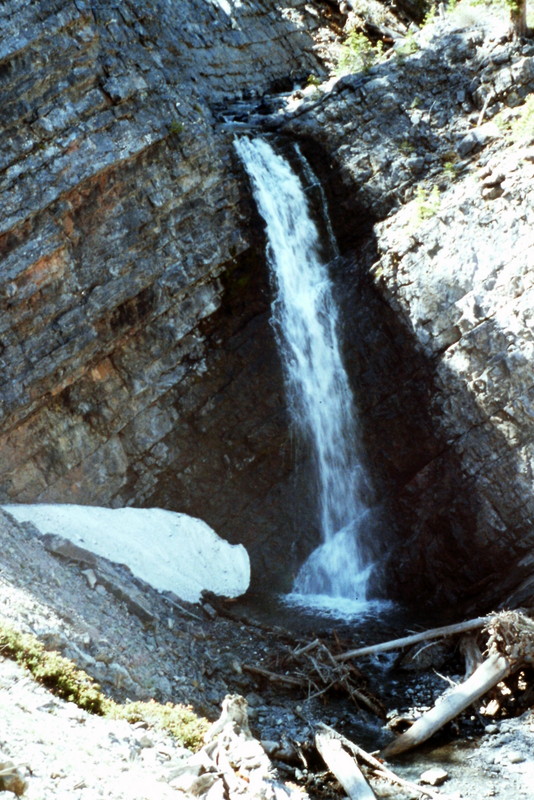
    A short distance ahead, we encounter a 100-foot waterfall dropping over vertical rock walls. Following the stream is out of the question. We located a route and start up the side of the canyon. The detour involves climbing 200 feet up a steep, dusty slope. From this point, a 75-foot loss in elevation brings us back down to the stream above the waterfall. The next obstacles (two smaller waterfalls) are not as time consuming to bypass. An hour has gone by.

    The highest water fall along the approach route.
    The highest waterfall along the approach route.

    A detour around a 4th waterfall brings us to a spot where the valley opens up into a hanging valley. A small tributary stream flows down from a side canyon, tumbling out of a long snow slope. Our route climbs up this slope to the cirque above. Do we get out our ice axes and crampons to climb the snow or do we climb the rocks to the left? Decisions, decisions. We opt for the rocks to save time. The slope is at least 300 feet high (100 feet higher than the Capital’s dome in Boise) and it takes us nearly 30 minutes to navigate our way to the top.

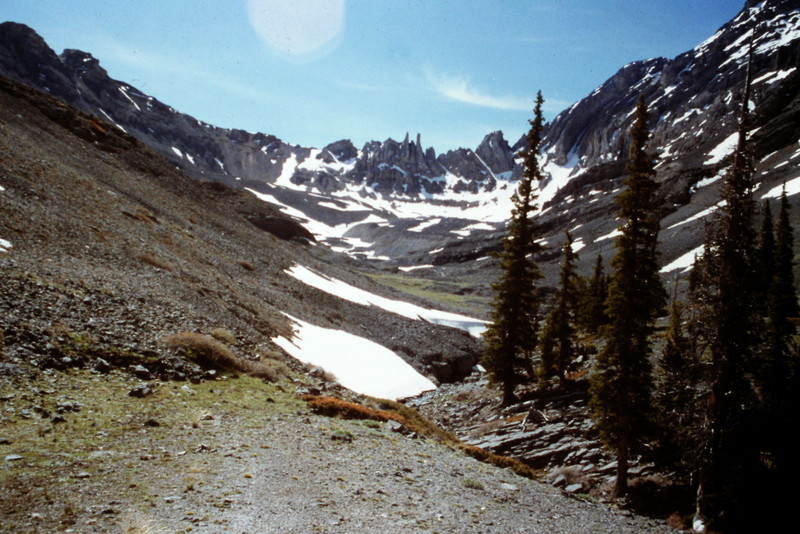
    Above the waterfalls the valley opens up into a spectacular high valley.
    Above the waterfalls, the valley opens up into a spectacular high valley.

    One hundred yards farther and we reach a small pond fed by melting snow. A thin glaze of ice covers its surface, a sure sign that the elevation is well over 10,000 feet. From the pond, we catch our first glimpse of the North Face of USGS Peak. The face is steep (as we knew it would be) but wow, it really looks steep. Slender snow ramps climb up the shadow-covered face. We snap a couple of photos and look at the wall through a monocular. Dana suggests a possible route. We discuss it. I give it my benediction, “Yes, it will go,” meaning that there are no obvious obstacles and what we see ahead of us doesn’t scare me.

    The North Face of USGS Peak.
    The North Face of USGS Peak.

    The intervening terrain is strewn with boulders and patches of snow. Although we picked the easiest route across the broken surface, it still takes 20 minutes to arrive at the face. It’s now time to unpack the ice axes and crampons and to decide whether a rope is necessary. The 1,500-foot slope above us rises at about 45 degrees. We opt for speed and leave the rope. Our ice tools are our only protection. The first pitch is 200 feet high, steep and the snow covering is still rock-hard in the morning shadows. At times, we hit water ice and neither the points of our crampons or the pick on our ice axes will make a dent. We use our ice axes to cut several steps across the ice and soon reach a rock buttress. Rather than remove our crampons, we climb up with our crampons clinking and scraping on the rocks. The footing is good and we scramble up the rock to the base of a snow chute that climbs to the summit ridge, another 1,000 feet above. Another hour has passed.

    “It looks good.” We are now 500 feet up the slope and the base of the cirque is spread out below us like the view from an airplane. The tops of the ridges that enclose the cirque are nearly level with us but the summit ridge seems no closer than it was 30 minutes earlier. We use our axes to cut a small platform and sit down to rest. The snow has varied in quality as we climbed, from “Styrofoam like,” to water ice, to unconsolidated, rotten snow where we have fallen through the crust to our waists. Anything that gets loose on the slope will end up in the rocks 500 feet below in no time at all.

    We continue cutting steps across water ice. Our quadriceps ache and our calves cramp, but we go on. We reach a rock band which constricts the snow chute and climb onto it for a change of pace. The rock quickly becomes too steep and we move back onto the snow. I’m counting my steps now to take my mind off my weariness. I set a goal. I’ll try to go 200 steps before I rest. I make it to 247. Time to cut more steps. Dana takes the lead. Each blow from the ice ax sends a cascade of ice down the slope. The air is completely still except for our labored breathing. Above the water ice, the slope moderates and the summit ridge cuts the sky. Another 15 minutes and we are on the summit ridge. The summit ridge is narrow but easy walking and we soon reach the top.

    A small register in a can records only the name of Rick Bauger of Idaho Falls who climbed the peak from the south one year earlier. We snack, enjoy the view, discuss other possible routes on the peak and drift into our own little worlds. The wind picks up, reminding us that it’s time to go down. We both know the descent is probably more dangerous than the climb up. We say nothing. We’ve climbed together for nearly 20 years and safety concerns are communicated non-verbally. Two hours later, we are back in camp.

    Sunday. Sunday we follow a trail to a nearby lake and hike to the top of the high point above it. It’s a nice change from the icy North Face but its anticlimactic. We still have the return hike, the swampy meadow, 2 river crossings, a talus slope and a 5-hour drive ahead of us. We decide to start for home. The next trip must be planned and, somehow, we have to get our heads back into our work.

    Monday. “May it please the court…..”

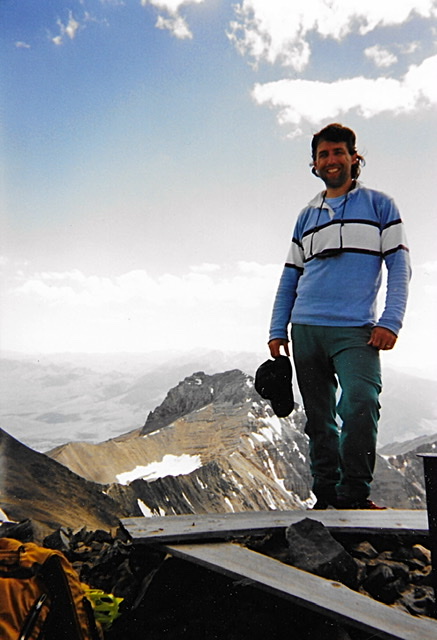
    On the summit.

    Next: Peakbagging in Glacier National Park


    ARTICLE INDEX

  • Mount Breitenbach: North Face – North East Ridge

    Mount Breitenbach: North Face – North East Ridge

    First Ascent: Bob Boyles, Mike Weber and Curtis Olsen
    Rating: Grade III, 5.8, A2

    Description

    Provided by Curtis Olson, Mountain Guides Inc., Boise, Idaho (as published in the American Alpine Journal, Idaho, 1983)

    Mount Breitenbach, North Face, Lost River Range

    From July 13 to 16, Bob Boyles, Mike Weber and I made the first ascent of the North Face of Mount Breitenbach. Bill March had told me that some years ago his party was turned back by very severe rock climbing at the top of a large couloir. We easily identified the couloir and rock band.

    We also discovered a possible route to the west of that couloir but still east of the summit. We pieced our climb together. It consisted of small, steep snowfields intermixed with steep limestone. The crux was a short aid pitch next to a waterfall which led us into a 900-foot long, 10-15 foot-wide hairline couloir that we followed to a bivouac on the skyline just east of the summit. In the dawn, we descended the East-Northeast Ridge in 2 hours of Class 4 climbing.

    On the second ascent of this route, Duane Monte and Kevin Sweigert bypassed the aid on the overhanging waterfall (A2) by using a free variation to the east (Class 5.8).


    Photo Essay by Bob Boyles

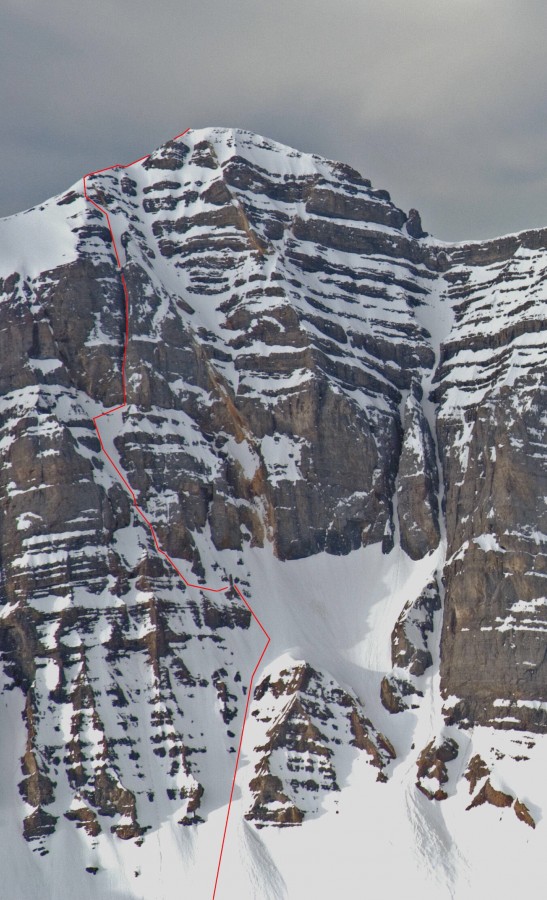
    North Face of Mt Breitenbach showing the Grand Chockstone Route. Photo - Wes Collins
    The North Face of Mount Breitenbach showing the Grand Chockstone Route. Wes Collins Photo

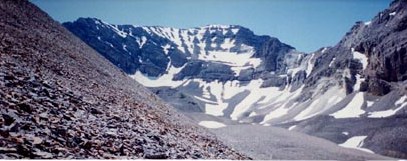
    The Grand Chockstone Route on the North Face of Mount Breitenbach is shown above in red. There is a freestanding limestone stack about one-third of the way up the route where the route bends 90 degrees.

    The limestone stack at the start of the technical climbing on the north face of Mount Breitenbach. Photo - Curt Olson
    The stack. Curt Olson Photo

    Amazingly, this stack appears to have survived the 1983 Borah Peak earthquake (magnitude 6.9) totally intact. This location is where the technical climbing begins.

    Mike on the rock band pitch between the two hanging snow fields. Photo - Curt Olson
    Mike on the rock band pitch. Curt Olson Photo

    This photo shows Mike on the rock band pitch between 2 hanging snow fields. All 3 of us rated this pitch as a dicey Class 5.8. And from this point on, retreat is not a very good option.

    Mike topping out at the marginal belay spot. Photo - Curt Olson
    Mike topping out. Curt Olson Photo

    Here, Mike is topping out at a marginal belay spot. Curt had 7 pieces of protection that consisted of copperheads and #1 and #2 stoppers strung together with equal tension slings on this belay. I clipped in and didn’t look at the anchors again until Mike finished this pitch. Faith be with us….

    Mike on the traverse to the waterfall pitch. Photo by Curt Olson
    Mike on the traverse. Curt Olson Photo

    This photo shows Mike traversing one of the hanging snowfields to the waterfall pitch.


    Return to the main Mount Breitenbach page