Category: Rock climbing

  • Kong and Us by Bob Boyles

    Kong and Us by Bob Boyles

    [This article was first published in Idaho Magazine, July 2022.]

    The Peak That Got Away

    Lady and I gotten along just fine for about half of the five-day horseback trip up the South Fork of the Payette River, until she bolted off the trail into Lodgepole pines. She was at full gallop and I had to lie flat on the saddle to keep from getting knocked off by low-lying tree limbs. After I finally managed to stop her and we trotted back up to the trail, the outfitters quickly found the cause of her behavior. A yellow jacket had burrowed under her saddle blanket and she was getting stung repeatedly. Other than this incident, Lady and I became good friends, and she impressed me with her calm demeanor and backcountry skills. I had ridden a few times in my youth but had never spent a full eight hours on the back of a horse, so I was in for a surprise after dismounting at the end of a long day. It took me a full day to walk normally again and by then, I had nothing but respect for those who make a living on horseback.

    This was September 1973, and I had been invited on the trip by the Carson family. When the outfitter assigned the horses that we would ride based on our experience and the personalities of the animals, he told me, “You’ll ride Lady. She’s a little feisty but she’s a good, sure-footed horse.” We started from the stables at Grandjean, from where we would ride a loop around Virginia, Edna, and Vernon Lakes in the Tenlake Basin before reaching base camp at Ardeth Lake.

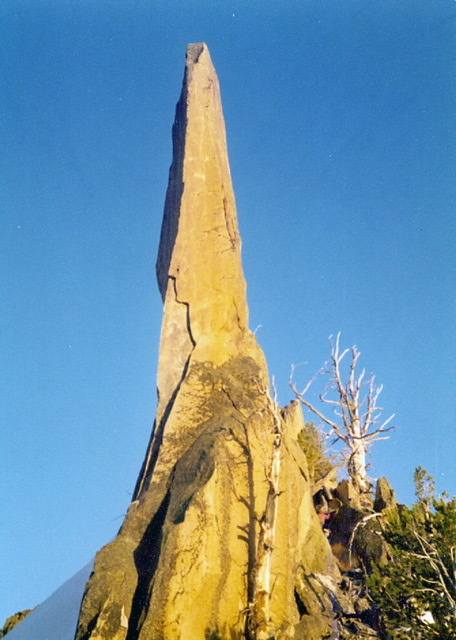
    Our trip was one year after I had started rock climbing, and because we had pack mules to haul our loads on this trip, I had decided to take my rock gear along. I also kept an eye out for opportunities for future trips and wasn’t disappointed once we passed Fern Falls on the South Fork of the Payette River. As we rode farther up the trail, I gawked at the granite formations on the east side of the valley and thought, “Wow.” One formation in particular stood out. I shot photos and vowed to come back to it with my rock-climbing buddies. The first name for it that occurred to me was King Kong, which stuck, although we later shortened it to Kong.
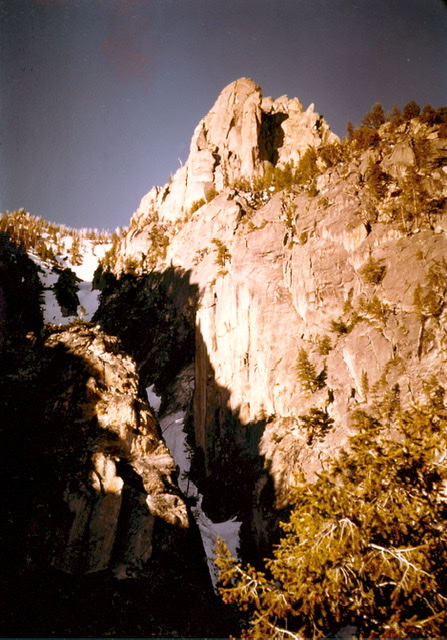
    The Kong

    After a long day in the saddle, we arrived at Ardeth Lake. Our outfitters had previously set up wall tents, so it was kind of like arriving at a motel in the wilderness. The pack mules had ensured there was just about nothing that didn’t get packed, including a couple of coolers full of drinks and comfort food like steaks and burgers. I wasn’t used to this kind of backcountry camping but quickly adapted after being offered an ice-cold beer. The early fall weather had been perfect for the ride up to camp but the next morning we woke to the surprise that it had snowed a couple of inches overnight.
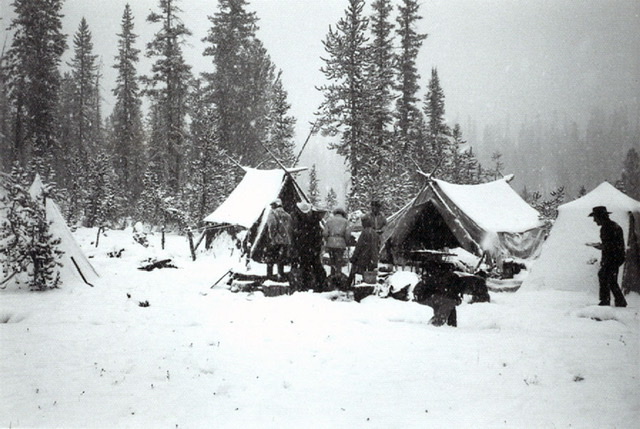
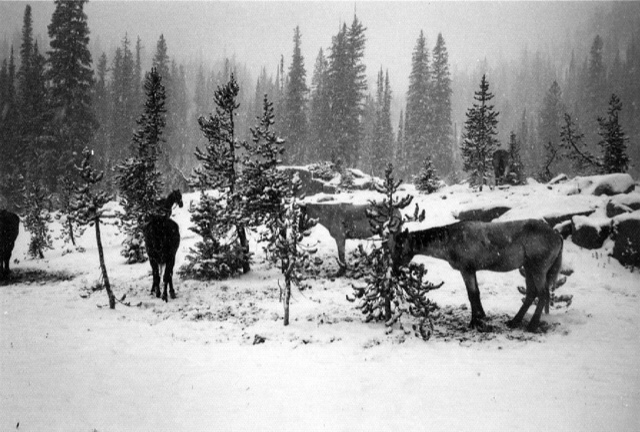
    Lady (foreground) with the other packhorses.

    Typically for fall, the weather improved by evening and the next day promised to be much better. The morning was clear and cold but by afternoon it had warmed into the lows seventies , and the dusting of snow had all but melted. The Carson kids, Bruce, Jackie, and Guy, headed up Tenlake Trail with me, and after about a half-mile we spotted a worthy climbing objective: the eastern face of Point 8590.
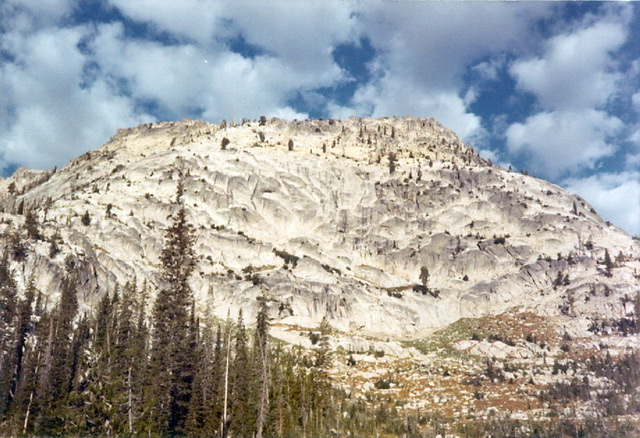
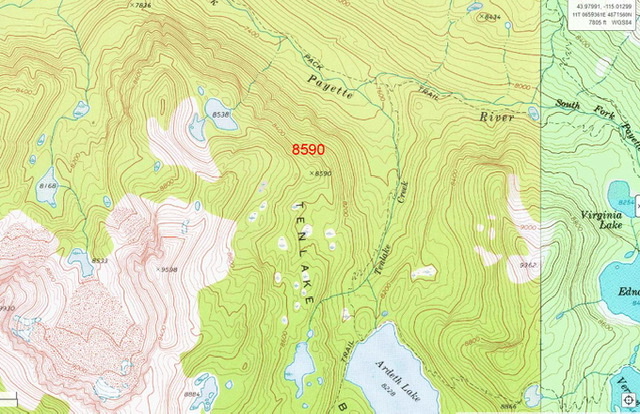
    Point 8590.
    Point 8590.

    It was getting late in the afternoon so we went back to camp, our plans for the next day now set. After a big breakfast along with real cowboy coffee, in which the grounds are dumped right into the water and boiled over an open campfire, the four of us headed back up Tenlake Trail, this time loaded with rock-climbing gear and a rope. We found a series of ledges that started out as second class but turned to fourth class higher up the face. At that point, Jackie decided she had had enough rock-climbing and went back down. Bruce, Guy, and I continued up until we finally reached a point where a rope and belay were in order. I led the first pitch, a delightful 5.4 (of a maximum 5.15 class rating) on near-perfect granite. After I brought Bruce and Guy up, we stayed roped and finished with another pitch of fun climbing. Below the top it turned to easier ground where we could scramble to the high point on the ridge and soak in views of the central Sawtooth Range.

    As soon as I got home from our pack trip, I started talking up with my climbing friends what I had seen on the Payette River. It didn’t take long to generate interest in Kong, and we made the trip in early October. This time we didn’t have horses, which meant our backs and legs took the load on the grueling hike above Fern Falls. After a hard day on the trail, we found a nice camping spot below our objective and spent the night. The next day we started looking for a way to get up the rock to the bottom of a massive slab that marked the beginning of final peak. There was an obvious gulley along the left of the climb but it was very steep, loose, and it looked like a death trap loaded with boulders that could tumble in a heartbeat. We found a fourth-class zigzagging rock route that led to a nice ledge (for camping or bivouacking) close to the base of the slab, but it also was out of the question, because we’d be carrying full climbing packs. It was getting late and we knew we’d have to do more exploring to figure out this challenge. We descended and decided to come back early the next summer, when the gulley would most likely be filled with snow.

    Not wanting to leave without some kind of summit, we decided to explore the top of the ridge and try to find the finish of our future climb. We were carrying only day packs, so we climbed up the gulley and along the ridge, where we spotted some interesting formations. There was a beautiful tower at the top of the gulley and we gave it a try. Mike made it all the way up to the last thirty feet, where the rock went blank. Lacking bolts or any way to protect ourselves, we called this one a near miss. Following the ridge that separates the Payette River and the Goat Creek drainages, we spotted a summit that looked reasonable and got to the top of it.
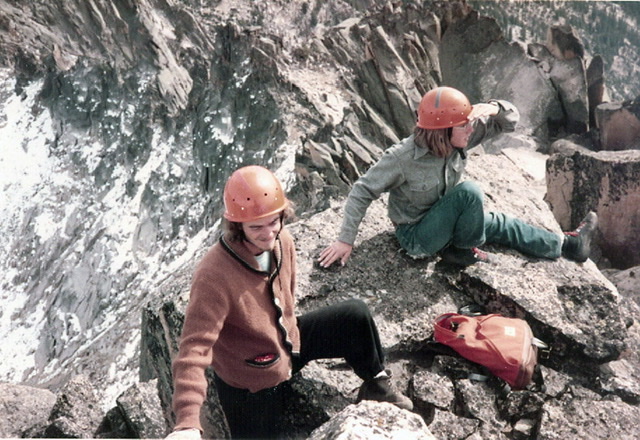
    Carl and the author on a ledge below the summit of The Kong.
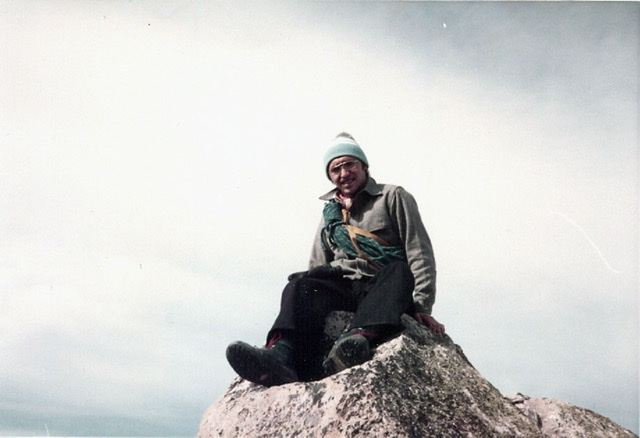
    Guy Carson on the summit of the unnamed point above the Kong.
    Mike climbed up to the last 30 feet on this pinnacle next to The Kong. The last 30 feet was without holds.

    When the time came in June 1974, we decided to do things a little differently. Instead of hiking up the South Fork of the Payette River and arriving in the heat of the afternoon, we would spent a night at the Grandjean campground and depart at 1:00 a.m., which should put us at our base camp early in the morning. Everything went as expected and we arrived in time for breakfast and a good rest. We lounged around for most of the day, enjoying the scenery and exploring the Elk Lake area.
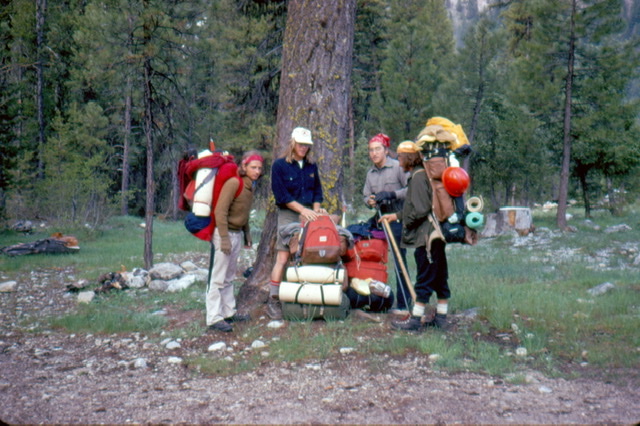
    (From left to right) Mike, Bob, Guy and Carl ready to roll at the Grandjean trailhead.
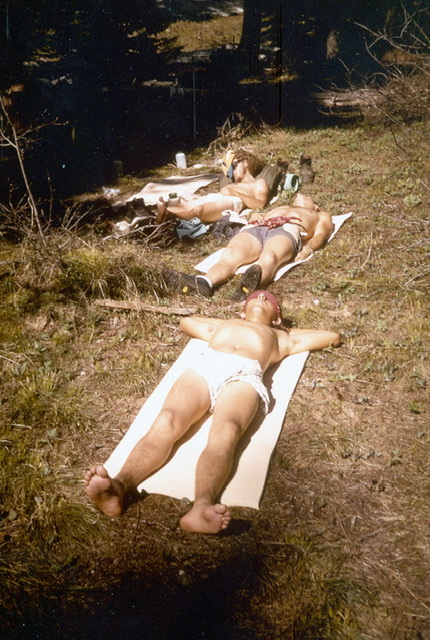
    Mike, Guy and Carl rest a few hours after the group’s all-night assault on The Kong.

    The weather was perfect and mosquitoes were non-existent, so we camped without bothering to put up a tent. Early the next morning, I awoke to the sound of something shuffling around our camp. I raised my head to the sight of a medium-sized black bear sniffing the foot of our sleeping bags. I sat up in and yelled to the guys, who woke all at once. My thought was that once the bear saw us, he’d bolt into the woods. Instead he slowly walked past us and stood on his hind legs to show us how big he was. A few minutes later, he took off into the brush and we didn’t see him again for the rest of the morning. We weren’t too worried about him, because we had plans to head up to our bivalve  ledge for the day so we loaded up our climbing packs and headed up the gulley. We had brought ice axes but no crampons, figuring the snow would soften up a bit by the time we got up the gulley. We were wrong.

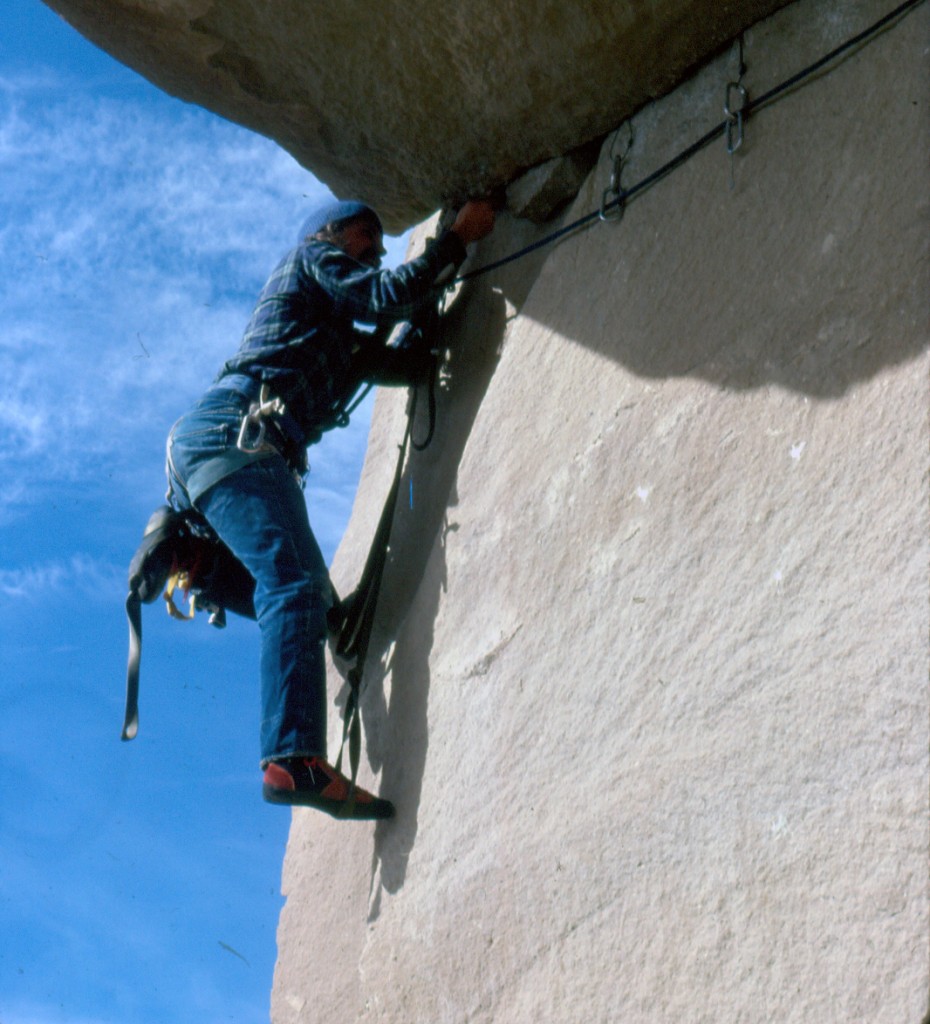
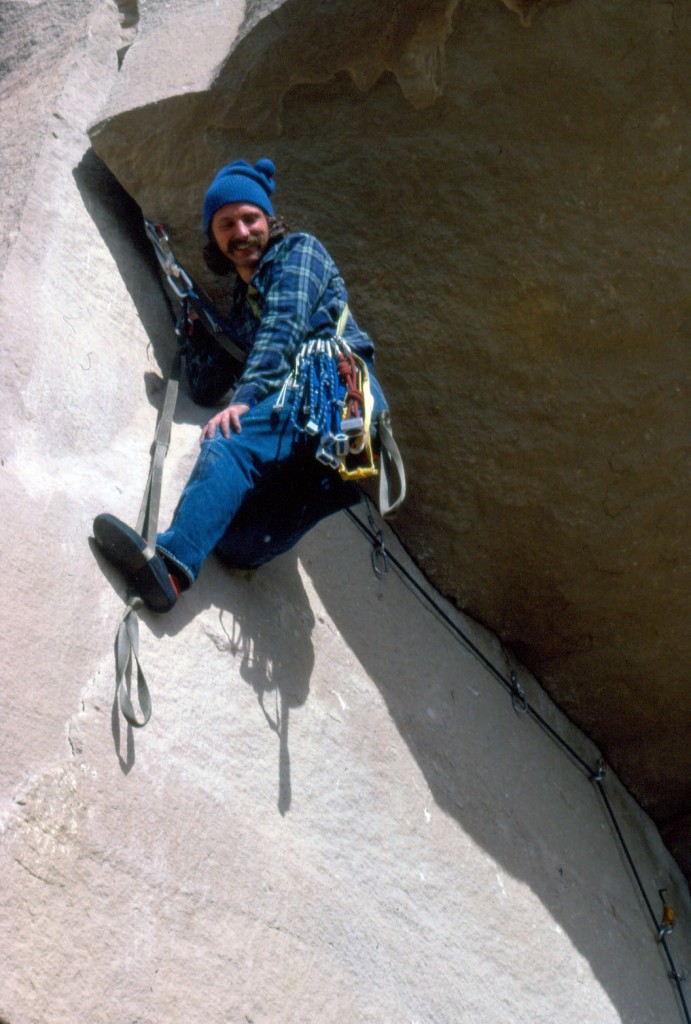
    The gully was reasonably accessible, but we could see that a short climb up an incline of fifty-five-to-sixty degrees on hard snow to the biv site would require step-cutting and a lot of “pucker factor.” After reaching the bivy ledge we scrambled up to the start of the climb where Guy and Carl watched while Mike and I racked up and tried to find a continuous crack system up the face. We finally spotted a good-looking line and I led the first pitch. I led up maybe ninety feet to the bottom of an overhanging, left-leaning fist crack that flared into an arm-and-knee crack. I didn’t think I could free-climb it so I slapped in a couple of hexes (hexagonal nuts that can be placed without a hammer) and pulled out my aiders (short ladder slings). Once I rounded the lip, I went free, but it was still very awkward and hard. I made it over the edge and decided to set a belay (a pulley-like device to control the rope)so I could talk to Mike when he came up. He ascended to the start of the overhang and then decided to try free-climbing the rest of the way up. After a fair amount of swearing, grunting and sweating, he made it over the lip. We really didn’t know grading very well but we both thought that it was maybe a 5.10. It later proved to be the crux pitch of the climb. We went up another pitch to a ledge system along the crack, and the climbing was still fairly stiff. We had burned up quite a bit of time getting to the base and working out the first two pitches so we knew we had to make a decision. It was getting late in the afternoon and we still had to descend the gully to get back to our base camp so we rappelled off and decided to come back the next summer to try it again.

    After descending the gulley we hiked back to where our packs were stashed and discovered that our bear friend had made another visit. All our packs were untouched except for Guy’s. It was missing two of the outside pockets that had had food in them and his foam pad had a large bite taken out of it. It was rolled up and when he unrolled it, it reminded me of how we used to make paper dolls. He accused the bear of being out to get him and no-one else. We picked up our packs and headed back to our base camp. As we ate the last of our food and listened to Guy grumble about the bear, Carl came up with an idea for revenge. He had part of a loaf of bread, some honey and a tin of cayenne pepper, so he and I went into the brush to fix the bear a snack.

    We found a stump and Carl stacked bread as if they were pancakes. In between each layer of bread he dumped a couple of tablespoons of cayenne pepper and then topped it off with a generous helping of honey. Chuckling, we headed back to camp. Figuring the bear wouldn’t find the bread for a while, we sat around talking about our adventure. We were wrong again. It took the bear only about thirty minutes to discover his snack, and he was very annoyed. As he came out of the brush above our camp, he was ripping leaves off the bushes.  We could see he had a mouthful of leaves and the hair on his back stood up. He snorted around and wouldn’t leave, which made us nervous, so we decided to use the African bush-beating method we’d seen on TV to chase him off. We all picked up our ice axes and at the word “go,” we charged toward him. We got about halfway to where he was sitting when he reared up on his hind legs and charged us. We turned and ran as fast as we could back to our camp. Luckily, his charge was a bluff, but he would not let us out of his sight. We agreed that maybe it wasn’t a good idea to stay there for the night. Under the watchful glare of the bear, we packed and hiked back to Grandjean.
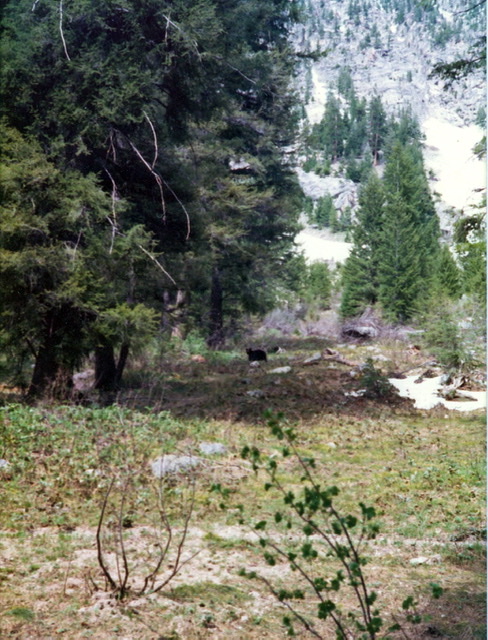
    Only hungry visitor casing our campsite.

    On our third trip at the beginning of July, 1975 we altered our plans once again. Instead of camping at the base and climbing the gully, we decided to haul all of our gear up to the bivy ledge both saving us time and avoiding any more encounters with our buddy, the bear. We couldn’t convince Guy to go back again so we recruited Mike’s cousin Sam to join us on our adventure. Carl was still interested so as a foursome we headed back up to Grandjean for the long grind up the Payette River. After a long day on the trail and a hard climb up the gully, we made it to our bivy spot below our climb.
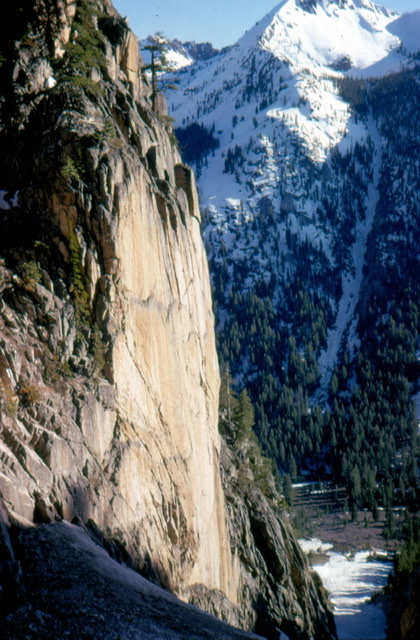
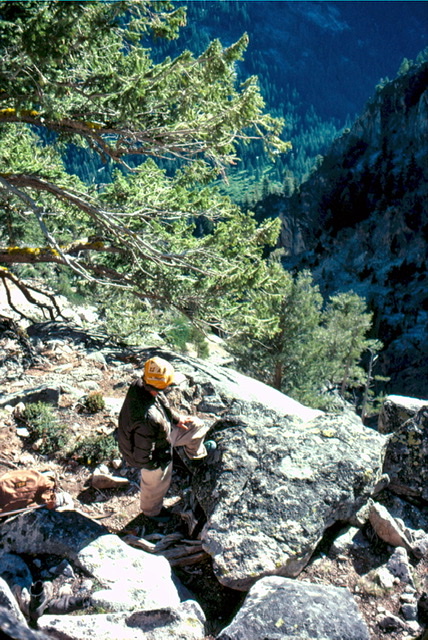
    The author and his friends bivouacked next to the tree at the top of this photo during the lightning storm.
    Carl on the bivy ledge.

    Early the next morning, Mike took the first lead up to the crux overhang. I had set a directional belay about twenty feet from the start in order to be able to watch him climb. Just as he was grunting his way over the bulge, he suddenly flew out of the crack and I heard him yell “falling.” As I was pulling in slack, his top piece of protection popped out and then my directional anchor gave way, leaving maybe thirty feet of slack in the rope. I watched him free-fall around forty feet until he came to a stop about thirty feet off the deck. As I lowered him, he cursed about having almost made it. I thought he’d pass me the lead after recovering but that’s not how Mike works. He quickly gathered himself and went right back up, more determined than ever. On this second try, he cracked the code of the crux and continued up to a nice belay ledge.
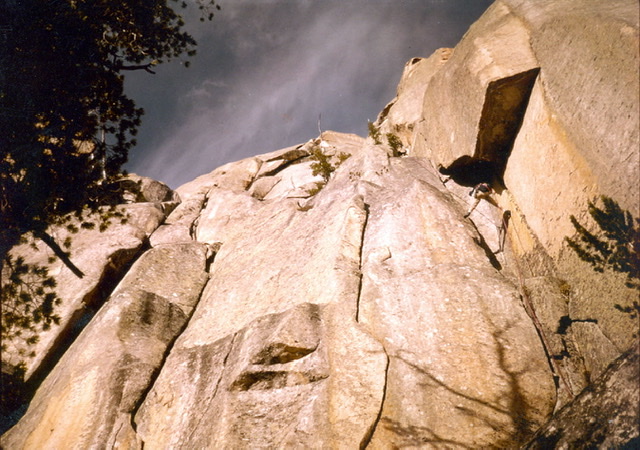
    Bob can be spotted on the right rappelling from the top of the first pitch.

    The next pitch led up to a dihedral (two planes of intersecting rock face). The climbing was on near-perfect granite that varied from hand-width to arm-width cracks. I led pitch three, which ended on a nice flat ledge midway up the dihedral. Mike took the fourth pitch, to the top of the dihedral, where we stopped to inspect the final short pitch to the top. There was no defined summit and from our ledge, we saw only two options for what we called the “H” pitch. To our left was a thirty-foot horizontal knife-blade crack that would require aid and led to places unknown. To our right was a large overhanging flared crack that would require very large pieces of gear to protect us. We didn’t have the right equipment for either approach, so we were stuck concerning how to finish the last fifty feet of rock. Bolts would have worked but we were devoted to the clean-climbing ethics of the time and neither of us owned that kind of hardware. We talked about cutting tree limbs for chocks and slinging them with webbing but it was too late in the day for that, so we called our high point good and began to rappel back down to our start.
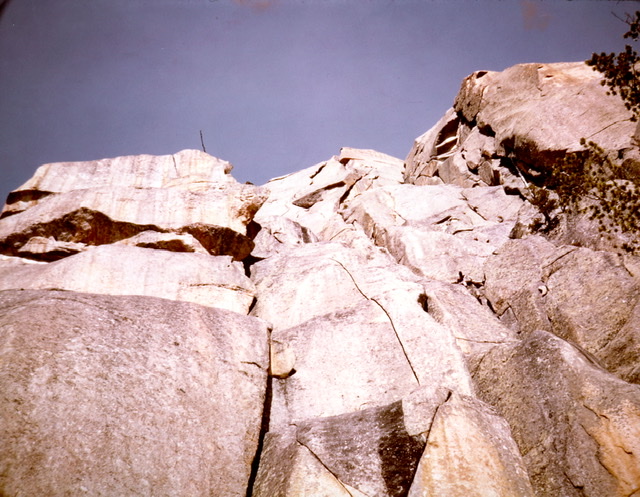
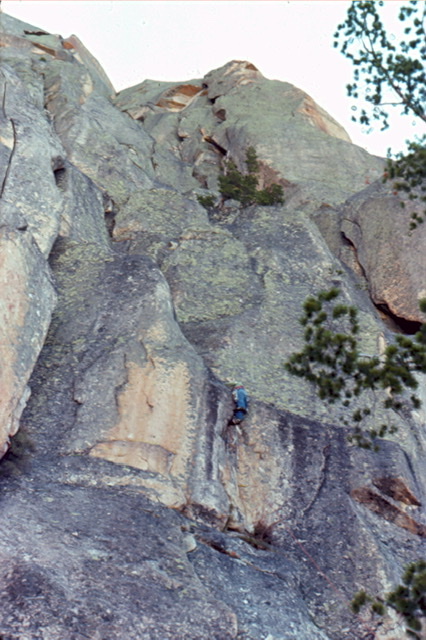
    The author cleaning P2.
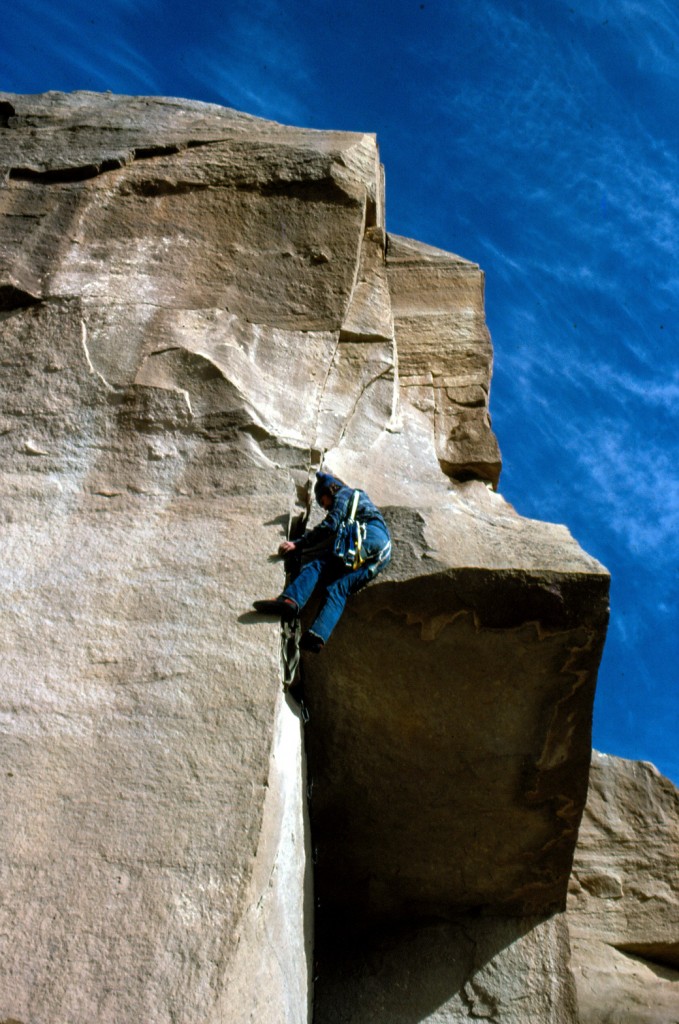
    Mike is the tiny figure contorted on the crux pitch.

    The first rappel went a without hitch and we had only to leave a single sling behind on our way down. On the third rappel, things were looking good until I pulled the rope down. Just after the free end started to fall, it stopped. We pulled as hard as we could and realized it was jammed hard and would not budge. It was late in the day and clouds were building rapidly in the west. Ascending a stuck rope was completely out of the question and neither one of us wanted to lead that pitch again. We had two ropes with us, so along with the shortened end of the stuck rope, we still had enough rope to get down.  I free-climbed up as high as I could without aids and cut the rope, after which we descended to our bivy ledge for another night but soon discovered our adventure wasn’t over yet.
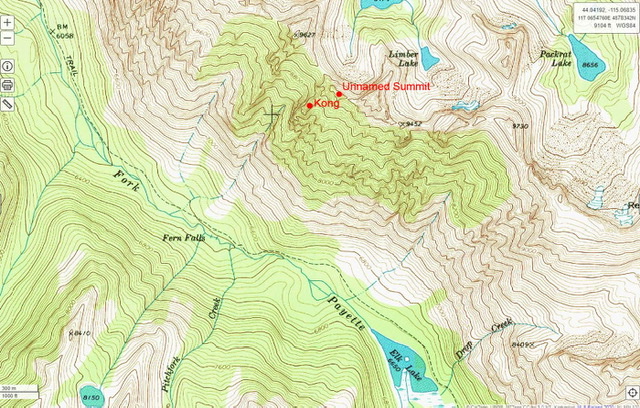
    The Kong.

    By the time the four of us down-climbed to our bivy ledge the sun was starting to set. We ate and settled into our respective spots. Soon it got dark and the wind began to blow in earnest. We saw the first of many flashes as a thunderstorm rolled in from the west. Rain poured down and the wind whipped up to about 50 m.p.h. We huddled in our spots and, in case we took a hit, we said goodbye to each other over the howling wind. Lightning struck below and above us. Rain hit the rocks in sheets and for maybe ten minutes it went up the mountain instead of down it. It then changed direction and poured downward for at least another half-hour. Lightning flashes that illuminated the entire mountainside left us temporarily blinded. There was no pause between the lightning and thunder, only loud explosions and an acrid smell in the air. Finally, the storm passed, and we were all okay. I later realized we had gone through a vertical wind shear, where the wind blows up one side of a thundercloud and down the other. We had experienced both sides of the storm.

    As chance would have it, it was the evening of July 4. In the morning, we not only were a little shaken from the excitement of the night before but realized we needed to rethink our hardware. We down-climbed and went back to Boise, where we read that a hiker had been killed by the same storm on the eastern side of the range.

    We always intended to go back and finish that last little bit of climbing to the top of Kong and retrieve the piece of stuck rope we had left hanging, but we were distracted by other Sawtooth climbs, such as the Finger of Fate and Elephant’s Perch. Around that time, we also started making regular trips to the Tetons and North Cascades. For us, Kong turned out to be the summit that got away.
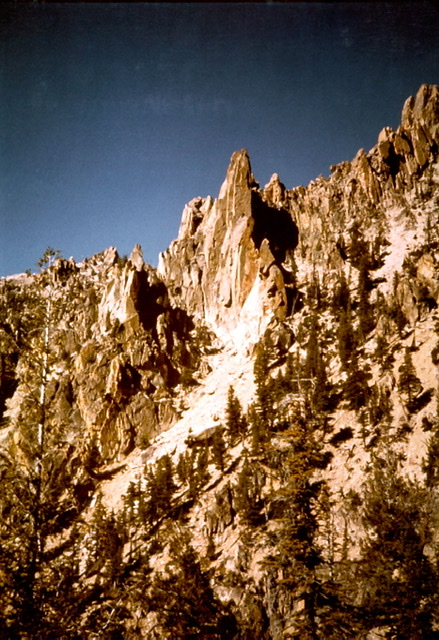
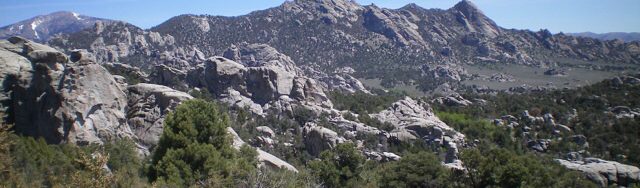
    An an unnamed tower that sits across the gully from the Kong.


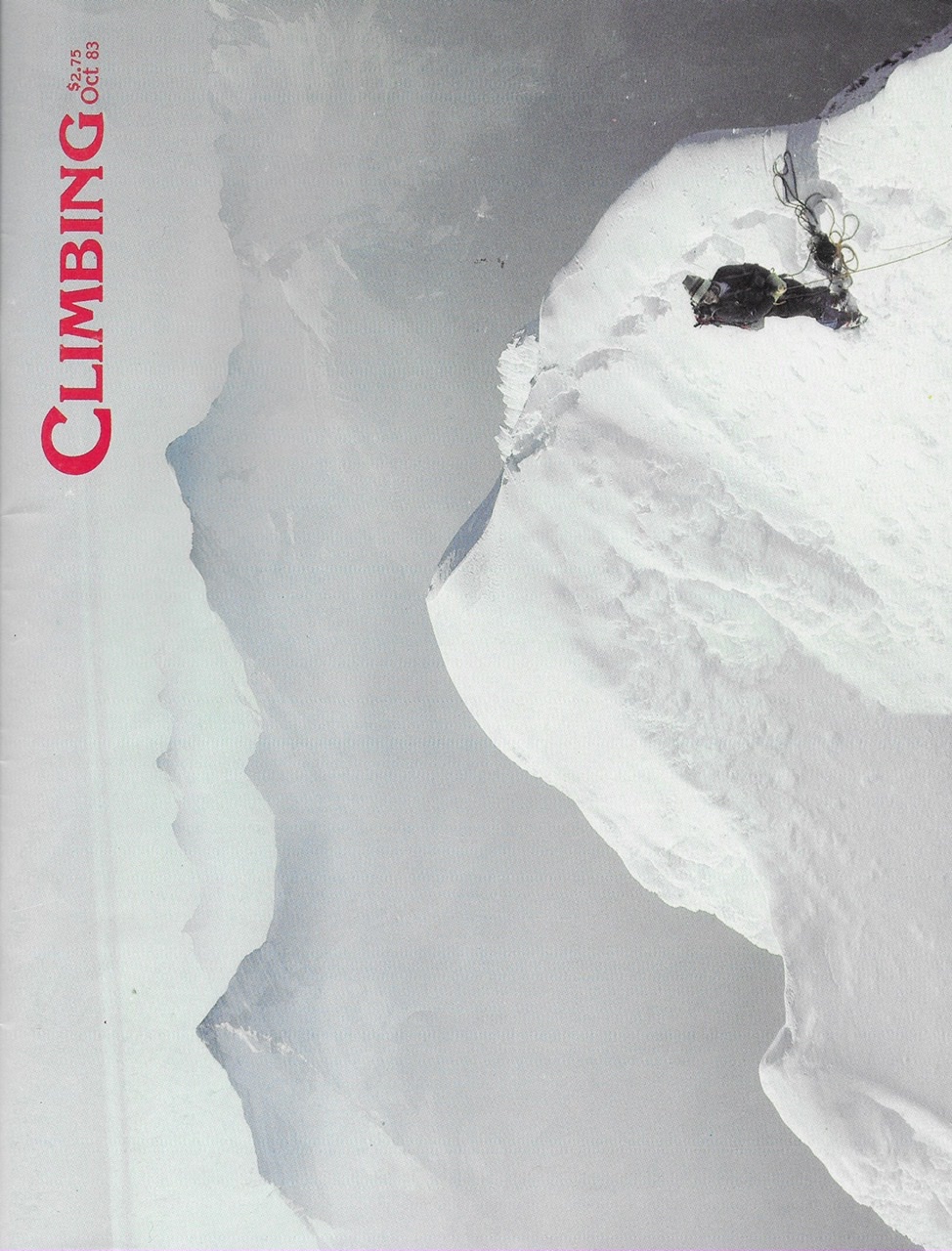
  • Big Trouble at the City

    Big Trouble at the City

    The City of Rocks

    —Politics, Climbing History and Need (Climbing, No. 80, October 1983)

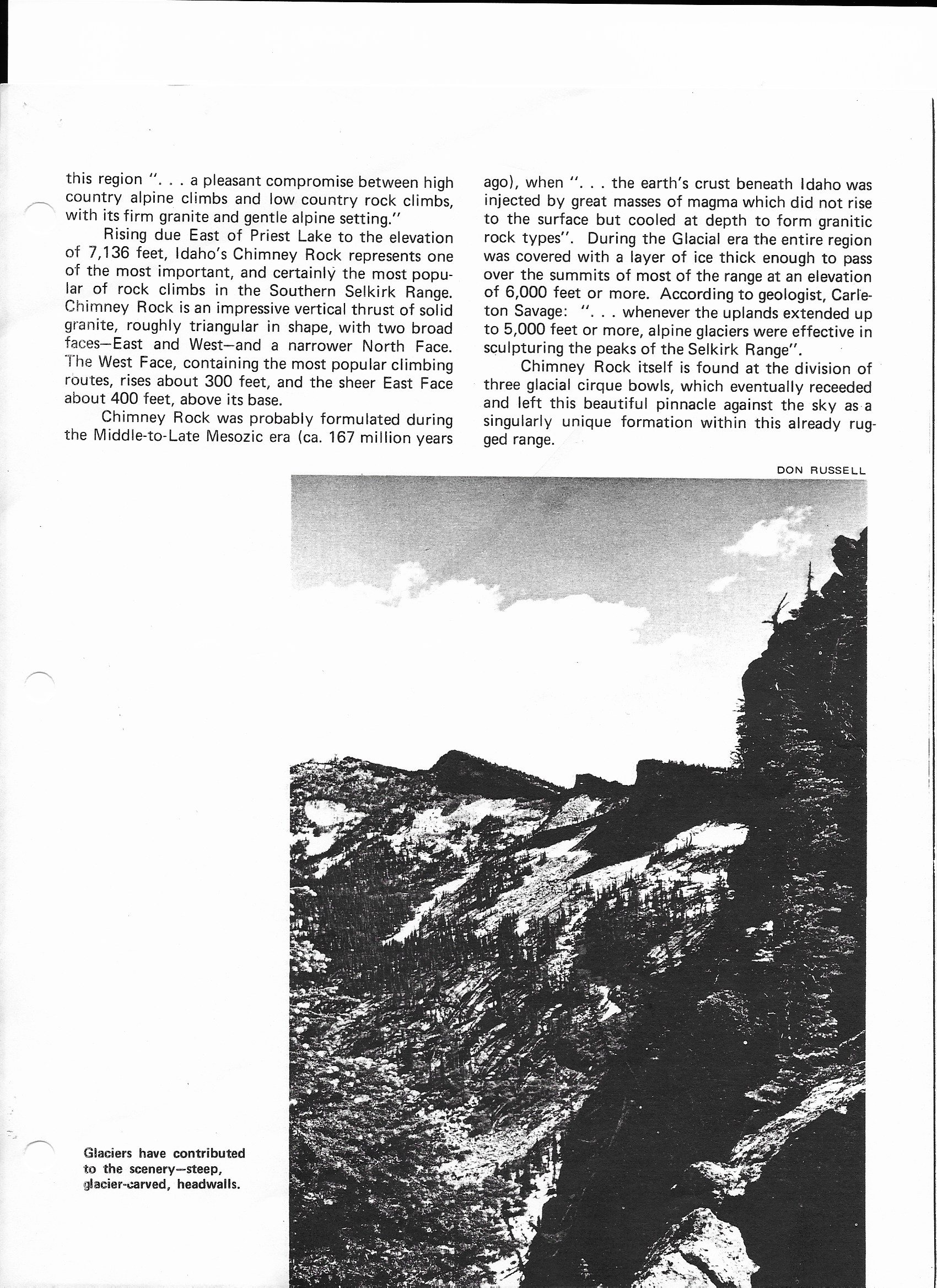
  • Chimney Rock Off-Belay Magazine 1972

    Chimney Rock Off-Belay Magazine 1972

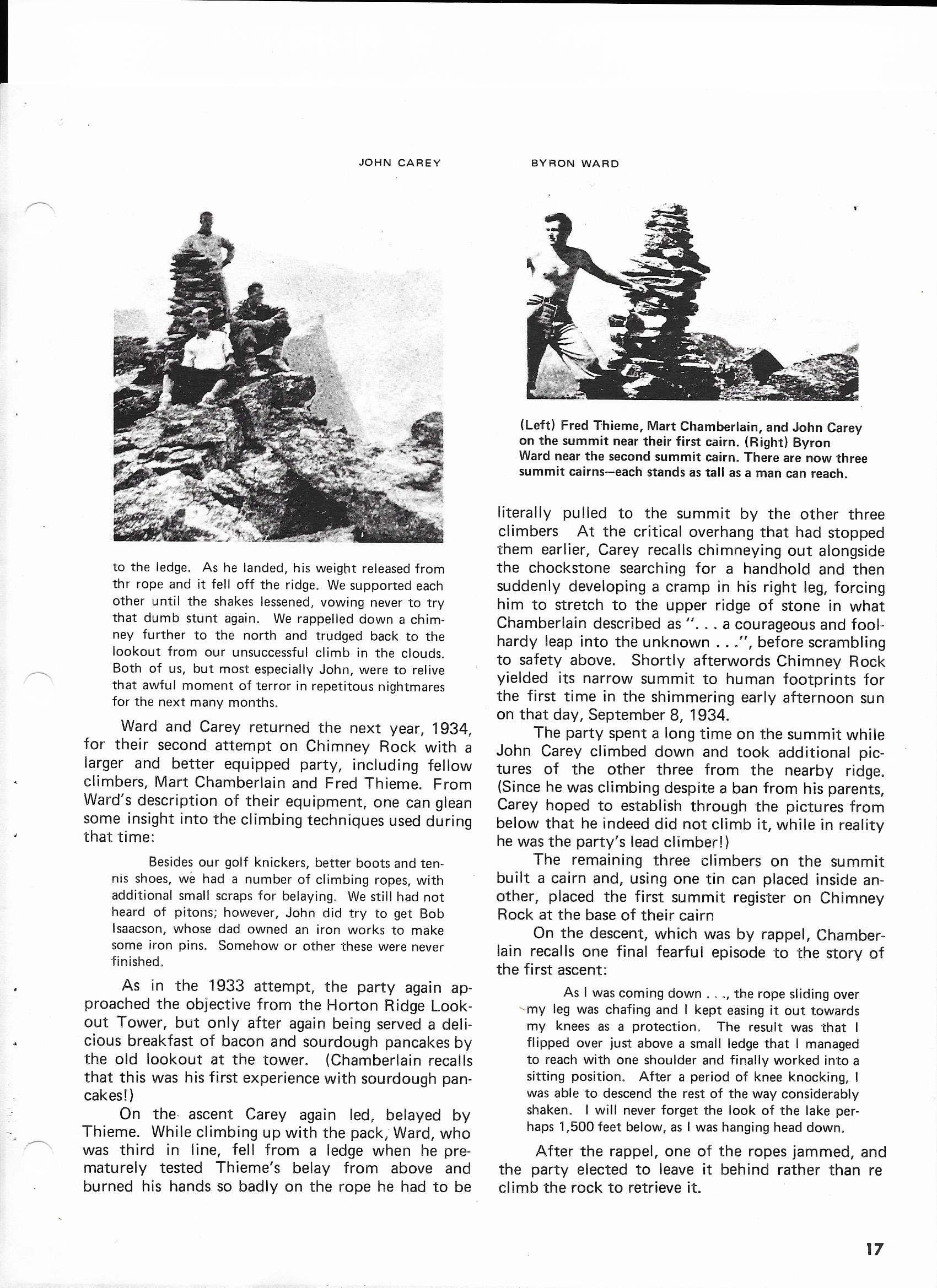
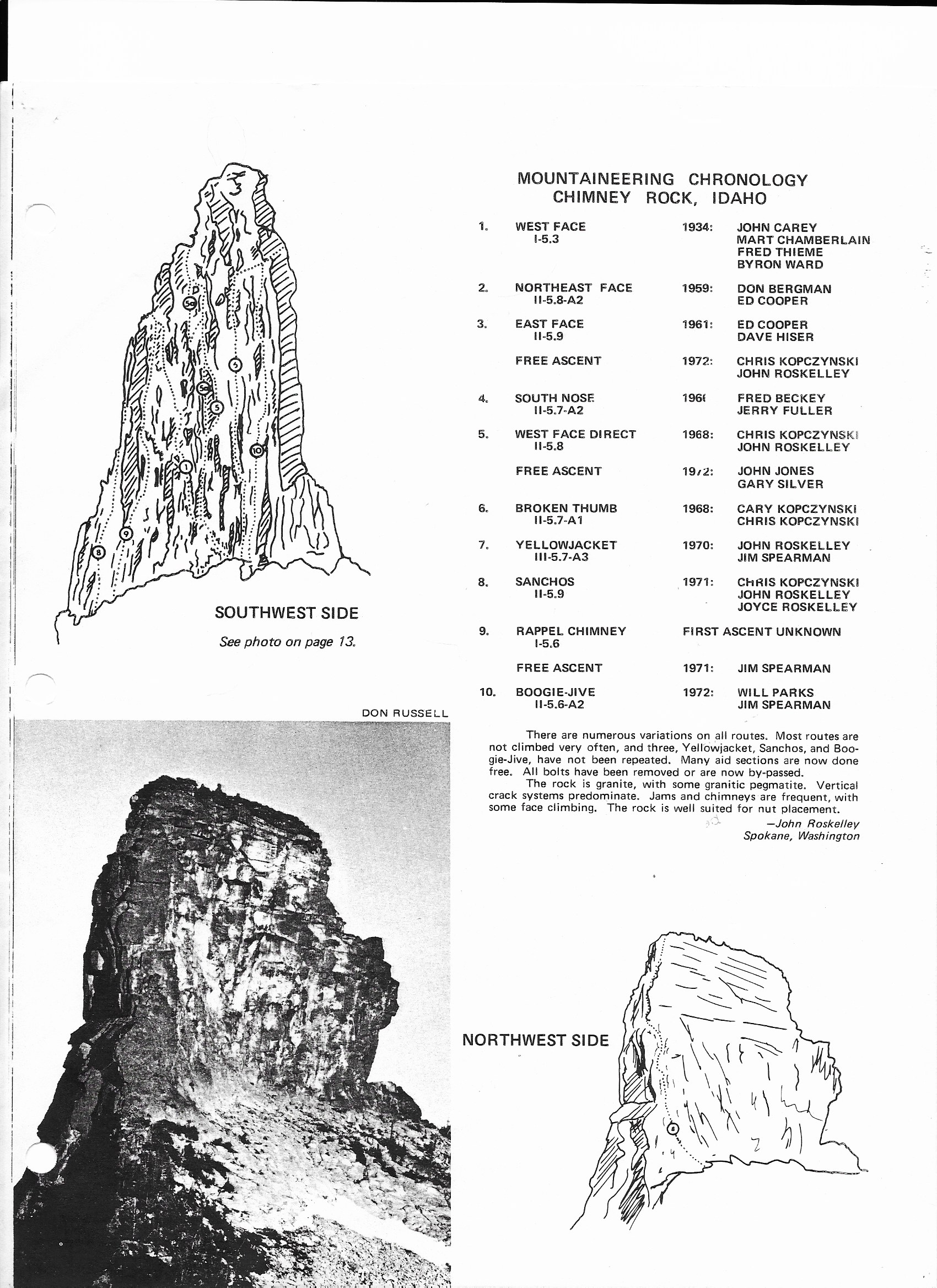
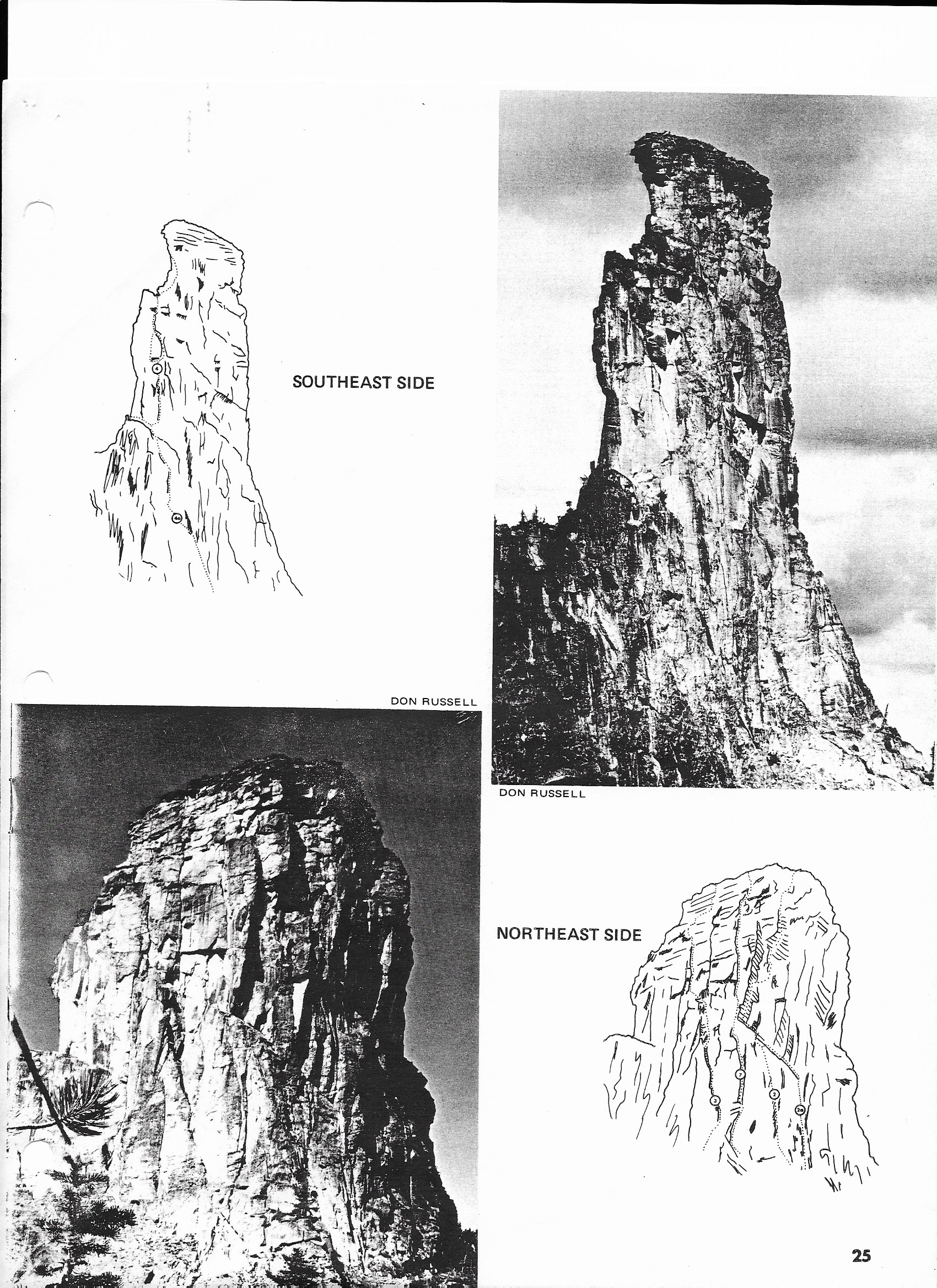
    Off Belay Magazine was THE climbing magazine of its day. The following article had an extensive discussion of Chimney Rock [Off-Belay Dec. 1972 Vol. No 6.]. Ron Klimkow (1936-2012), the author, was a professor in the Music Department at the University of Idaho and an accomplished climber.


  • 1975 Fatality on El Capitan

    1975 Fatality on El Capitan

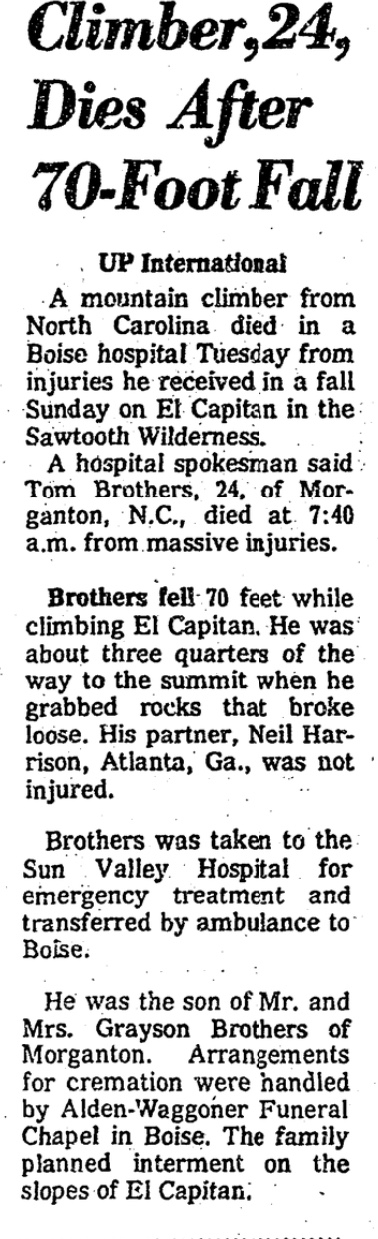
    [Editor’s note: This August 6, 1975 article by UPI was published in the Idaho Statesman. No other details are known.]


    Climber, 24, Dies After 70-Foot Fall

    United Press International

    -A mountain climber from North Carolina died in a Boise hospital Tuesday from injuries he suffered in a fall Sunday on El Capitan in the Sawtooth Wilderness.

    A hospital spokesman said Tom Brothers, 24, of Morganton, North Carolina died at 7:40AM from massive injuries. Brothers fell 70 feet while climbing El Capitan. He was about three quarters of the way to the summit when he grabbed rocks that broke loose. His partner, Neil Harrison of Atlanta, Georgia was not injured.

    Brothers was taken to the Sun Valley Hospital for emergency treatment and was transferred by ambulance to Boise. He was the son of Mr. and Mrs. Grayson Brothers of Morganton. Arrangements for cremation were handled by Alden-Waggoner Funeral Chapel in Boise. The family planned an interment on the slopes of El Capitan.

    UPI article 8/6/1975
    UPI article 8/6/1975
  • The Early Climbing History at Table Rock by Bob Boyles

    The Early Climbing History at Table Rock by Bob Boyles

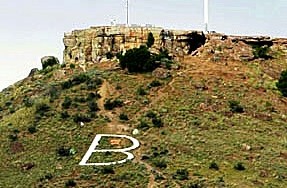
    For those who live in the vicinity of Boise, Table Rock is an unmistakable landmark rising up on the Northeast Side of town. The climbing history of its rock walls, which are graced by seemingly random bolt placements and the occasional chalk mark, is slowly disappearing as time passes and excavators mine the Northeast Corner for building materials. Table Rock, like the Black Cliffs, was a training ground for Boise climbers who took what they learned to the mountains where they established impressive routes like the North Face of Mount Breitenbach. Though the active rock quarry on the Northeast Side of the rock has changed the landscape considerably since the 1970s, climbing opportunities still exist on Table Rock.

    The silica-infused brown sandstone found in the foothills of the Boise Front is relatively rare in Southern Idaho. Formed by sediment from a large lake (Lake Idaho) and fused with silica from the hot springs that are found outside of Boise, the resulting cement hard rock made it a perfect place for Boise rock climbers to gather during the 1960s and 1970s. Bouldering short but difficult rock moves had become a legitimate form of rock climbing in the country during the 1960s when the legendary John Gill introduced gymnastic training to rock climbing moves.

    During that era, Table Rock quickly developed into what could best be described as Boise’s first outdoor climbing gym and meeting place. The low elevation of Table Rock offered year around opportunities and it was not uncommon to find climbers practicing there throughout the Winter. The climbing was not limited to the quarried rock found on the South Side of Tablerock. In less than a decade, all 4 sides of Tablerock were climbed extensively explored and climbed, including the large roofs that are found near the cross.

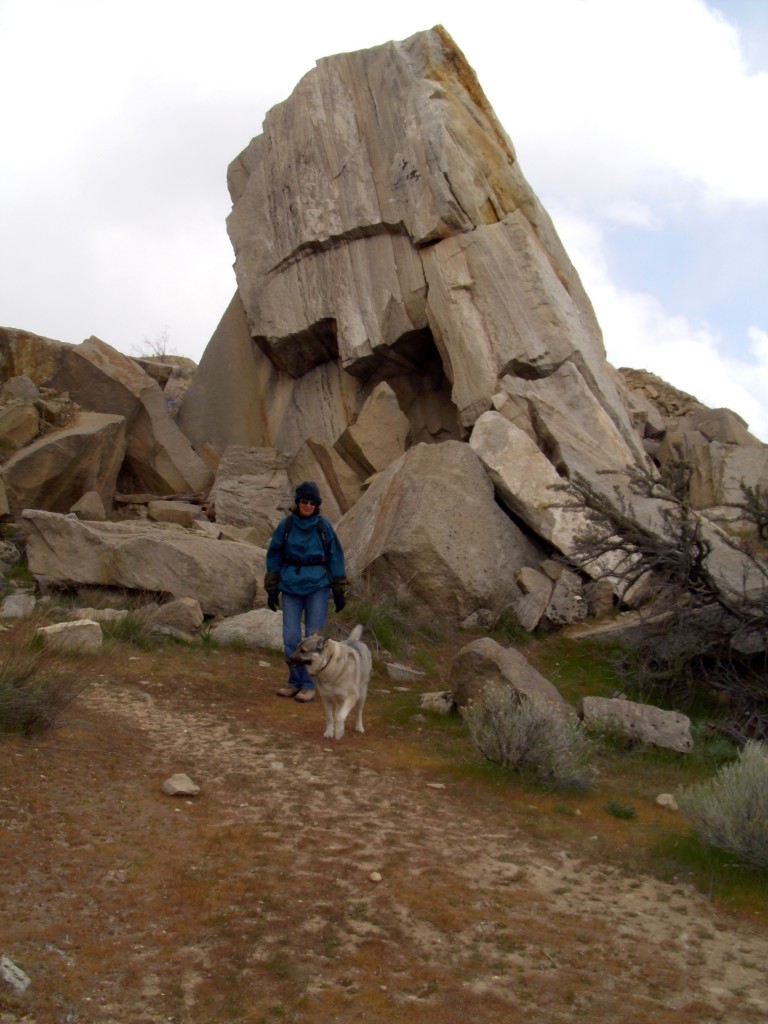
    Carol Boyles and Bob's beloved dog, Brit, at the quarry. Bob relates that "in 1963 he watched his brother do the first climb I ever witnessed at Tablerock on the big rock that stands behind us. He took off his shoes, climbed it barefoot, did a handstand on top, and then climbed back down." Bob Boyles Photo
    Carol Boyles and Bob’s beloved dog, Brit, at the quarry. Bob relates that “In 1963 he watched his brother do the first climb I ever witnessed at Table Rock on the big rock that stands behind us. He took off his shoes, climbed it barefoot, did a handstand on top and then climbed back down.” Bob Boyles Photo

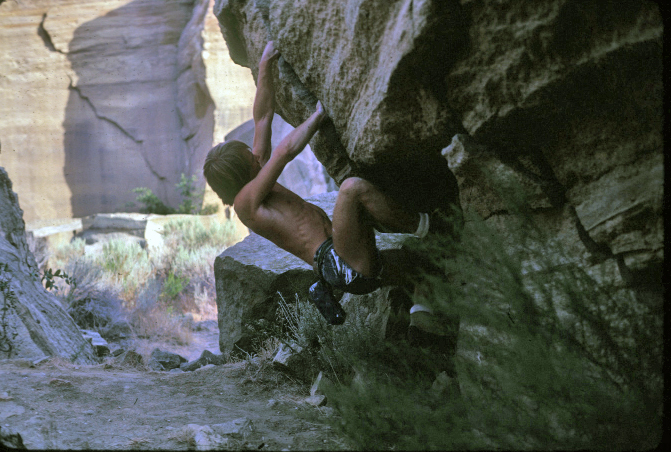
    The South Side of Table Rock (the Quarry) offers clean, cleaved-off slabs of hard sandstone, left exposed from decades of quarrying. During the 1970s, this area became the hub of local climbing activity. Unroped bouldering was the main activity but it was not uncommon to see some climbers practicing aid climbing or rappelling. Crash pads were unknown at that time with the exception of a small patch of carpet that might have been left behind for wiping sand from your soles on a wet day. Spotting a partner was a given and it helped to know there was a “mosh” landing on some risky moves. Where it was safe, cat-like jumps were perfected if one fell off a boulder but they didn’t always work. I know that a few of us went home early with sore knees or a sprained ankle. This “climb or fall” technique also provided great motivation for one to perfect the moves on the taller, riskier boulders. Like modern day sport and gym climbing, the Quarry provided us a place to practice extremely hard climbing moves without the distraction of high exposure or the risk of a big fall.

    Frank Florence, co-founder of Sawtooth Mountaineering describes it like this:
    “I think that the spirit of the Boise climbing community of the 1970s was special. It was a fairly small group of people, a tight enough circle that we all knew one another to some degree. And there was real talent there. Local climbers who pretty much started from scratch, like Tom McLeod and Charlie Crist, as well as young Turks, like yourself [Bob Boyles] and Mike [Weber]. Then there were the “externals,” guys who had some experience climbing elsewhere that they could bring to their efforts around Boise. Dan McHale, the Rozells and Bob Jahn are good examples. I might have taught you a few things about ropes and knots but they were the exemplars when it came to pushing abilities and standards. We all learned from them and that sharing of experience, talent, and knowledge was critical for every one of us and led us to wonder if we couldn’t take it a little further. I don’t want to over-romanticize the times, but it’s fair to say that our climbing scene had elements in common with the camaraderie and positive competition found in British pubs and Camp 4 in the same decade.”

    Interviewed in 1975 by the Idaho Statesman, Florence who, at the time, conducted Boise‘s only regularly scheduled climbing classes noted: “The 30-40 foot walls at Table Rock serve as a “sort of nursery” for beginning climbers. The convenient old quarry contains plenty of sandstone for bouldering difficult but close-to-the-ground maneuvering.”

    During the 1980s, a new generation of younger climbers including Ted Thompson and Pete Takeda were climbing at Table Rock. For 4 years, Curt Olson (the founder of High Country Sports in downtown Boise) sponsored what was the first semi-pro bouldering competition in the United States at Table Rock. The competition attracted a young Todd Skinner who is considered one of first proponents of modern sport climbing and top climbers of his generation.

    The Quarry stayed an active place for climbing through the early 1990s when the mid-section of the quarry was sold to a local company and opened to rock mining after sitting idle since 1940. The Table Rock sandstone had always been prized as a building material and no doubt, the extraction of rock generated economic benefit to those who owned the mineral rights.

    The sandstone can now be found in some of the valley’s most expensive homes and at the entrance to upscale developments where it’s used as billboards to announce the name of the subdivision. Local climbers, a loose knit group at best, rallied for a while to save the old quarry, but lacking any kind of formal organization, their voices weren’t loud enough to raise any local activism. Economics won out and rock climbing at the Quarry has never been the same.

    Tablerock
    This climb is now half-buried in dirt. But back then, it was a challenging problem. Here Tom McLeod is starting at ground level (these days, subterranean). John Platt Photo
    Tablerock
    Moving around the overhang. John Platt Photo
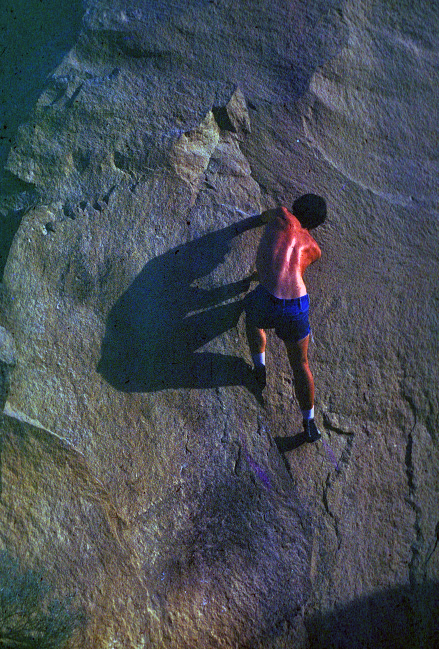
    He better be wearing underwear. John Platt Photo
    He better be wearing underwear. John Platt Photo
    Tablerock
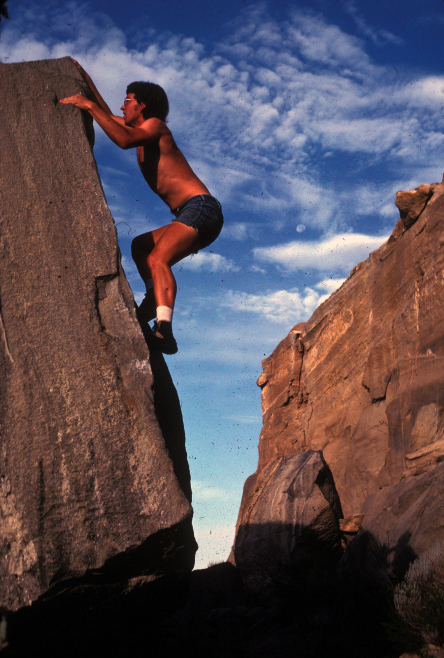
    He’s got the top and the mantel is easy. John Platt Photo
    Tablerock
    But no, he’s not done yet. There followed several more pirouettes past the camera before dropping to the ground. John Platt Photo


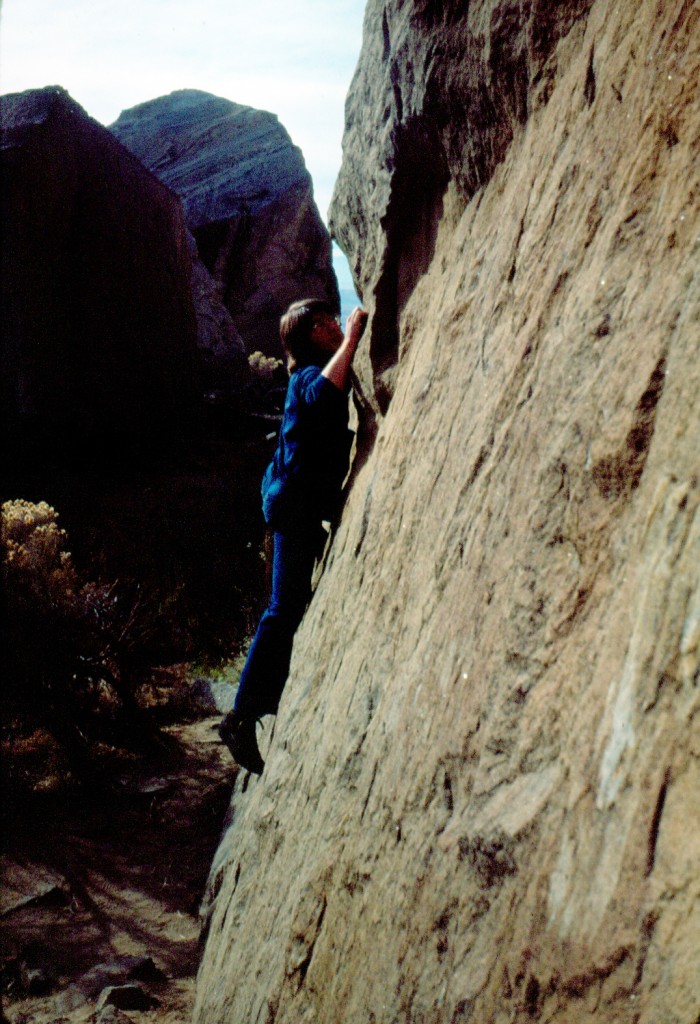
    Bob working a classic mid-cliff slab in blue jeans and Fabiano Directisma “blue boots” as we called them. They were totally rigid from heel to toe making them terrible for walking, but they worked perfectly on the tiny nicks and chips in the quarried rock. Mike Weber Photo
    Bob Boyles working a classic mid-cliff slab in blue jeans and Fabiano Directisma “blue boots” as we called them. They were totally rigid from heel to toe making them terrible for walking, but they worked perfectly on the tiny nicks and chips in the quarried rock. Mike Weber Photo
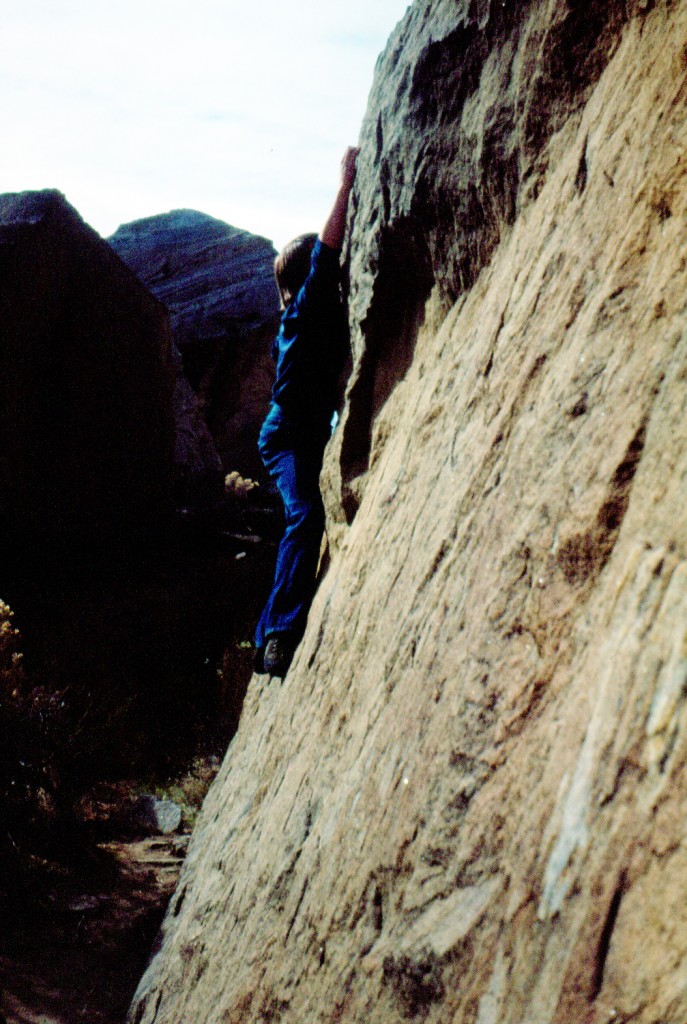
    Bob stretching through the crux moves. Mike Weber Photo
    Bob stretching through the crux moves. Mike Weber Photo
    A young John Platt working the sharp edge of a classic mid-cliff Tablerock boulder. Tom Lopez
    A young John Platt working the sharp edge of a classic mid-cliff Table Rock boulder. John Platt Photo
    John at work on the “Layback Crack”.
    John at work on the “Layback Crack.” John Platt Photo
    Mike Weber doing a “clean” aid ascent of the “Roof” using only hexes and stoppers.
    Mike Weber doing a “clean” aid ascent of the “Roof” using only hexes and stoppers. Bob Boyles Photo
    Tablerock
    Mike resting before rounding the edge of the big roof. Bob Boyles Photo
    Tablerock
    Mike stepping out of his etrier and going free. Bob Boyles Photo

    Also see John Platt’s page.

  • The Early Climbing History of the Black Cliffs by Bob Boyles

    The Early Climbing History of the Black Cliffs by Bob Boyles

    During the Summer of 1972, three of my friends and I took a basic rock climbing class at Table Rock from Frank Florence, a rock climbing instructor who had just opened a shop (Sawtooth Mountaineering) on Fairview Avenue. Frank and his father Lou moved to Boise from New York City in pursuit of a new life out West where the mountains were taller than the buildings on Wall Street. After that initial class, the 4 of us (Carl, Mike, Guy and I) were totally hooked on this new sport and we started to buy climbing gear so that we could continue with our newfound pursuit. We managed to get one trip to Slick Rock near McCall before Fall came and the rain and snow pretty much shut down the high country.

    The unimproved dirt road to Table Rock was notorious for holes when it was wet and walking up wasn’t much better so, on a whim, we ventured out ID-21 to check out what we called the “Black Cliffs.” The area had a reputation for being dangerous and we were warned that some of the basalt columns might collapse if we tried to climb them. We never had a problem with the columns being unstable but we did learn to set our belays way off to one side to protect the belayer from the rocks that had to be cleaned while working on a new route.

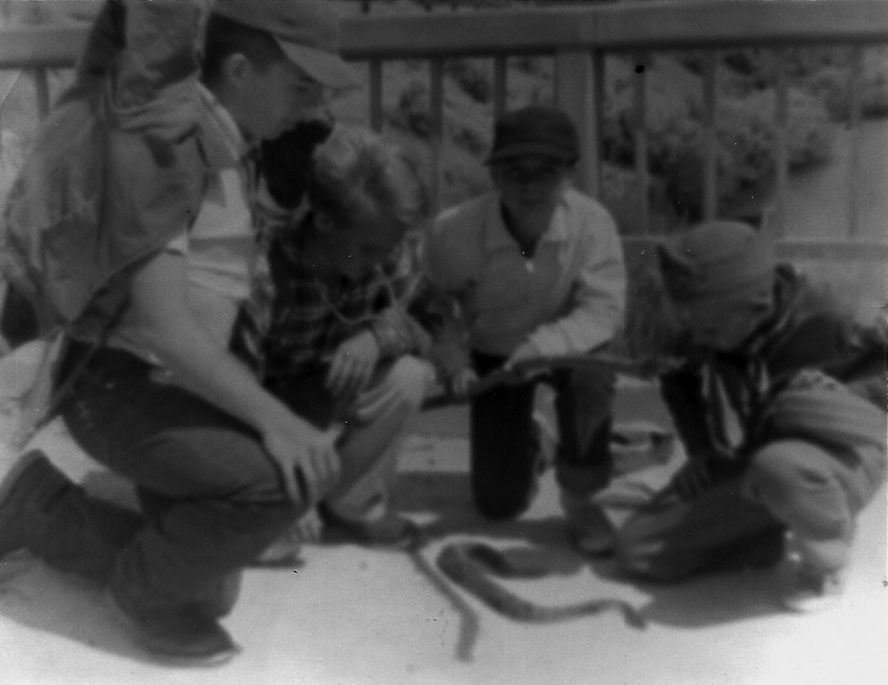
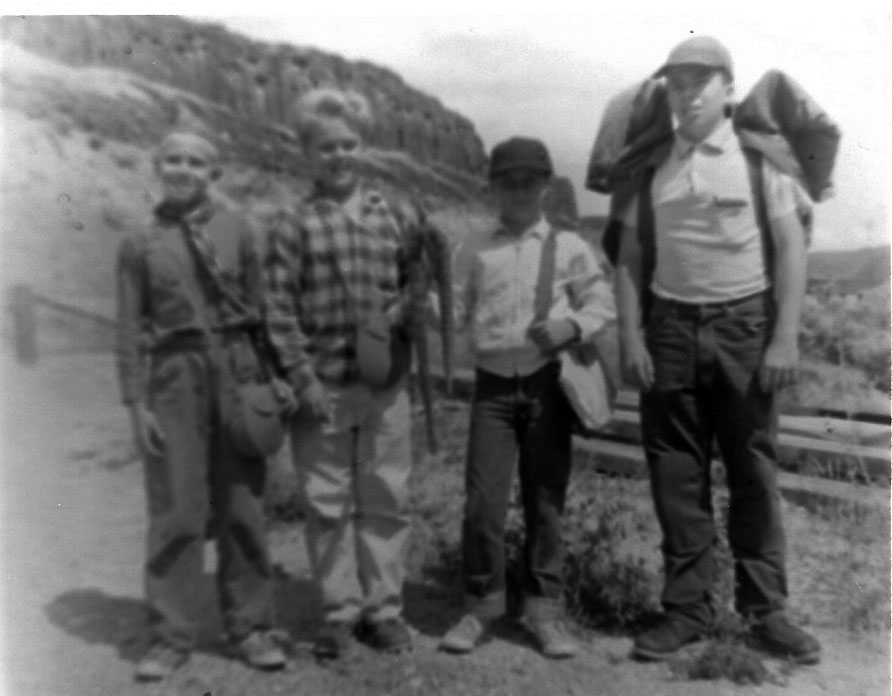
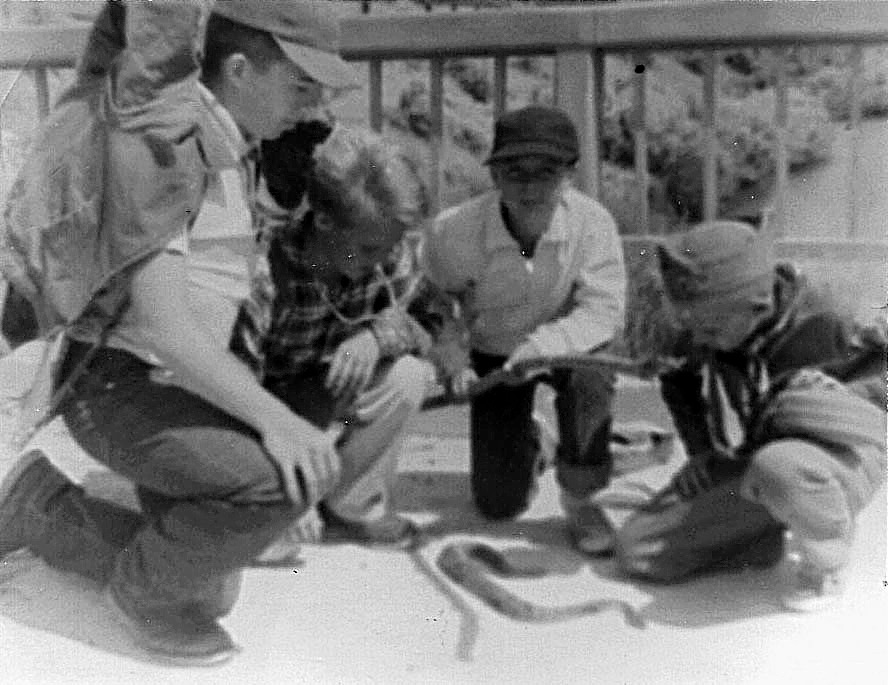
    On earlier Boy Scout hikes in the area, we had stumbled upon a large den of rattlesnakes on what is now called “The Dark Side” so we were pretty cautious about sticking our hands into cracks without taking a close first look. As it turned out, we never found a single rattlesnake on the highway side of the cliffs and later we were told that someone had used dynamite to blow up the den that was found in the main canyon (Car Body as it was later named). We scouted around the cliffs on the left side of the canyon and soon found a line that looked feasible so we roped up and climbed it. I think I took the first lead but as soon as we were done we roped up and did it again. After that first climb, we used the route as a warm-up on future trips and coined the name, The Standard. We soon realized that the black basalt was a magnet for heat even with the low angled sun of Winter and continued to climb and put up new routes throughout the Winter.

    Troop 77 at the black cliffs in 1963 and a big rattlesnake. Ed Boyles Photo
    Boy Scout Troop 77 at the black cliffs in 1963 and a big rattlesnake. Ed Boyles Photo

    It didn’t take long for word of our discovery to spread in the small climbing community that had formed at Sawtooth Mountaineering, but the stigma of being a dangerous place to climb took a little longer to go away. When the Spring of 1973 came, we pretty much switched our main focus of climbing to the Cliffs and the only other people we saw during the Spring was Tom McLeod and his climbing partners. Tom, one of the hottest climbers at Table Rock and never one to want to just repeat someone else’s climb, started working on new hard routes on the right side of Car Body Canyon. Because we had a friendly rivalry, we never told each other what we were working on until it had been completed.
    Bottom-up, on-sight leads were the standard and grabbing a piece of gear or resting on it was considered aid climbing even if no one saw you do it. To us, it was simple. Free climbing was all free and any use of gear to make progress was aid. If a new route was top-roped, it was only because there was no way to protect it with the gear we had and it was noted as being a “top-roped climb”. We figured if we couldn’t do a route with the gear we had, we just weren’t good enough and we would have to get better. Pitons were almost never used due to the fact that they didn’t work well in the flared cracks and the use of them could cause the rock to expand and break.

    Yvonne Chouinard had just introduced hexes and stoppers to the climbing world and they turned out to be the best and safest gear we could get to use in the natural features of the basalt. The use of bolts would come later after clean climbing ethics of the 1970s were not adopted by the next generations of climbers. The use of bolts opened up climbing on a large number of new, hard routes that could not be climbed safely without their use. The rock climbing standards in the valley rose higher as a result. I can’t recommend that any modern sport climber should use what was a common anchor back then on the top of the cliff–an improvised V-thread anchored to sagebrush.

    By the Summer of 1974, the Black Cliffs had become quite popular. Most of Boise’s small community of climbers were visiting and climbing there. Our exploring took us all the way down towards the end of the cliffs near the Lucky Peak Dam and Tom ventured across the dam to start putting up some very hard routes on what is known as the “Dark Side.” At some point, Tom hooked up with Bob Jahn, a Gunks climber who had moved to Boise from back east. Tom, who had set the standard for the hardest routes  at the Cliffs (5.9), soon pushed the standard higher (5.10) when he and Bob started climbing together. This was at a time when the hardest routes in the country were rated 5.10 so, with little doubt, those two were at the cutting edge of free climbing standards in the country at that time.

    Later, in the 1970s, Doug Scott, the renowned Himalayan climber from England visited Boise on an invite from Lou Florence and put up a route that bears his name in Car Body Canyon. Lou also invited the renowned solo climber, Henry Barber for a visit to Boise and he spent an afternoon climbing at the Black Cliffs. During this outing, he free-soloed a new route to the amazement of all those who were lucky enough to be there and watch. During the 1980s, Tony Yaniro (the prolific Joshua Tree climber) spent most of the Summer in Boise and out up new routes at the Cliffs. Later, the young Pete Takada was climbing and perfecting his technical rock climbing skill at the Cliffs.

    As for any climbing that occurred before the 1970s, the only traces we ever found were some old iron ring pins that looked to have been used for rappel practice. I had heard that the Hari Clark (who worked at Bob Greenwoods Ski Shop) had trained the National Guard out there but I can’t confirm that. Bob Greenwoods was the first shop in Boise to carry modern climbing gear and offer professional rock climbing instruction from Hari and Tom Naylor before they got out of the rock climbing business.

    All photos by Bob Boyles except where noted.

    Guy Carson, Carl Sheets and Mike Weber posing for the camera in Car Body Canyon, Fall 1973
    Guy Carson, Carl Sheets and Mike Weber posing for the camera in Car Body Canyon (Fall 1973).
    Mike Weber leading the “Roof”. Now known as Bloody Crack.
    Mike Weber leading the “Roof,” now known as “Bloody Crack.”
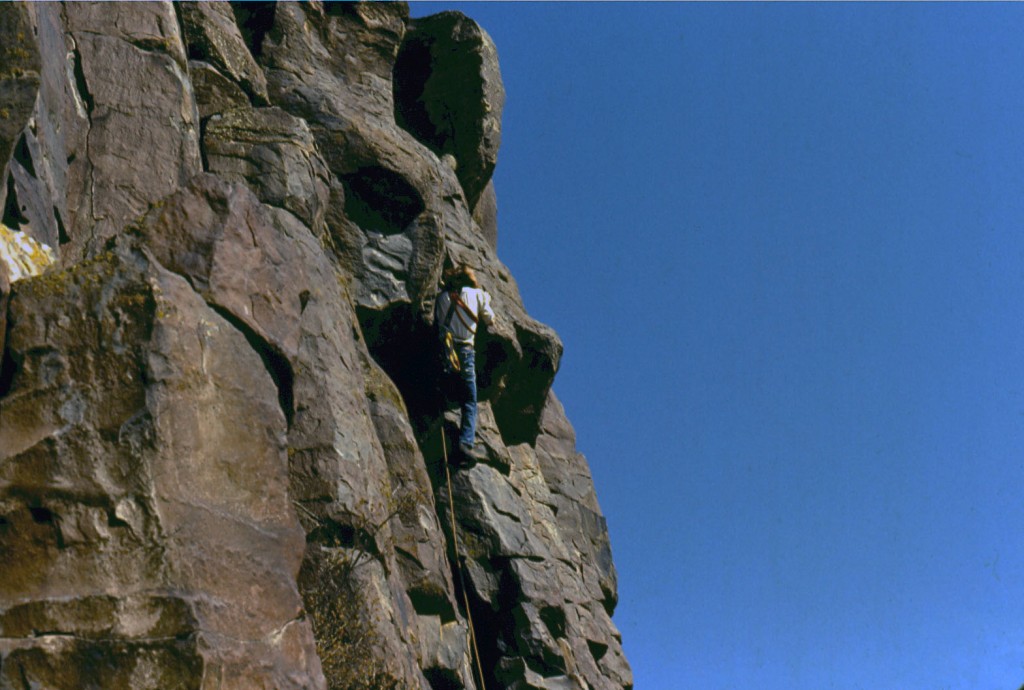
    Rick Rosell leading a new route at the Tall Cliff section of the Black Rocks.
    Rick Rosell leading a new route at the Tall Cliff section of the Black Rocks.
    Frank Florence working the crux at the Black Cliffs.
    Frank Florence working the crux at the Black Cliffs.
    Bob Boyles stretching for a move on the left side of Berry-Berry in Car Body Canyon. Mike Weber Photo
    Bob Boyles stretching for a move on the left side of Berry-Berry in Car Body Canyon. Mike Weber Photo
    Bob Boyles taking a break for the camera near the top of the cliff. Mike Weber Photo
    Bob Boyles taking a break for the camera near the top of the cliff. Mike Weber Photo
    Guy Carson near the top of Barry-Barry in Car Body Canyon.
    Bob Boyles leading the “Roof” aka Bloddy Crack. Mike Weber Photo
    Bob Boyles leading the “Roof” (“Bloody Crack”). Mike Weber Photo
    In 1975, Doug Scott, fresh from his ascent of the Southwest Face of Everest, came to Boise to give a talk at the shop about his recent ascent of the Southwest Face of Everest. He wanted to get in some climbing while in town and a posse quickly assembled. We went out to the Black Cliffs for what turned out to be a toasty day. Scott asked what had been done and what hadn’t and then led through a couple of each. Lou Florence took the photo. Left to right: Bob Boyles, Bob Henry, Doug Scott and Frank Florence..
    Bob Boyles checking out Wounded Knee at the Black Cliffs for the first time in February 1974. “Soon after, I bought some tube chocks from Sawtooth Mountaineering and went out and completed it with Frank Florence.” Mike Weber Photo
    Bob Boyles checking out Wounded Knee at the Black Cliffs for the first time in February 1974. “Soon after, I bought some tube chocks from Sawtooth Mountaineering and went out and completed it with Frank Florence.” Mike Weber Photo

    And now for some recollections of John Platt:

    I remember trying to climb out there with pitons. They would ring like a mother as you pounded them in, then rotate 30° when you put weight on them. This because the cracks flared as they went in. Not confidence inspiring. So we didn’t do much out there until clean climbing and hexes/stoppers. Of course for me, “we” almost always meant me and McLeod.

    Back then, there weren’t any chains. So we climbed to the top, sometimes making the final move in dirt, then tied off to sagebrush for a belay. Kick some spots for your heels (in rock shoes) in the dirt. I think we were still employing this tactic in the late 1980s.
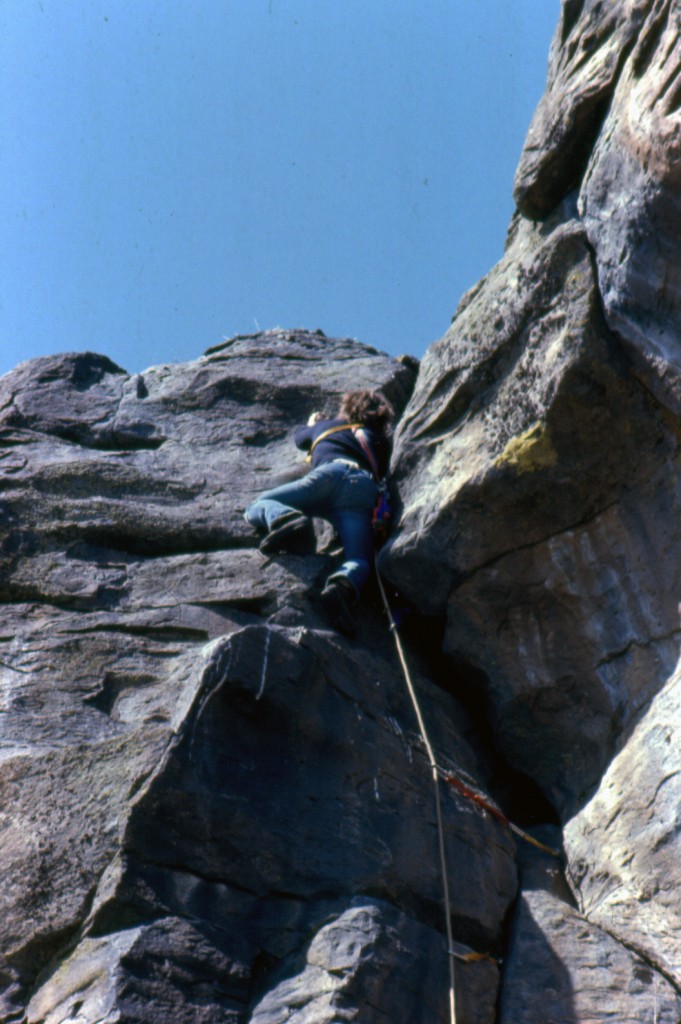
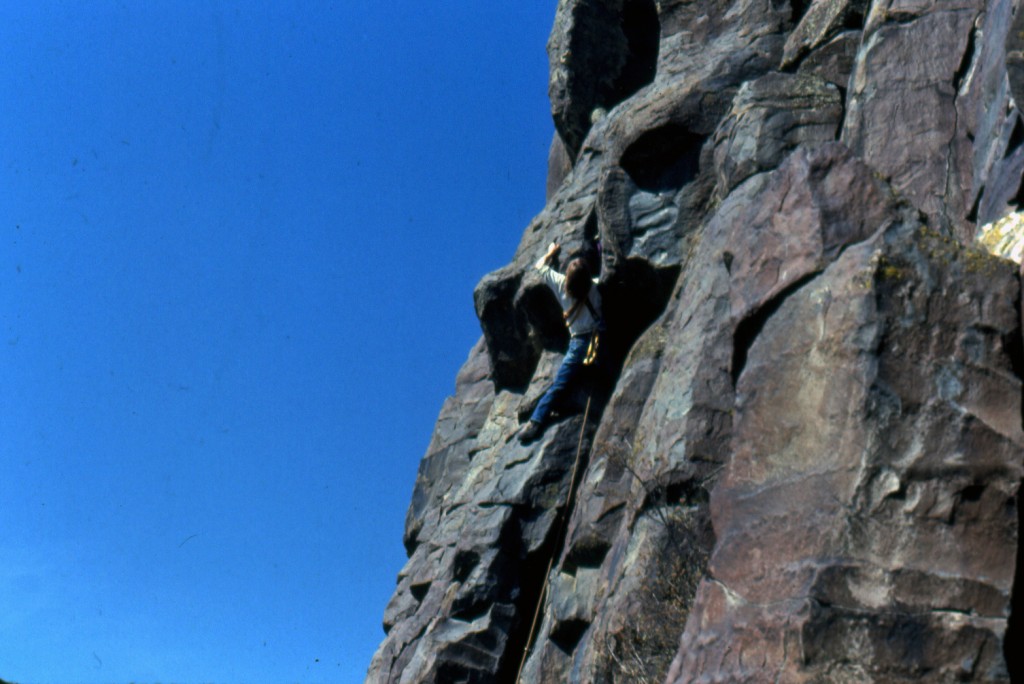
    In the late 1980s, McLeod was doing some very hard stuff. I recall going to Car Body Canyon and climbing overhung routes. Tom would lead them, but I couldn’t follow. We called these “thrash and dangle” because the overhangs were always near the top, and I would get past the last piece, then fall off (after thrashing), hanging in space (dangle). Tom didn’t want to lower me 60 feet off a sagebrush, so I would clip jumars and ascend to the top.

    1963 Boy Scouts Snake Hunters

    Bob Boyles provided the following photos from 1963. Future Idaho explorers start early in Idaho. Bob relates “I was 10 and didn’t get to go on the Boy Scout hike because I wasn’t old enough to join for another year. I was standing there when the “troops” of Troop 77 came back with the rattlesnake that almost bit one of them.”

    Troop 77. Ed Boyles Photo
    Boy Scout Troop 77. Ed Boyles Photo
    Troop 77. Ed Boyles Photo
    The kid in the scout uniform is my late brother George. He’s the one who did the handstand on top of the big rock at Table Rock. Boy Scout Troop 77. Ed Boyles Photo
    Troop 77. Ed Boyles Photo
    George Boyles is first on the left. Boy Scout Troop 77. Ed Boyles Photo