[Editor’s note: This August 6, 1975 article by UPI was published in the Idaho Statesman. No other details are known.]
Climber, 24, Dies After 70-Foot Fall
United Press International
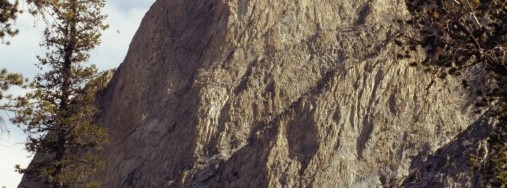
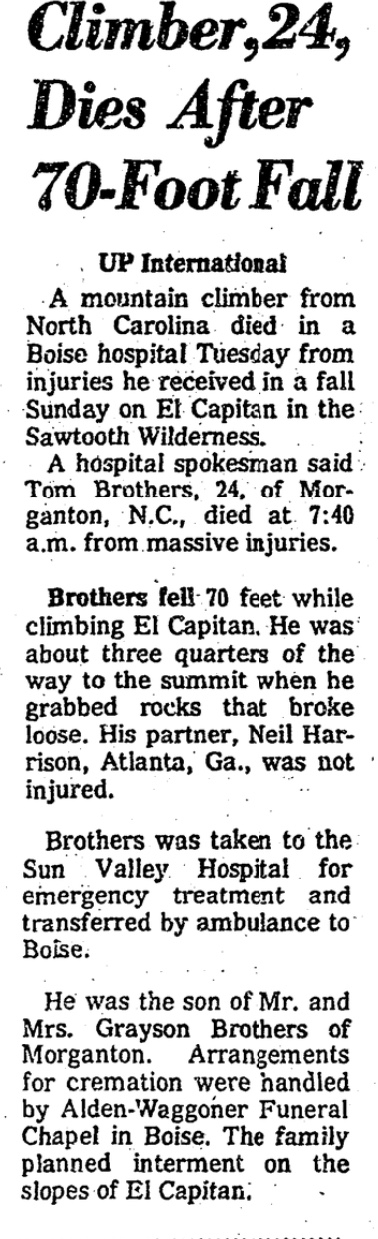
-A mountain climber from North Carolina died in a Boise hospital Tuesday from injuries he suffered in a fall Sunday on El Capitan in the Sawtooth Wilderness.
A hospital spokesman said Tom Brothers, 24, of Morganton, North Carolina died at 7:40AM from massive injuries.Brothers fell 70 feet while climbing El Capitan. He was about three quarters of the way to the summit when he grabbed rocks that broke loose. His partner, Neil Harrison of Atlanta, Georgia was not injured.
Brothers was taken to the Sun Valley Hospital for emergency treatment and was transferred by ambulance to Boise. He was the son of Mr. and Mrs. Grayson Brothers of Morganton. Arrangements for cremation were handled by Alden-Waggoner Funeral Chapel in Boise. The family planned an interment on the slopes of El Capitan.
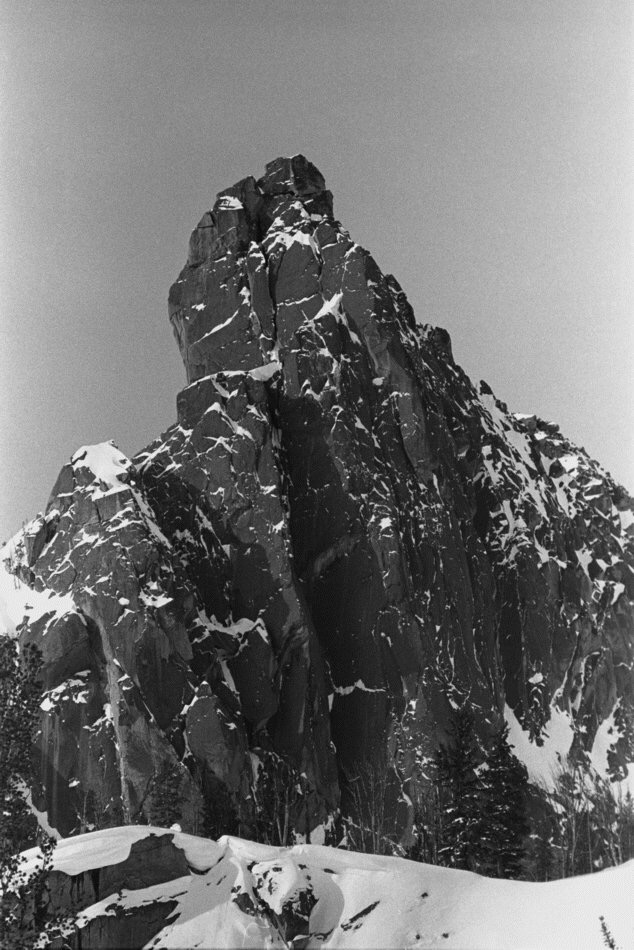
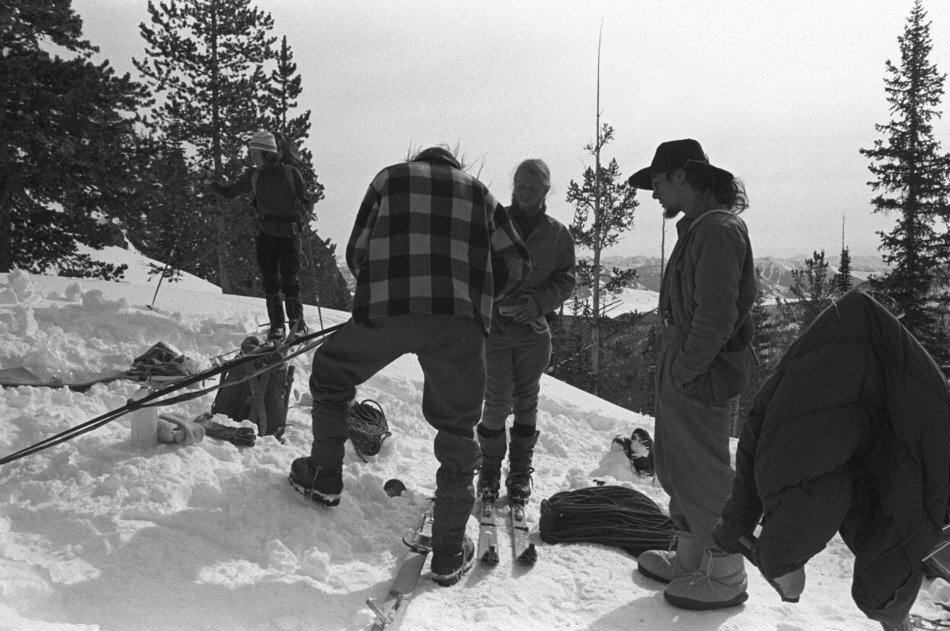
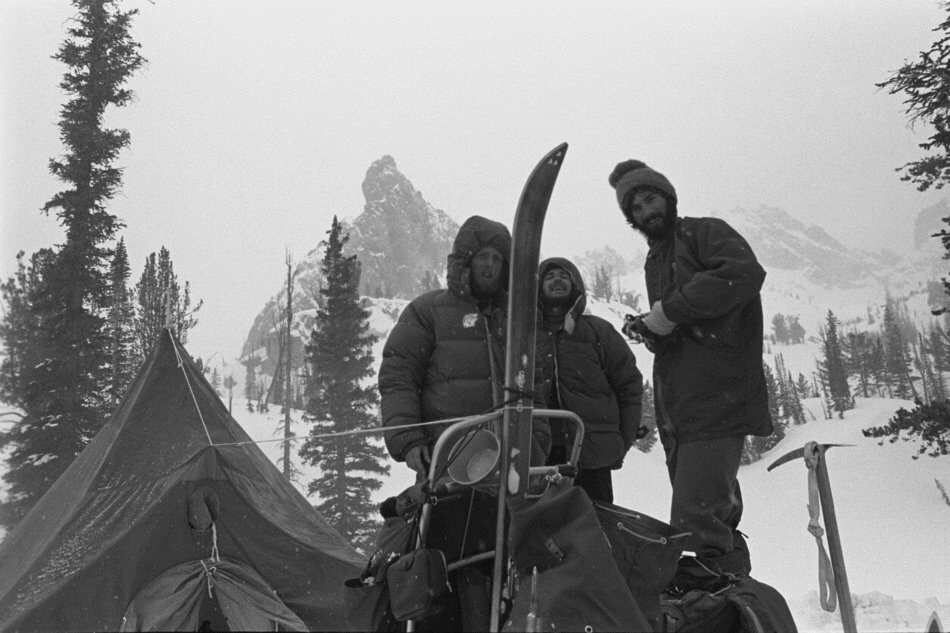
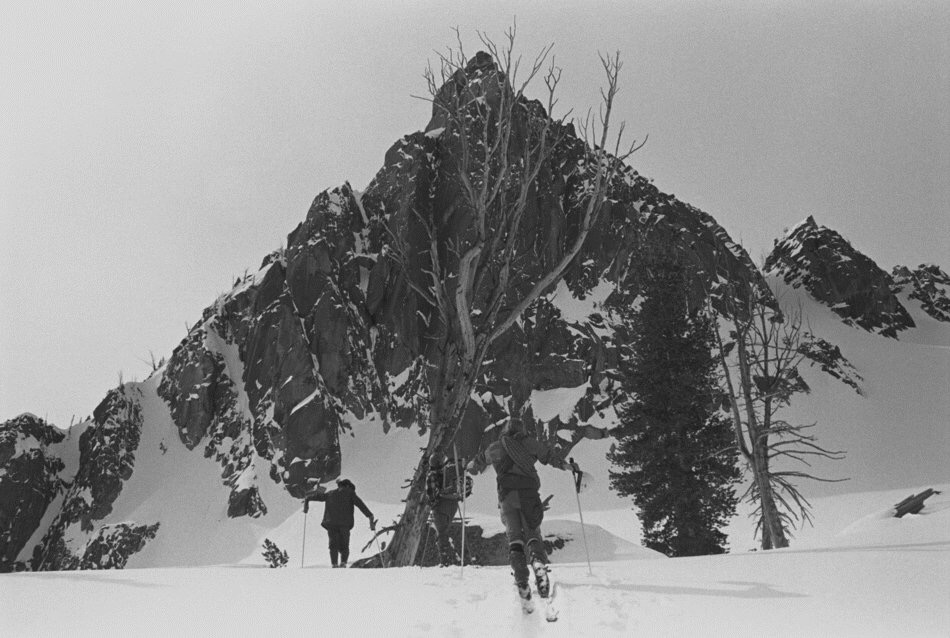
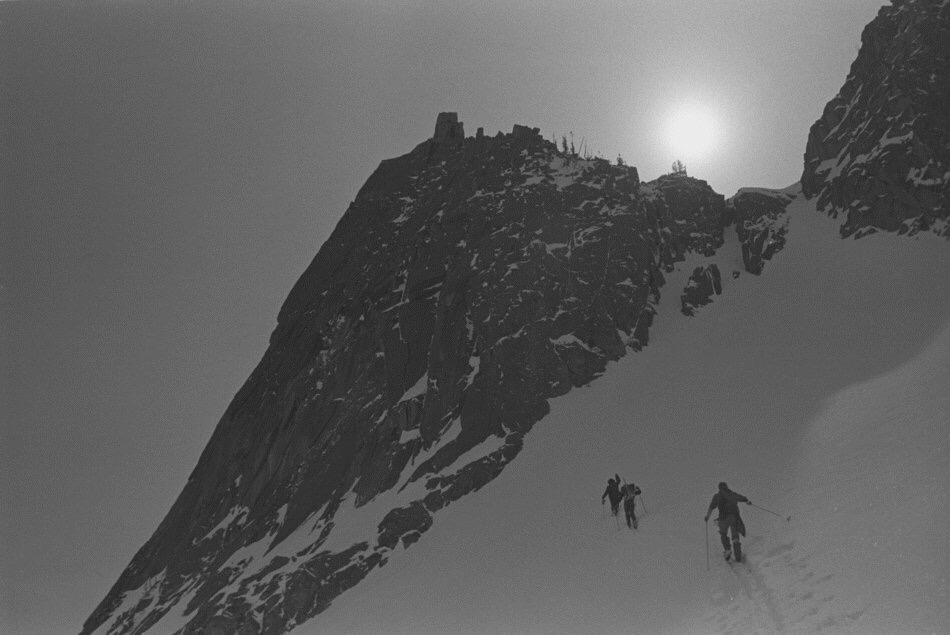
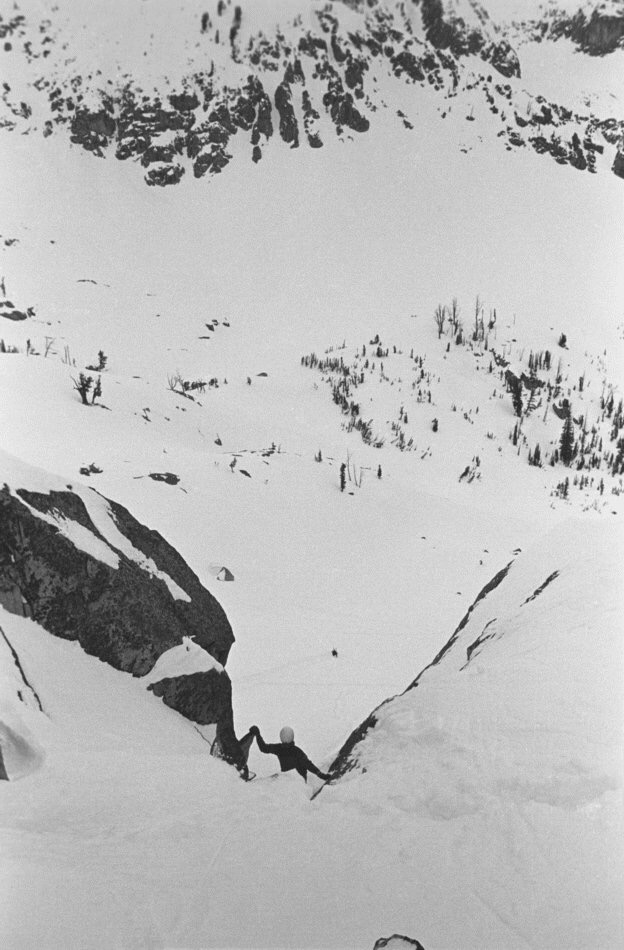
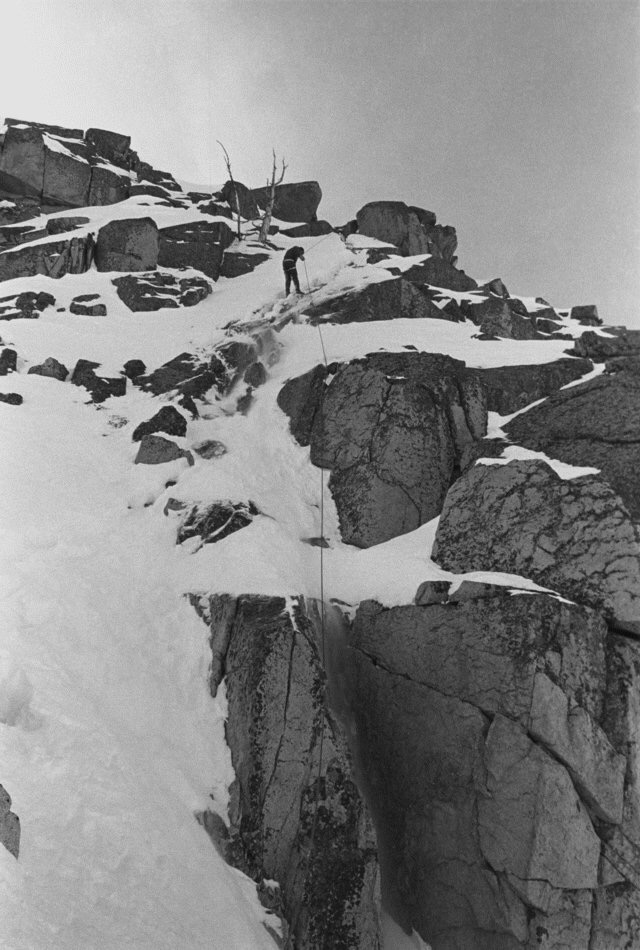
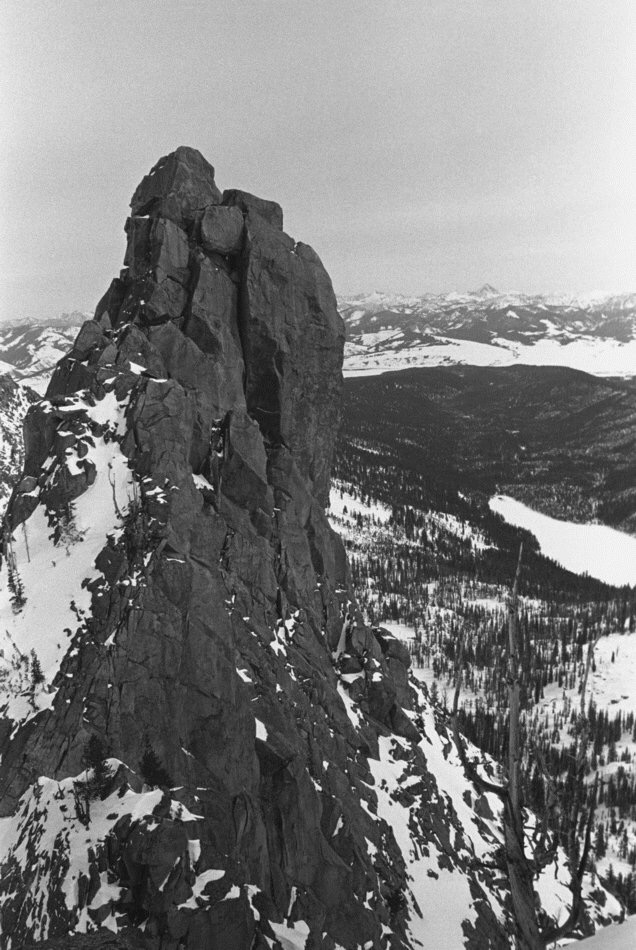
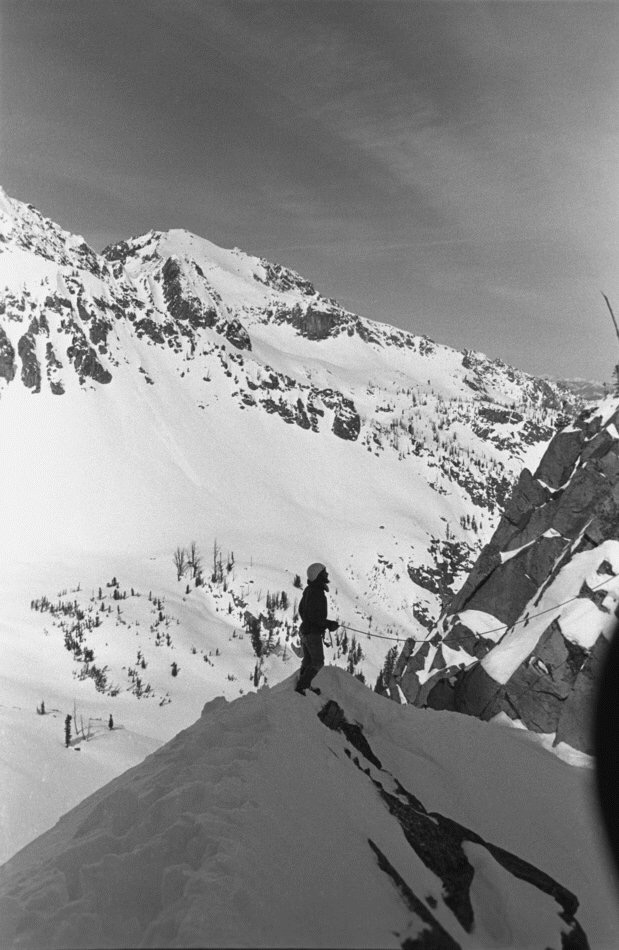
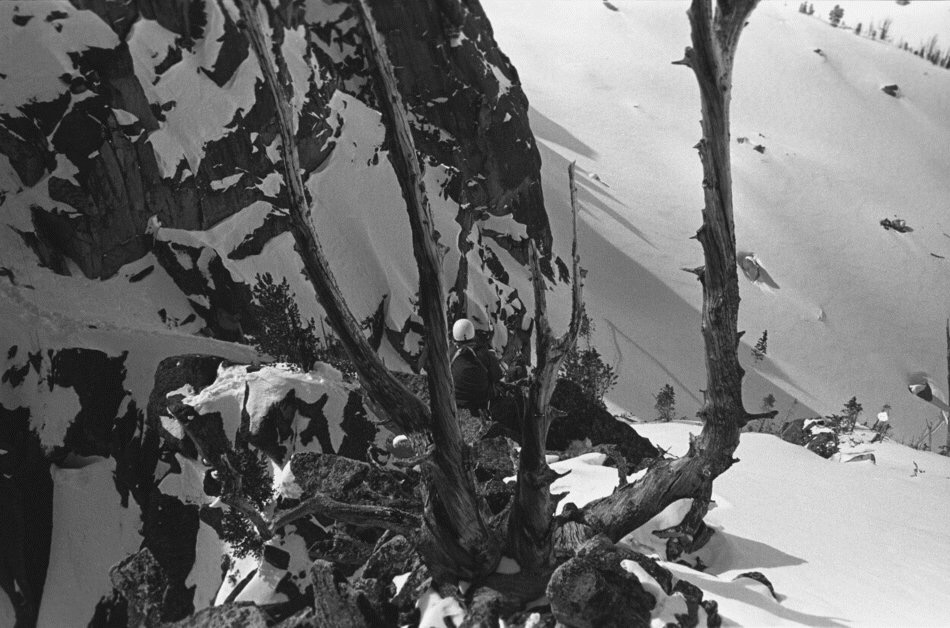
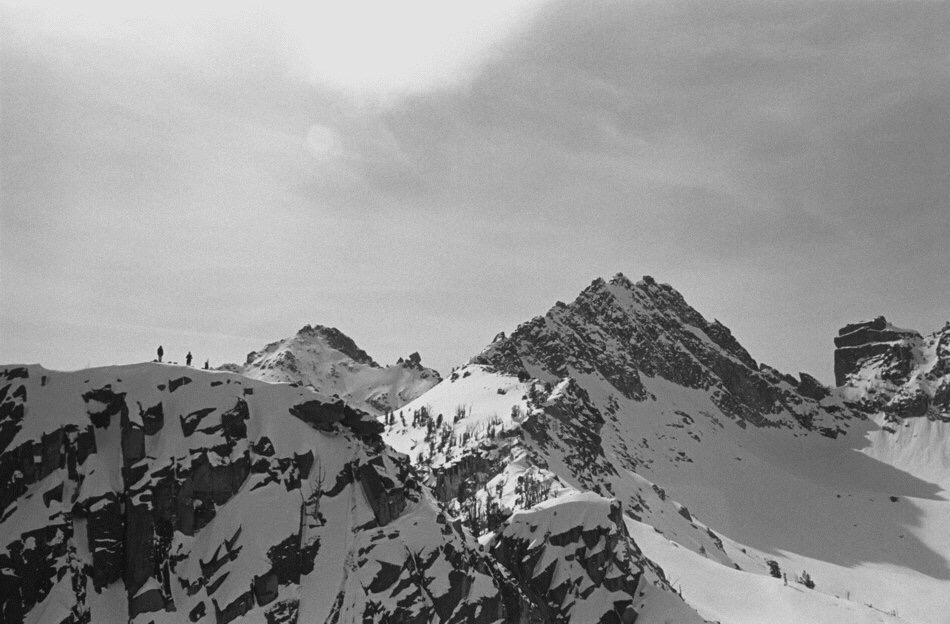
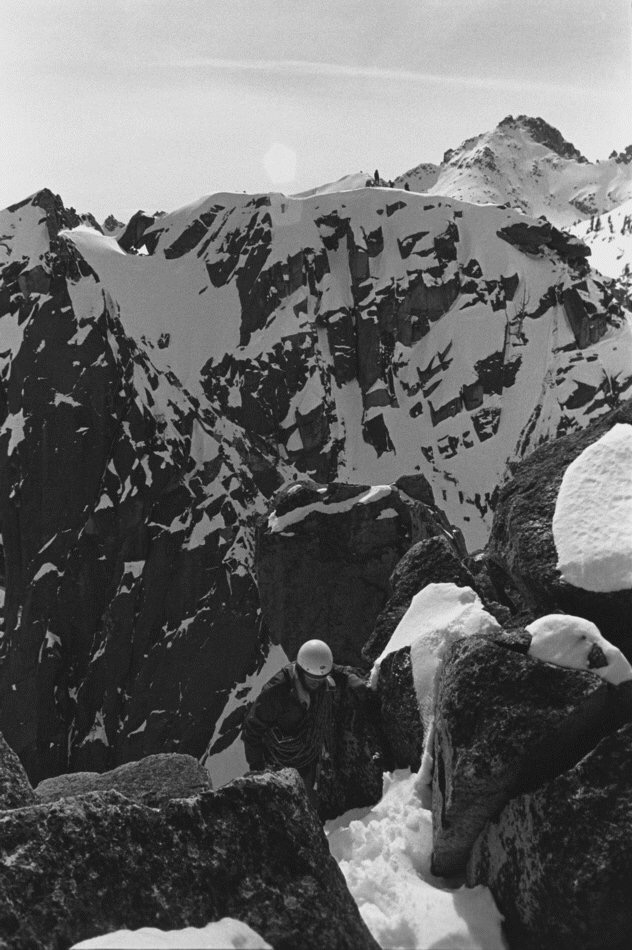
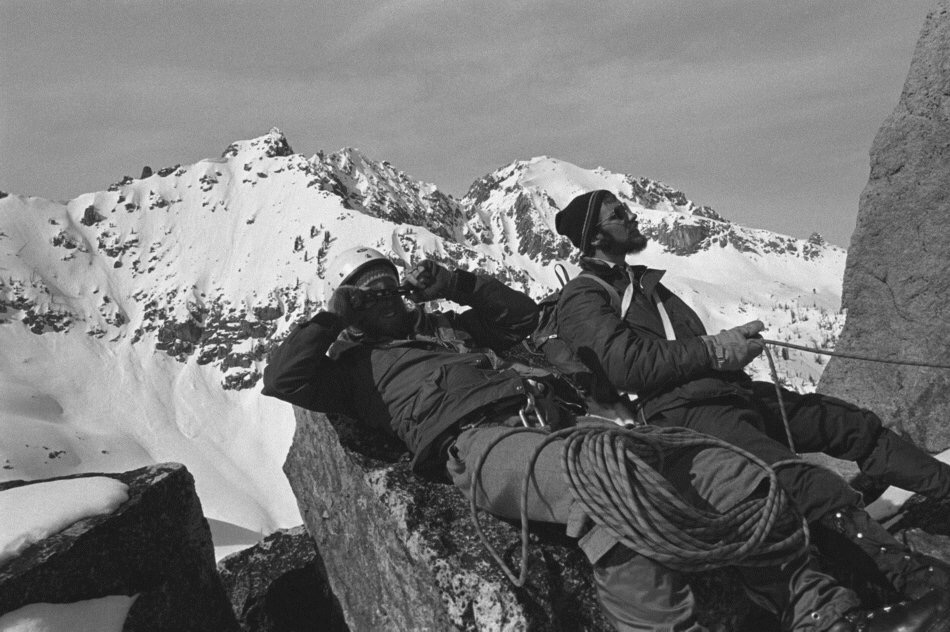
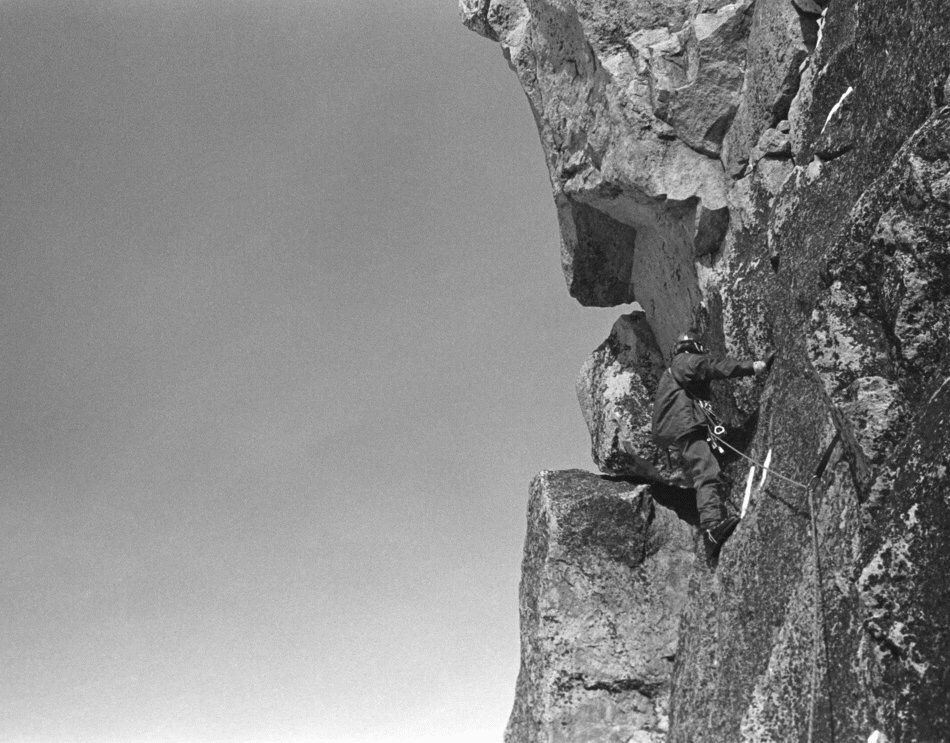
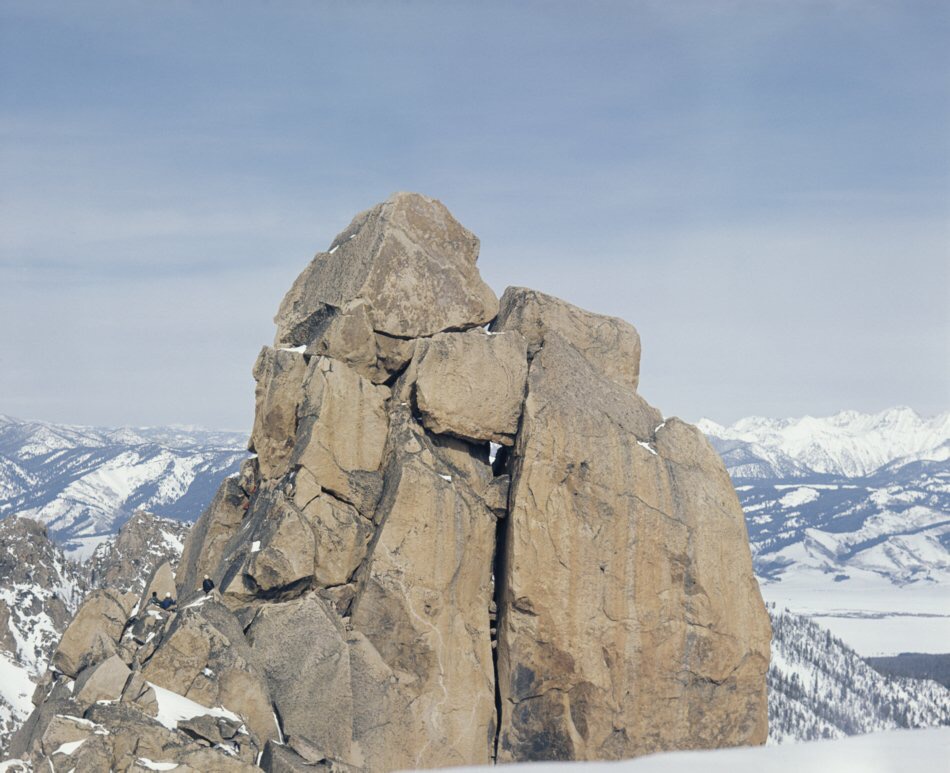
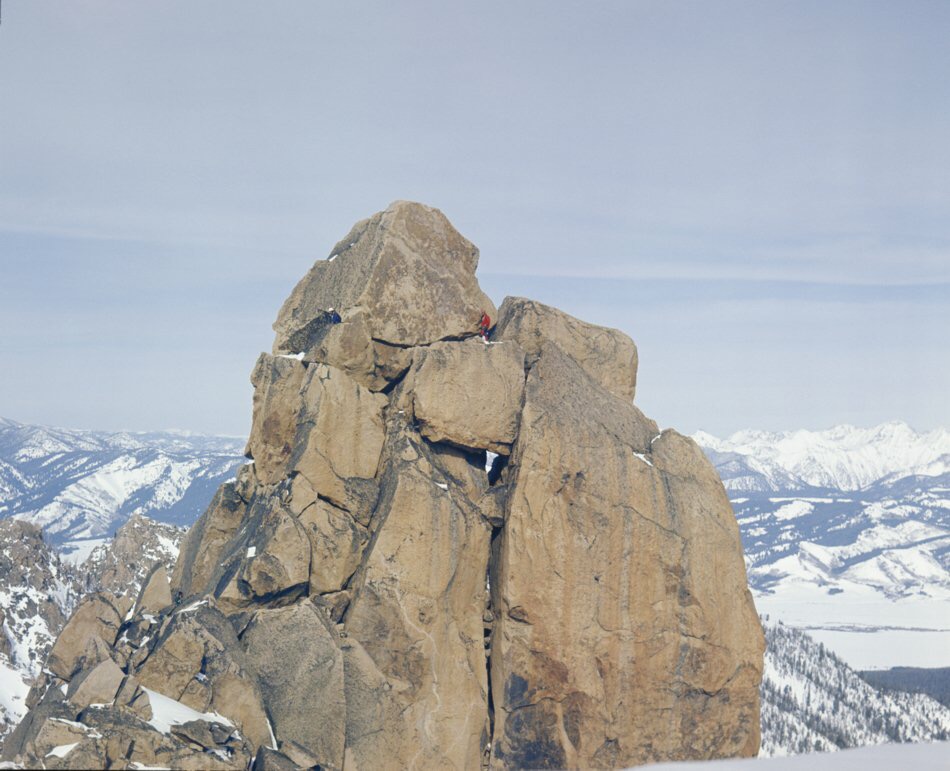
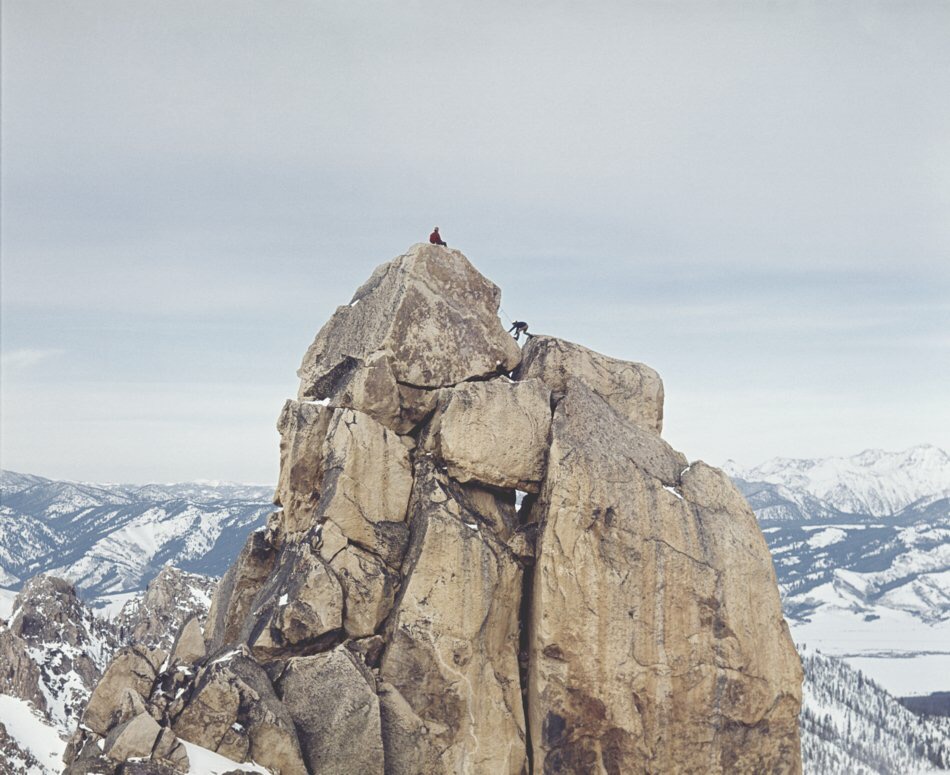
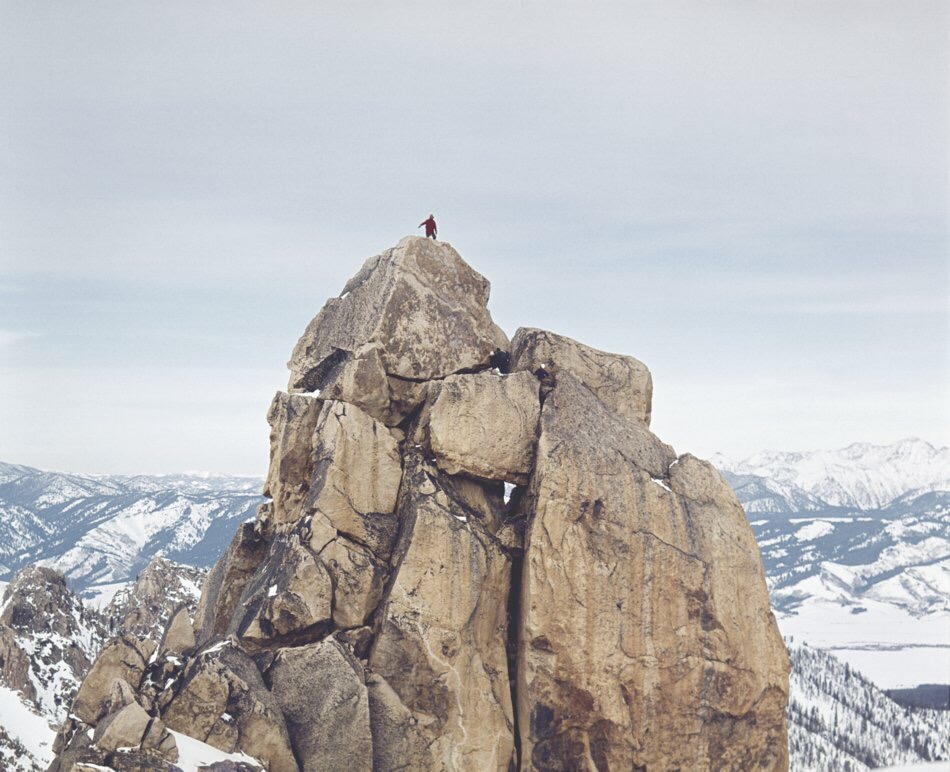
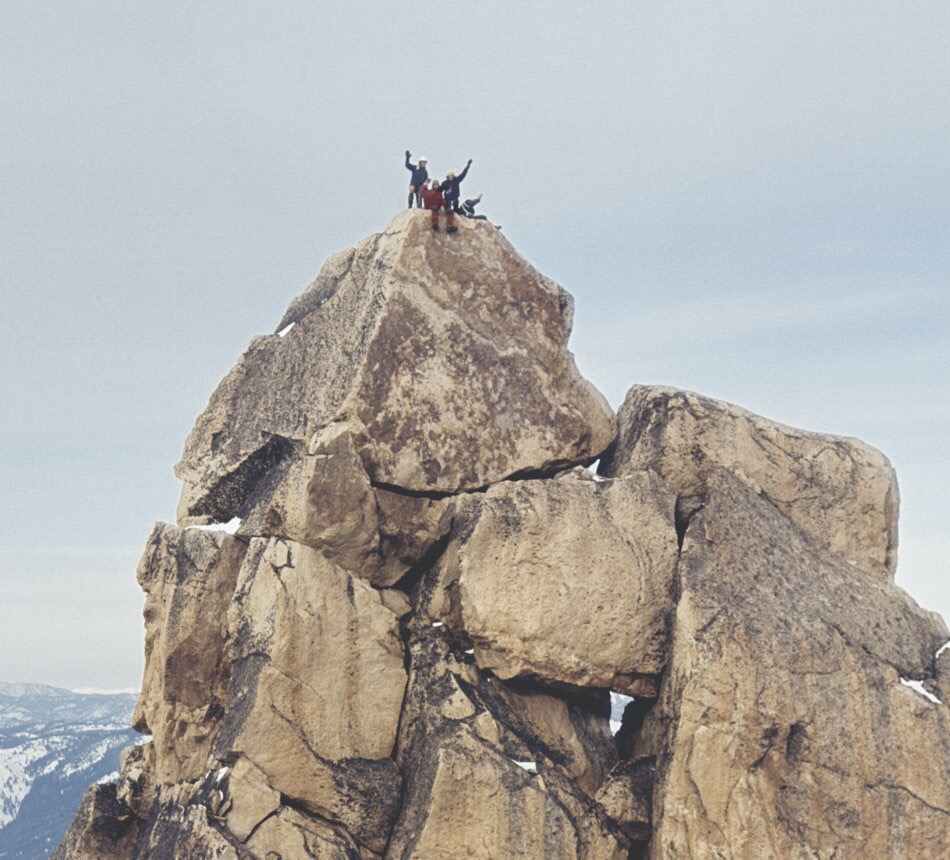
The first winter ascent of the Finger of Fate was made on March 19, 1973 by James Christopher Hecht, Harry Bowron, Gordon K. Williams and Joe Fox. I was part of the support team which also included Art Troutner and John Platt. I took the color photos. I developed the black and white photos that were shot by the ascent team.
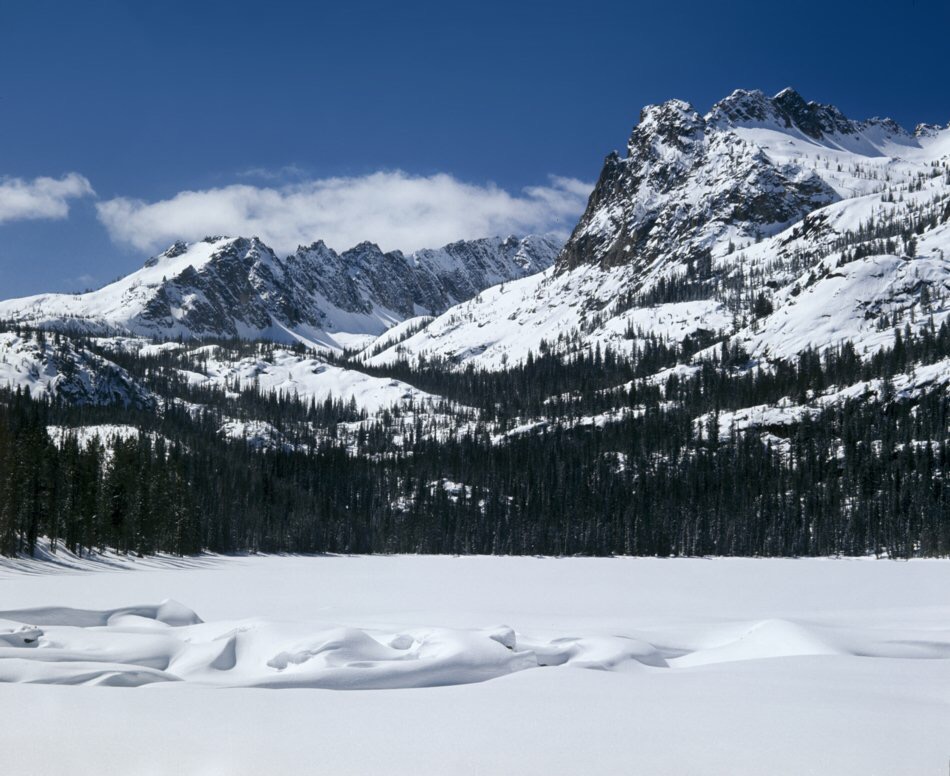
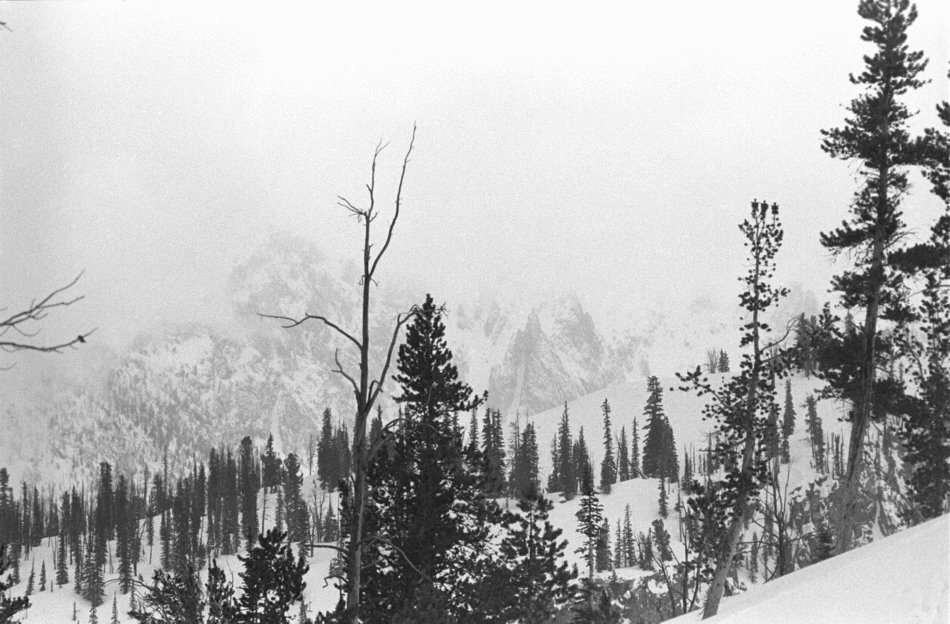
Our first day was spent skiing up Hell Roaring Road down in the forest, the end of the road being Camp I. Semi-unplanned as it was we hooked up with a Boise contingent of the DFC&FC* on the ski in, boosting our group to seven adventuresome lads. The second morning we were greeted with scenery. The fickle “Finger of Fate” is seen pointing skyward in this view from the outlet at Hell Roaring Lake, flanked by the Arrowhead and the Birthday Cake on the skyline. *Decker Flats Climbing & Frisbee ClubLooking southwest from the Hell Roaring Lake outlet toward Imogene lake, which is up and around the spectacular canyon beyond. This was my first Winter expedition and, at this point, I remember being extremely impressed with the snow forms on the mountains. Everything about the Sawtooths was magnified by being there in winter. I was 22 years old in 1973 and it may as well have been the Himalayas to me.The 2nd day we humped from the road end to Hell Roaring Lake, where the climbing began. Carrying heavy packs up to High Camp II was tough. The 3rd morning dawned a little funky but cleared up after a while.The North Face of the Finger, showing the “Open Book” route in deep shadows, not a nice climb in Winter. It was attempted repeatedly before selecting an alternate plan.Gearing up in the morning. Nice equipment, huh? I believe those are my Hickory 215CM Sundins Mountain Skis from REI, with screwed in metal edges and my surplus canvas + aluminum frame pack. I fondly remember treating the ski bases with Pine Tar so wax would adhere properly. I don’t miss doing it anymore though. The Silveretta cable bindings were versatile and enabled amazing Winter travel, though stylish turns were difficult. Also my classic aluminum cup.Gearing up in the morning. Nice equipment, huh? I believe those are my hickory 215 cm Sundins Mountain Skis from REI, with screwed in metal edges, and my surplus canvas + aluminum frame pack. I fondly remember treating the ski bases with Pine Tar so wax would adhere properly. I don’t miss doing it anymore though. The Silveretta cable bindings were versatile and enabled amazing winter travel, though stylish turns were difficult. Also my classic aluminum cup.Soft morning light kisses the powder snow ‘Good Morning’ as Gordon leads off toward the climb on Day 3.Skiing up from Camp II the morning of March 19, 1973. A cloudy dawn turned into a fine day.A closer look at the Open Book Route.Ascending the colouir to the West Ridge saddle.Looking back down the col toward Camp II, with someone working their way up the track way below.Sitting atop the buttress west of the Finger and making a plan before the climbers scramble back down to the saddle and head up the West Ridge Route.Rappelling down the buttress back to the saddle.The Finger of Fate as viewed from the buttress, with Hell Roaring Lake snowed over down below, looking east toward the Sawtooth Valley. Our cars are waaaay out there. Big bad Castle Peak is on the horizon.If you see the rope, follow it upward and you’ll notice Gordon’s head (center) peering out from a belay position above a pitch.A casual belay.Looking down at the saddle.The Buttress west of the Finger as seen from the Finger. I took up a position on top of the buttress with my Graflex to shoot pics back toward the Finger while the rock climbers worked on their goal. You see the route up and down the buttress in the disturbed snow.Looking toward the Arrowhead, Sevy Peak and the Birthday Cake displayed prominently on the skyline.The view west from the Finger of Fate. Chris is coming up.Belay on! View is to the NNW with Decker Peak the more distant summit on the right.Harry leads a nice pitch.The lads are now seen (lower left if you look closely) watching as Harry leads a line. These are the pics I shot from over on the buttress.Looks like Gordon is belaying the next climber up while Harry pokes around.Making a leap of faith. There is a large gap from one boulder to the next, which takes a measured leap to do properly. Don’t come up short, but don’t overshoot the landing either.Harry on the summit block.Detail summit photo of the first Winter ascent (March 19, 1973). Left to right: James Christopher Hecht, Harry Bowren, Gordon K. Williams and Joe Fox.
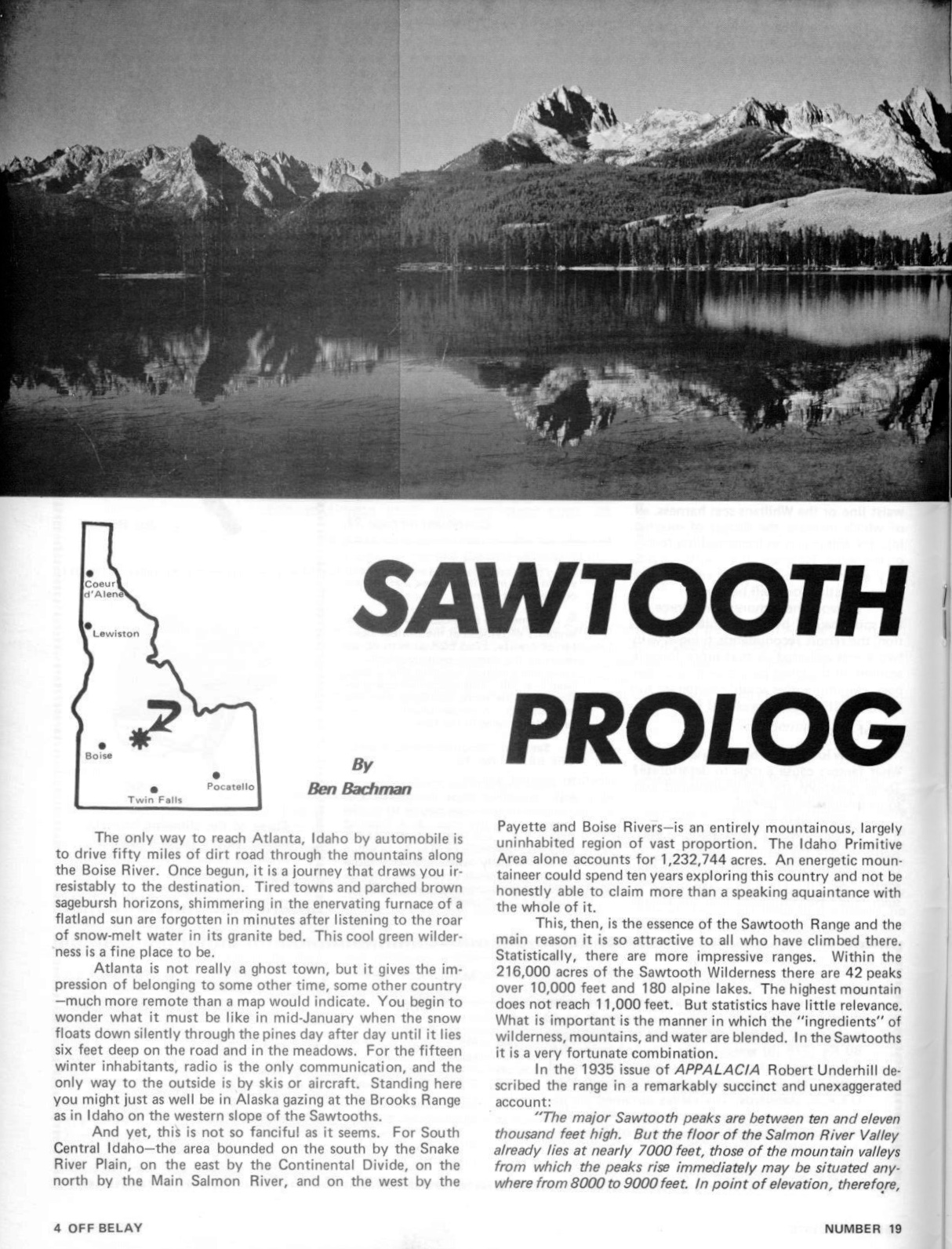
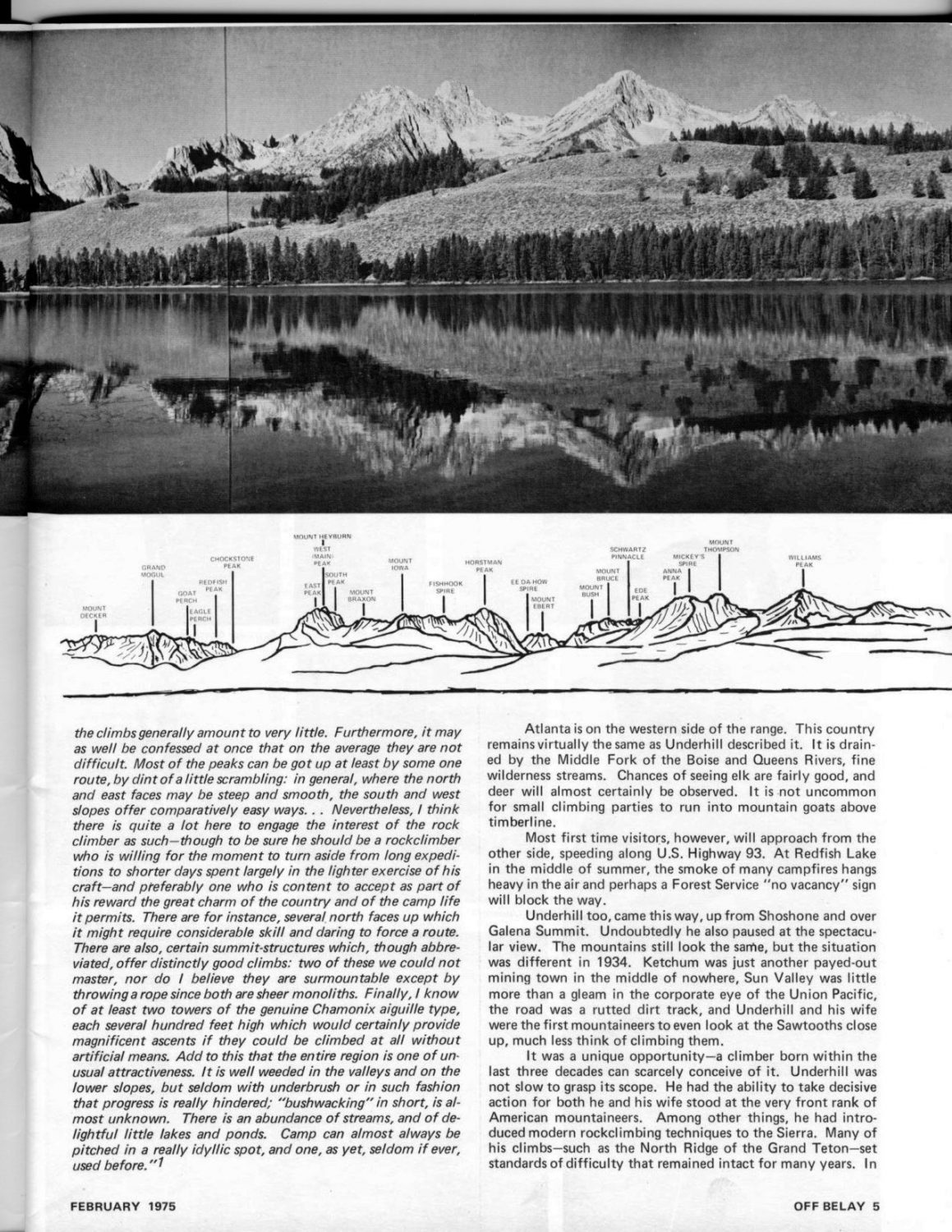
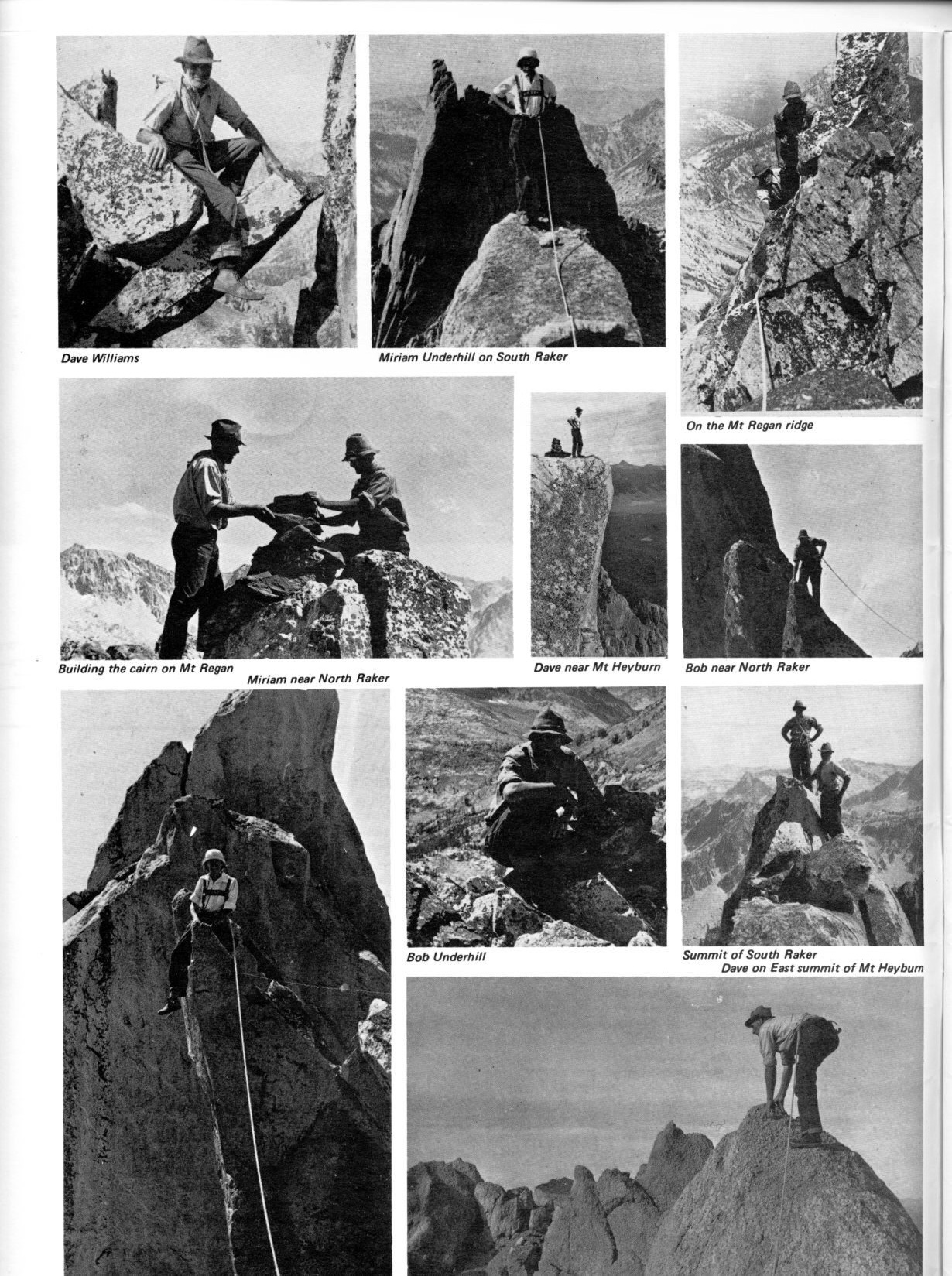
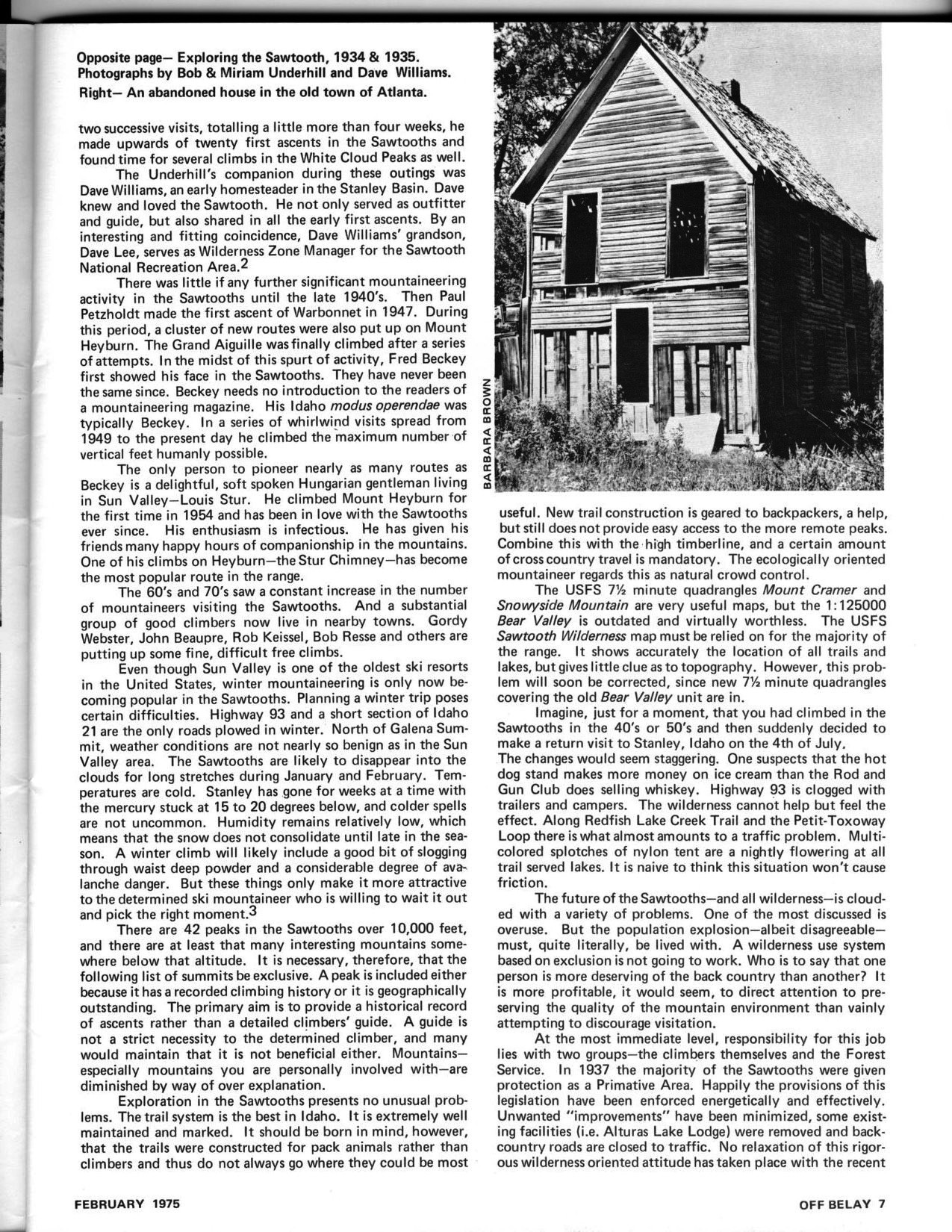
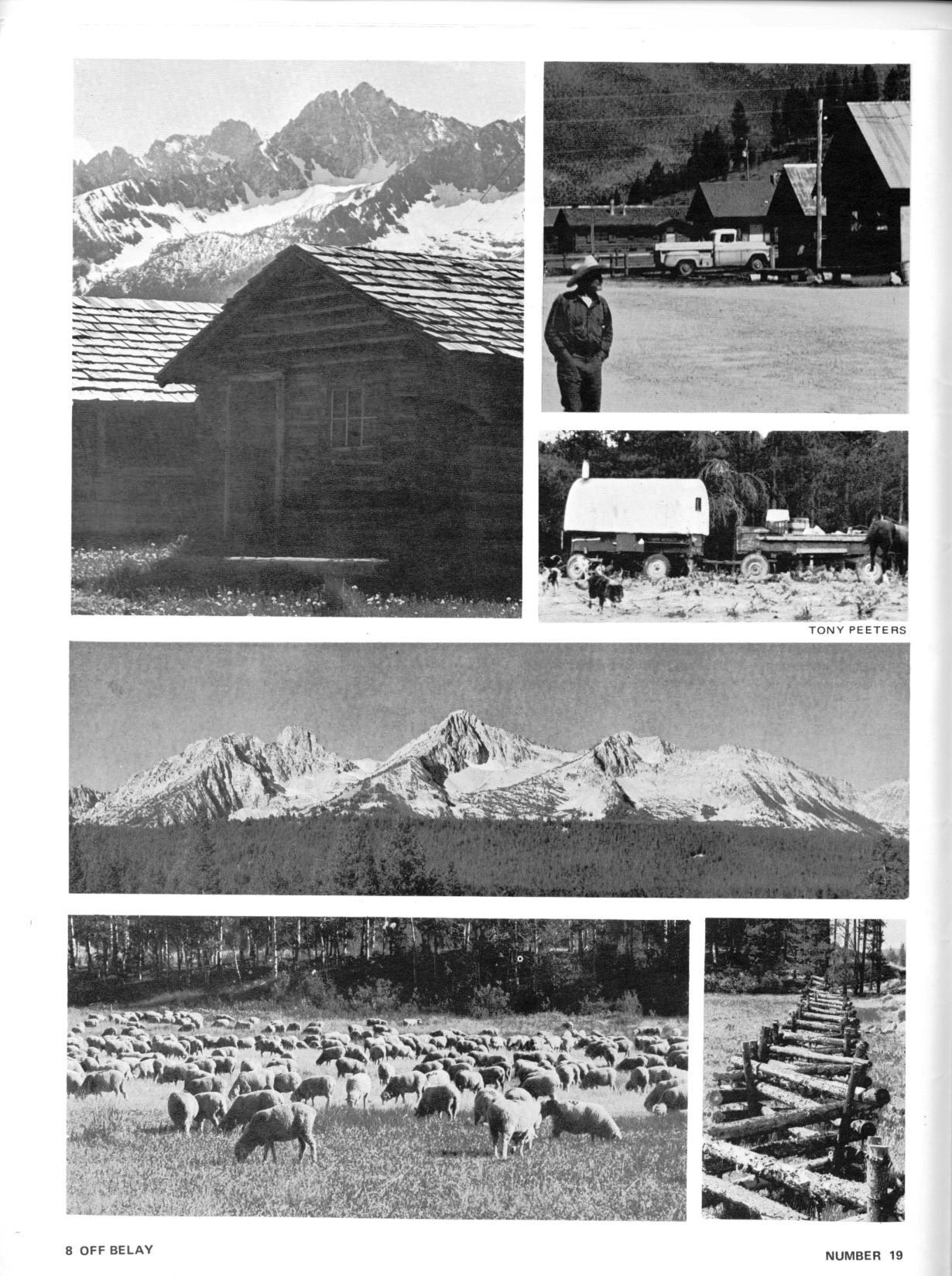
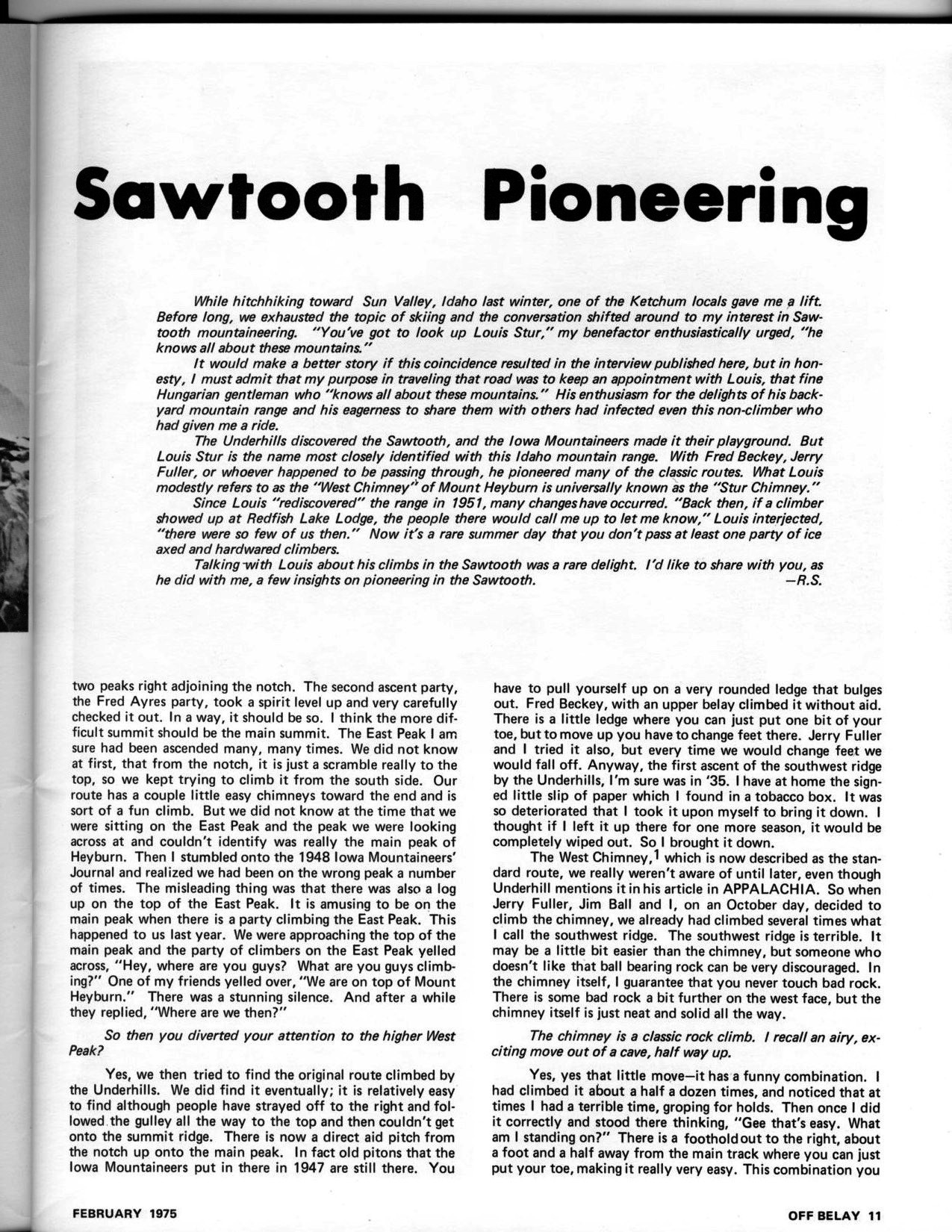
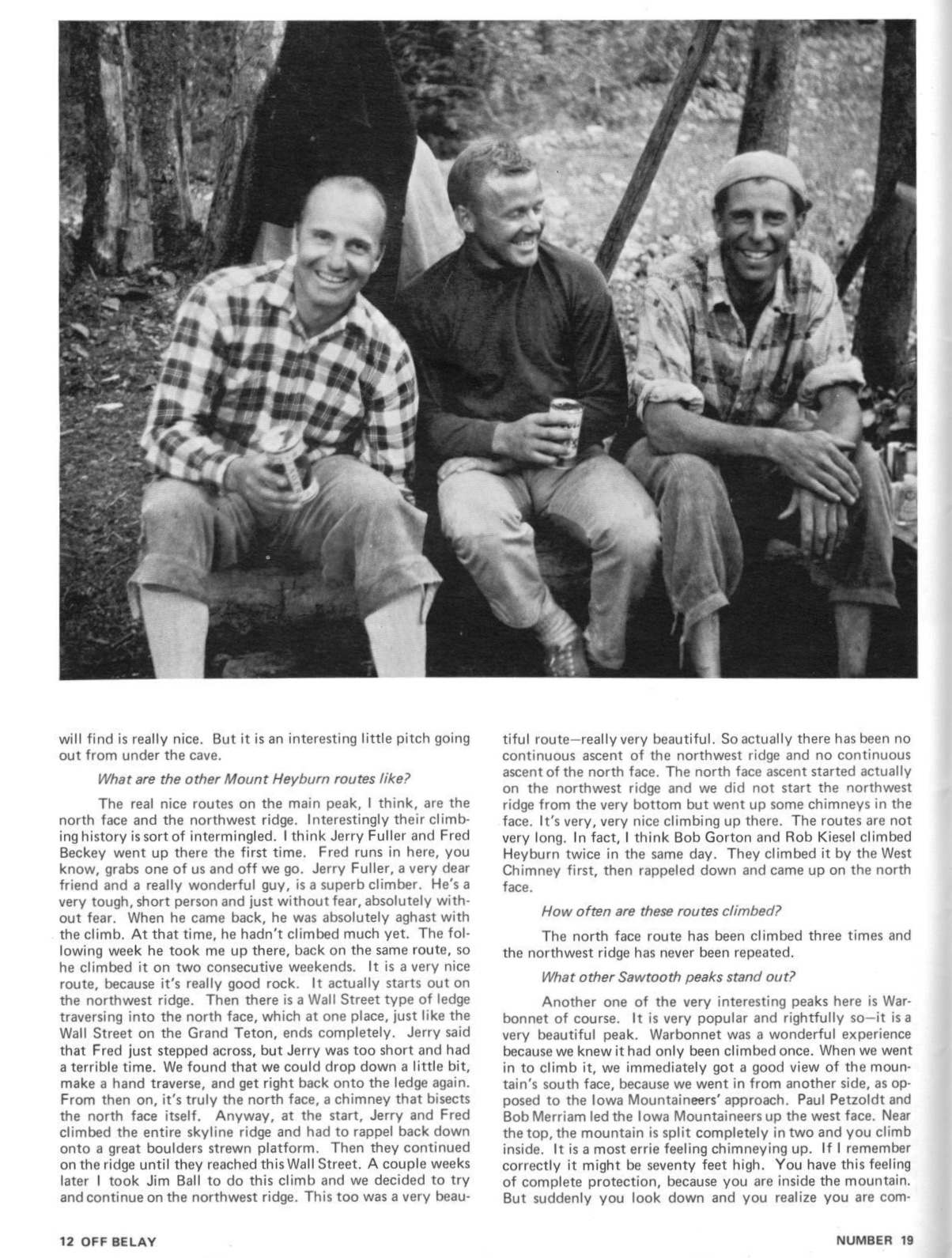
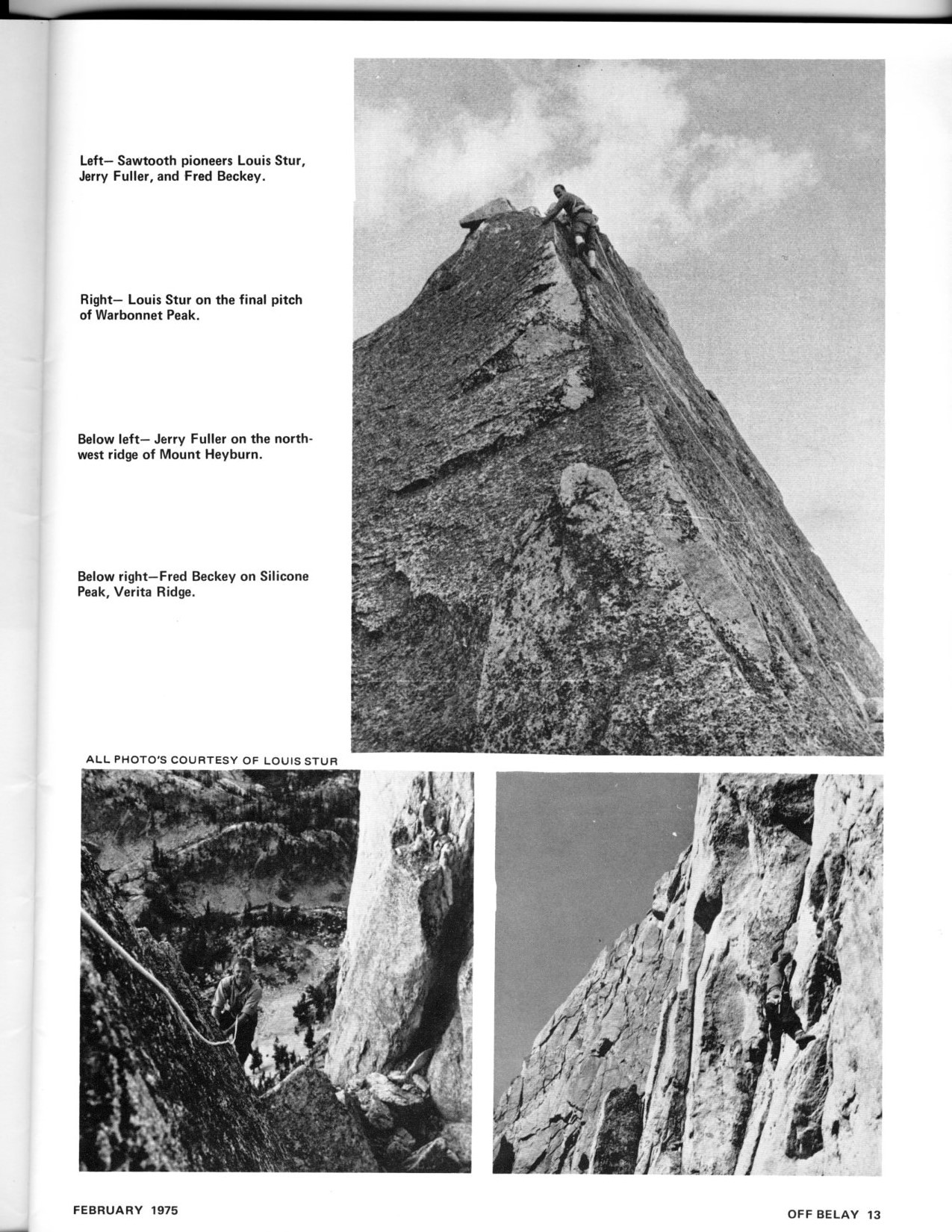
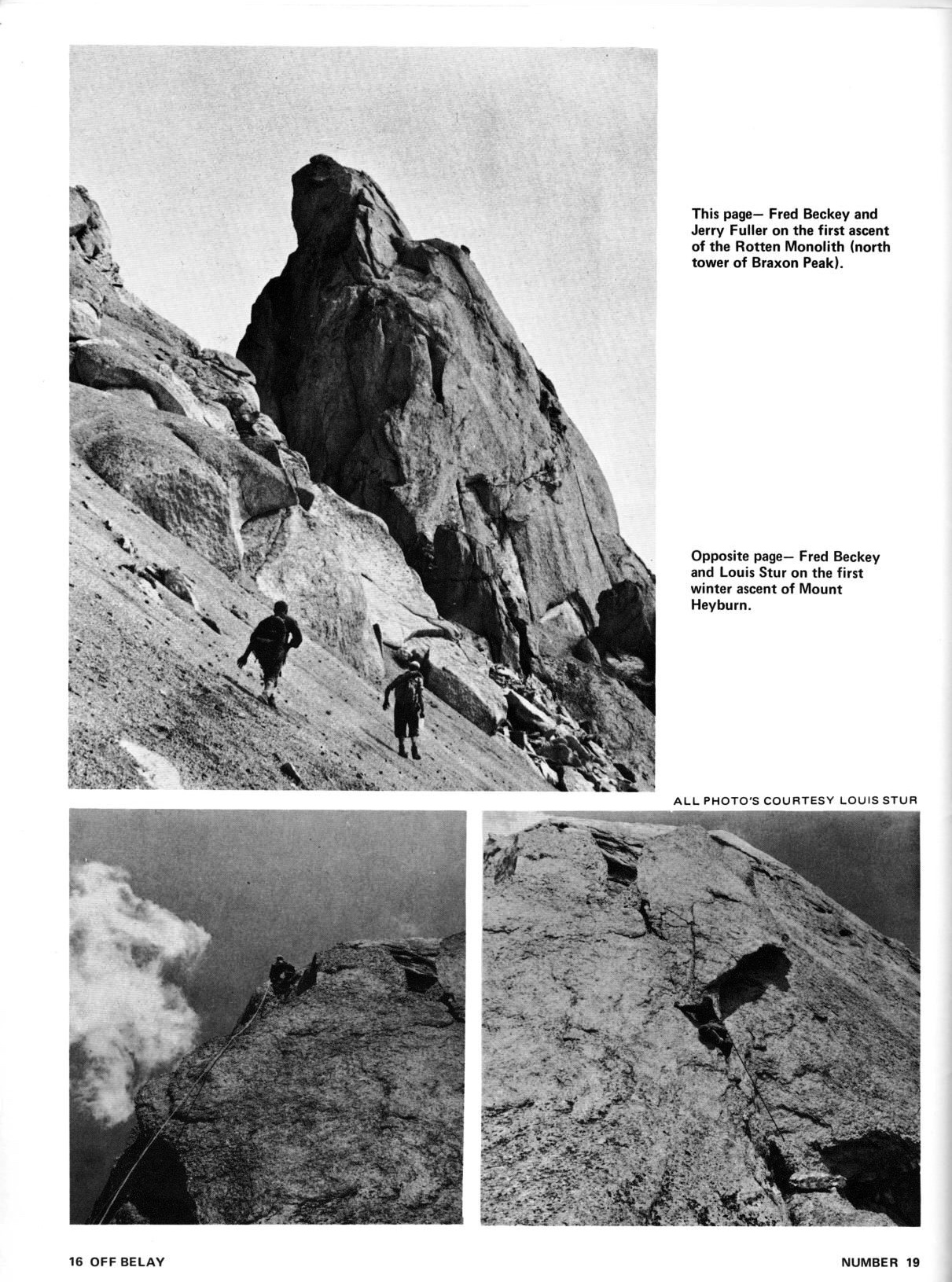
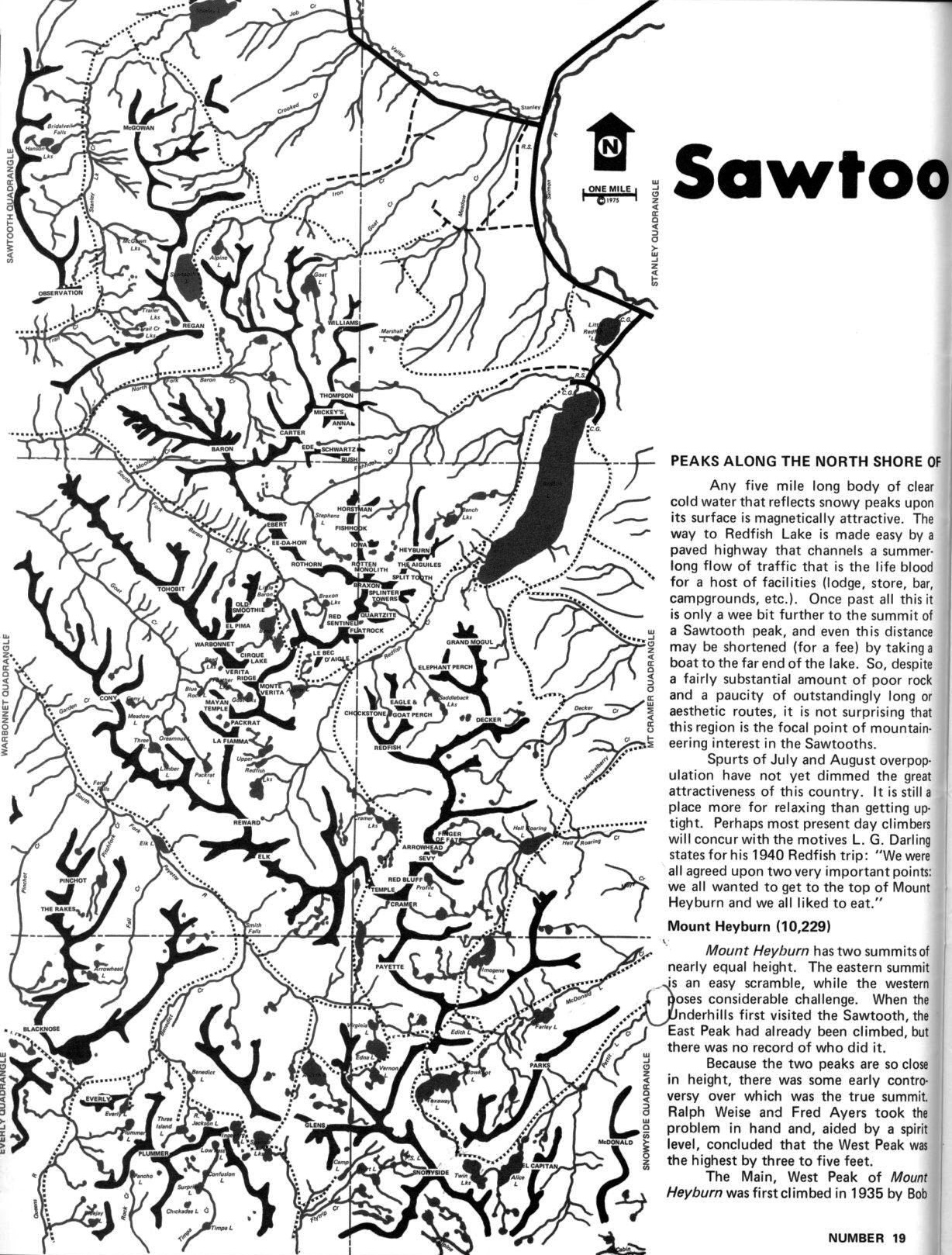
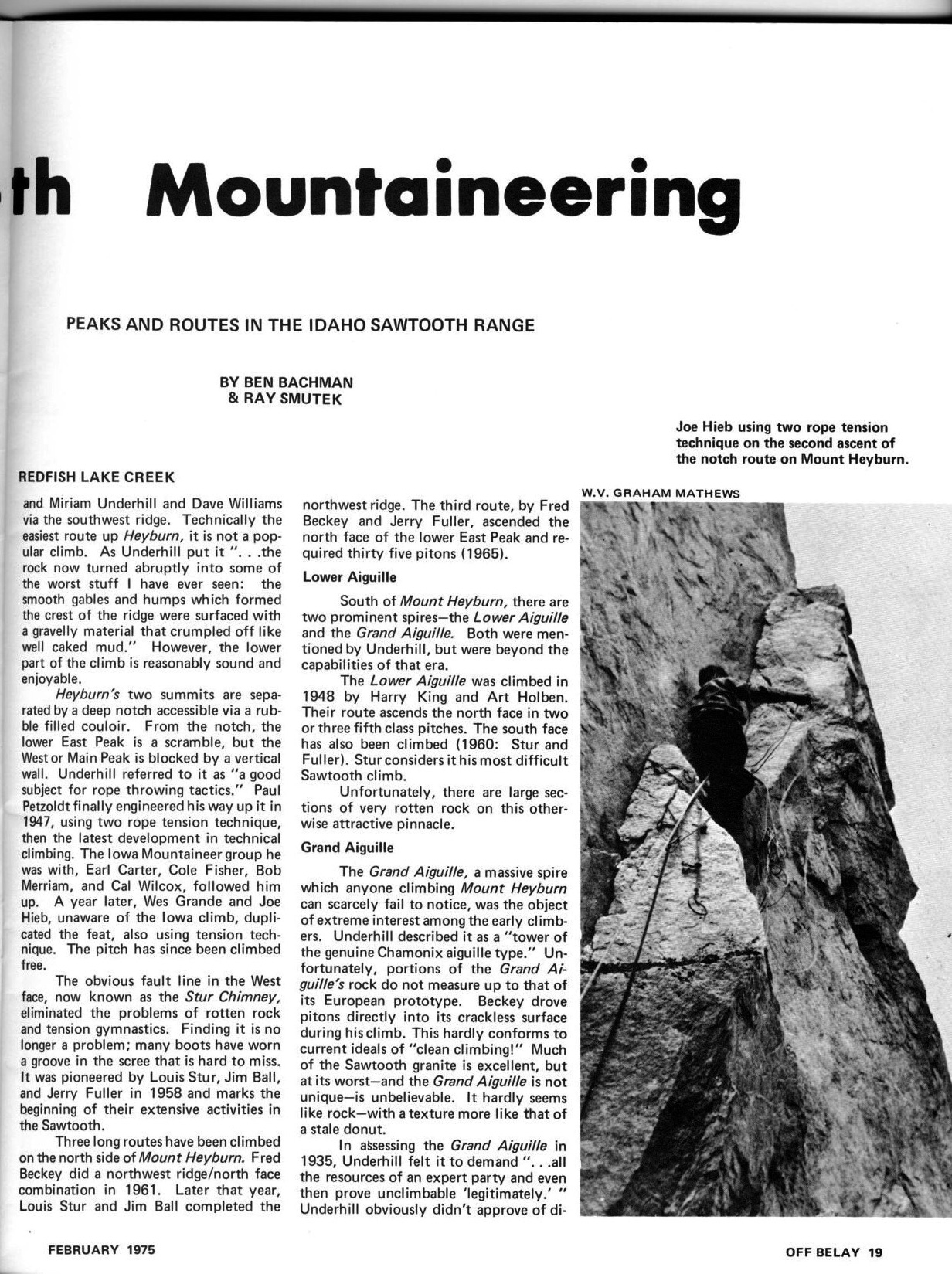
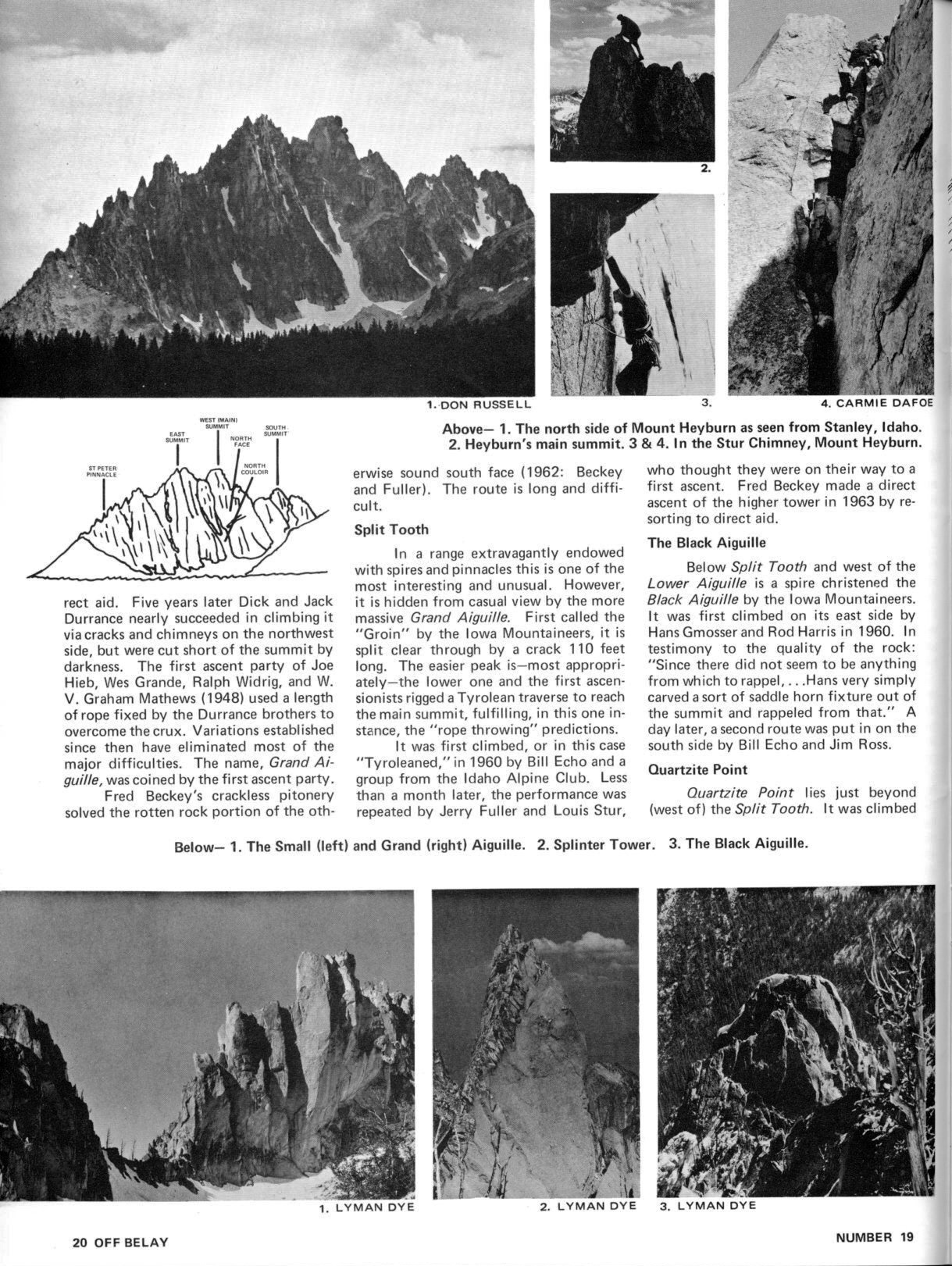
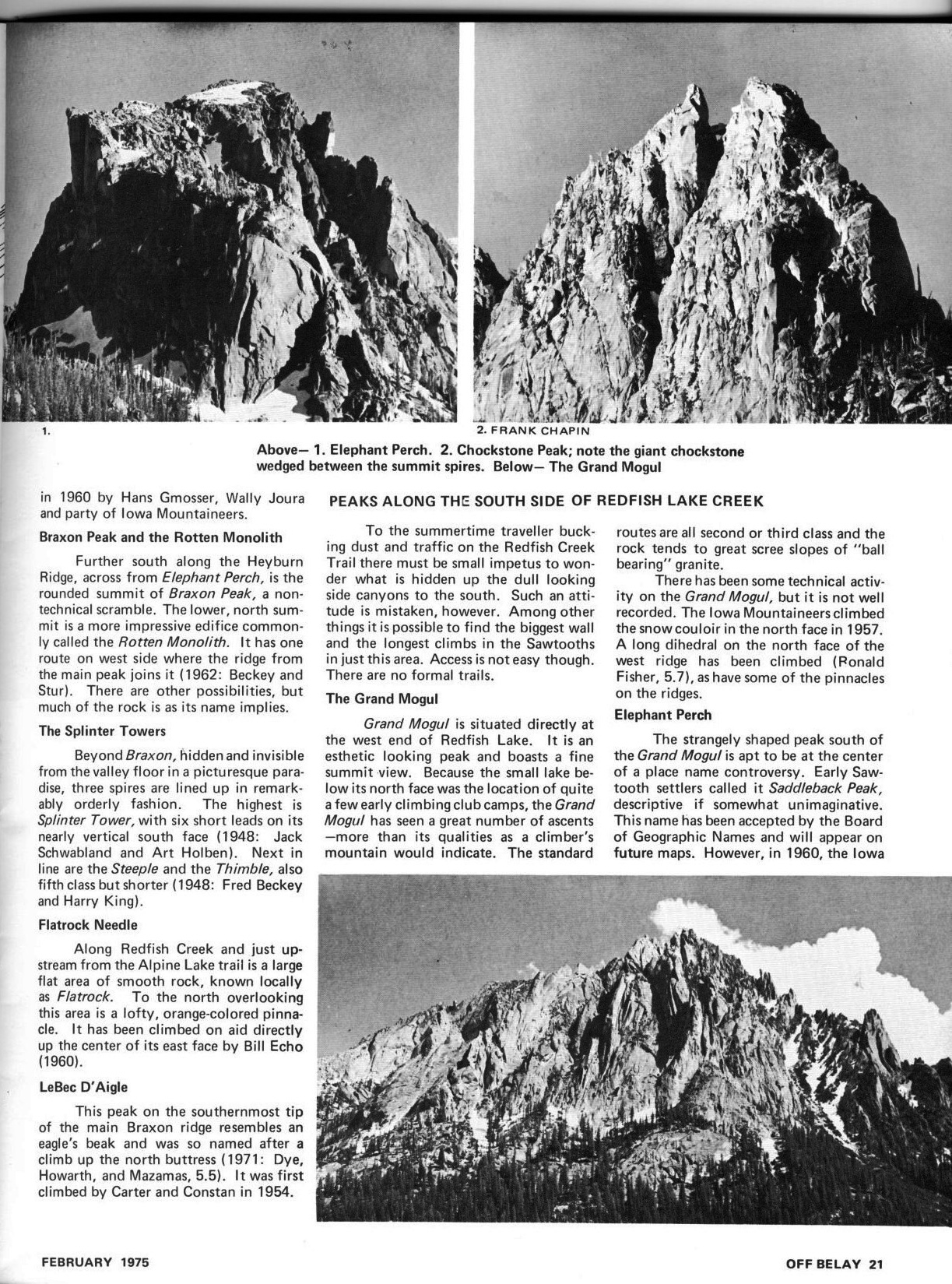
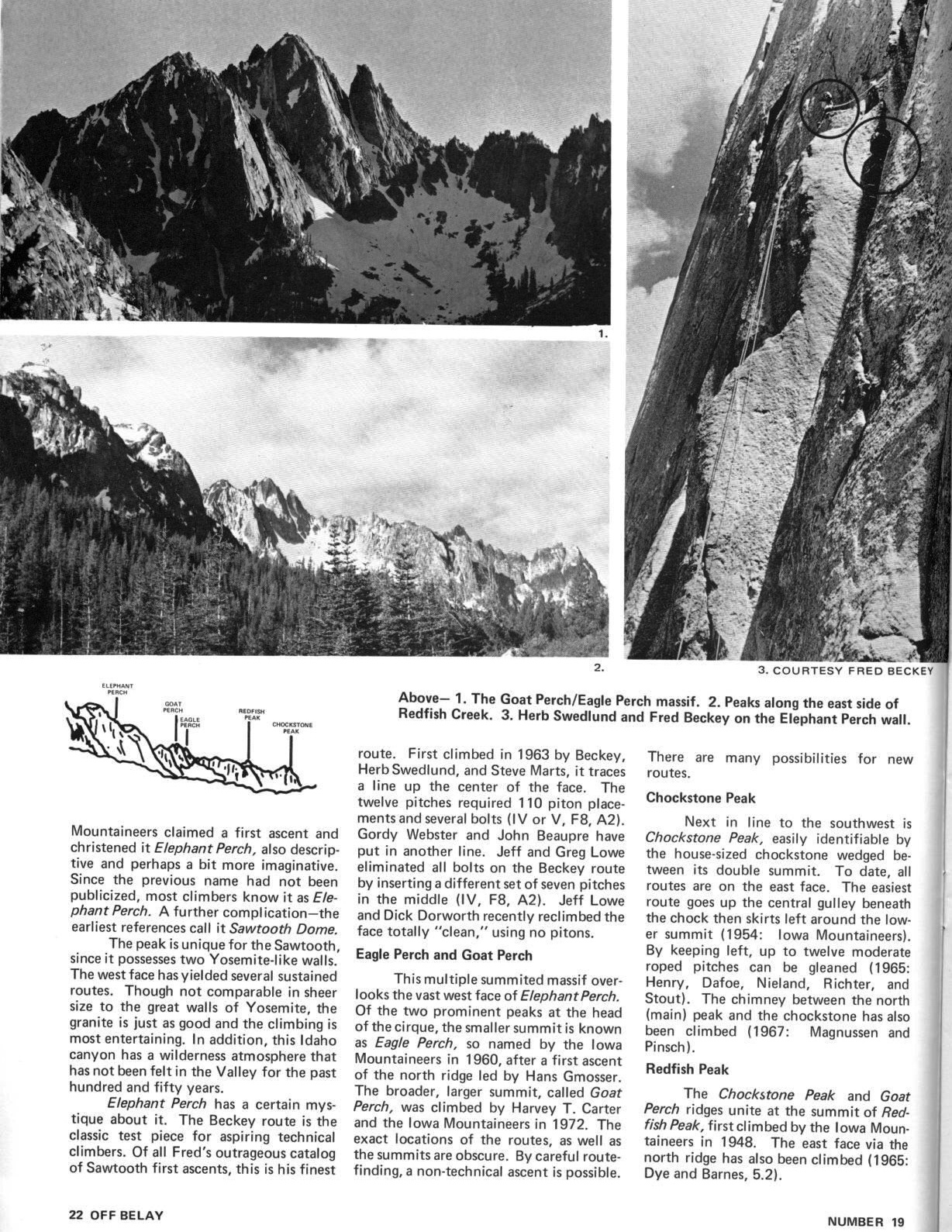
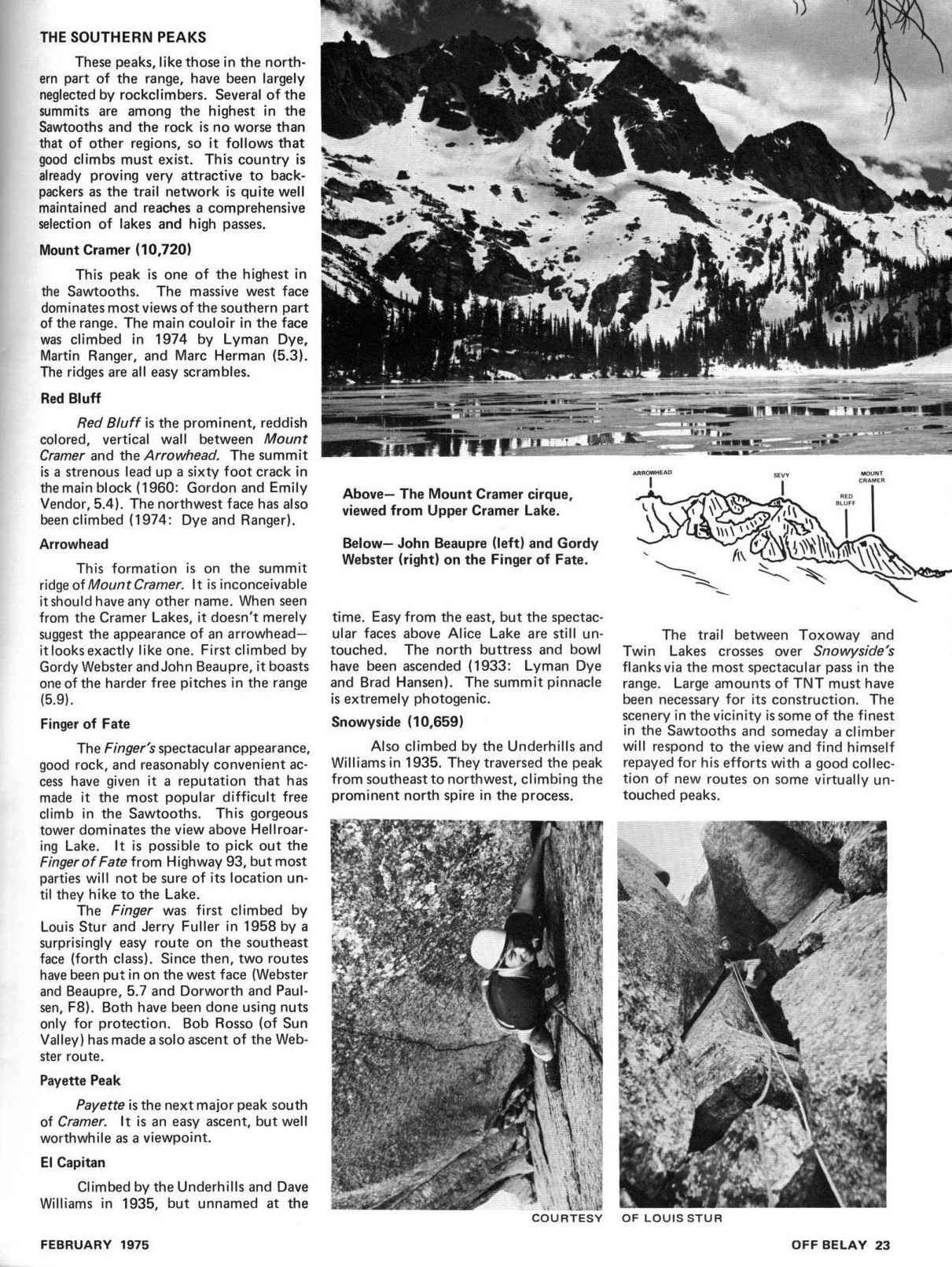
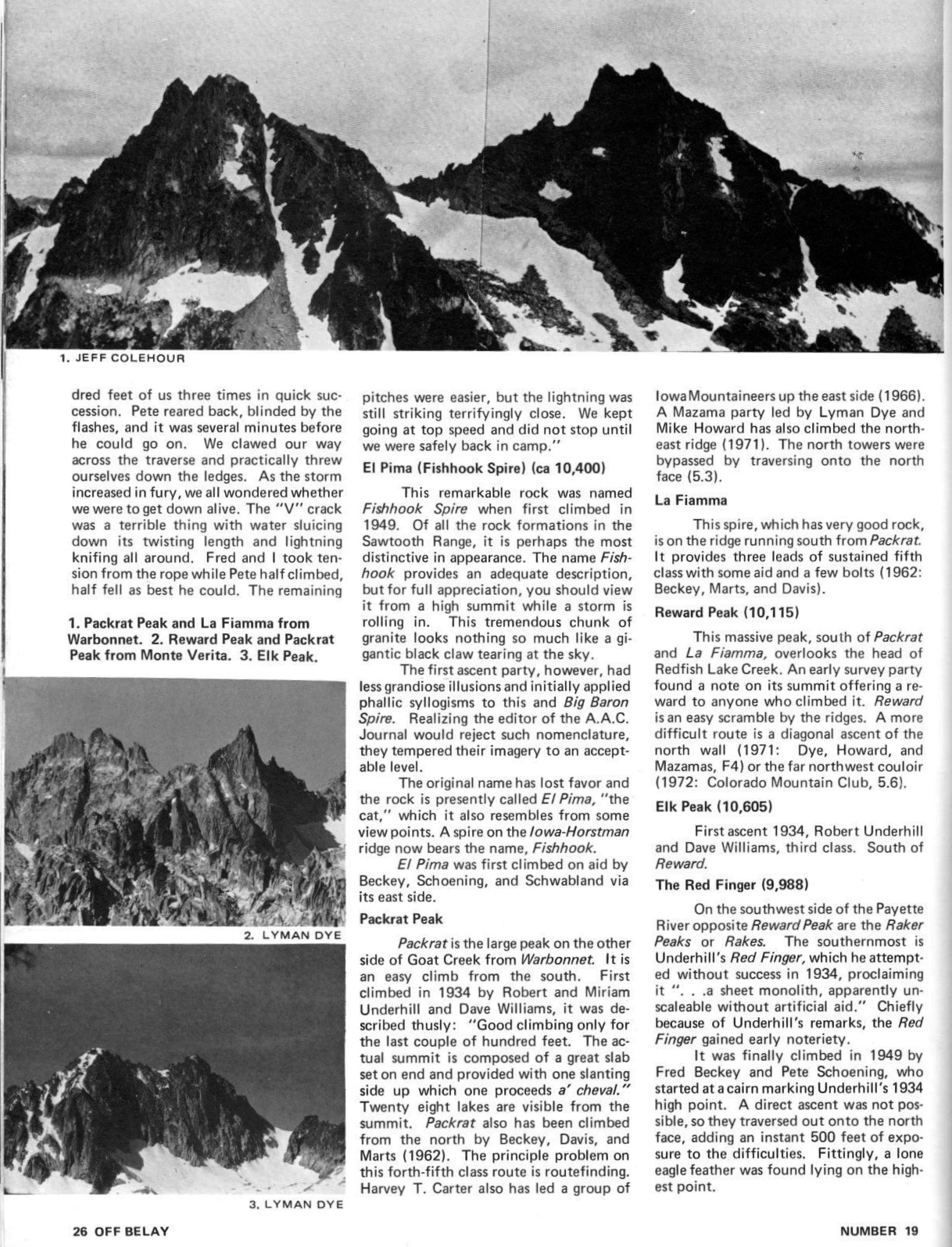
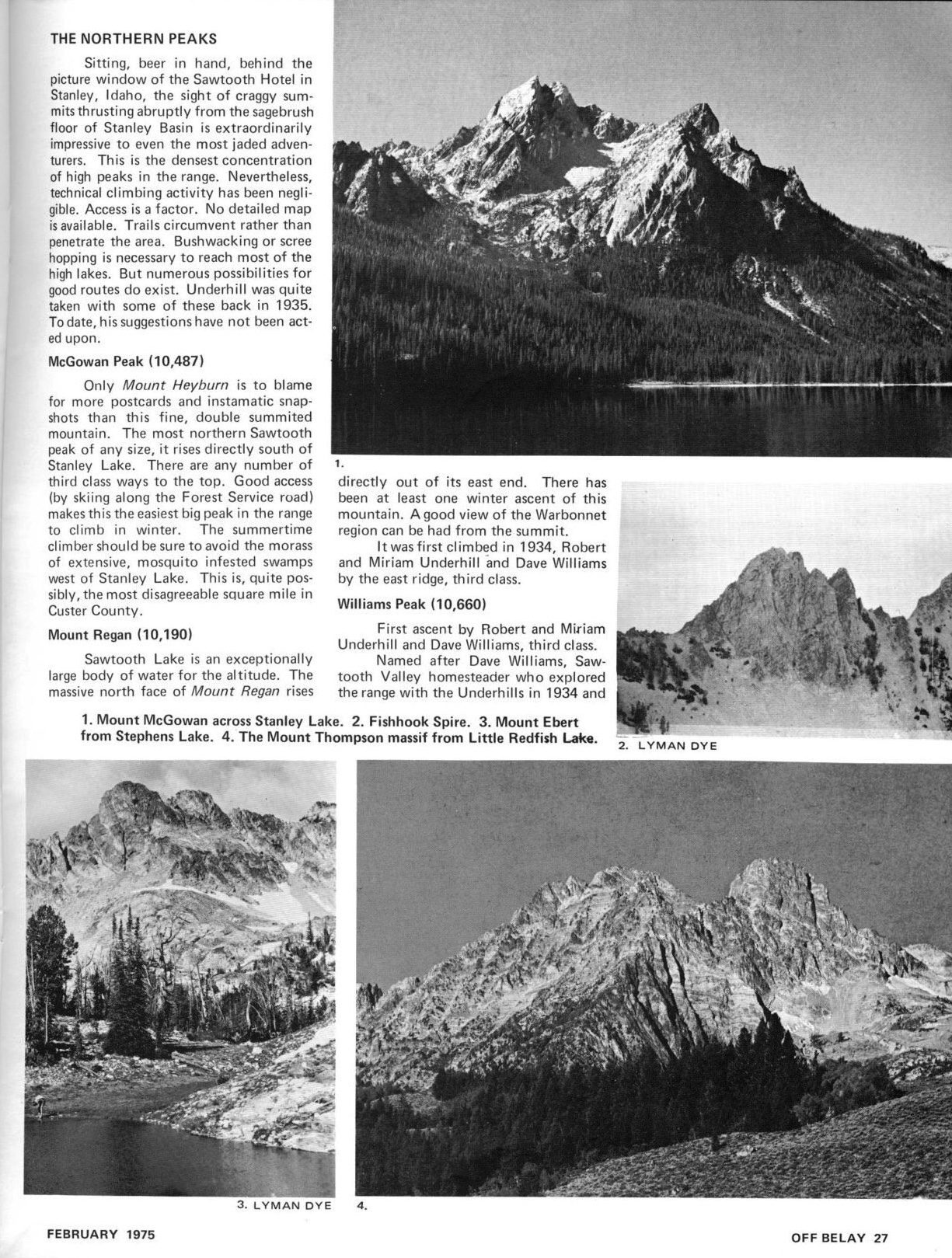
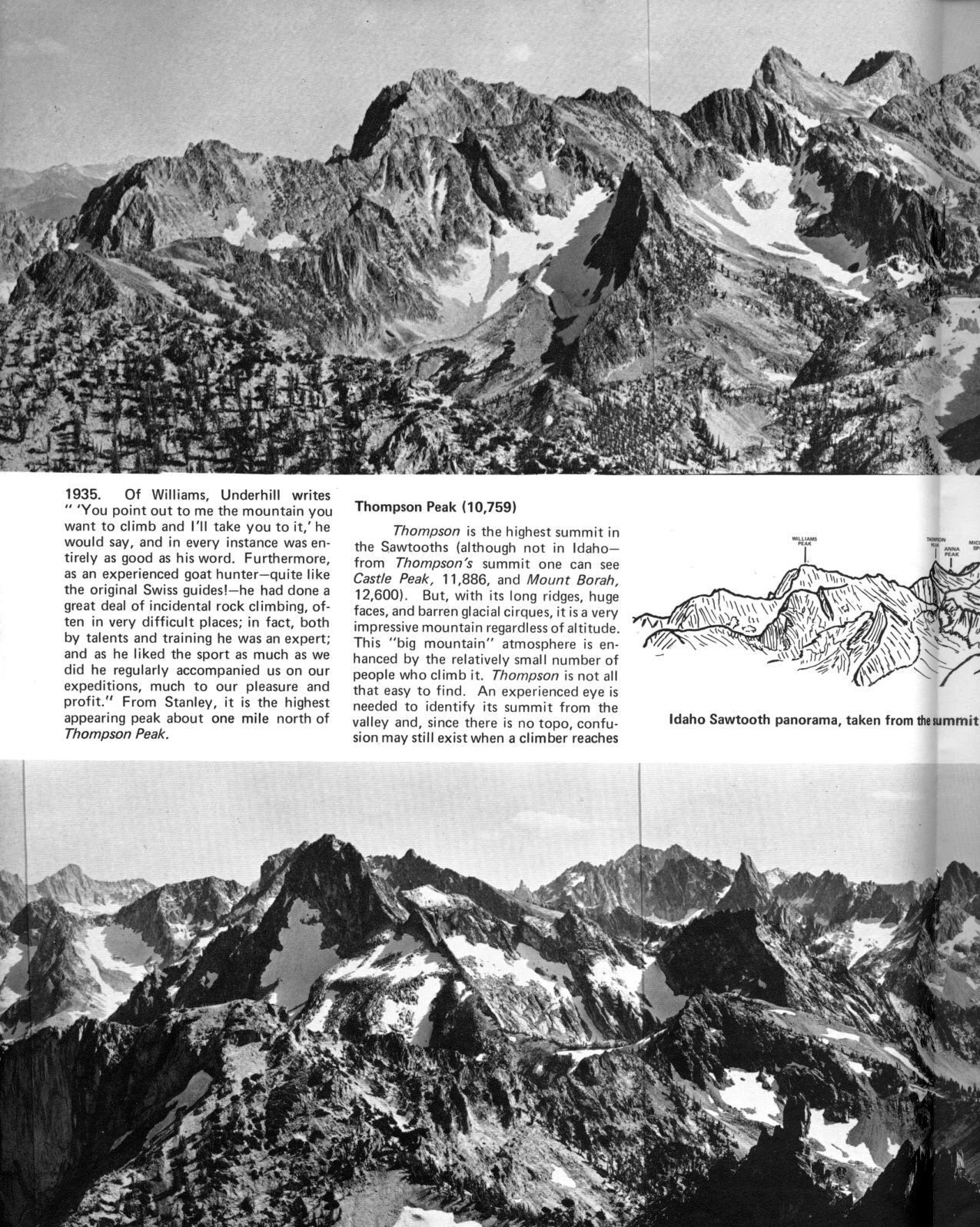
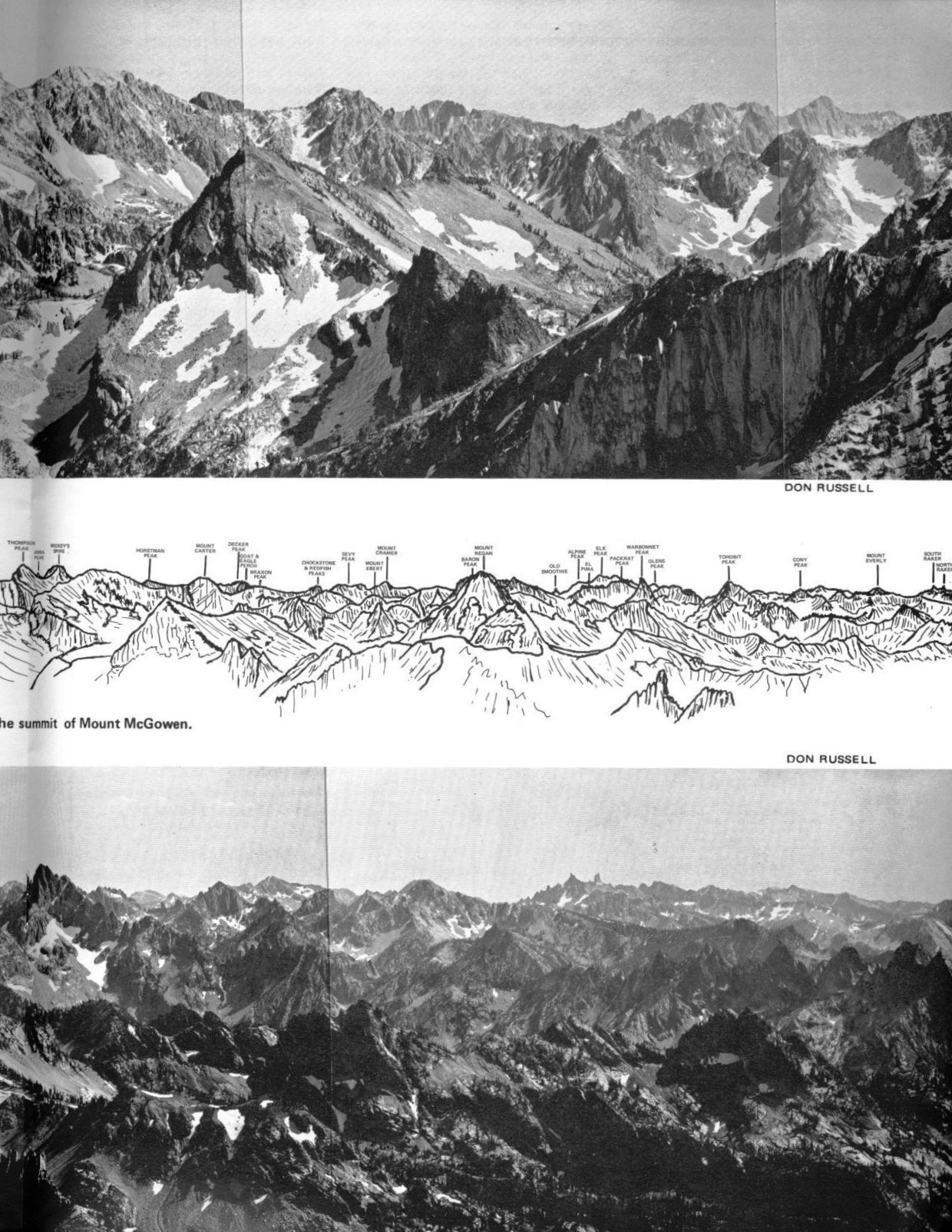
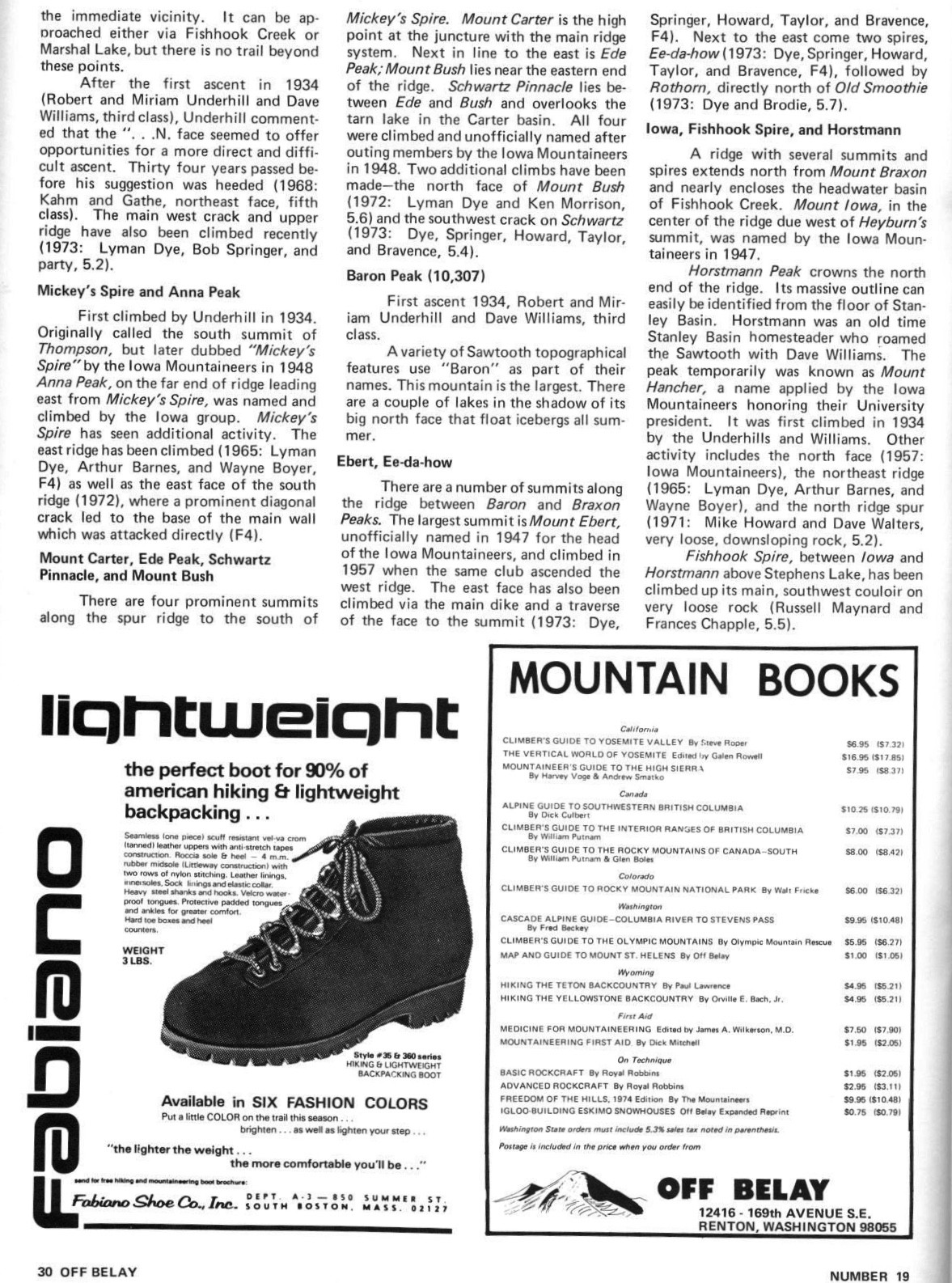
Off Belay Magazine was THE climbing magazine of its day. The following articles contained the most extensive discussion of the Sawtooth Range yet published in 1975. Special thanks to Ray Brooks for providing the scans. (Click on the scans to enlarge)
This article from the Idaho Statesman was published on August 1, 1926. In 2018, we know that there are no active glaciers in Idaho. Pettit Lake is the only landmark mentioned in the article, so it is safe to assume that the glacier was located west of the lake. Based on the distance and size measurements set forth in the article as well as the name Snowyside Peak, I think that the North Slopes of Snowyside Peak is a possible location. I added a photo of the North Side of the peak at the bottom of the page. See also The End of the Last Idaho Ice Age by Bob Boyles.
Along with its balmy climate, industrial opportunities, scenery and potatoes, Idaho can also boast of those phenomenal masses of ice, the awe inspiring beauty of which each year entices thousands of tourists to Switzerland. One of the few glaciers in the State of Idaho can be found far into the upper reaches of Idaho’s Alps (the Sawtooths) 20 miles up from Pettit Lake at an elevation of approximately 10,000 feet. Extremely difficult to access and far from the paths of men, this mass of ice is today practically unknown (even to native sons) and has not been named.
The glacier lies in an upland valley. It is oblong in shape and is estimated to be a mile in length and half-mile wide. Due to the probable irregularities of the valley floor, there is no accurate way of determining its supposedly great depth. The surface is rugged, very irregular and slanting.
The claim of this body or ice to the name “glacier” cannot be doubted. It is neither an overgrown snowbank nor the frozen surface of a mountain lake and possesses all glacial properties to the least details. Its interior formation is essentially that or the glacier, being made up of layers of solid lice, which is really frozen snow and seepage water under terrific pressure. At its crest is found the firn, a mass of granular snow which forms the upper part of glaciers. In its surface are crevices, so large and forbidding that as yet no man has dared venture near enough to determine their depth. And, as more substantial proof, it is slowly but inexorably moving, descending between the confining precipices of granite, pushing a moraine (a mass of accumulated debris) ahead of it and leaving a scarred trail on the bedrock in its wake.
The ascent from Pettit Lake to the glacier is so rugged and difficult that only a few more hardy nature-lovers have made the trip. The trail (only a dim outline) is so steep and dangerous that it is necessary to travel practically the entire distance on foot. But, dangerous and exhausting as the trail is, those who follow it to the journey’s end will find themselves amply repaid. To the brave belong the spoils.
Was the glacier located below Snowyside Peak’s North Face?
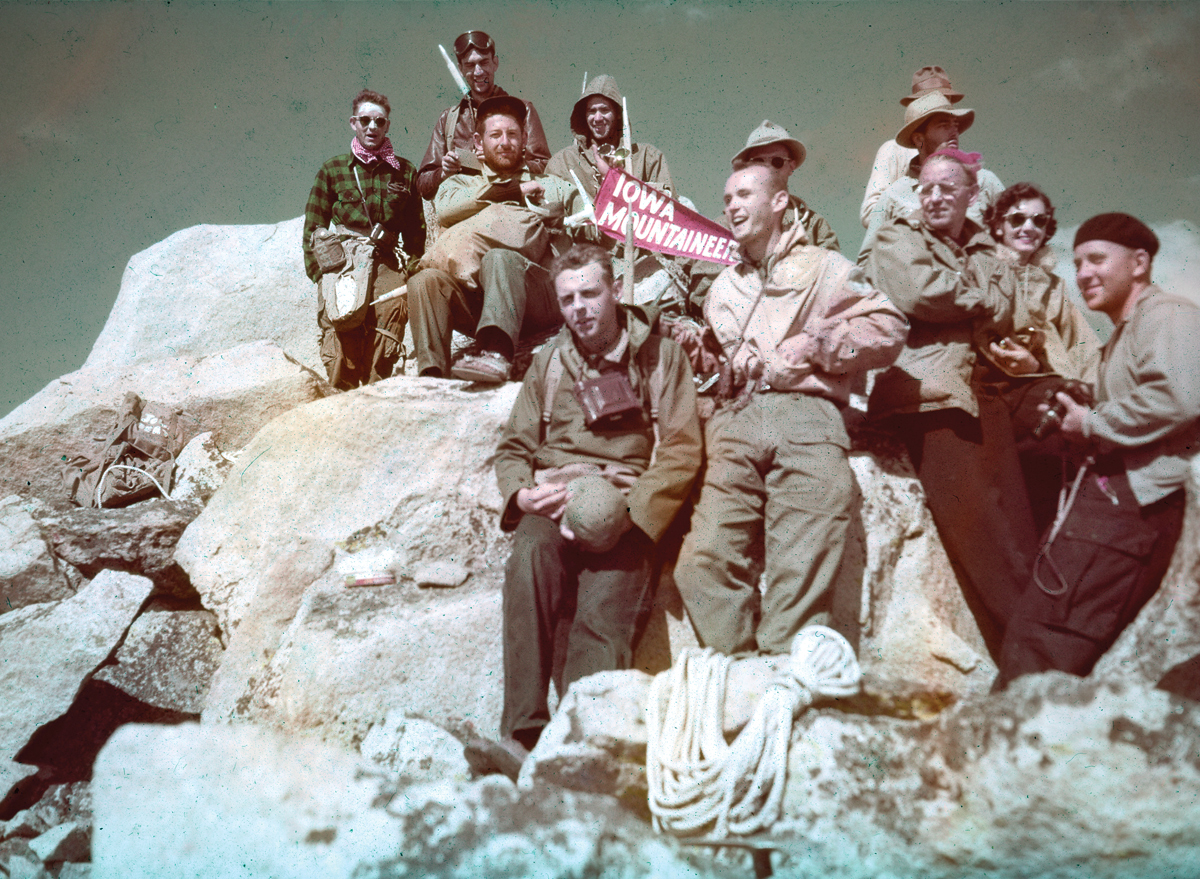
The Iowa Mountaineers climbing club was a major player in the in early Sawtooth Range exploration. The club was founded by John and Ede Ebert in 1940, as the University of Iowa Mountaineering Club. The club later incorporated as a not-for-profit Iowa corporation and became a major force in sponsoring climber education and expeditions throughout the world.
Schwartz Pinnacle, Harriets Pinnacle, Mount Bruce, Mount Ebert, the Elephants Perch and, of course, Mount Iowa all owe their names to the Iowa Mountaineers. You can read about the Club’s Sawtooth explorations and first ascents on Page 19 of the book as well as in numerous entries in the Sawtooth Range chapter. A 2018 article in the University of Iowa Alumni magazine provides a good history of the Club: Mountain Roots by Josh O’Leary.
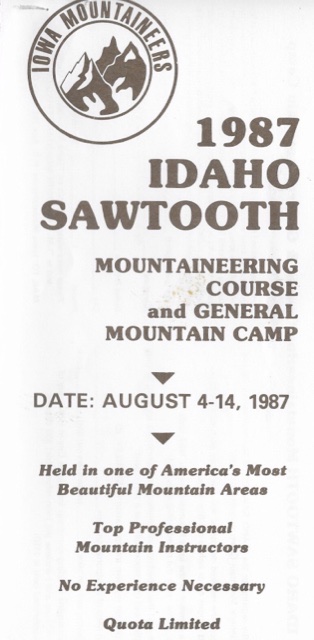
Photo courtesy of the University of Iowa Alumni Magazine and the Ebert Family.This is the front page from a 1987 brochure advertising the club’s upcoming climbing school in the Sawtooth Range.