Editor’s Note: Sawtooth Mountaineering was Boise’s first climbing shop. It was founded by Lou and Frank Florence. The shop was an important link between many of Idaho’s premier climbers and the development of Idaho’s technical climbing scene. Bob Boyles (quoted on Page 23 of the book) noted the shop’s importance as a hub for local climbers, stating “The thirty or so most dedicated climbers in the Boise Valley often hung out at Sawtooth Mountaineering to share stories . . ..” This group of climbers, centered on the shop, are credited with some of the most challenging first ascents in Idaho. In this article, Frank recounts his and the shop’s history.
I grew up on Long Island (New York), hardly a mountainous setting. My early camping and hiking trips were in the Appalachian and Adirondack Mountains and I was introduced to mountaineering in 1970 as a student in NOLS. I stayed on with NOLS, eventually working as a course instructor in Wyoming and Washington State.
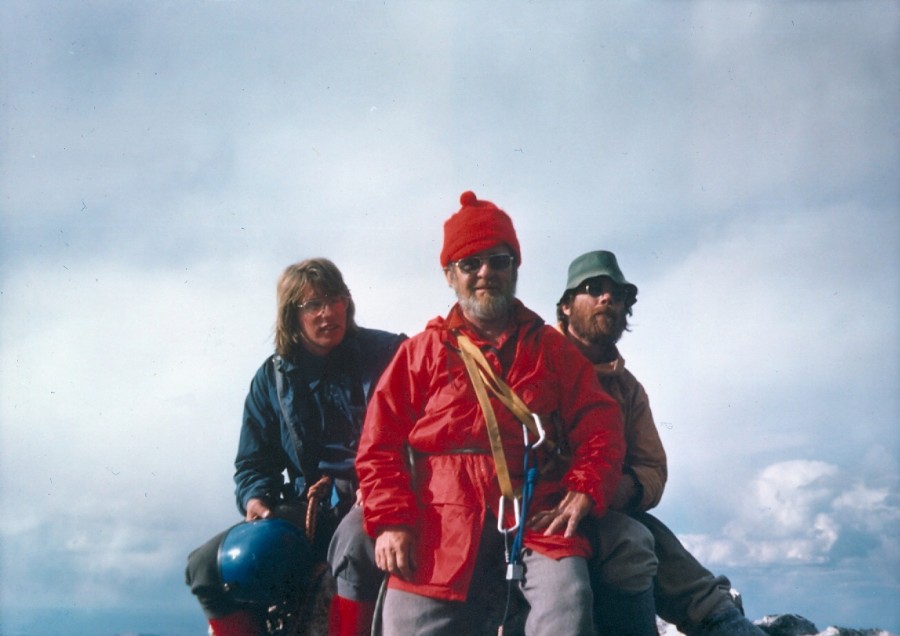
Bob Boyles and Lou and Frank Florence on the summit of Grand Teton. Mike Weber Photo
In 1972, I joined my father, Lou Florence, in bringing a small outdoor recreation equipment store to Boise. Our business (Sawtooth Mountaineering) promoted climbing, hiking, and cross-country skiing across Southern Idaho, from Slick Rock to the Lost River Range. We offered introductory climbing classes and fostered enthusiasm for climbing by hosting a speaker series with some of the leading climbers and alpinists of the day, including Royal Robbins, Henry Barber, Doug Scott, Bill March, and Sawtooth pioneer Louis Stur.
British Mountaineer Doug Scott lectured twice at our shop. The first time was in 1975. Scott came to Boise to give a talk about his recent ascent of the Southwest Face of Everest. He wanted to get in some climbing while in town and a posse quickly assembled. We went out to the Black Cliffs for what turned out to be a toasty day. Scott asked what had been done and what hadn’t and then led through a couple of each.
Scott came through Boise again in 1977 to give a slide show at the shop after his epic descent off The Ogre. And again I and a few others got a chance to climb with a famous alpinist. That time we returned to the Cliffs and he led what is now called the Doug Scott Route. Nice route, too. I remember Scott stopped at one point after trying a move and then pondered it a bit before he led through the sequence. When he came down, I asked him what he thought about it, especially that one section. “It’s all there,” he replied. “Just a lack of balls.”
Doug Scott at the Black Cliffs (1975). Left to right Bob Boyles, Bob Henry, Doug Scott and myself. Lou Florence Photo
Through Sawtooth Mountaineering, we conducted popular introductory clinics in cross-country skiing and helped develop an early network of ski trails around Idaho City. Long-time staff members Ray York and Gary Smith, as well as Lou and I, trained and volunteered with Idaho Mountain Search and Rescue. Days off were spent exploring the many crags local to Boise: Stack Rock, Slick Rock, Table Rock, Rocky Canyon, Morse Mountain and the Black Cliffs.
I frequently partnered with Bob Boyles and Mike Weber on technical climbs, but in the mid 1970s, there was a free-wheeling mix of local climbers who swapped leads including Tom McLeod, John Platt, Art Troutner and Charley Crist. It was a time of discovery as there was little in the way of guide books and, championing clean climbing ethics, we clanged our way up the cliffs using hexes and stoppers. We became better climbers as we challenged one another on new routes locally and expanded our alpine skills into the Sawooths and Lost River Range. In the Winter of 1974, John Platt, Jerry Osborn, Walt Smith, and I skied across the White Cloud Mountains from Obsidan to Robinson Bar. In 1976, I summitted Denali with friends from Seattle and the following year made the first Winter ascent of Mount Borah’s North Face with Art Troutner, Mike Weber and Bob Boyles.
Sawtooth Mountaineering closed in 1980 and I returned to college and a career in geology. That took me out of Boise but, from time to time over the years, it’s been my pleasure to renew my acquaintance with the Sawtooths and the Lost River Range and those same partners from back in the day.
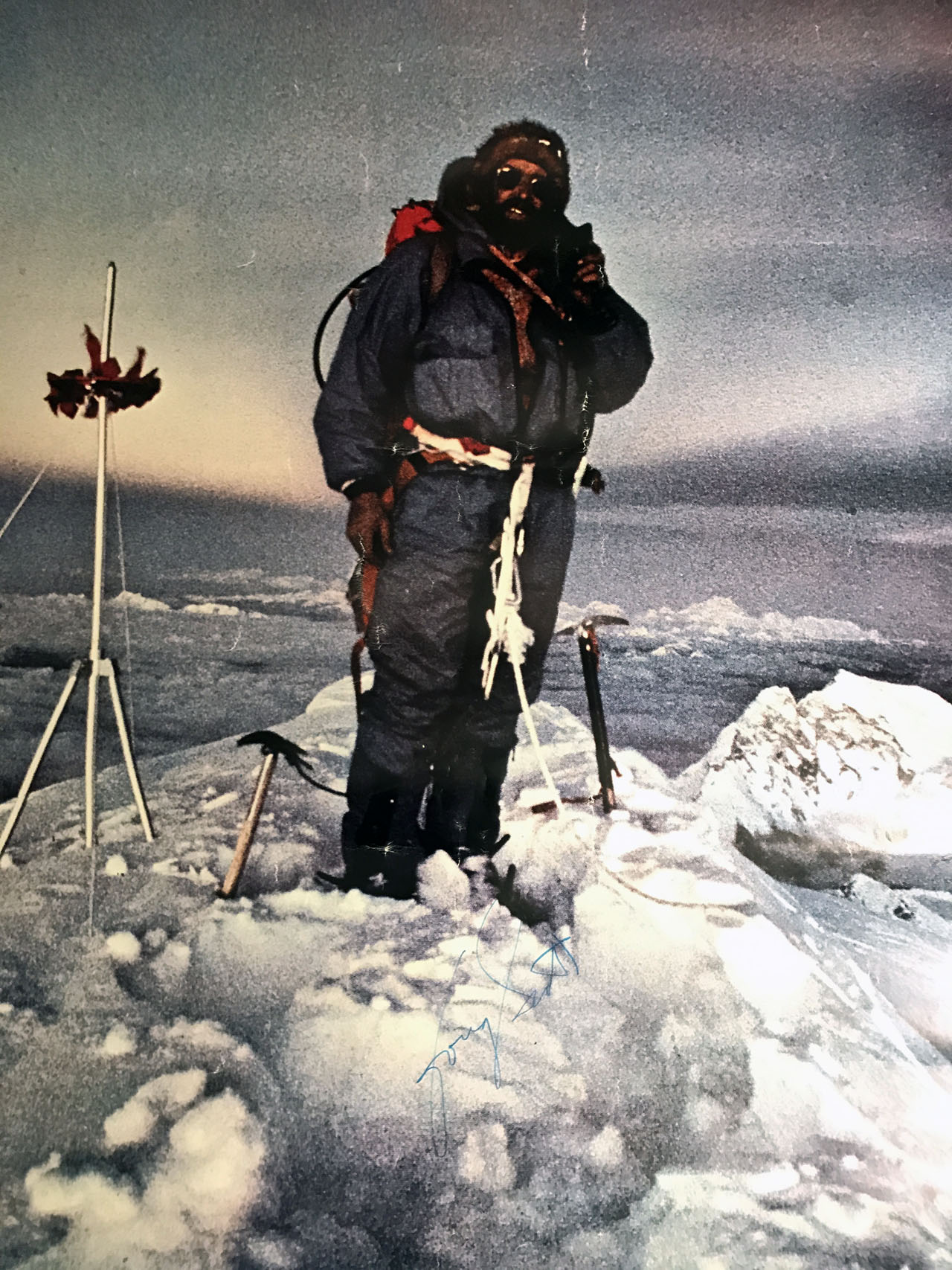
During one of Doug Scott’s lectures at Sawtooth Mountaineering, Bob Boyles secured a signed copy of the famous climber’s posters.
For those who live in the vicinity of Boise, Table Rock is an unmistakable landmark rising up on the Northeast Side of town. The climbing history of its rock walls, which are graced by seemingly random bolt placements and the occasional chalk mark, is slowly disappearing as time passes and excavators mine the Northeast Corner for building materials. Table Rock, like the Black Cliffs, was a training ground for Boise climbers who took what they learned to the mountains where they established impressive routes like the North Face of Mount Breitenbach. Though the active rock quarry on the Northeast Side of the rock has changed the landscape considerably since the 1970s, climbing opportunities still exist on Table Rock.
The silica-infused brown sandstone found in the foothills of the Boise Front is relatively rare in Southern Idaho. Formed by sediment from a large lake (Lake Idaho) and fused with silica from the hot springs that are found outside of Boise, the resulting cement hard rock made it a perfect place for Boise rock climbers to gather during the 1960s and 1970s. Bouldering short but difficult rock moves had become a legitimate form of rock climbing in the country during the 1960s when the legendary John Gill introduced gymnastic training to rock climbing moves.
During that era, Table Rock quickly developed into what could best be described as Boise’s first outdoor climbing gym and meeting place. The low elevation of Table Rock offered year around opportunities and it was not uncommon to find climbers practicing there throughout the Winter. The climbing was not limited to the quarried rock found on the South Side of Tablerock. In less than a decade, all 4 sides of Tablerock were climbed extensively explored and climbed, including the large roofs that are found near the cross.
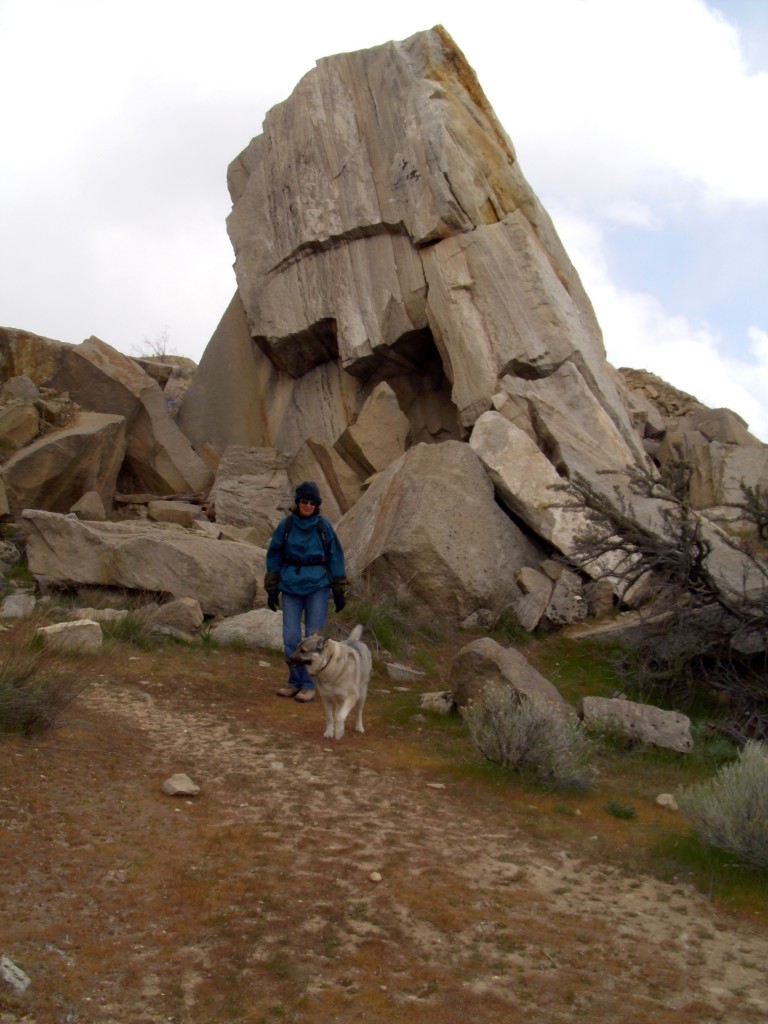
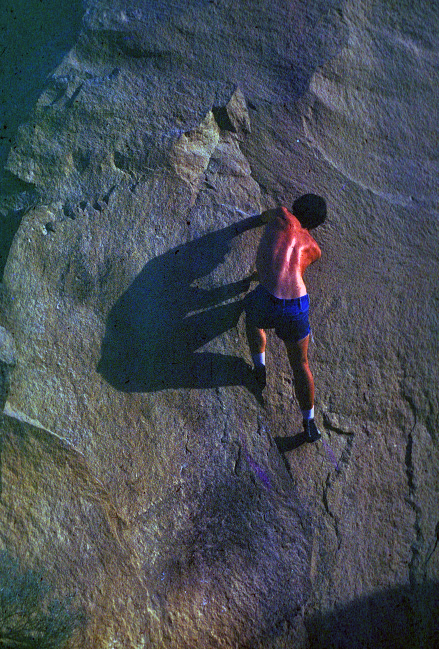
Carol Boyles and Bob’s beloved dog, Brit, at the quarry. Bob relates that “In 1963 he watched his brother do the first climb I ever witnessed at Table Rock on the big rock that stands behind us. He took off his shoes, climbed it barefoot, did a handstand on top and then climbed back down.” Bob Boyles Photo
The South Side of Table Rock (the Quarry) offers clean, cleaved-off slabs of hard sandstone, left exposed from decades of quarrying. During the 1970s, this area became the hub of local climbing activity. Unroped bouldering was the main activity but it was not uncommon to see some climbers practicing aid climbing or rappelling. Crash pads were unknown at that time with the exception of a small patch of carpet that might have been left behind for wiping sand from your soles on a wet day. Spotting a partner was a given and it helped to know there was a “mosh” landing on some risky moves. Where it was safe, cat-like jumps were perfected if one fell off a boulder but they didn’t always work. I know that a few of us went home early with sore knees or a sprained ankle. This “climb or fall” technique also provided great motivation for one to perfect the moves on the taller, riskier boulders. Like modern day sport and gym climbing, the Quarry provided us a place to practice extremely hard climbing moves without the distraction of high exposure or the risk of a big fall.
Frank Florence, co-founder of Sawtooth Mountaineering describes it like this:
“I think that the spirit of the Boise climbing community of the 1970s was special. It was a fairly small group of people, a tight enough circle that we all knew one another to some degree. And there was real talent there. Local climbers who pretty much started from scratch, like Tom McLeod and Charlie Crist, as well as young Turks, like yourself [Bob Boyles] and Mike [Weber]. Then there were the “externals,” guys who had some experience climbing elsewhere that they could bring to their efforts around Boise. Dan McHale, the Rozells and Bob Jahn are good examples. I might have taught you a few things about ropes and knots but they were the exemplars when it came to pushing abilities and standards. We all learned from them and that sharing of experience, talent, and knowledge was critical for every one of us and led us to wonder if we couldn’t take it a little further. I don’t want to over-romanticize the times, but it’s fair to say that our climbing scene had elements in common with the camaraderie and positive competition found in British pubs and Camp 4 in the same decade.”
Interviewed in 1975 by the Idaho Statesman, Florence who, at the time, conducted Boise‘s only regularly scheduled climbing classes noted: “The 30-40 foot walls at Table Rock serve as a “sort of nursery” for beginning climbers. The convenient old quarry contains plenty of sandstone for bouldering difficult but close-to-the-ground maneuvering.”
During the 1980s, a new generation of younger climbers including Ted Thompson and Pete Takeda were climbing at Table Rock. For 4 years, Curt Olson (the founder of High Country Sports in downtown Boise) sponsored what was the first semi-pro bouldering competition in the United States at Table Rock. The competition attracted a young Todd Skinner who is considered one of first proponents of modern sport climbing and top climbers of his generation.
The Quarry stayed an active place for climbing through the early 1990s when the mid-section of the quarry was sold to a local company and opened to rock mining after sitting idle since 1940. The Table Rock sandstone had always been prized as a building material and no doubt, the extraction of rock generated economic benefit to those who owned the mineral rights.
The sandstone can now be found in some of the valley’s most expensive homes and at the entrance to upscale developments where it’s used as billboards to announce the name of the subdivision. Local climbers, a loose knit group at best, rallied for a while to save the old quarry, but lacking any kind of formal organization, their voices weren’t loud enough to raise any local activism. Economics won out and rock climbing at the Quarry has never been the same.
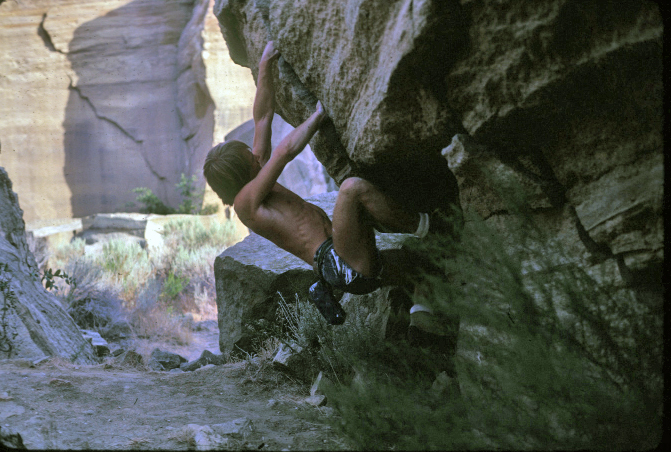
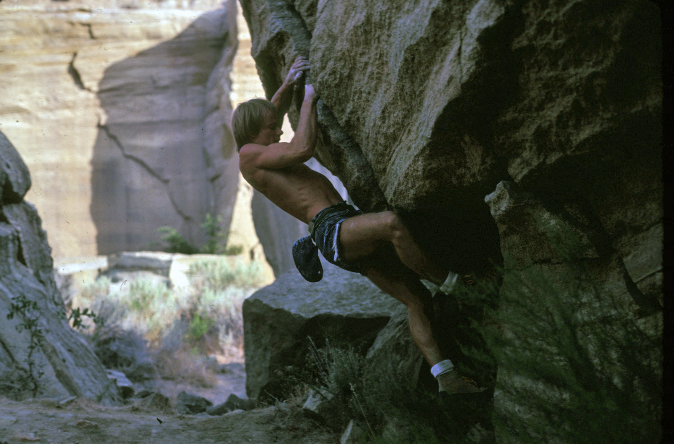
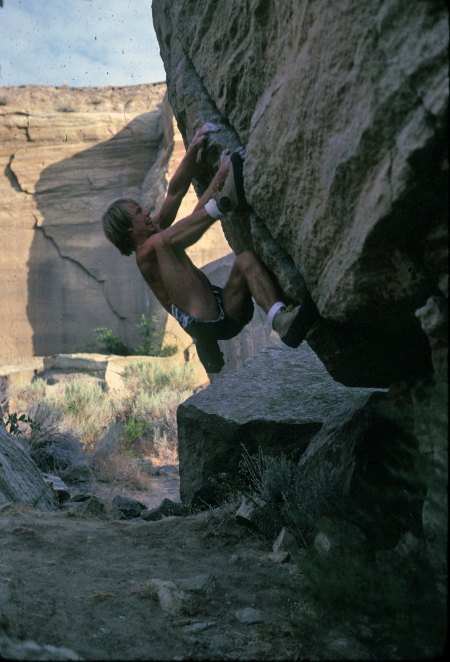
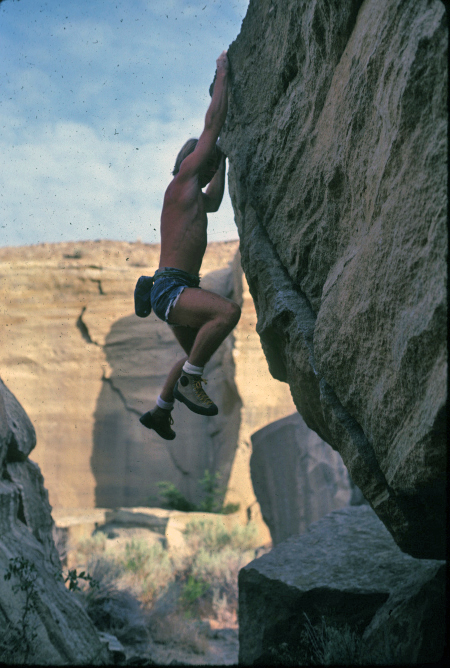
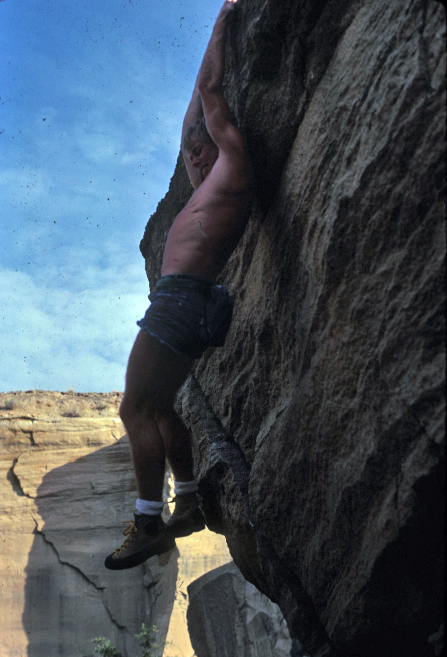
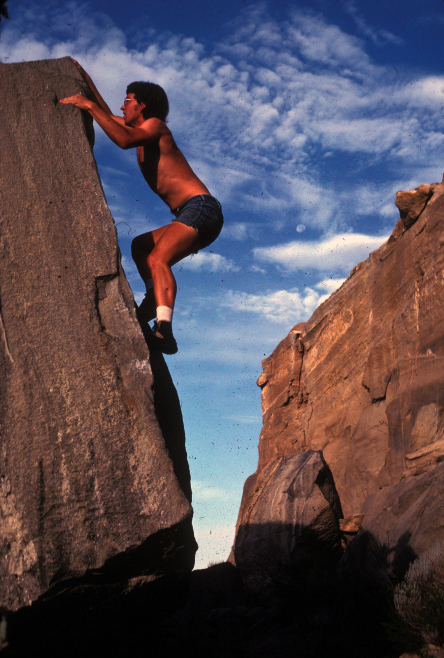
This climb is now half-buried in dirt. But back then, it was a challenging problem. Here Tom McLeod is starting at ground level (these days, subterranean). John Platt PhotoMoving around the overhang. John Platt PhotoHe better be wearing underwear. John Platt PhotoHe’s got the top and the mantel is easy. John Platt PhotoBut no, he’s not done yet. There followed several more pirouettes past the camera before dropping to the ground. John Platt Photo
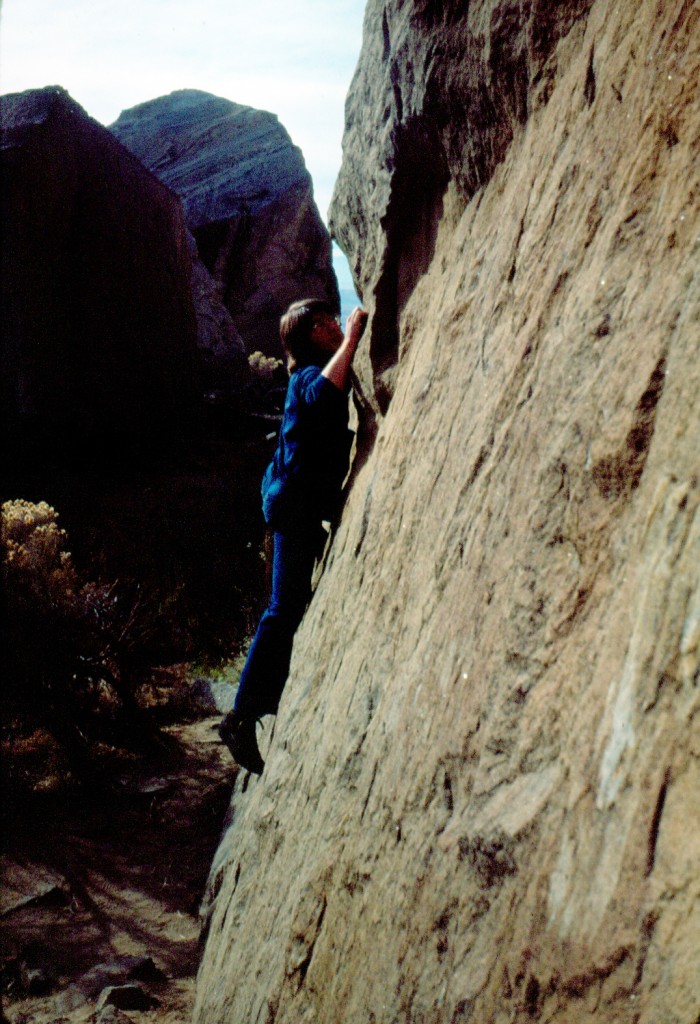
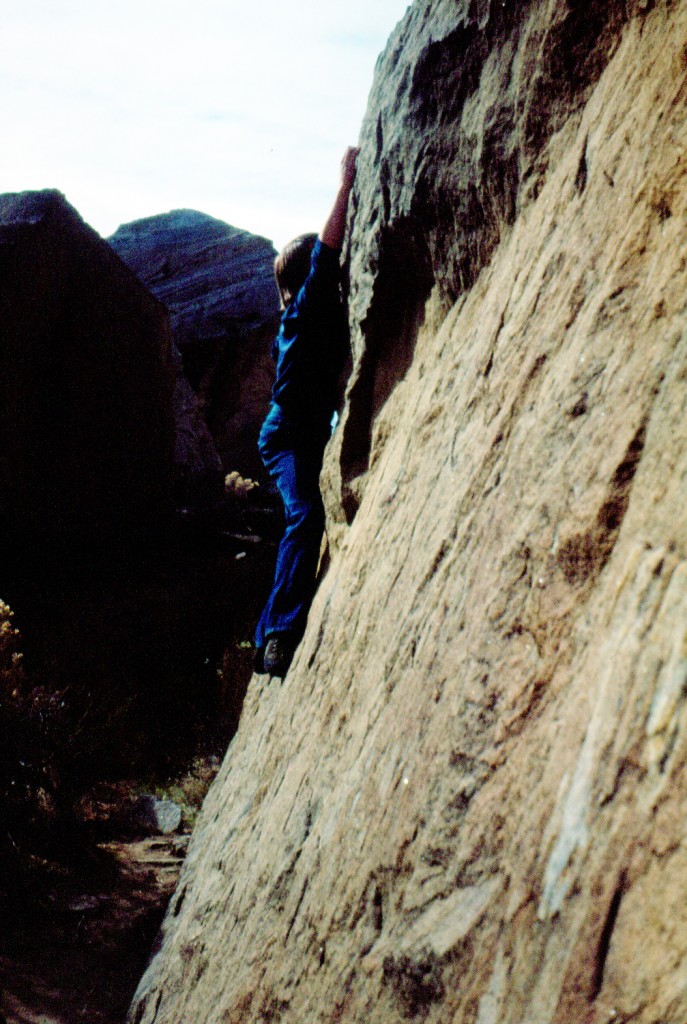
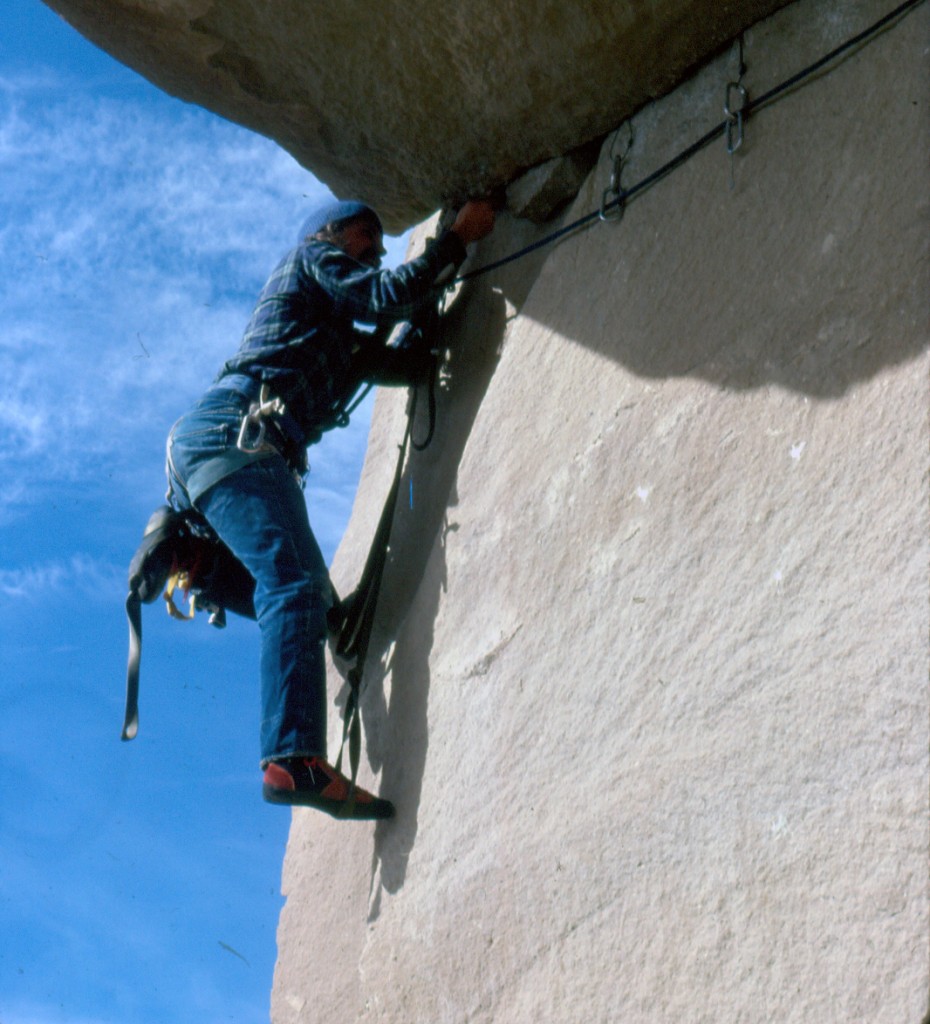
Bob Boyles working a classic mid-cliff slab in blue jeans and Fabiano Directisma “blue boots” as we called them. They were totally rigid from heel to toe making them terrible for walking, but they worked perfectly on the tiny nicks and chips in the quarried rock. Mike Weber PhotoBob stretching through the crux moves. Mike Weber PhotoA young John Platt working the sharp edge of a classic mid-cliff Table Rock boulder. John Platt PhotoJohn at work on the “Layback Crack.” John Platt PhotoMike Weber doing a “clean” aid ascent of the “Roof” using only hexes and stoppers. Bob Boyles PhotoMike resting before rounding the edge of the big roof. Bob Boyles PhotoMike stepping out of his etrier and going free. Bob Boyles Photo
During the Summer of 1972, three of my friends and I took a basic rock climbing class at Table Rock from Frank Florence, a rock climbing instructor who had just opened a shop (Sawtooth Mountaineering) on Fairview Avenue. Frank and his father Lou moved to Boise from New York City in pursuit of a new life out West where the mountains were taller than the buildings on Wall Street. After that initial class, the 4 of us (Carl, Mike, Guy and I) were totally hooked on this new sport and we started to buy climbing gear so that we could continue with our newfound pursuit. We managed to get one trip to Slick Rock near McCall before Fall came and the rain and snow pretty much shut down the high country.
The unimproved dirt road to Table Rock was notorious for holes when it was wet and walking up wasn’t much better so, on a whim, we ventured out ID-21 to check out what we called the “Black Cliffs.” The area had a reputation for being dangerous and we were warned that some of the basalt columns might collapse if we tried to climb them. We never had a problem with the columns being unstable but we did learn to set our belays way off to one side to protect the belayer from the rocks that had to be cleaned while working on a new route.
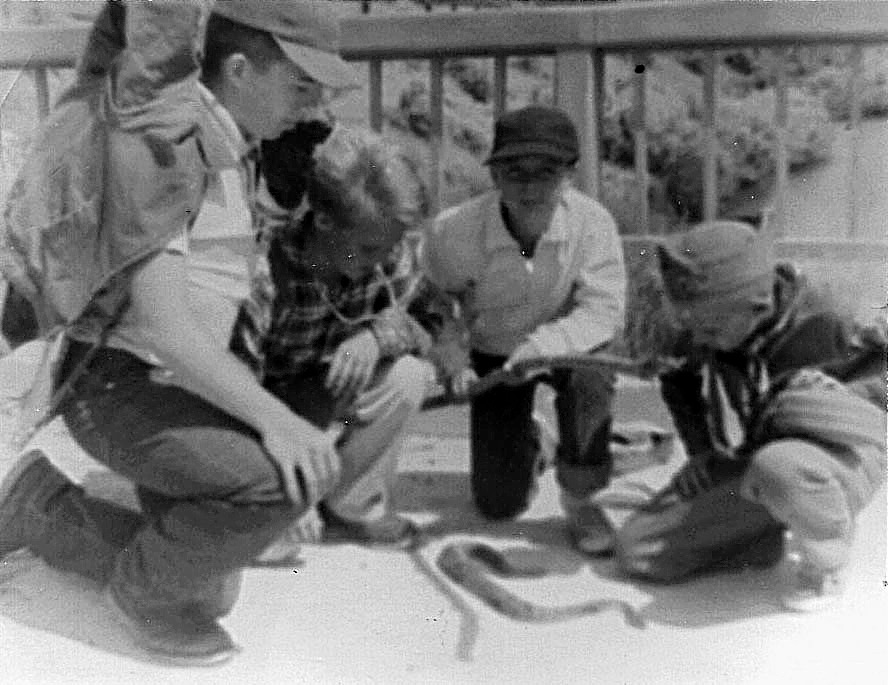
On earlier Boy Scout hikes in the area, we had stumbled upon a large den of rattlesnakes on what is now called “The Dark Side” so we were pretty cautious about sticking our hands into cracks without taking a close first look. As it turned out, we never found a single rattlesnake on the highway side of the cliffs and later we were told that someone had used dynamite to blow up the den that was found in the main canyon (Car Body as it was later named). We scouted around the cliffs on the left side of the canyon and soon found a line that looked feasible so we roped up and climbed it. I think I took the first lead but as soon as we were done we roped up and did it again. After that first climb, we used the route as a warm-up on future trips and coined the name, The Standard. We soon realized that the black basalt was a magnet for heat even with the low angled sun of Winter and continued to climb and put up new routes throughout the Winter.
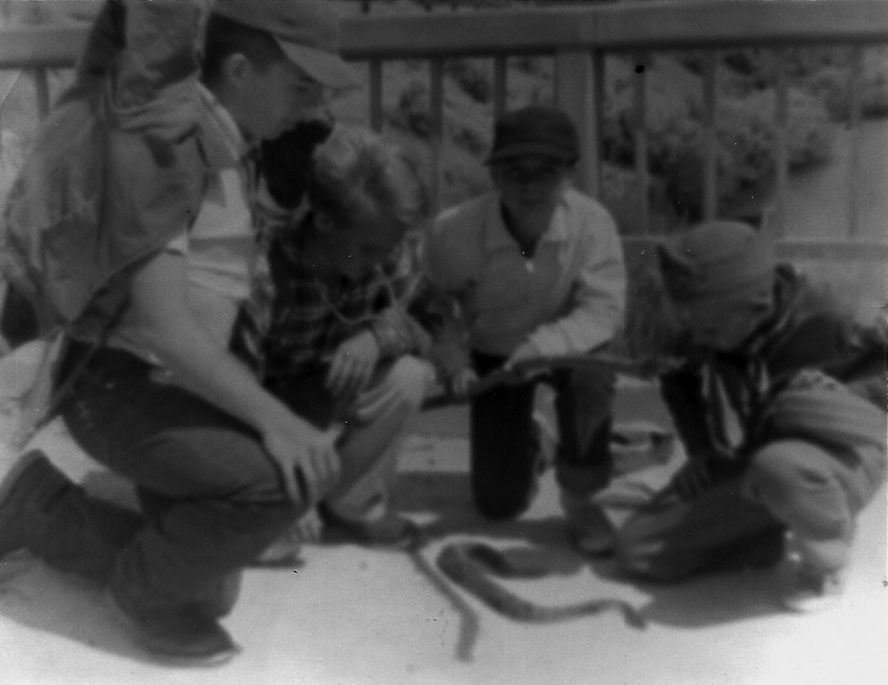
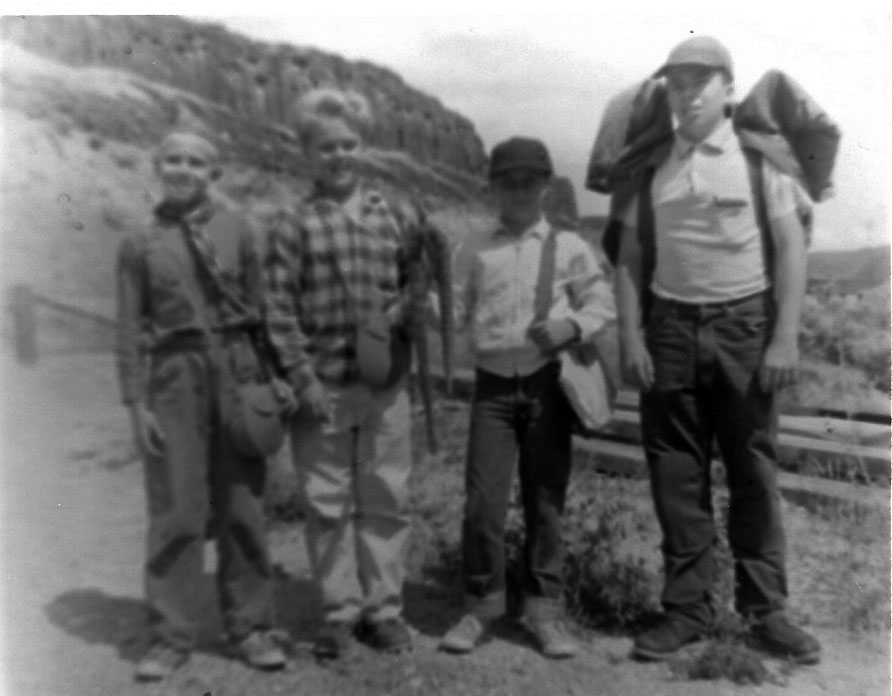
Boy Scout Troop 77 at the black cliffs in 1963 and a big rattlesnake. Ed Boyles Photo
It didn’t take long for word of our discovery to spread in the small climbing community that had formed at Sawtooth Mountaineering, but the stigma of being a dangerous place to climb took a little longer to go away. When the Spring of 1973 came, we pretty much switched our main focus of climbing to the Cliffs and the only other people we saw during the Spring was Tom McLeod and his climbing partners. Tom, one of the hottest climbers at Table Rock and never one to want to just repeat someone else’s climb, started working on new hard routes on the right side of Car Body Canyon. Because we had a friendly rivalry, we never told each other what we were working on until it had been completed.
Bottom-up, on-sight leads were the standard and grabbing a piece of gear or resting on it was considered aid climbing even if no one saw you do it. To us, it was simple. Free climbing was all free and any use of gear to make progress was aid. If a new route was top-roped, it was only because there was no way to protect it with the gear we had and it was noted as being a “top-roped climb”. We figured if we couldn’t do a route with the gear we had, we just weren’t good enough and we would have to get better. Pitons were almost never used due to the fact that they didn’t work well in the flared cracks and the use of them could cause the rock to expand and break.
Yvonne Chouinard had just introduced hexes and stoppers to the climbing world and they turned out to be the best and safest gear we could get to use in the natural features of the basalt. The use of bolts would come later after clean climbing ethics of the 1970s were not adopted by the next generations of climbers. The use of bolts opened up climbing on a large number of new, hard routes that could not be climbed safely without their use. The rock climbing standards in the valley rose higher as a result. I can’t recommend that any modern sport climber should use what was a common anchor back then on the top of the cliff–an improvised V-thread anchored to sagebrush.
By the Summer of 1974, the Black Cliffs had become quite popular. Most of Boise’s small community of climbers were visiting and climbing there. Our exploring took us all the way down towards the end of the cliffs near the Lucky Peak Dam and Tom ventured across the dam to start putting up some very hard routes on what is known as the “Dark Side.” At some point, Tom hooked up with Bob Jahn, a Gunks climber who had moved to Boise from back east. Tom, who had set the standard for the hardest routes at the Cliffs (5.9), soon pushed the standard higher (5.10) when he and Bob started climbing together. This was at a time when the hardest routes in the country were rated 5.10 so, with little doubt, those two were at the cutting edge of free climbing standards in the country at that time.
Later, in the 1970s, Doug Scott, the renowned Himalayan climber from England visited Boise on an invite from Lou Florence and put up a route that bears his name in Car Body Canyon. Lou also invited the renowned solo climber, Henry Barber for a visit to Boise and he spent an afternoon climbing at the Black Cliffs. During this outing, he free-soloed a new route to the amazement of all those who were lucky enough to be there and watch. During the 1980s, Tony Yaniro (the prolific Joshua Tree climber) spent most of the Summer in Boise and out up new routes at the Cliffs. Later, the young Pete Takada was climbing and perfecting his technical rock climbing skill at the Cliffs.
As for any climbing that occurred before the 1970s, the only traces we ever found were some old iron ring pins that looked to have been used for rappel practice. I had heard that the Hari Clark (who worked at Bob Greenwoods Ski Shop) had trained the National Guard out there but I can’t confirm that. Bob Greenwoods was the first shop in Boise to carry modern climbing gear and offer professional rock climbing instruction from Hari and Tom Naylor before they got out of the rock climbing business.
All photos by Bob Boyles except where noted.
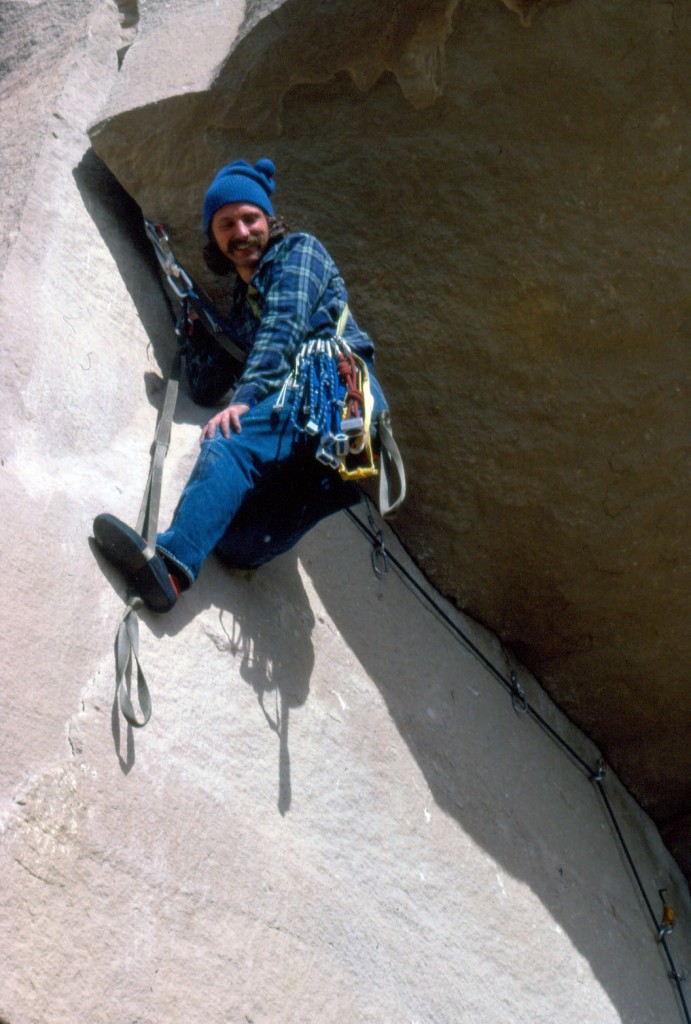
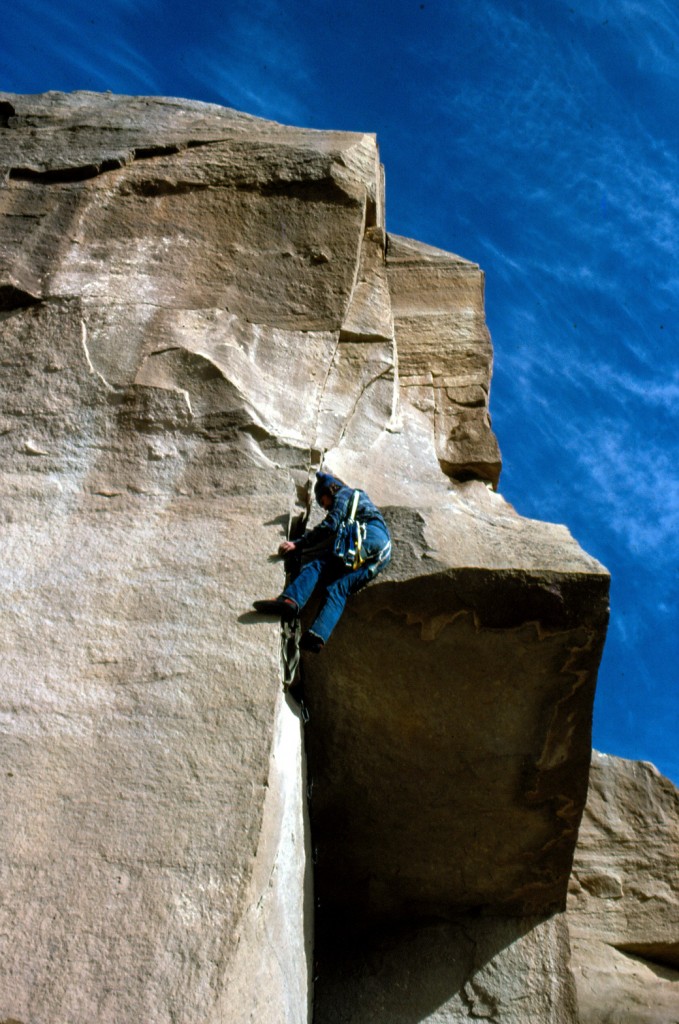
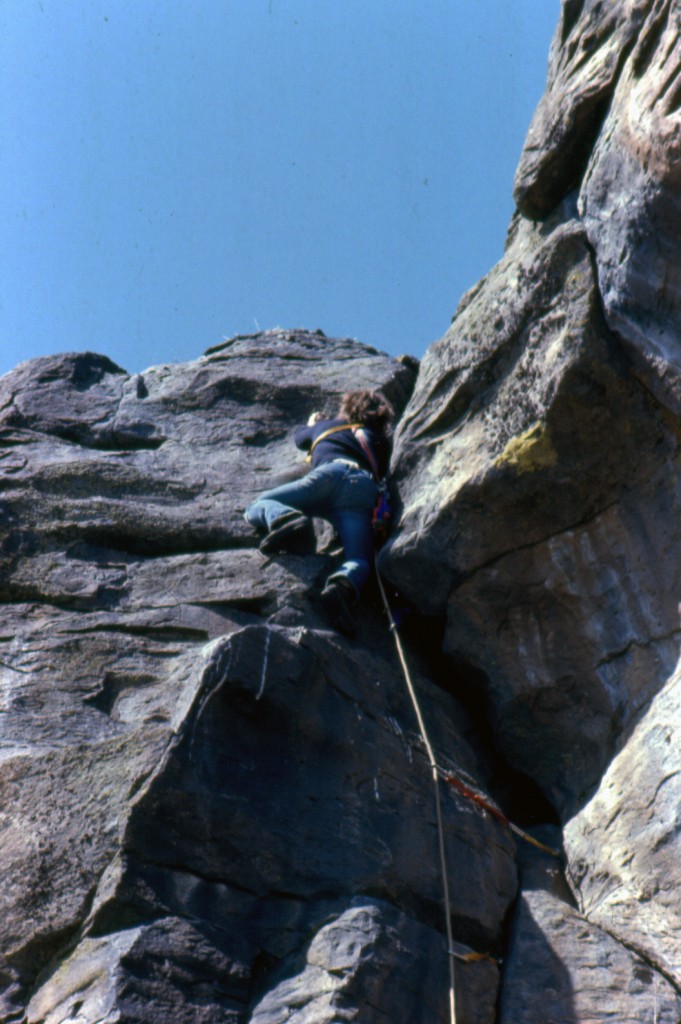
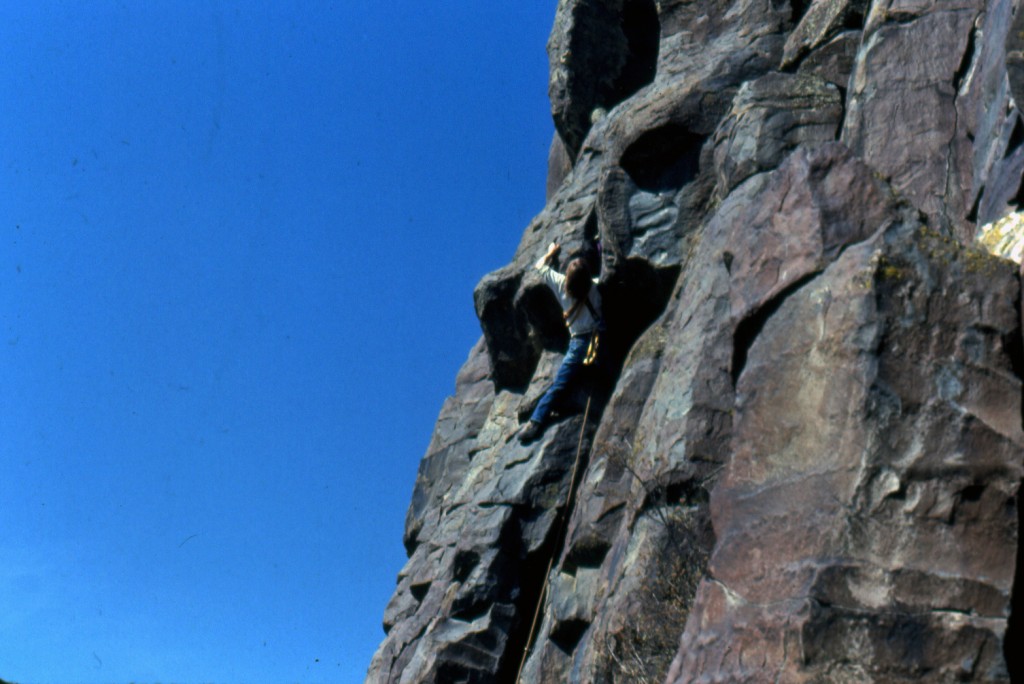
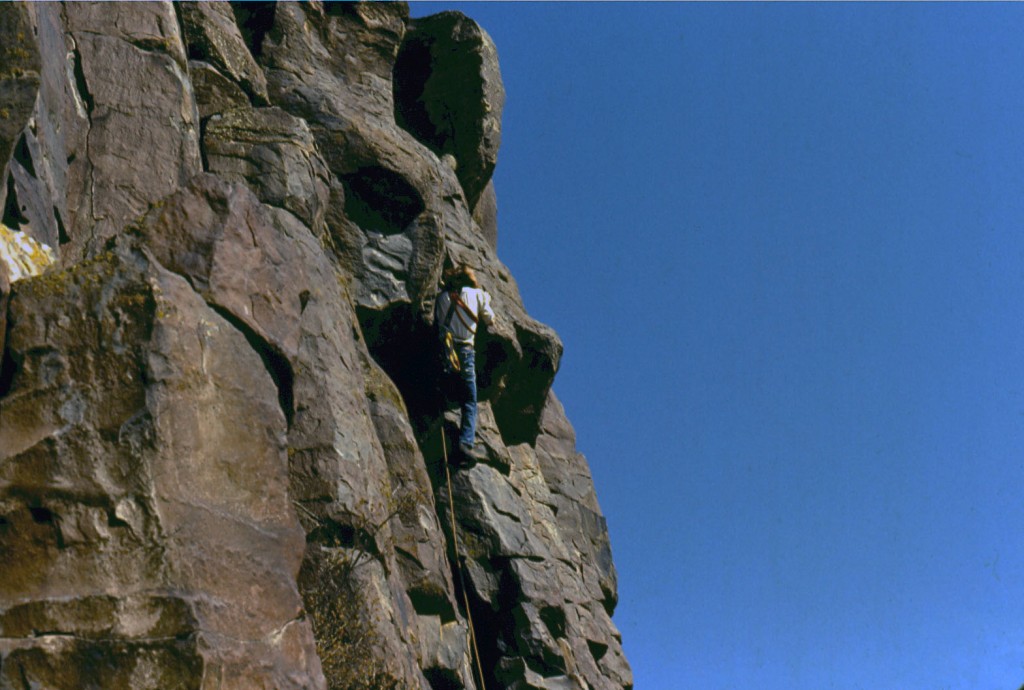
Guy Carson, Carl Sheets and Mike Weber posing for the camera in Car Body Canyon (Fall 1973).Mike Weber leading the “Roof,” now known as “Bloody Crack.”Rick Rosell leading a new route at the Tall Cliff section of the Black Rocks.Frank Florence working the crux at the Black Cliffs.Bob Boyles stretching for a move on the left side of Berry-Berry in Car Body Canyon. Mike Weber PhotoBob Boyles taking a break for the camera near the top of the cliff. Mike Weber PhotoGuy Carson near the top of Barry-Barry in Car Body Canyon.Bob Boyles leading the “Roof” (“Bloody Crack”). Mike Weber PhotoIn 1975, Doug Scott, fresh from his ascent of the Southwest Face of Everest, came to Boise to give a talk at the shop about his recent ascent of the Southwest Face of Everest. He wanted to get in some climbing while in town and a posse quickly assembled. We went out to the Black Cliffs for what turned out to be a toasty day. Scott asked what had been done and what hadn’t and then led through a couple of each. Lou Florence took the photo. Left to right: Bob Boyles, Bob Henry, Doug Scott and Frank Florence..Bob Boyles checking out Wounded Knee at the Black Cliffs for the first time in February 1974. “Soon after, I bought some tube chocks from Sawtooth Mountaineering and went out and completed it with Frank Florence.” Mike Weber Photo
And now for some recollections of John Platt:
I remember trying to climb out there with pitons. They would ring like a mother as you pounded them in, then rotate 30° when you put weight on them. This because the cracks flared as they went in. Not confidence inspiring. So we didn’t do much out there until clean climbing and hexes/stoppers. Of course for me, “we” almost always meant me and McLeod.
Back then, there weren’t any chains. So we climbed to the top, sometimes making the final move in dirt, then tied off to sagebrush for a belay. Kick some spots for your heels (in rock shoes) in the dirt. I think we were still employing this tactic in the late 1980s.
In the late 1980s, McLeod was doing some very hard stuff. I recall going to Car Body Canyon and climbing overhung routes. Tom would lead them, but I couldn’t follow. We called these “thrash and dangle” because the overhangs were always near the top, and I would get past the last piece, then fall off (after thrashing), hanging in space (dangle). Tom didn’t want to lower me 60 feet off a sagebrush, so I would clip jumars and ascend to the top.
1963 Boy Scouts Snake Hunters
Bob Boyles provided the following photos from 1963. Future Idaho explorers start early in Idaho. Bob relates “I was 10 and didn’t get to go on the Boy Scout hike because I wasn’t old enough to join for another year. I was standing there when the “troops” of Troop 77 came back with the rattlesnake that almost bit one of them.”
Boy Scout Troop 77. Ed Boyles PhotoThe kid in the scout uniform is my late brother George. He’s the one who did the handstand on top of the big rock at Table Rock. Boy Scout Troop 77. Ed Boyles PhotoGeorge Boyles is first on the left. Boy Scout Troop 77. Ed Boyles Photo